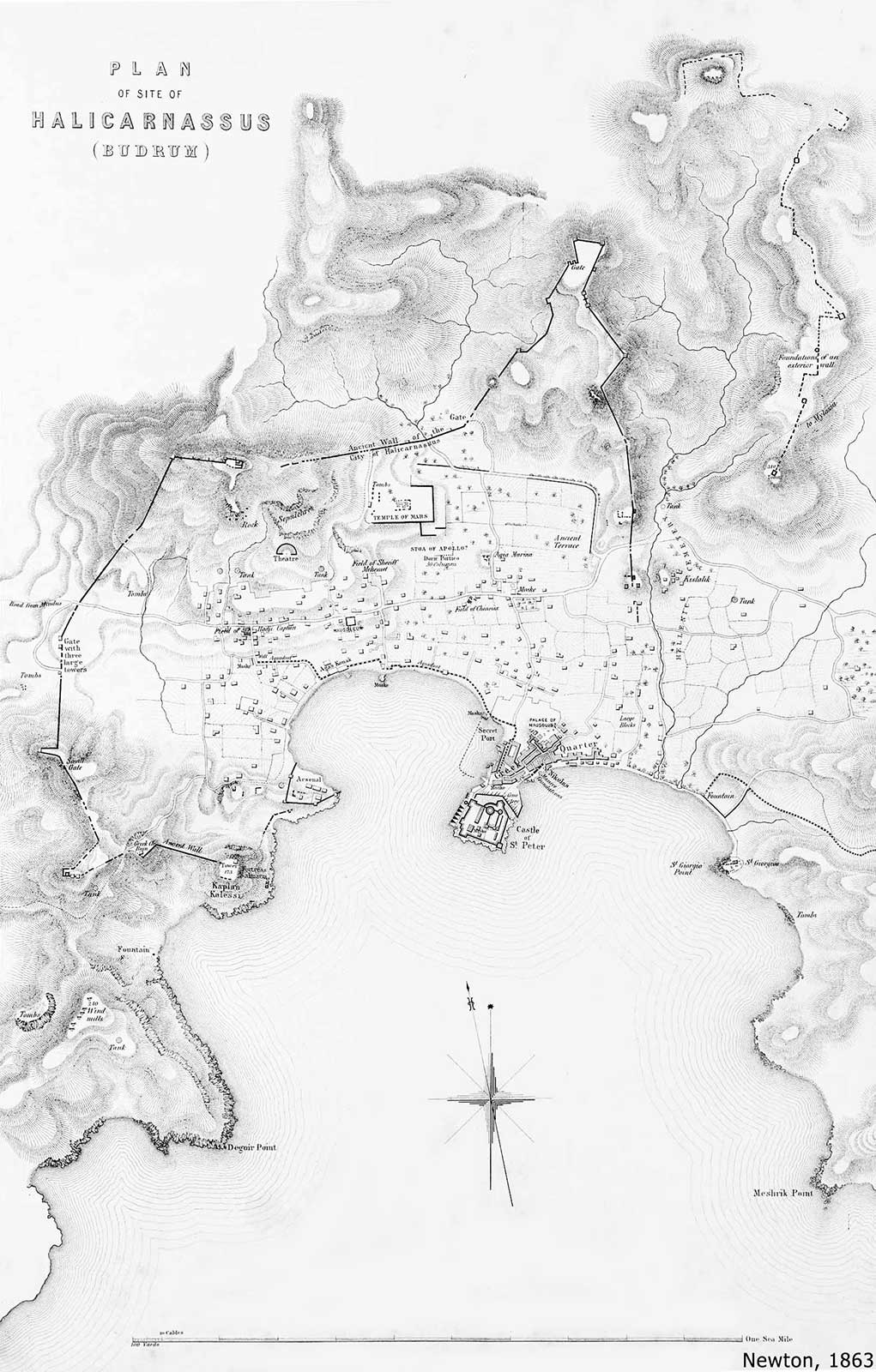
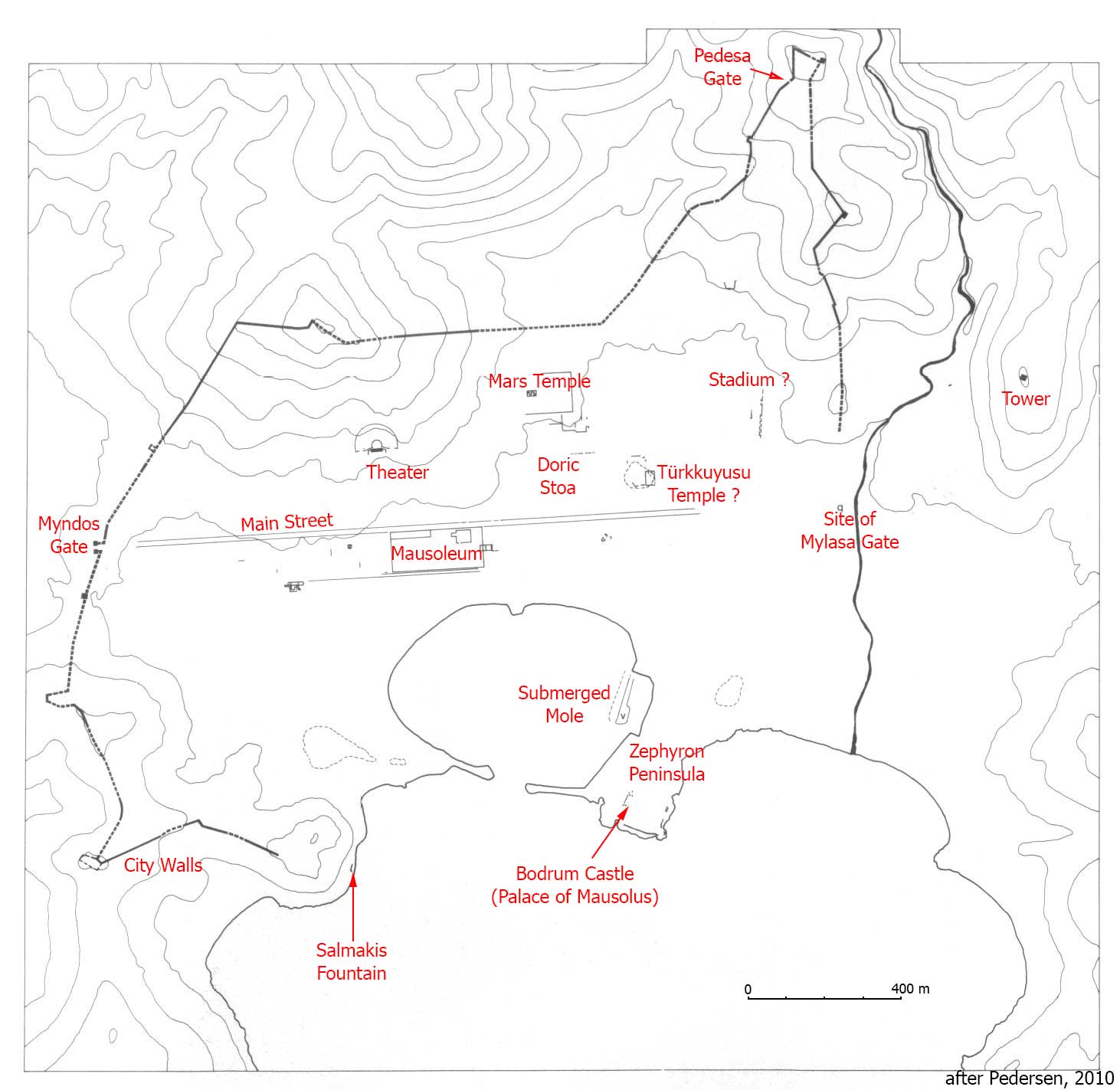
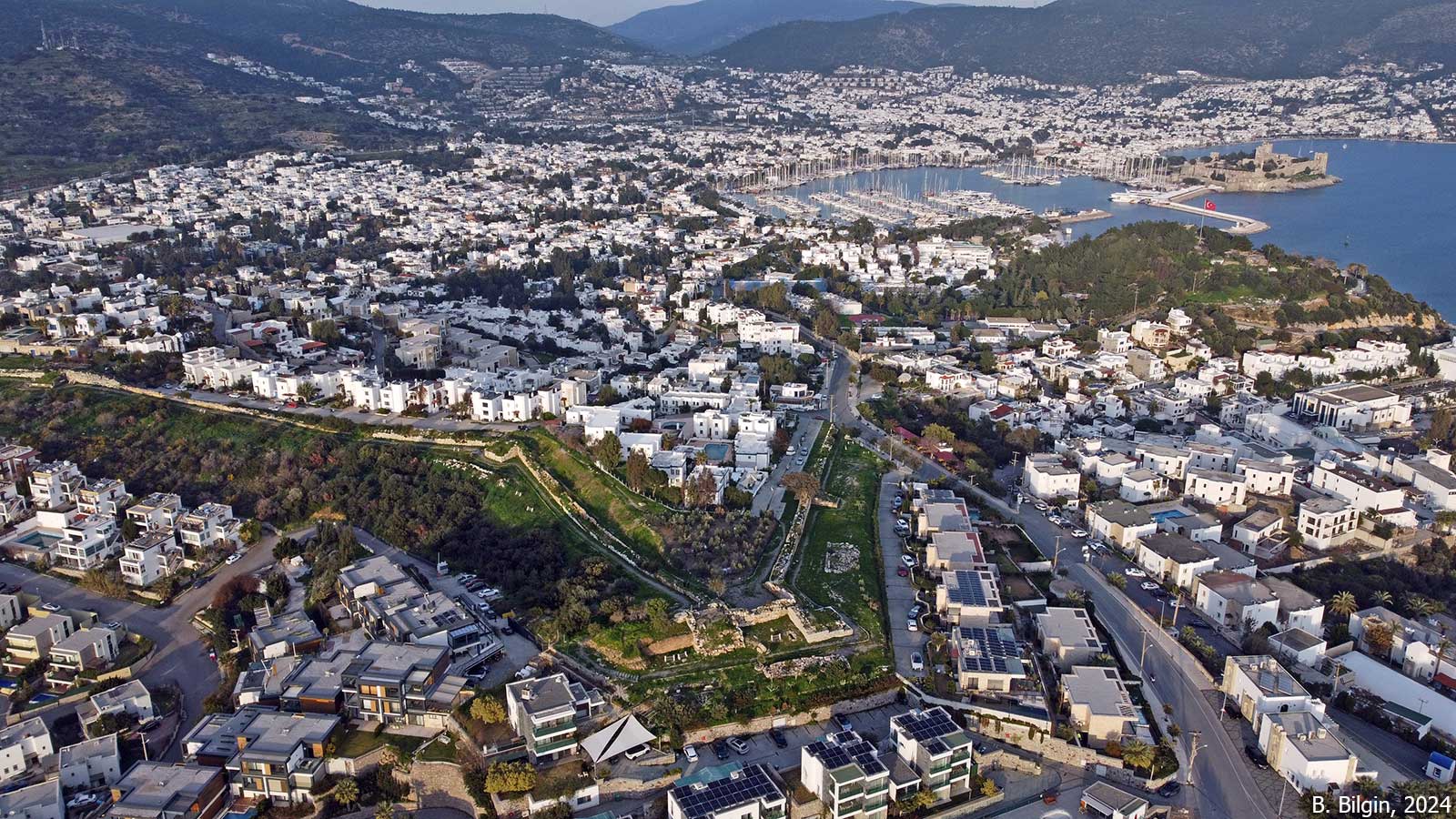
Ancient Halicarnassus is located on the site of the modern district of Bodrum in the Muğla province. The city possessed a strategic natural harbor protected by the island of Arkonnesos (modern Karaada) and featured the Zephyrion promontory (the site of the medieval castle), which served as the location for the Hecatomnid palace and a naval base.
The settlement is believed to have acquired the name “Halicarnassus” around the 10th century BCE with the arrival of Dorian settlers. Etymologically, there are divergent theories regarding the name; some scholars suggest a Luwian origin, while others propose a derivation from a mix of Karian and Luwian languages. A poetic interpretation found in the “Salmakis Inscription” suggests the name signifies “the city of the sacred spring pool by the sea,” referencing the famous local spring of Salmakis.
Archaeological evidence, including Mycenaean pottery found within the castle walls, indicates settlement in the area dating back to 1400–1200 BCE, predating the traditional Greek foundation dates. By the 5th century BCE, Halicarnassus was under Persian control but ruled by a local dynasty, the Lygdamids (most notably Artemisia I). During this period, the city comprised two distinct settlements: the Carian settlement of Salmakis and the Dorian settlement on the Zephyrion promontory, which eventually integrated. The rule of the Lygdamids ended around 454 BCE when Halicarnassus joined the Delian League and became an ally of Athens. Following the decline of Athenian influence, Caria was reintegrated into the Persian Empire.
The city’s zenith occurred in the 4th century BCE when the Satrap Mausolus transferred the capital of Caria from Mylasa to Halicarnassus (c. 370 BCE). Mausolus implemented a massive synoikism (political consolidation), forcibly relocating the populations of six nearby Lelegian cities to populate his new capital. He rebuilt the city on an orthogonal grid plan, transforming it into a maritime and military stronghold.
The city was besieged and damaged by Alexander the Great in 334 BCE. Subsequently, it fell under Ptolemaic control (approx. 280–195 BC) and later Rhodian influence before becoming part of the Roman province of Asia. By Late Antiquity, Halicarnassus saw a resurgence in prosperity, evidenced by elite villas and mosaics.
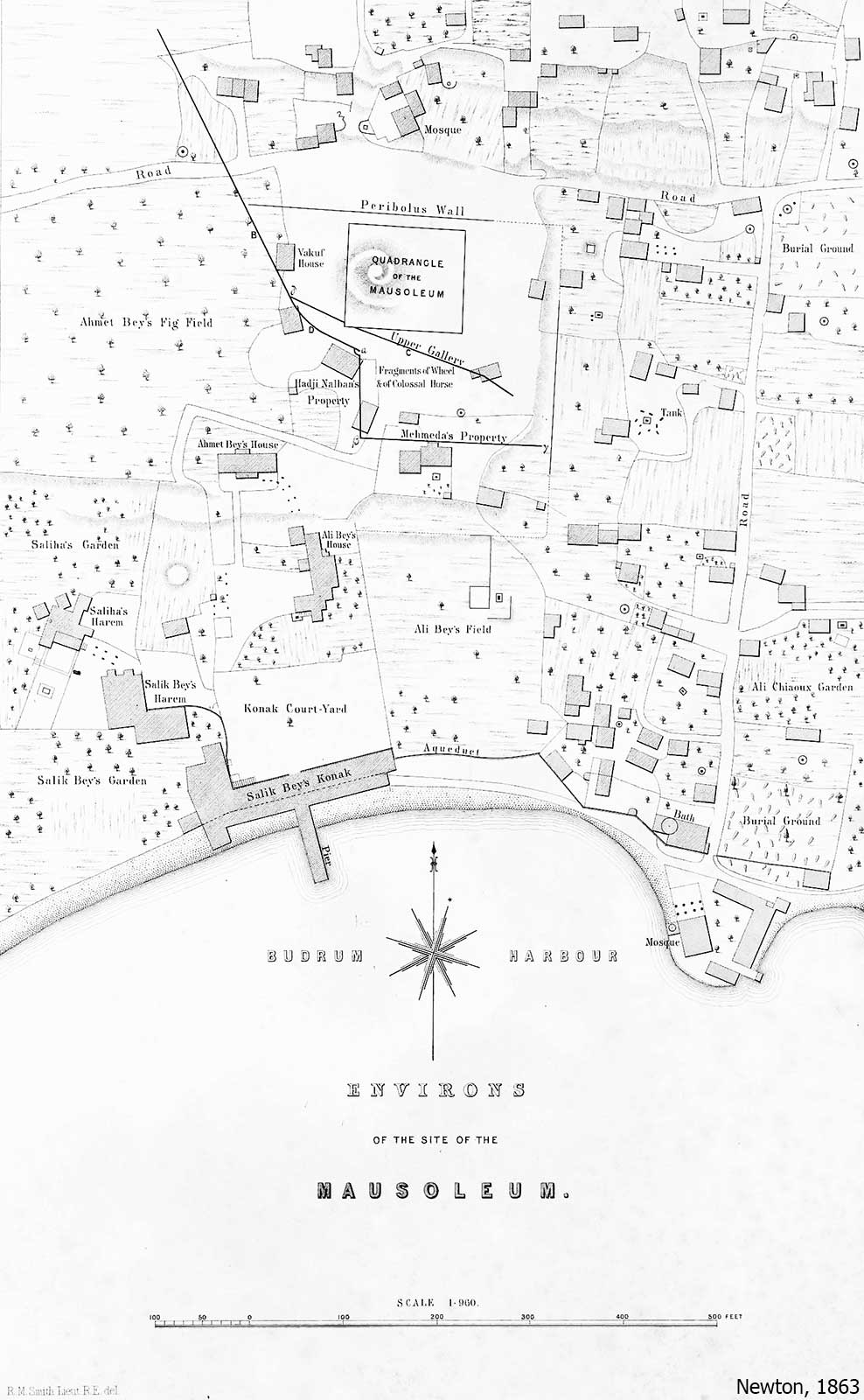
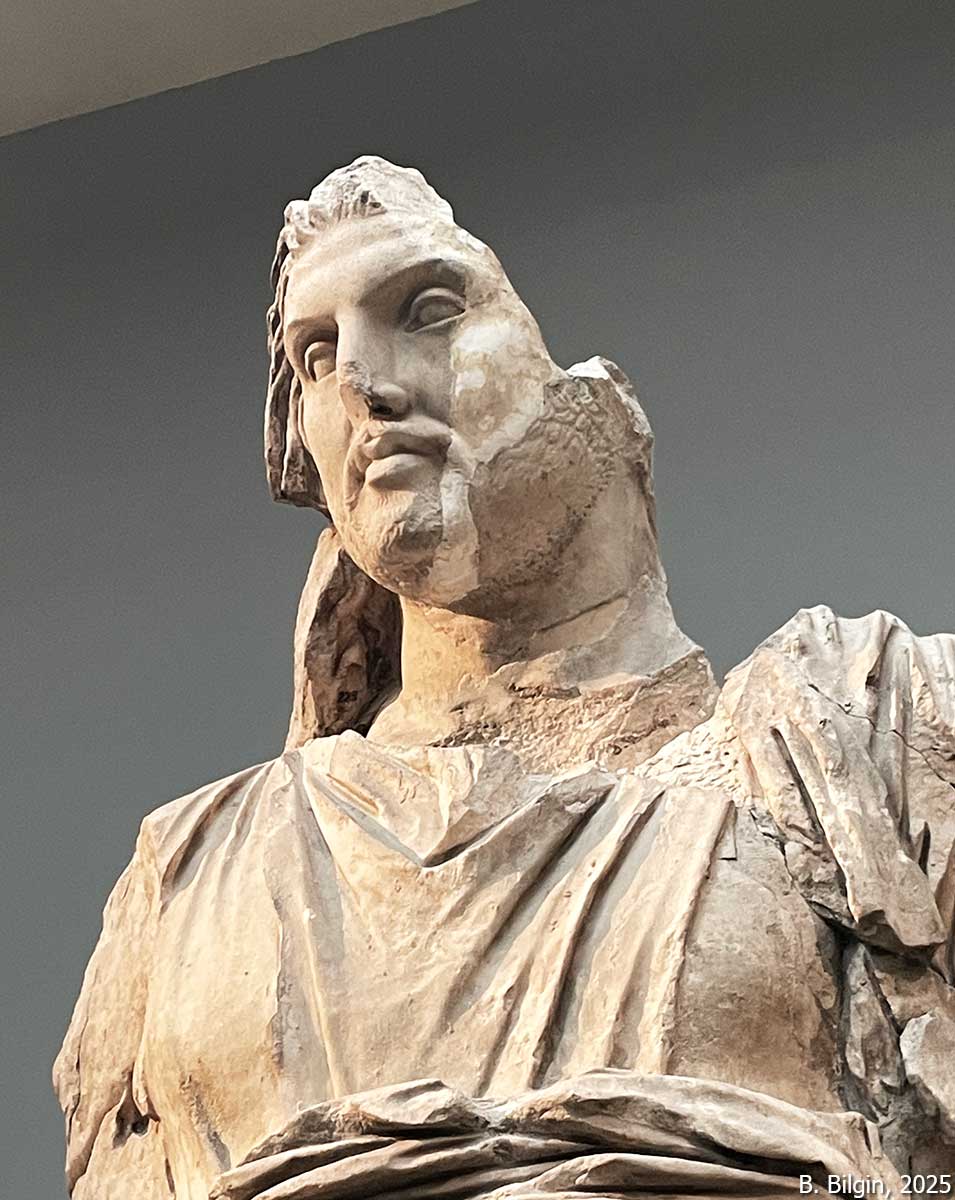
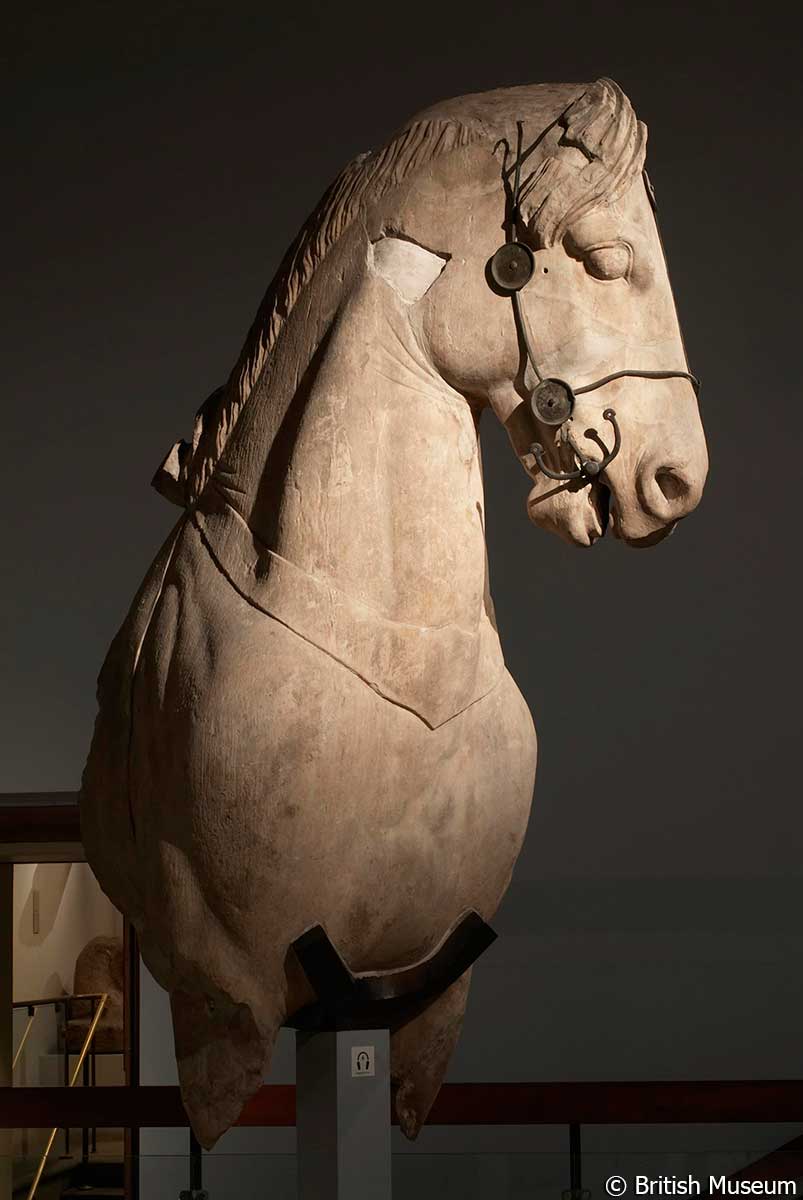
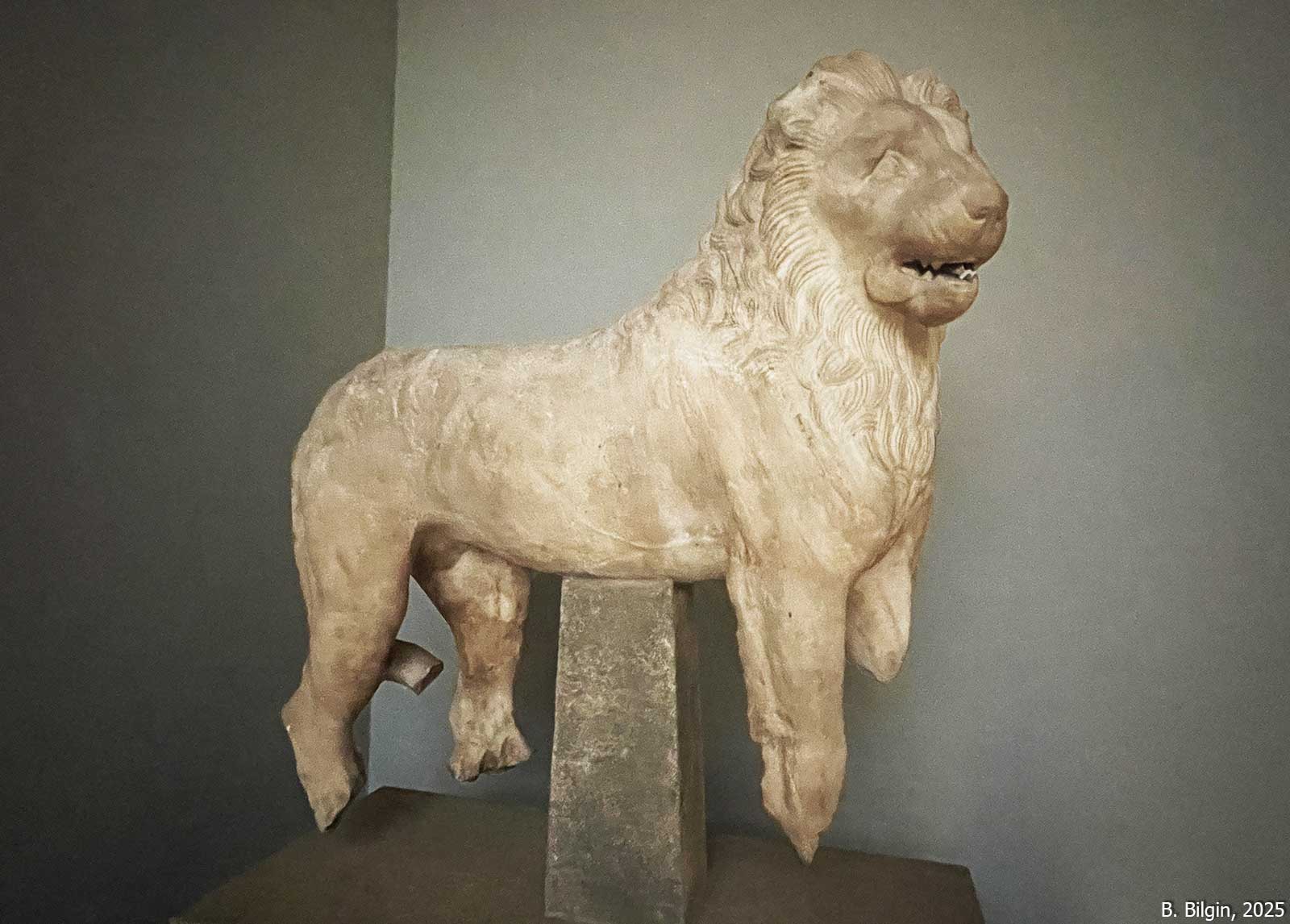
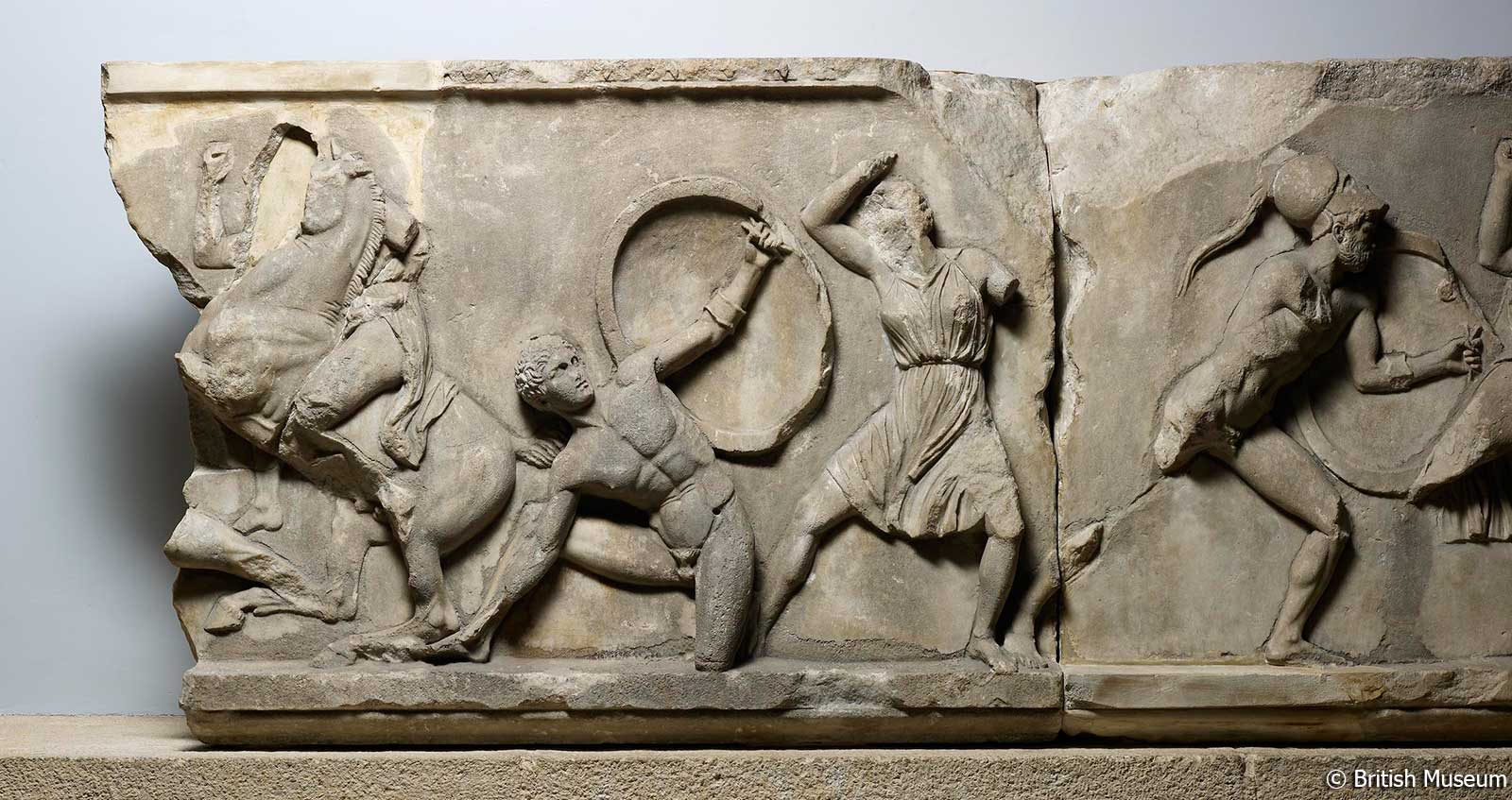
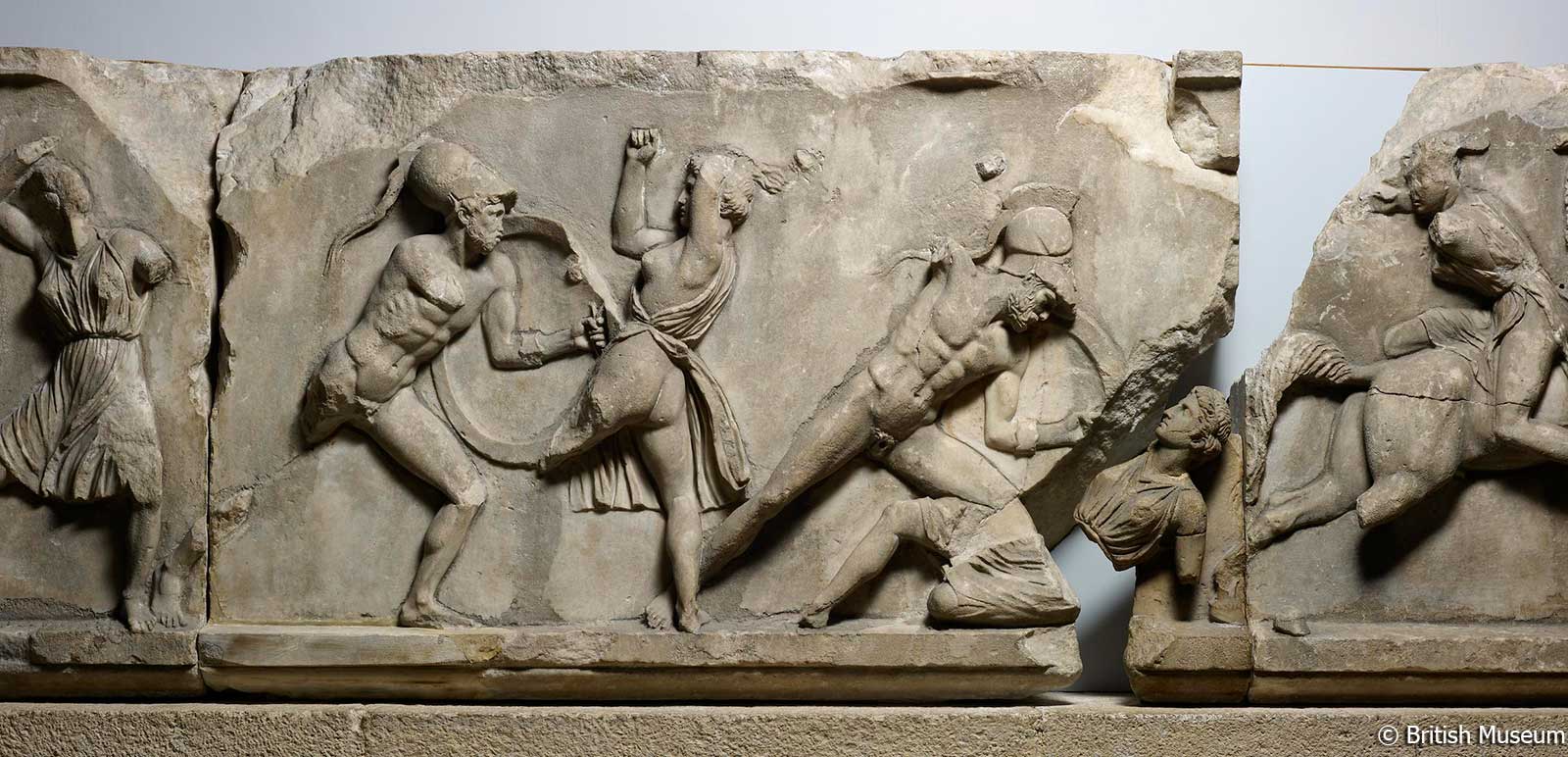
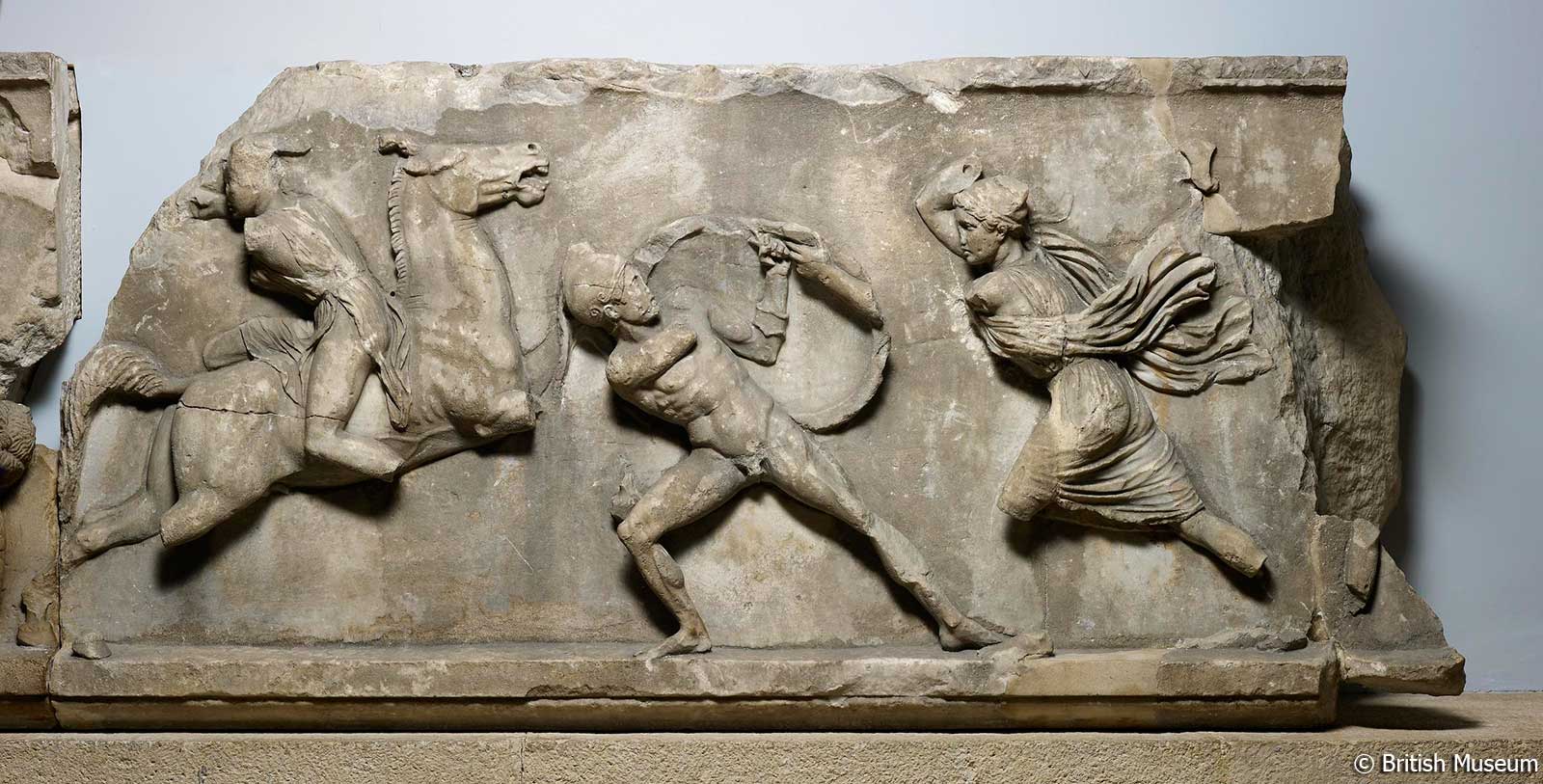
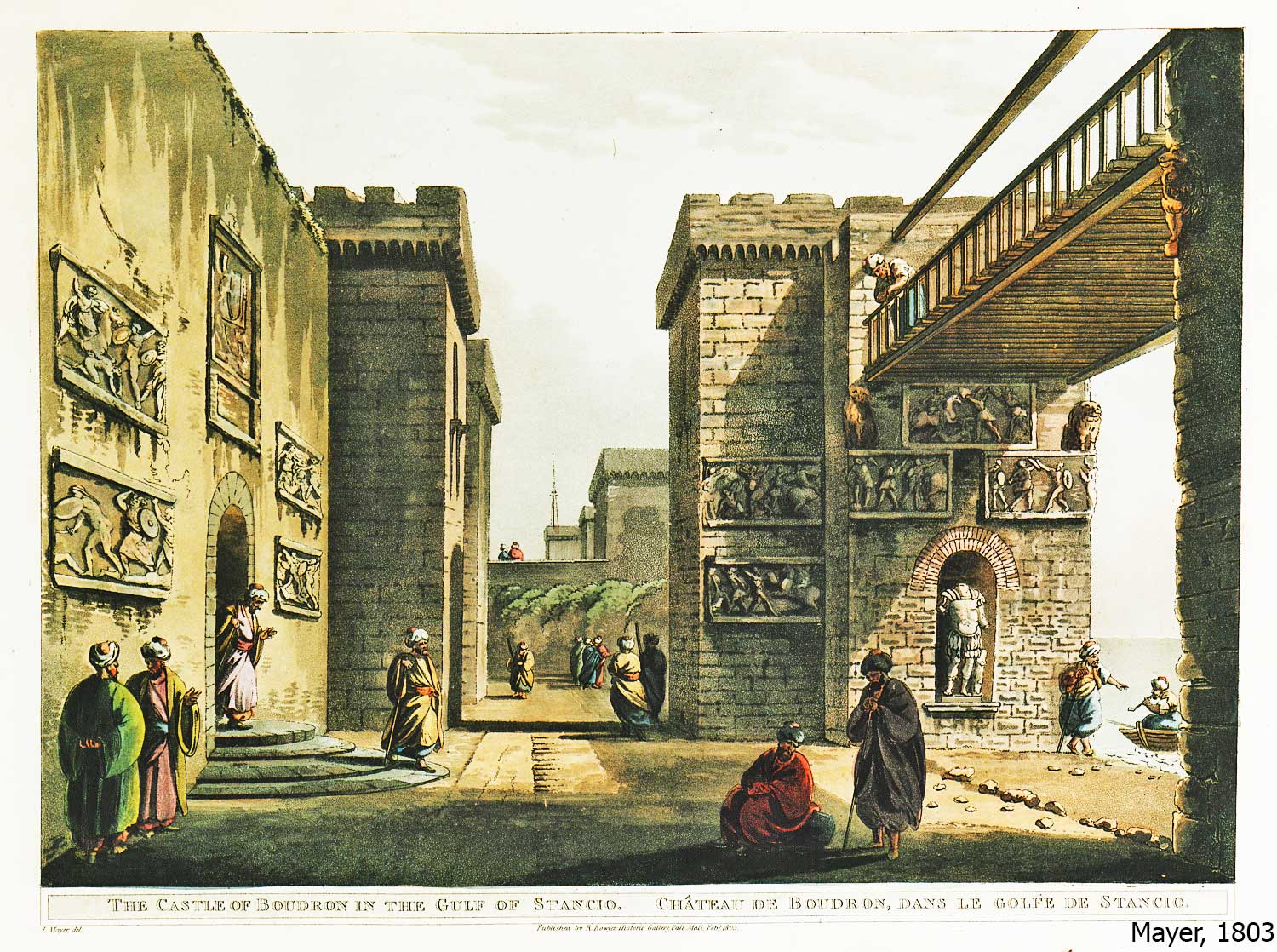
The ruins of Halicarnassus attracted travelers as early as the 17th century, but scientific investigation began in the mid-19th century. Charles Thomas Newton conducted the first major excavations (1856–1857), specifically targeting the Mausoleum, and transported many friezes and statues to the British Museum. In the 20th century, G. E. Bean and J. M. Cook conducted epigraphic and topographical surveys. Since 1966, the Danish Halikarnassos Project initiated by Kristian Jeppesen has been the primary authority on the site, focusing on the Mausoleum. Most recent work has been conducted by Turkish archaeologists, including excavations of the necropolis and the theater.
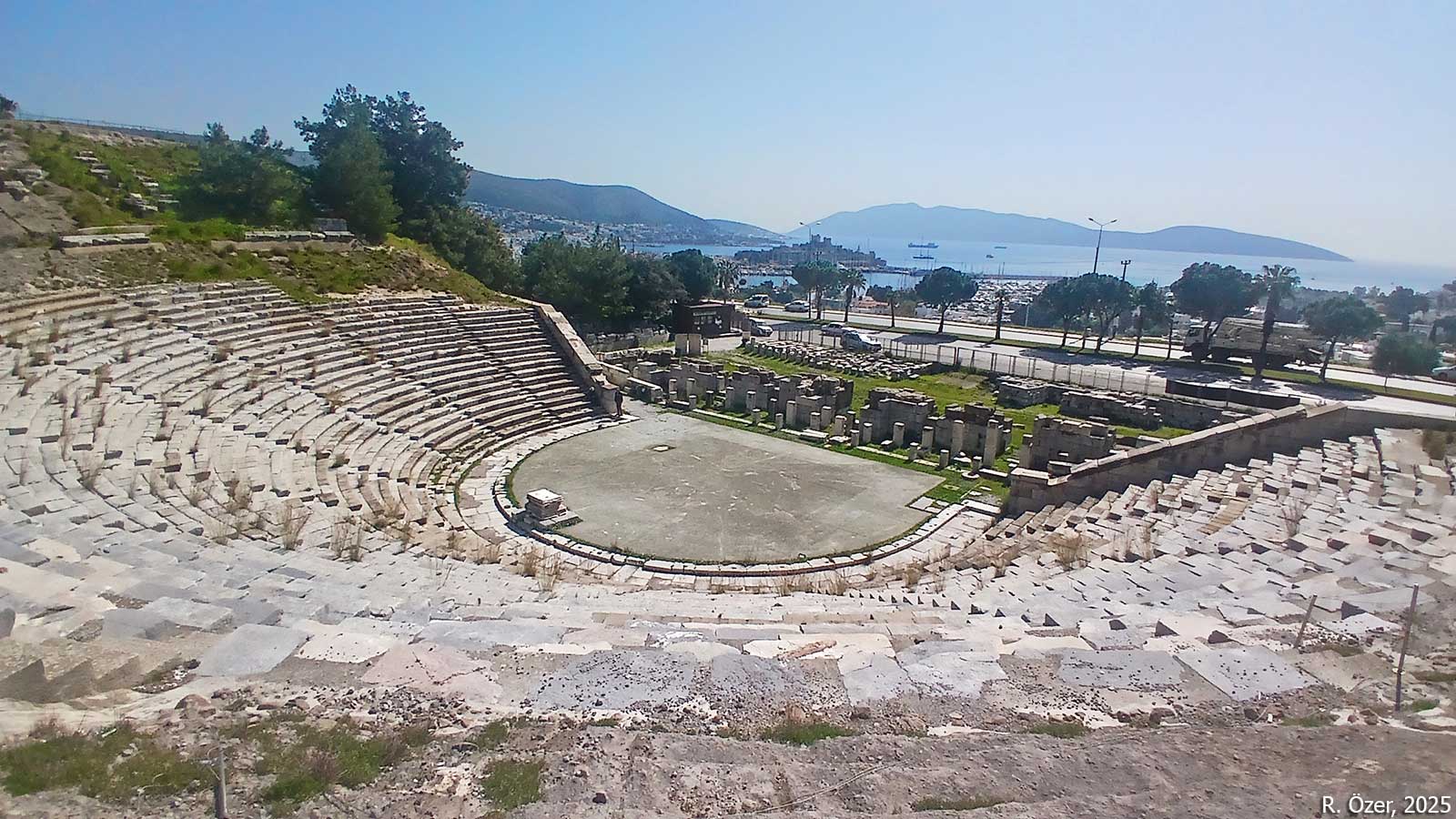
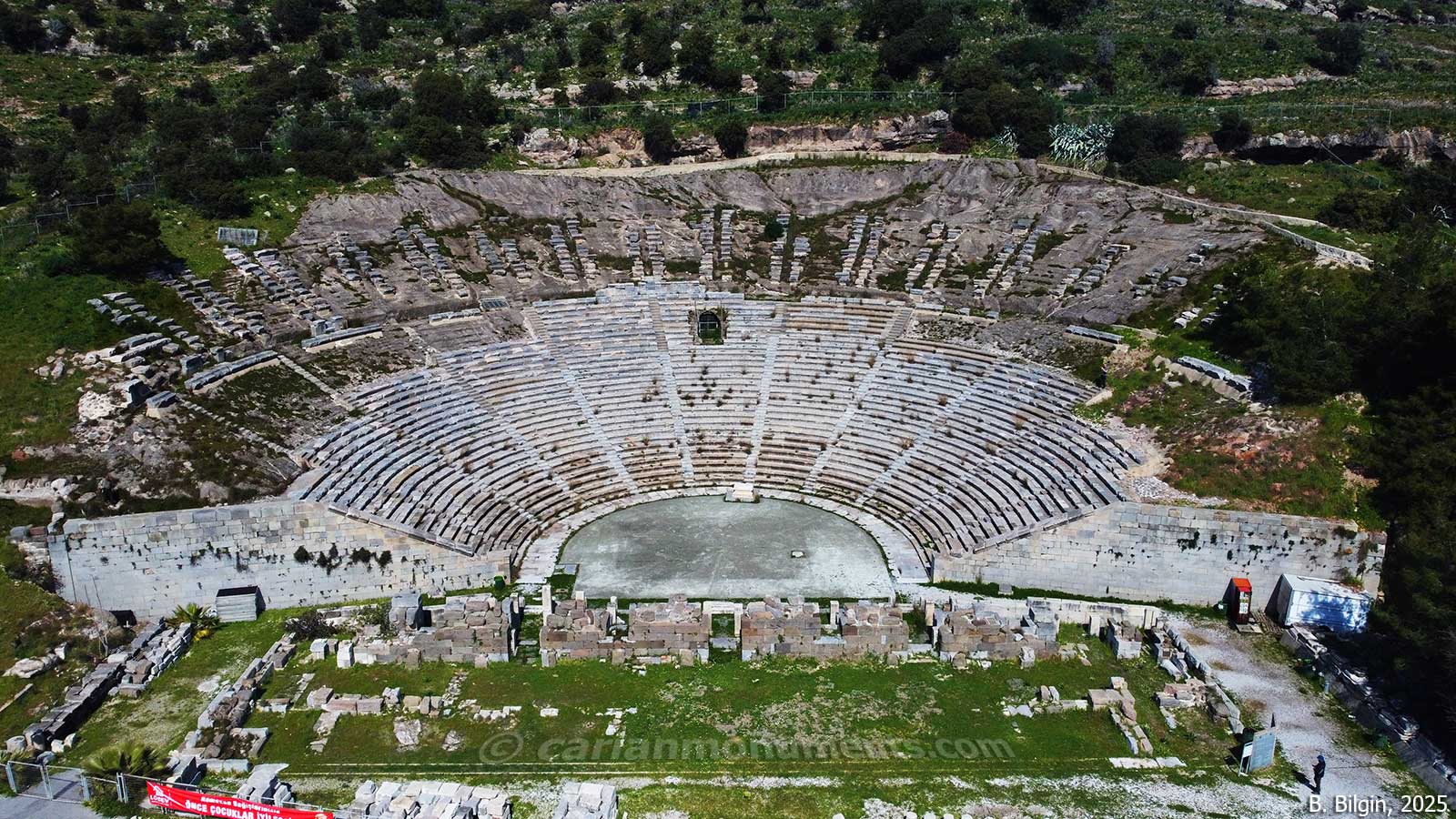
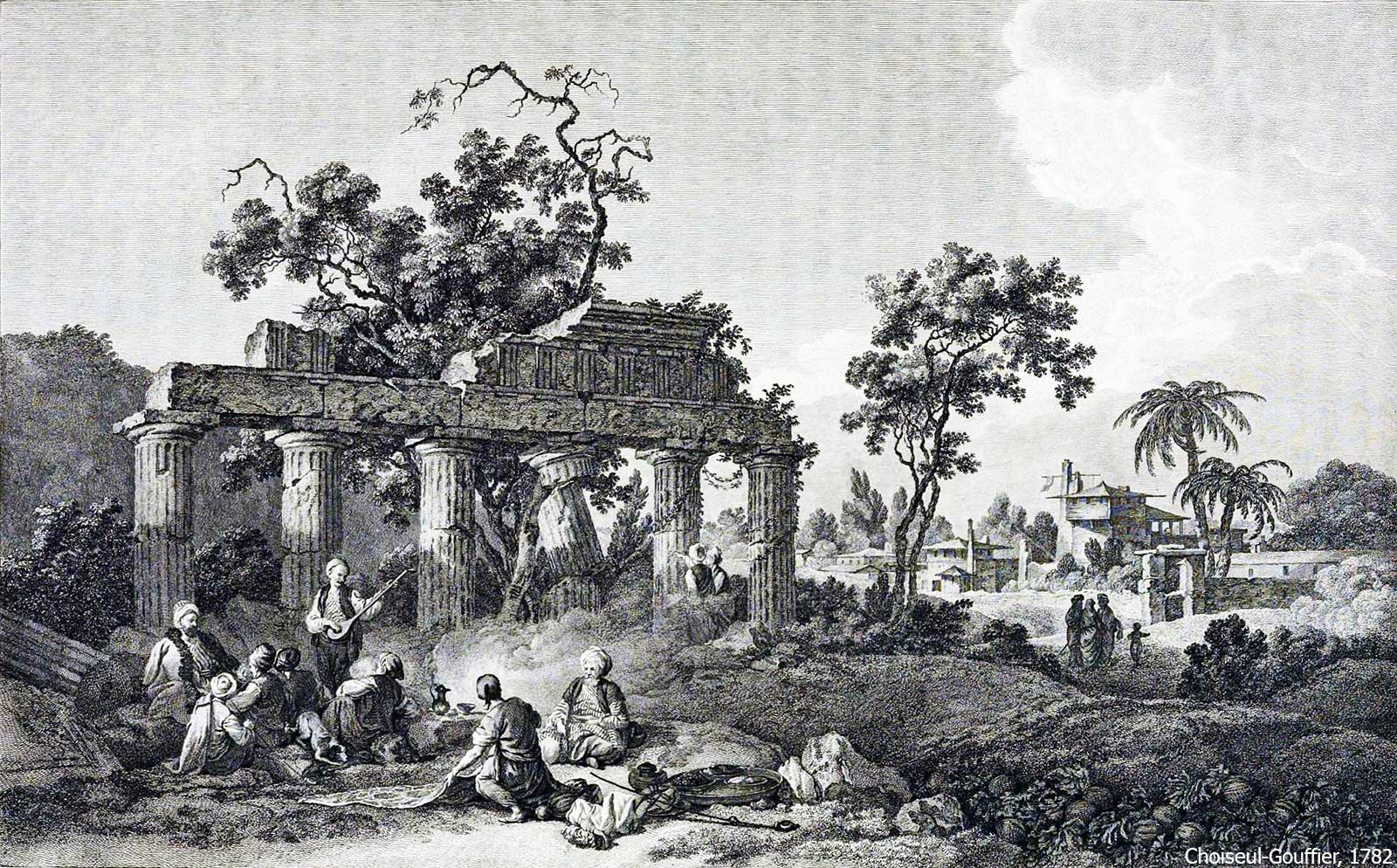
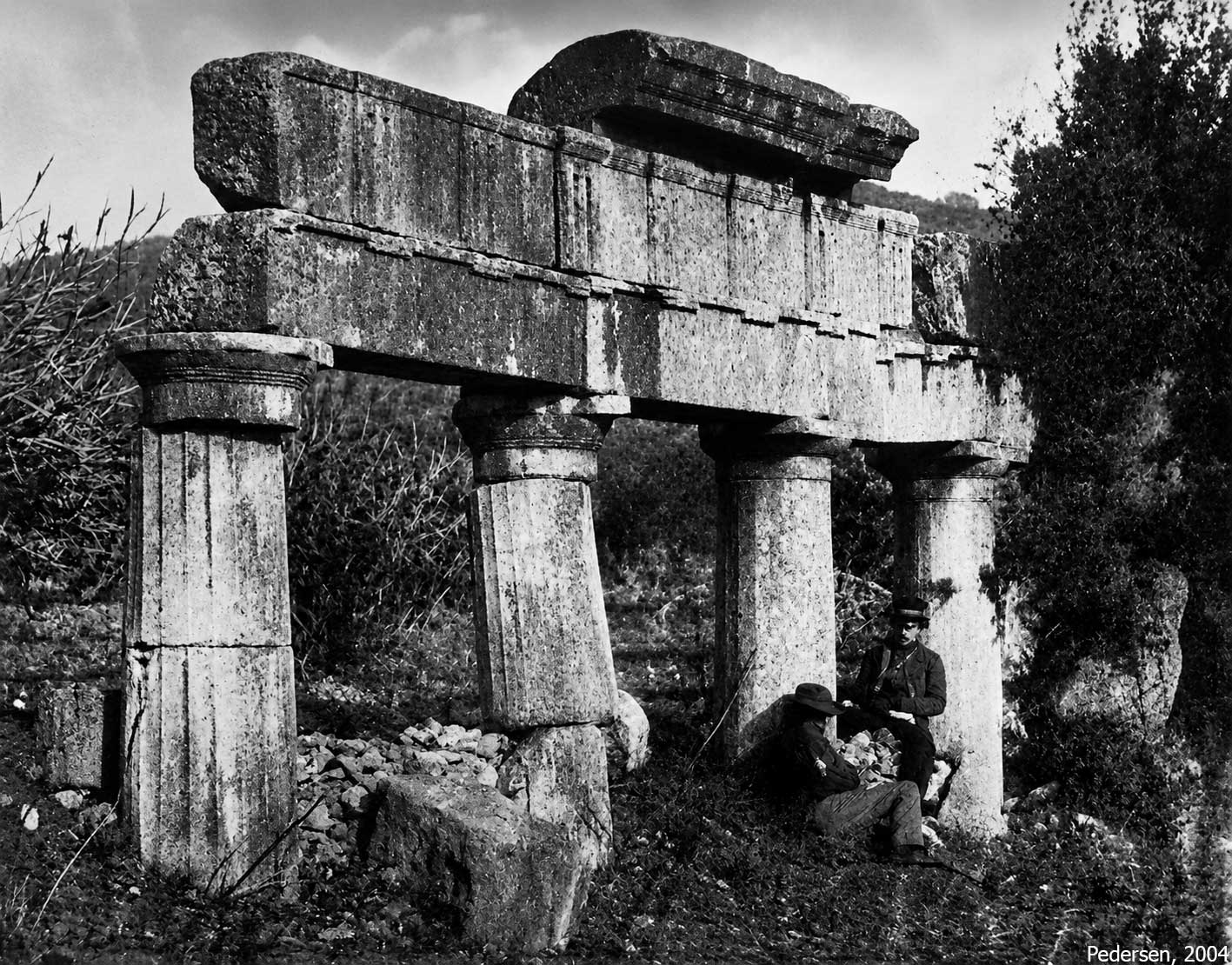
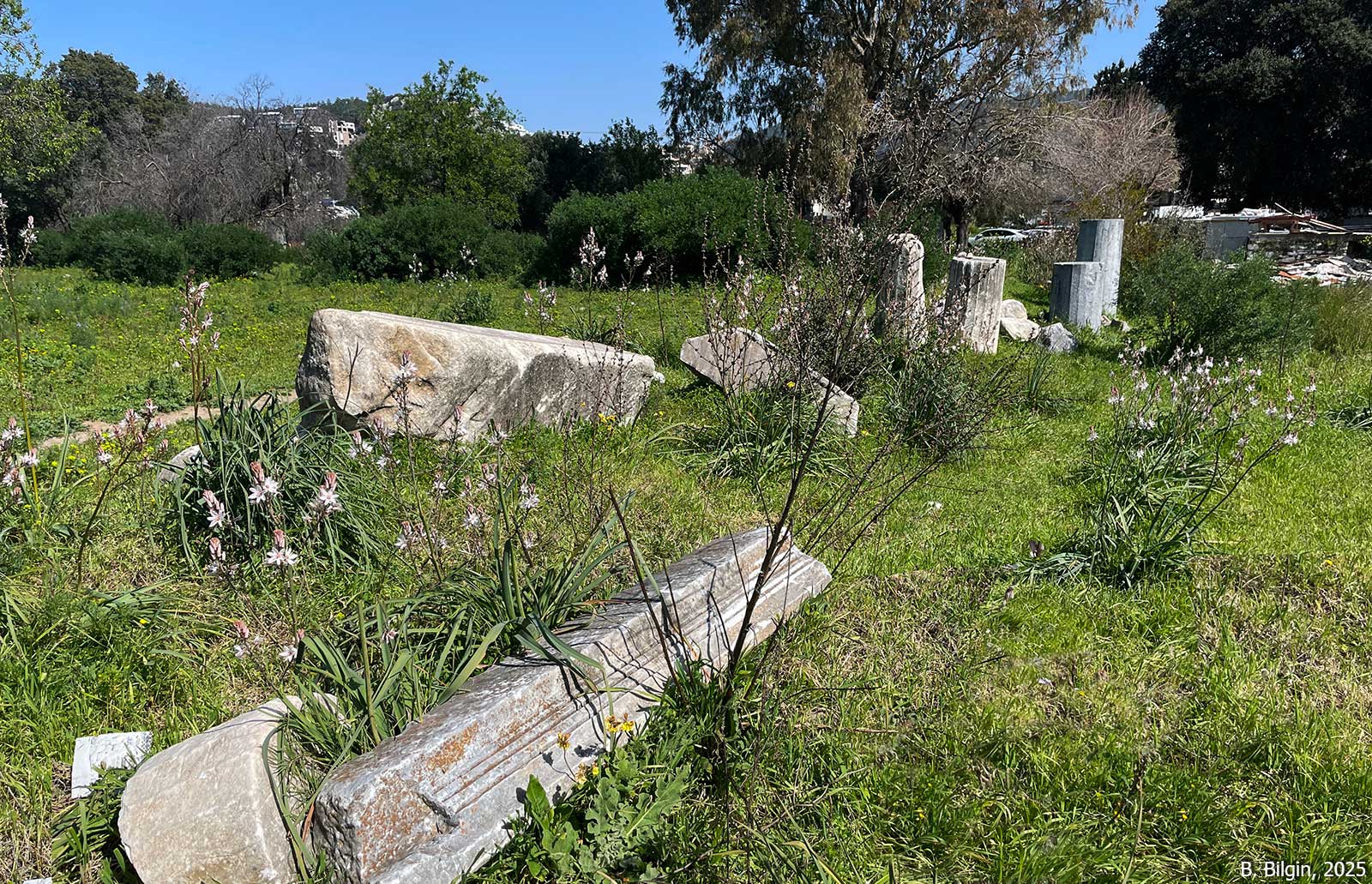
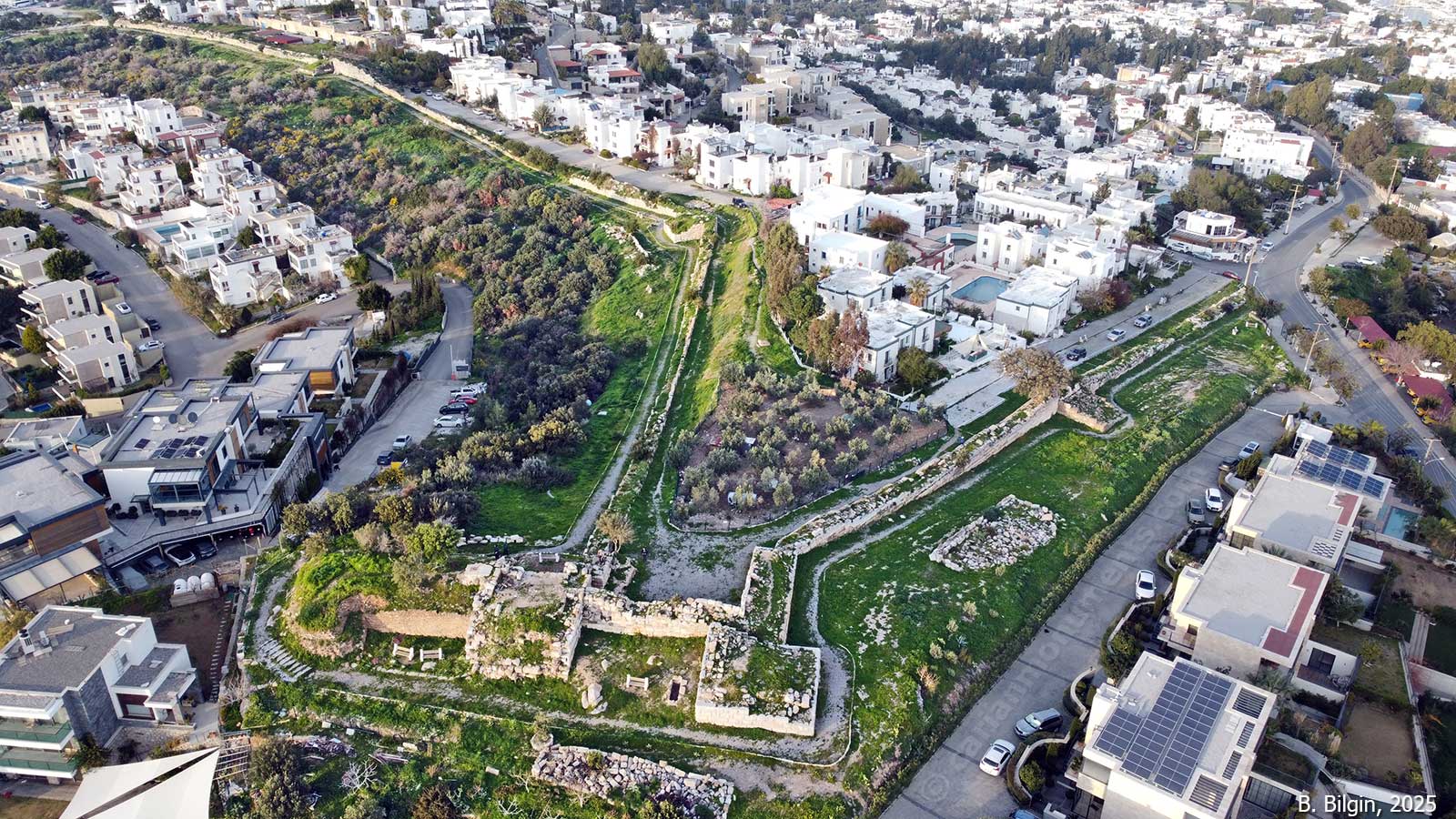
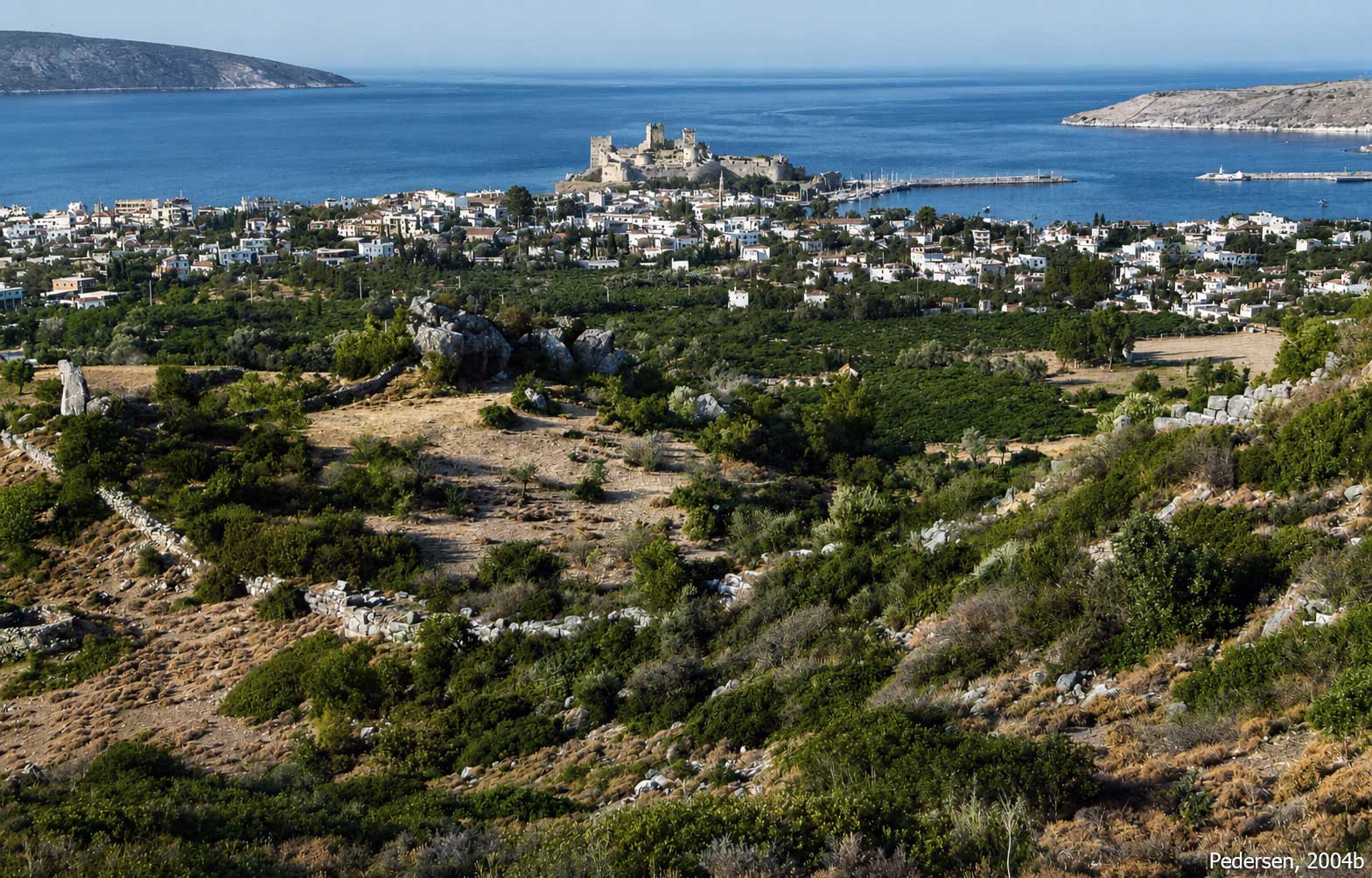
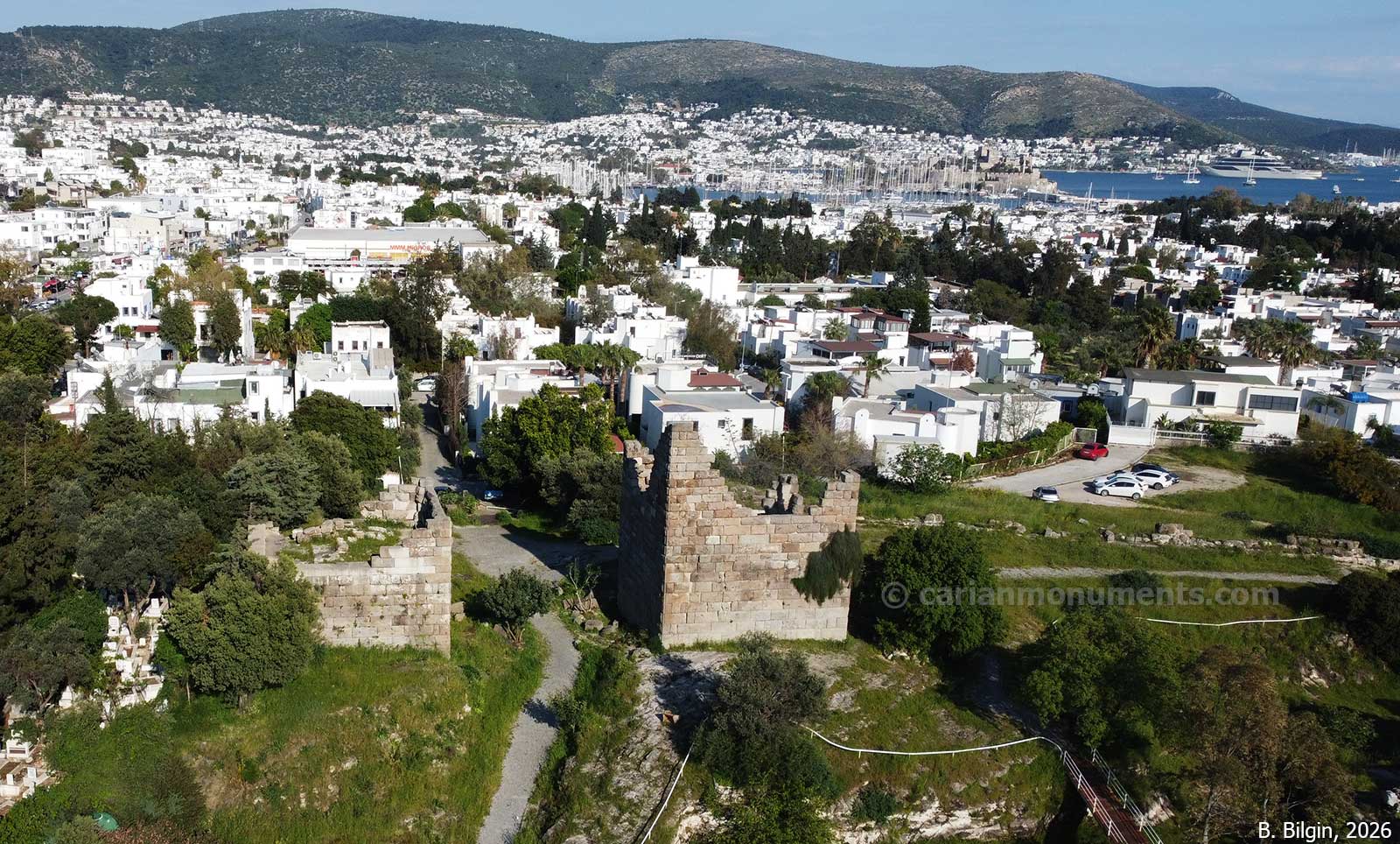
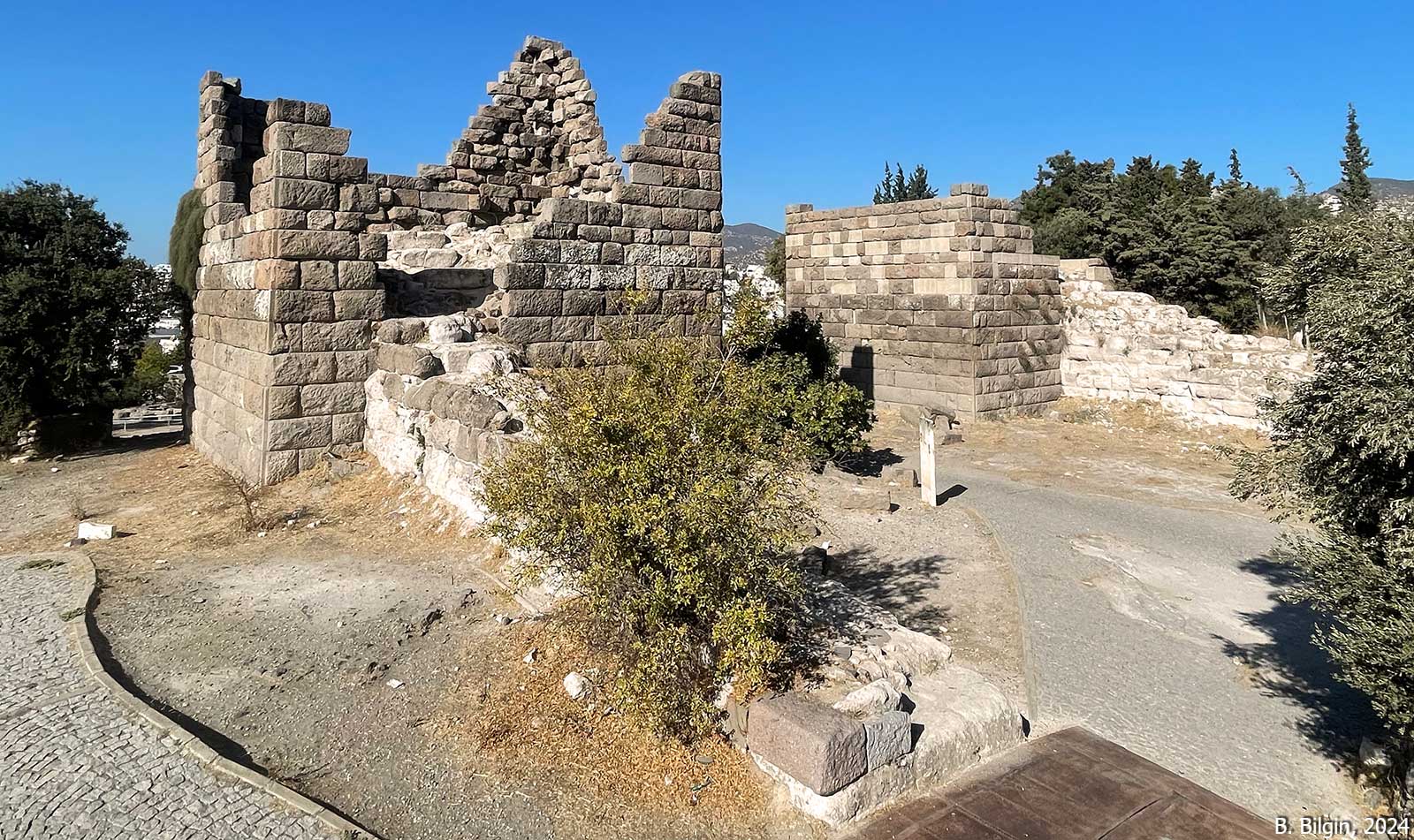
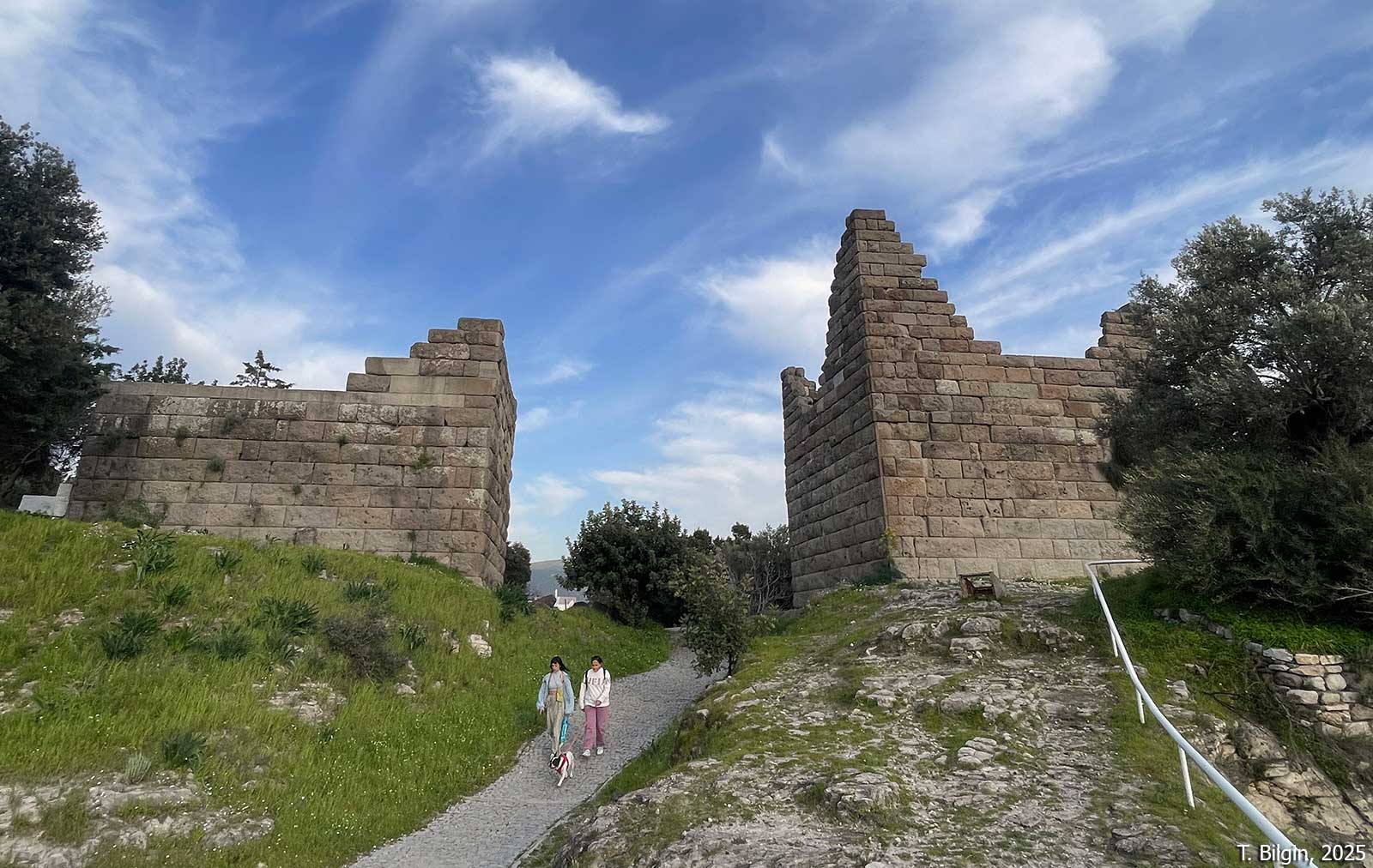
The city walls extend for approximately 7 km are constructed by Mausolus. The Myndos Gate (tripylon), featuring a courtyard for defensive trapping, remains one of the most visible sections. The Palace of Mausolus was located on the Zephyrion promontory (modern castle site), positioned to overlook the harbor. A large theater with an estimated capacity of 10,000 spectators is situated on the hillside. While the current remains are largely Roman, it likely originated in the Late Classical or early Hellenistic period. The Temple of Mars was situated in a prominent position at the top of the city’s theater-like plan. While very few physical remains exist today, it was built in the Ionic order and stood on a massive terrace approximately 105 meters wide.


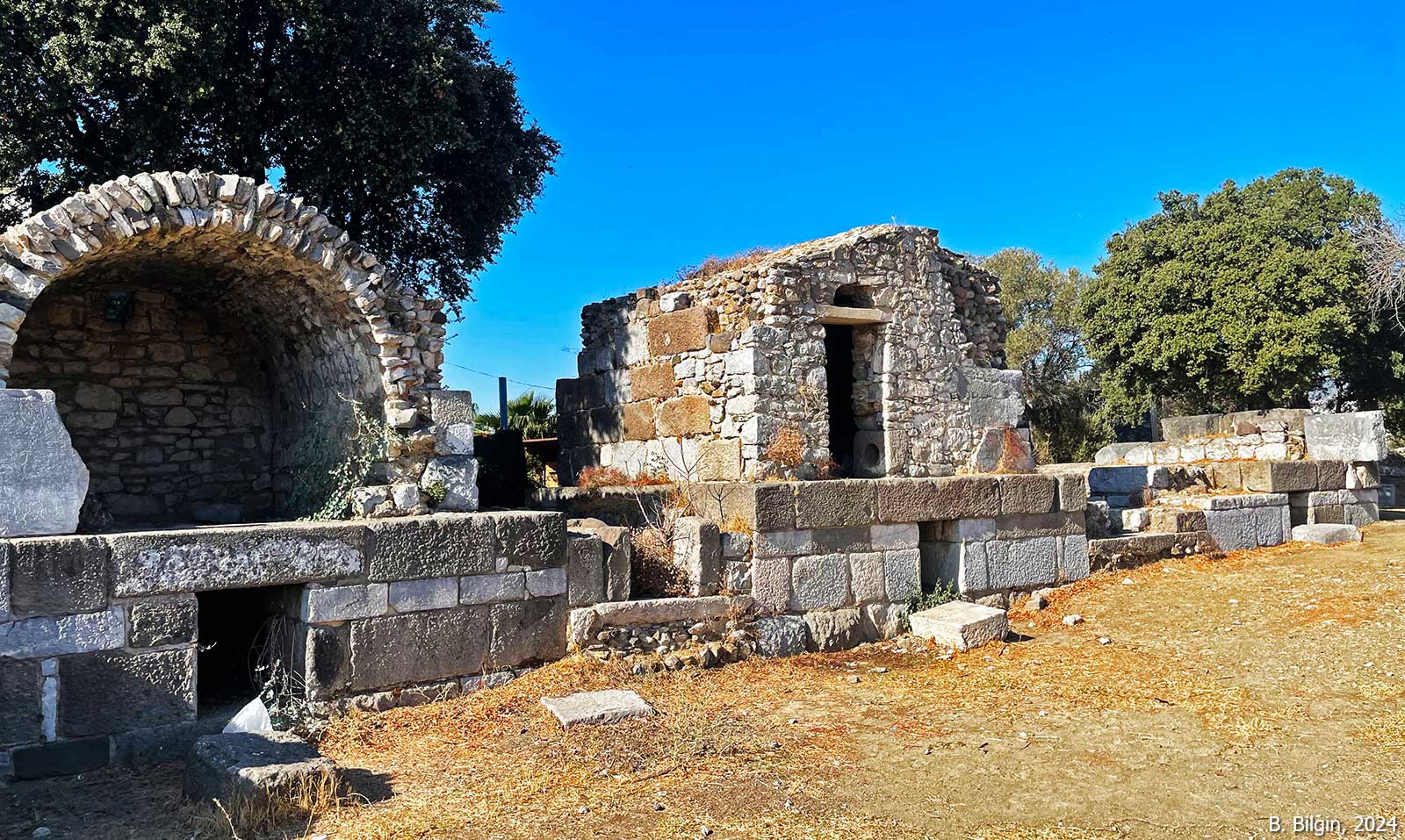
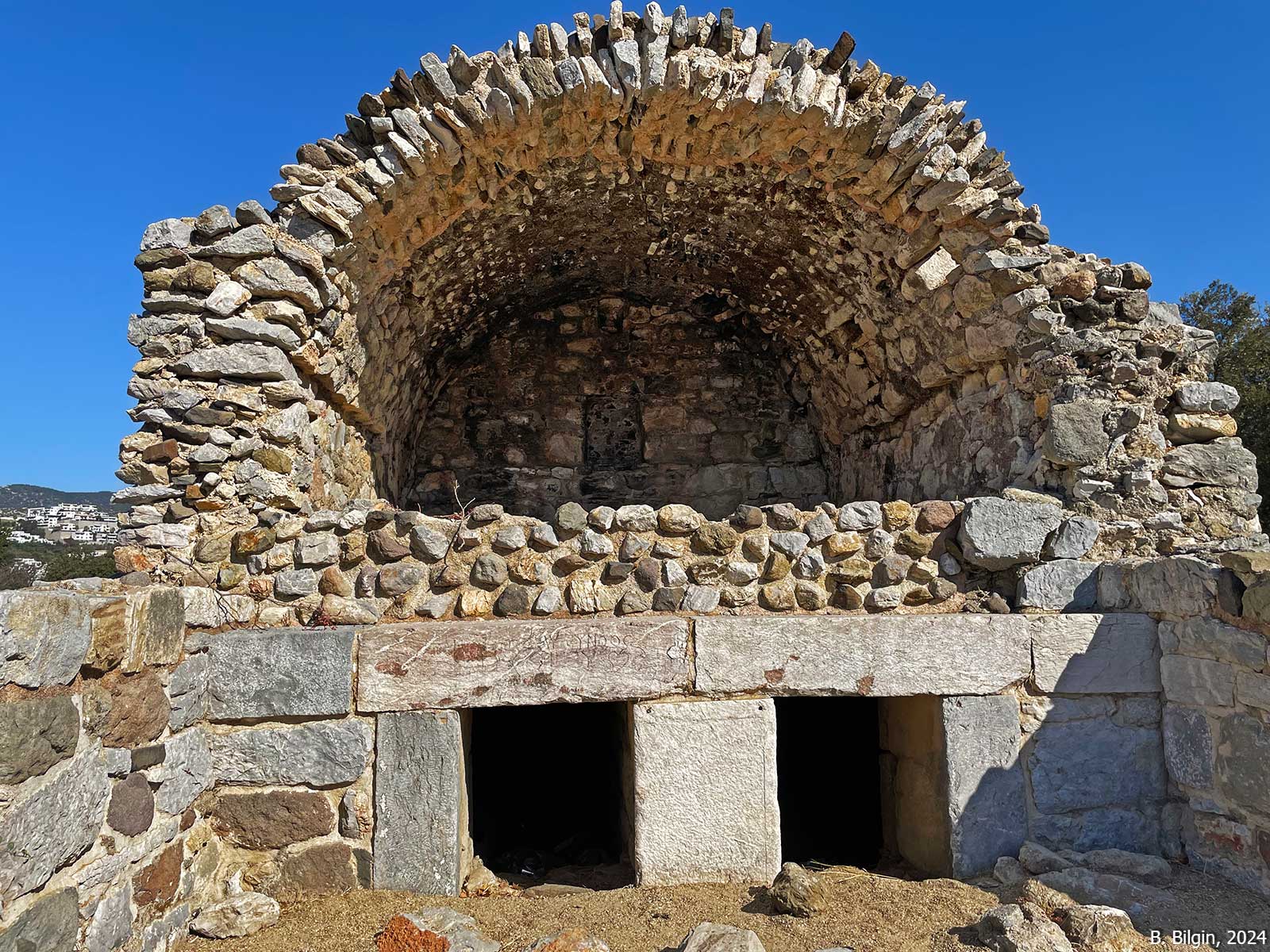
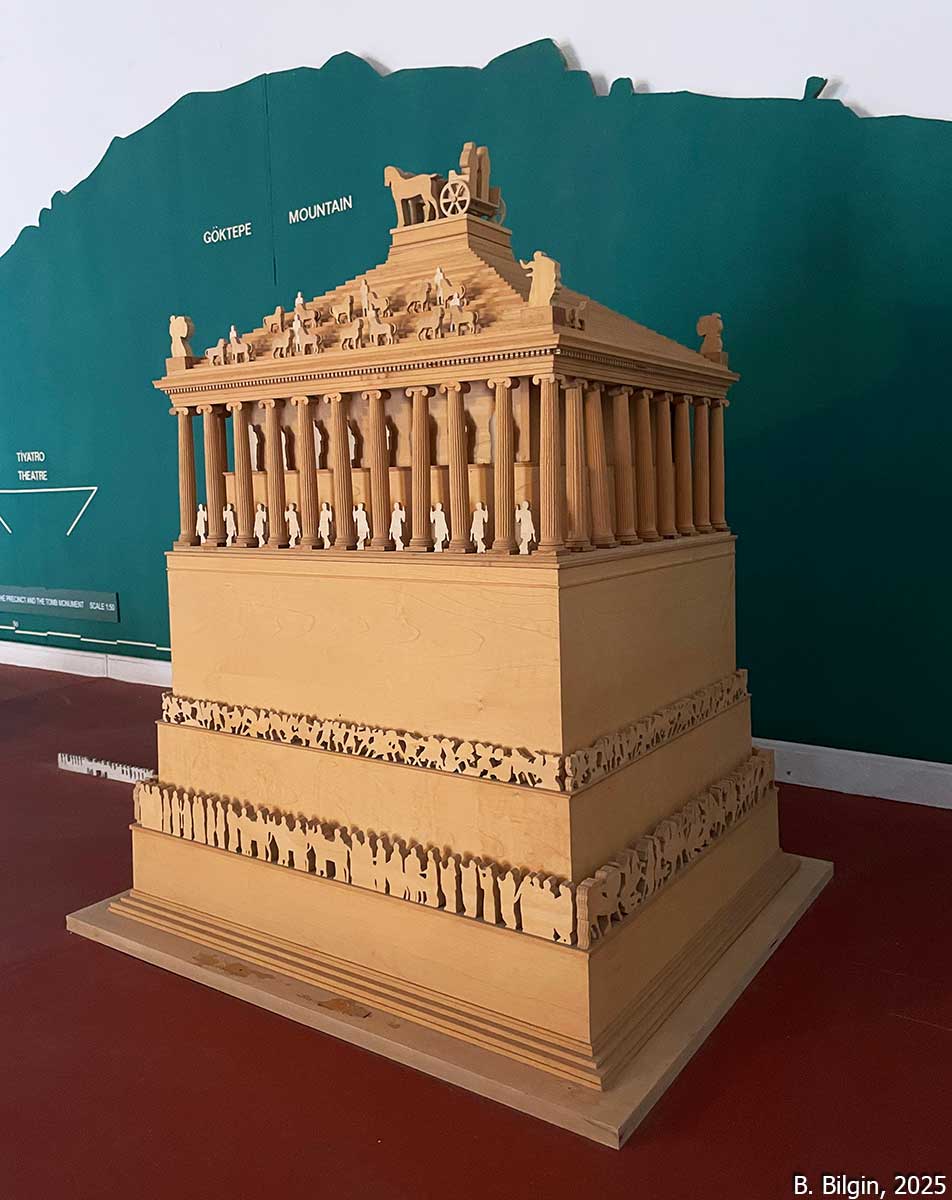
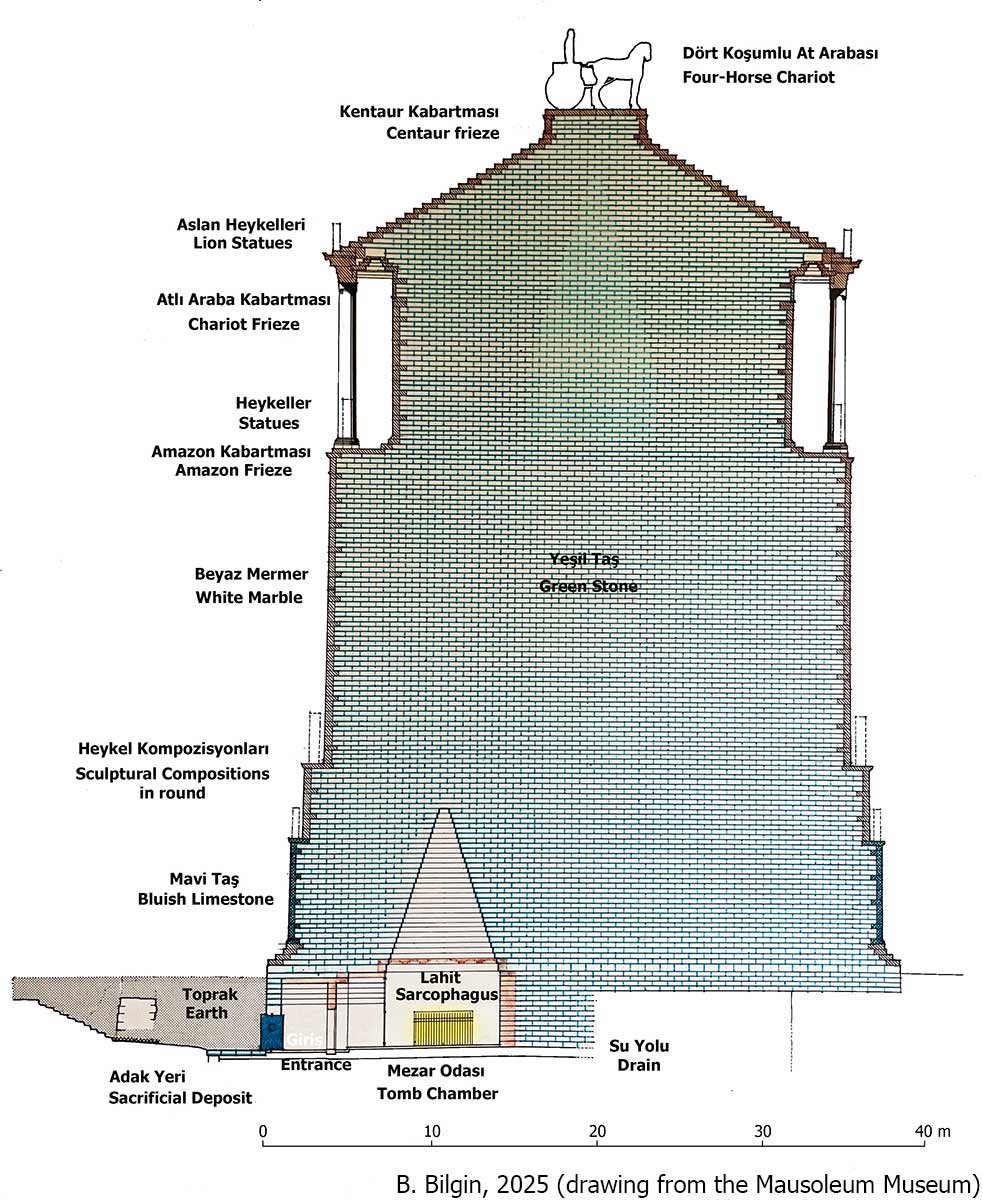
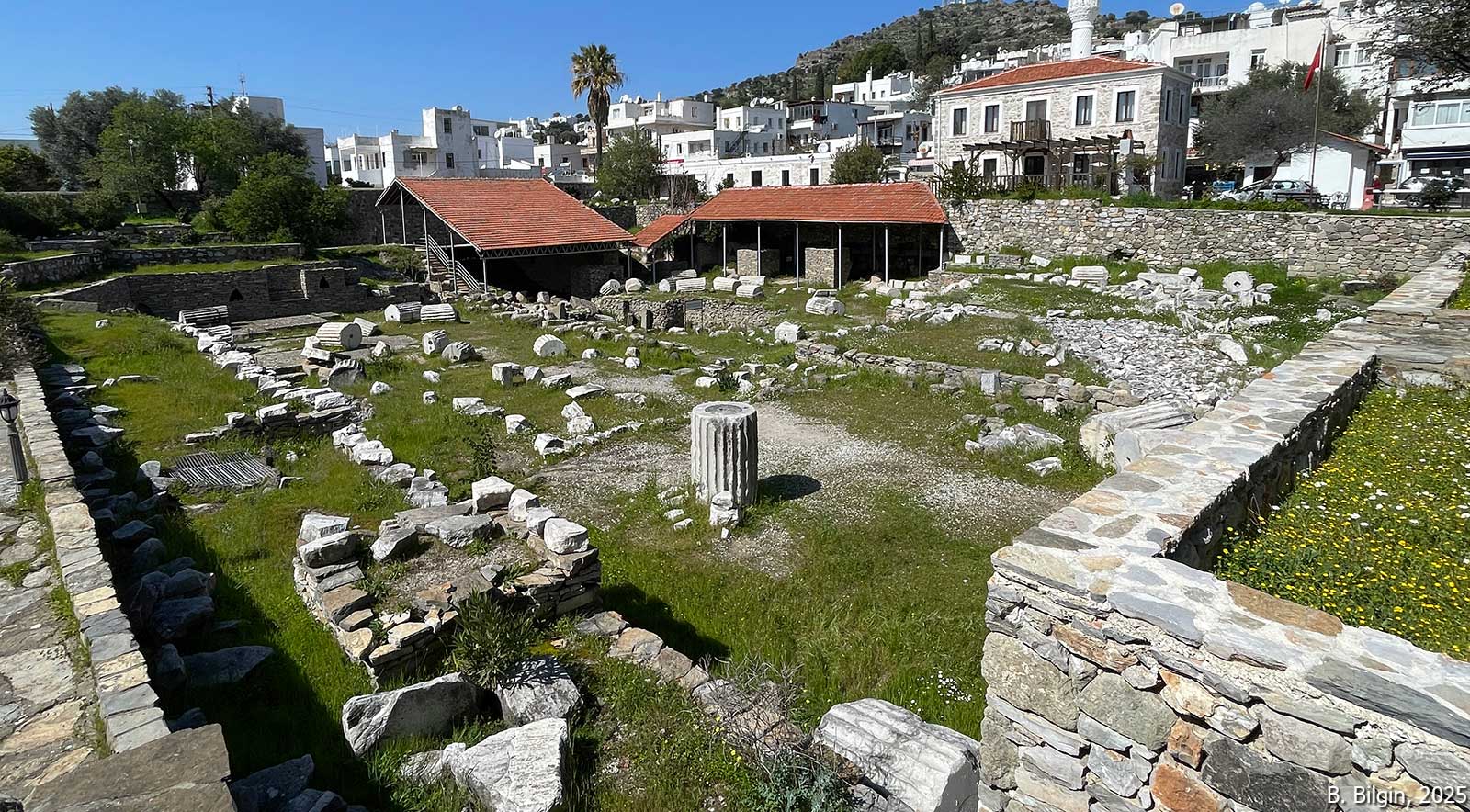
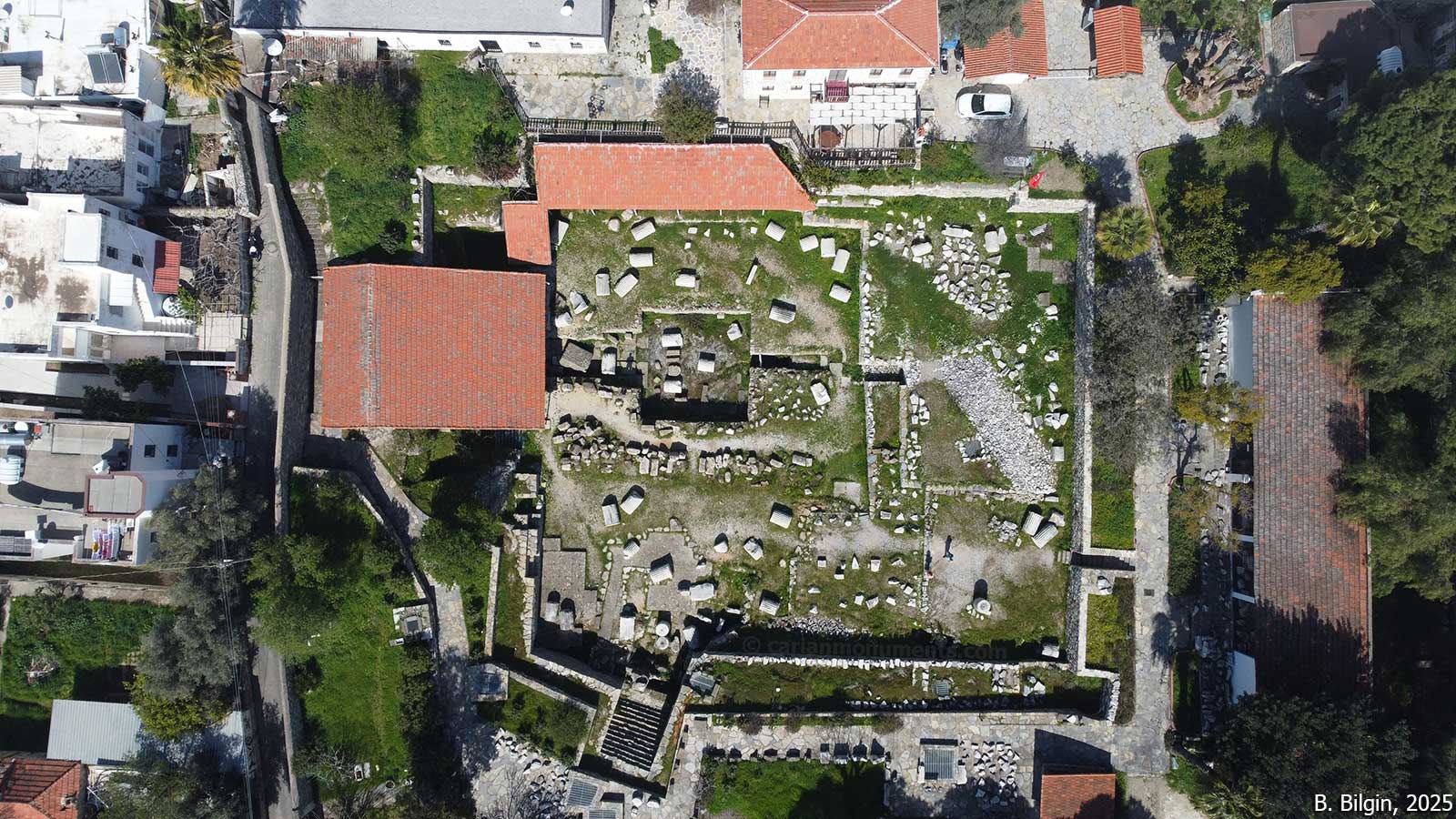
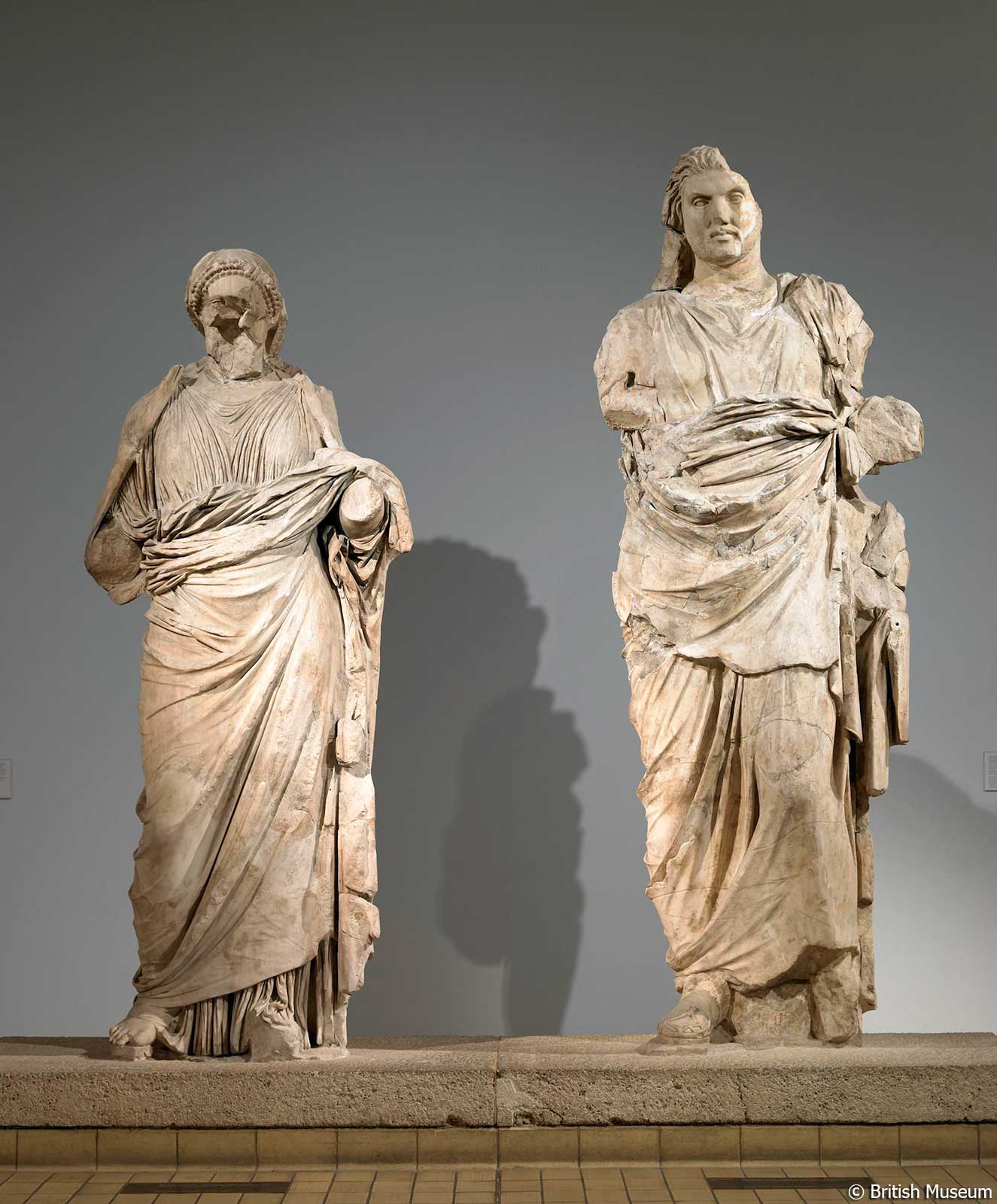
The Mausoleum of Halicarnassus
Ancient Halicarnassus is located on the site of the modern district of Bodrum in the Muğla province. The city possessed a strategic natural harbor protected by the island of Arkonnesos (modern Karaada) and featured the Zephyrion promontory (the site of the medieval castle), which served as the location for the Hecatomnid palace and a naval base.
The settlement is believed to have acquired the name “Halicarnassus” around the 10th century BCE with the arrival of Dorian settlers. Etymologically, there are divergent theories regarding the name; some scholars suggest a Luwian origin, while others propose a derivation from a mix of Karian and Luwian languages. A poetic interpretation found in the “Salmakis Inscription” suggests the name signifies “the city of the sacred spring pool by the sea,” referencing the famous local spring of Salmakis.
Archaeological evidence, including Mycenaean pottery found within the castle walls, indicates settlement in the area dating back to 1400–1200 BCE, predating the traditional Greek foundation dates. By the 5th century BCE, Halicarnassus was under Persian control but ruled by a local dynasty, the Lygdamids (most notably Artemisia I). During this period, the city comprised two distinct settlements: the Carian settlement of Salmakis and the Dorian settlement on the Zephyrion promontory, which eventually integrated. The rule of the Lygdamids ended around 454 BCE when Halicarnassus joined the Delian League and became an ally of Athens. Following the decline of Athenian influence, Caria was reintegrated into the Persian Empire.
The city’s zenith occurred in the 4th century BCE when the Satrap Mausolus transferred the capital of Caria from Mylasa to Halicarnassus (c. 370 BCE). Mausolus implemented a massive synoikism (political consolidation), forcibly relocating the populations of six nearby Lelegian cities to populate his new capital. He rebuilt the city on an orthogonal grid plan, transforming it into a maritime and military stronghold.
The city was besieged and damaged by Alexander the Great in 334 BCE. Subsequently, it fell under Ptolemaic control (approx. 280–195 BC) and later Rhodian influence before becoming part of the Roman province of Asia. By Late Antiquity, Halicarnassus saw a resurgence in prosperity, evidenced by elite villas and mosaics.
The ruins of Halicarnassus attracted travelers as early as the 17th century, but scientific investigation began in the mid-19th century. Charles Thomas Newton conducted the first major excavations (1856–1857), specifically targeting the Mausoleum, and transported many friezes and statues to the British Museum. In the 20th century, G. E. Bean and J. M. Cook conducted epigraphic and topographical surveys. Since 1966, the Danish Halikarnassos Project initiated by Kristian Jeppesen has been the primary authority on the site, focusing on the Mausoleum. Most recent work has been conducted by Turkish archaeologists, including excavations of the necropolis and the theater.
The city walls extend for approximately 7 km are constructed by Mausolus. The Myndos Gate (tripylon), featuring a courtyard for defensive trapping, remains one of the most visible sections. The Palace of Mausolus was located on the Zephyrion promontory (modern castle site), positioned to overlook the harbor. A large theater with an estimated capacity of 10,000 spectators is situated on the hillside. While the current remains are largely Roman, it likely originated in the Late Classical or early Hellenistic period. The Temple of Mars was situated in a prominent position at the top of the city’s theater-like plan. While very few physical remains exist today, it was built in the Ionic order and stood on a massive terrace approximately 105 meters wide.
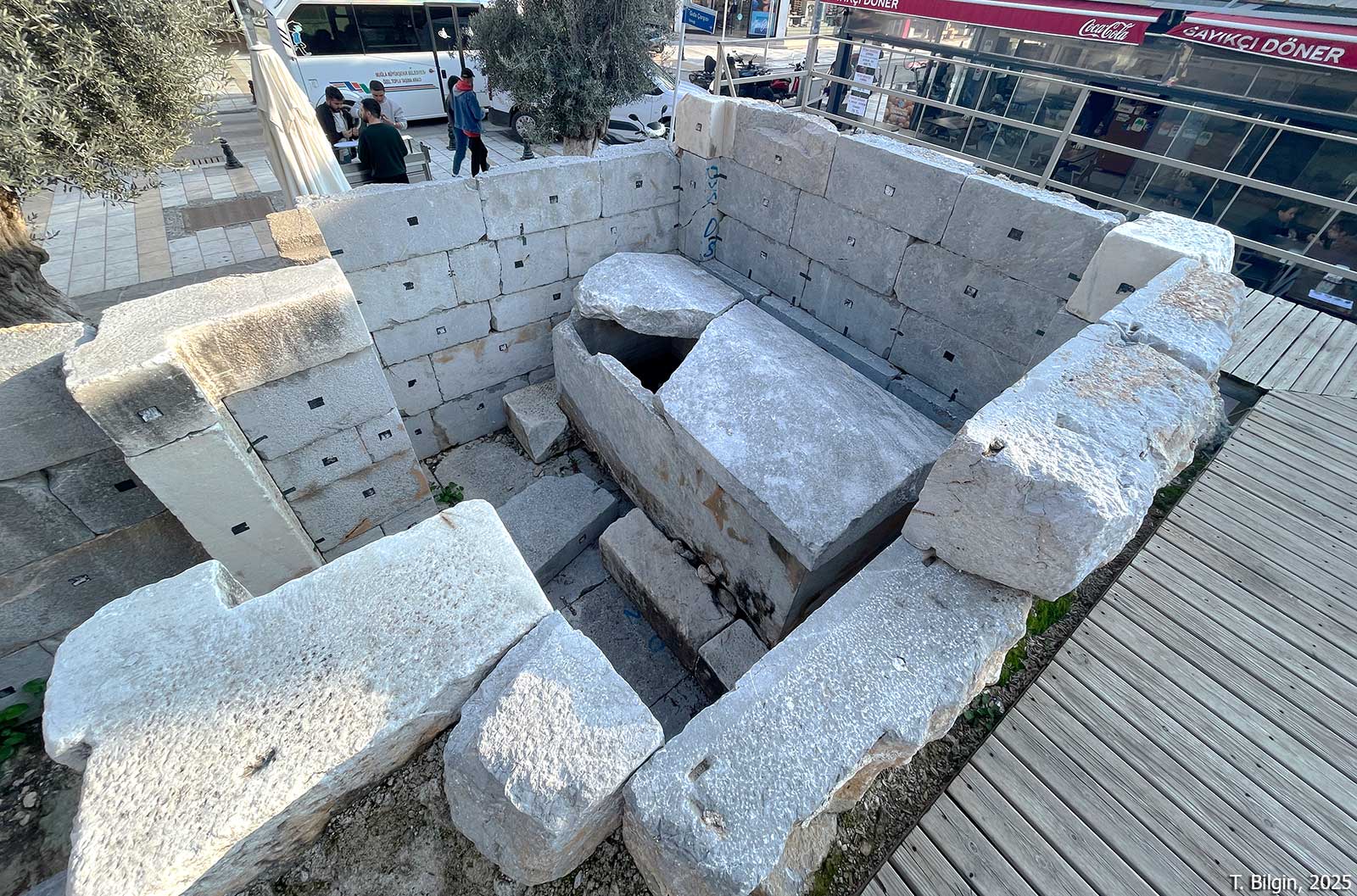
Salmakis Fountain
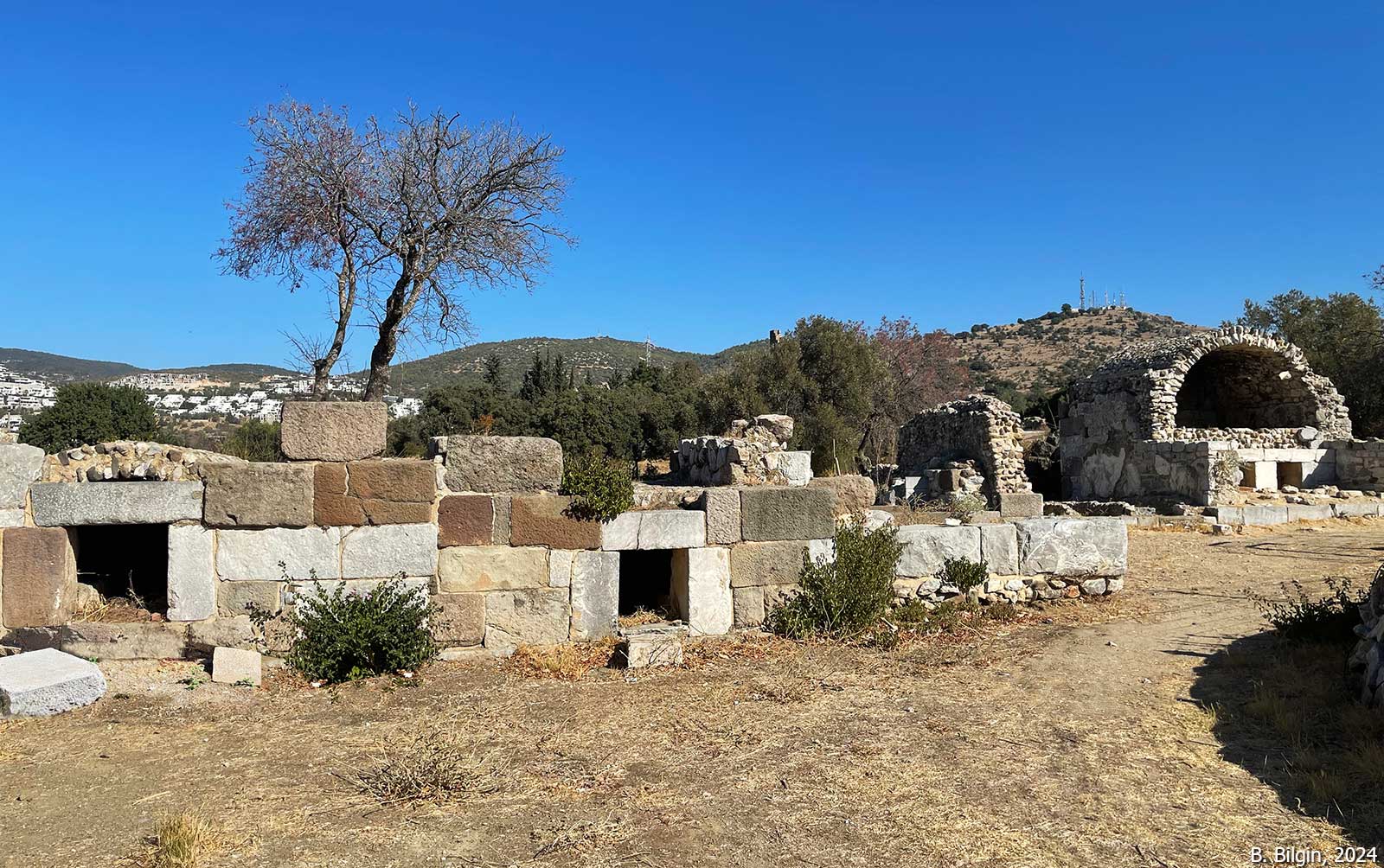
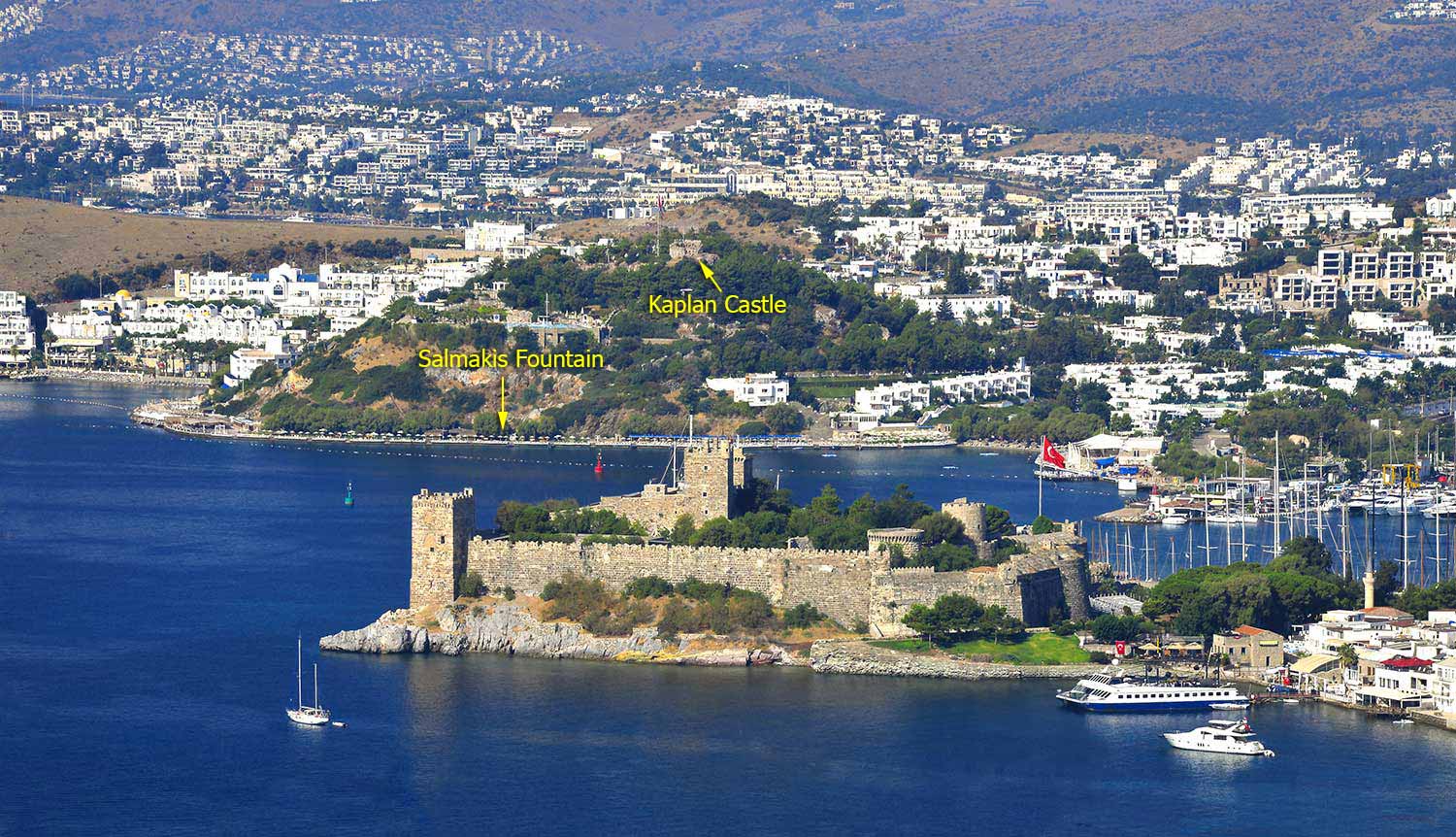
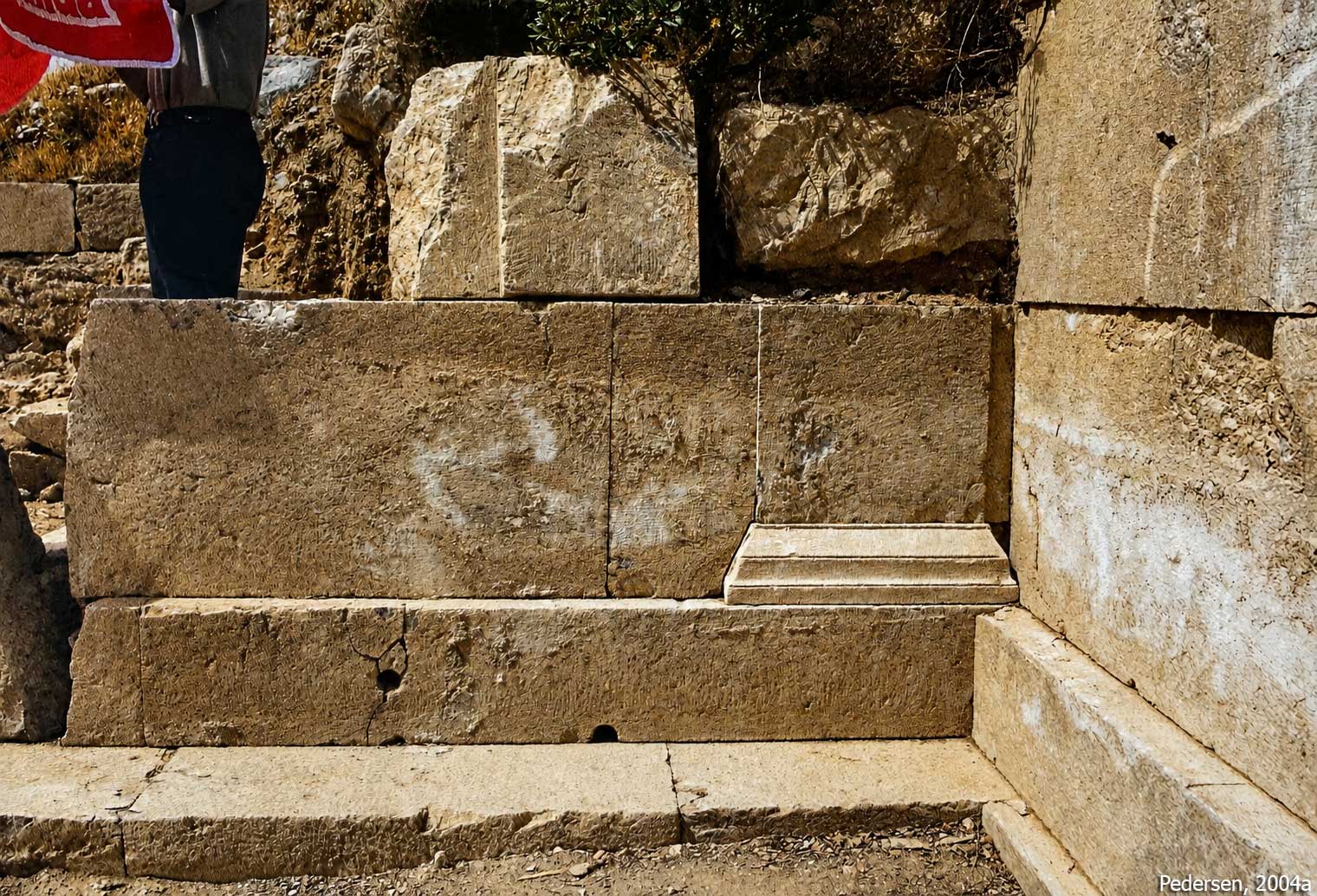
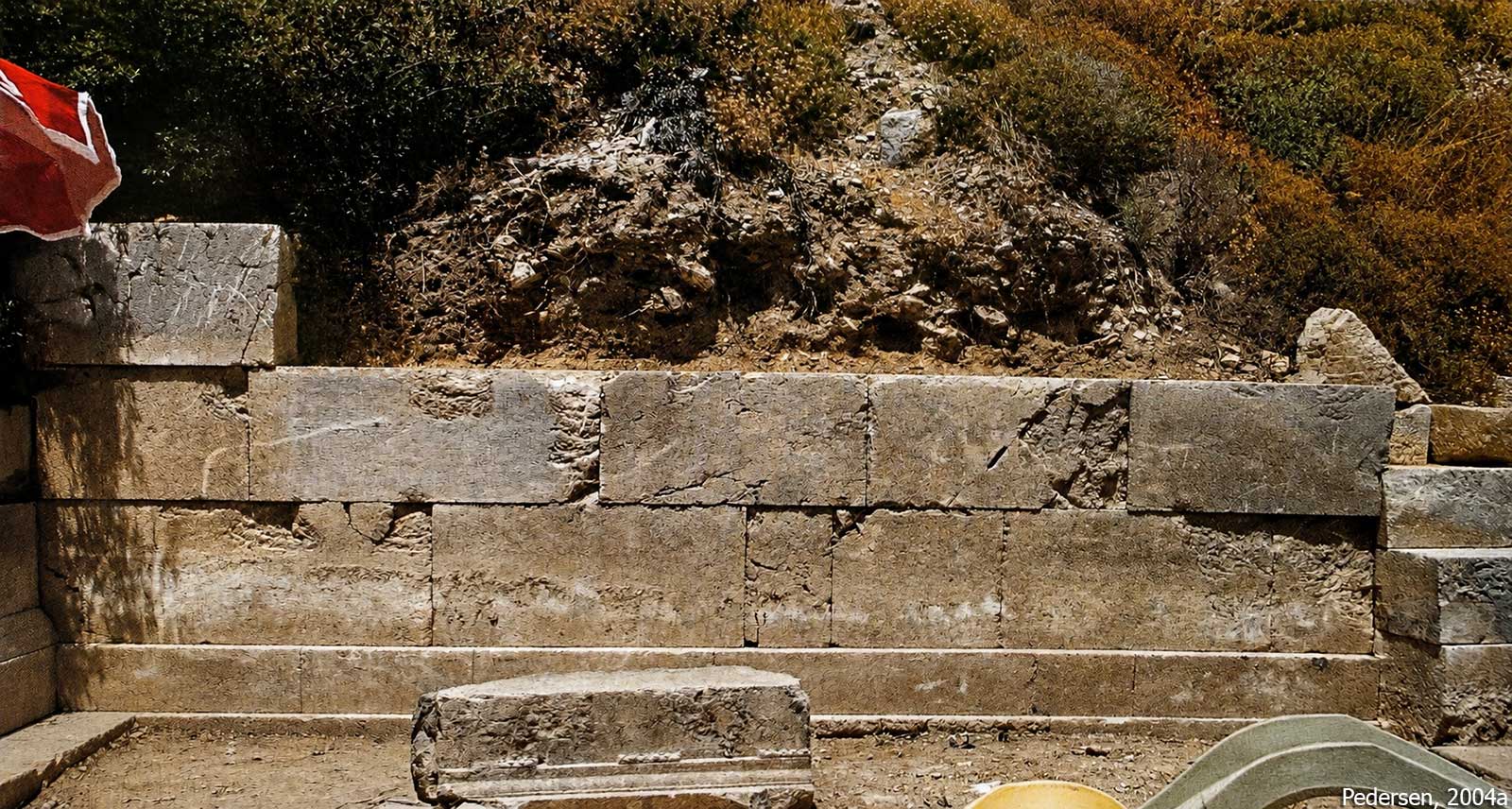
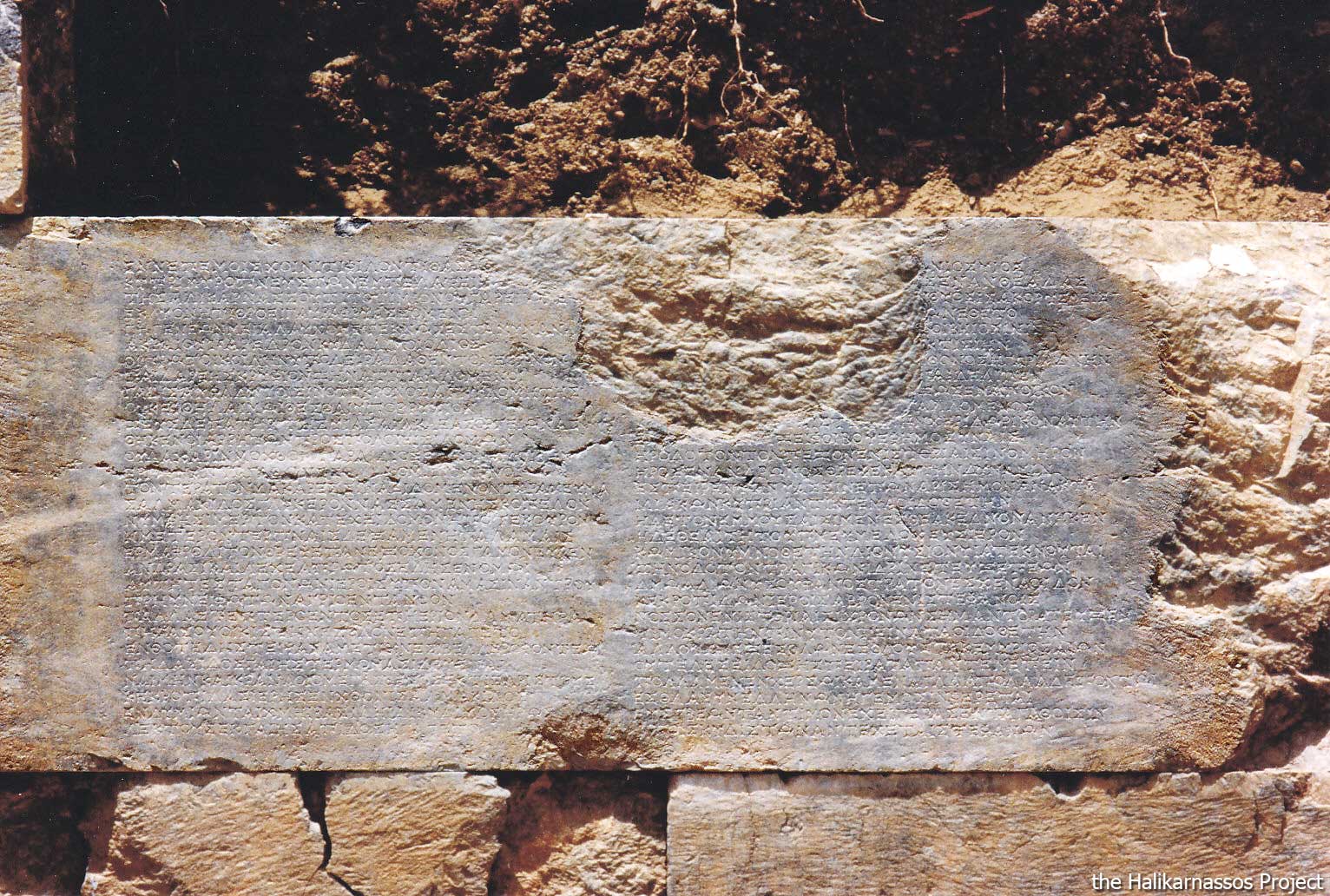
The Salmakis Fountain was a famous spring (mentioned by ancient writers) located on the Salmakis promontory (modern Kaplan Kalesi) at the western side of the harbor entrance in Halicarnassus. While the spring was renowned in antiquity, its exact location was lost until the discovery of the fountain complex in 1995. The fountain house is a monumental structure dating to the Hellenistic period. An inscription of 60-line poem is discovered on the wall of the fountain building, which is dated to the late 2nd or early 1st century BCE. The poem is structured as a dialogue in which the poet asks the goddess Aphrodite what constitutes the “pride of Halicarnassus”, and the goddess replies by recounting the city’s glorious past.
The inscription provides a local, “eulogistic” version of the city’s history, focusing on three main themes:
1. The Myth of Salmakis and Hermaphroditos: The nymph Salmakis presented as a benevolent nurturer. She raises the infant Hermaphroditos in her arms to be an “extraordinary man.” The poem asserts that the water dripping in the cave “tempers the savage mind of men.”
2. The Colonization of Halicarnassus: The text lists multiple waves of mythical colonizers to demonstrate the city’s prestigious mixed heritage.
3. The Catalogue of Authors: The final section of the poem lists famous writers (including Herodotus) produced by the city, presenting them as the “pride” of Halicarnassus.
According to the scholars, the fountain’s myths allowed Halicarnassus to present itself not merely as a Doric colony on foreign soil, but as a unique, multi-ethnic community where the indigenous Carian element played an active, nurturing role in the creation of a civilized society.
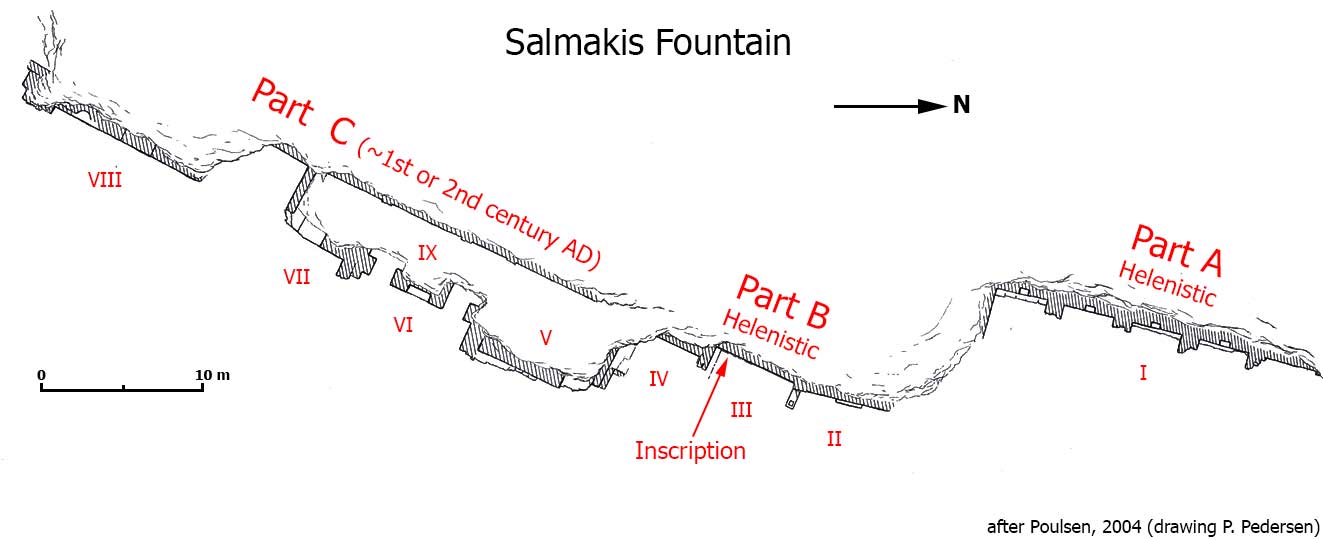
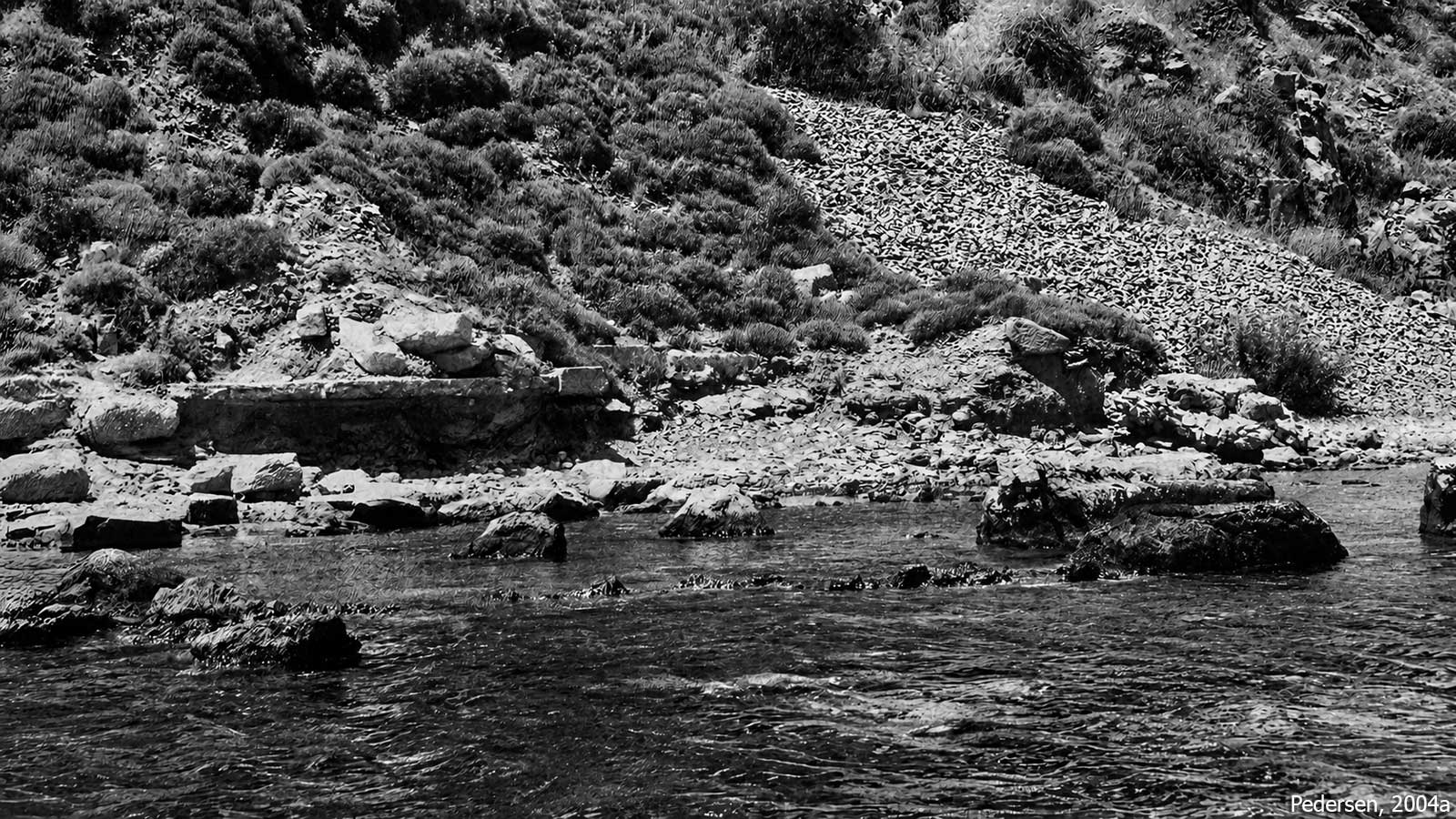
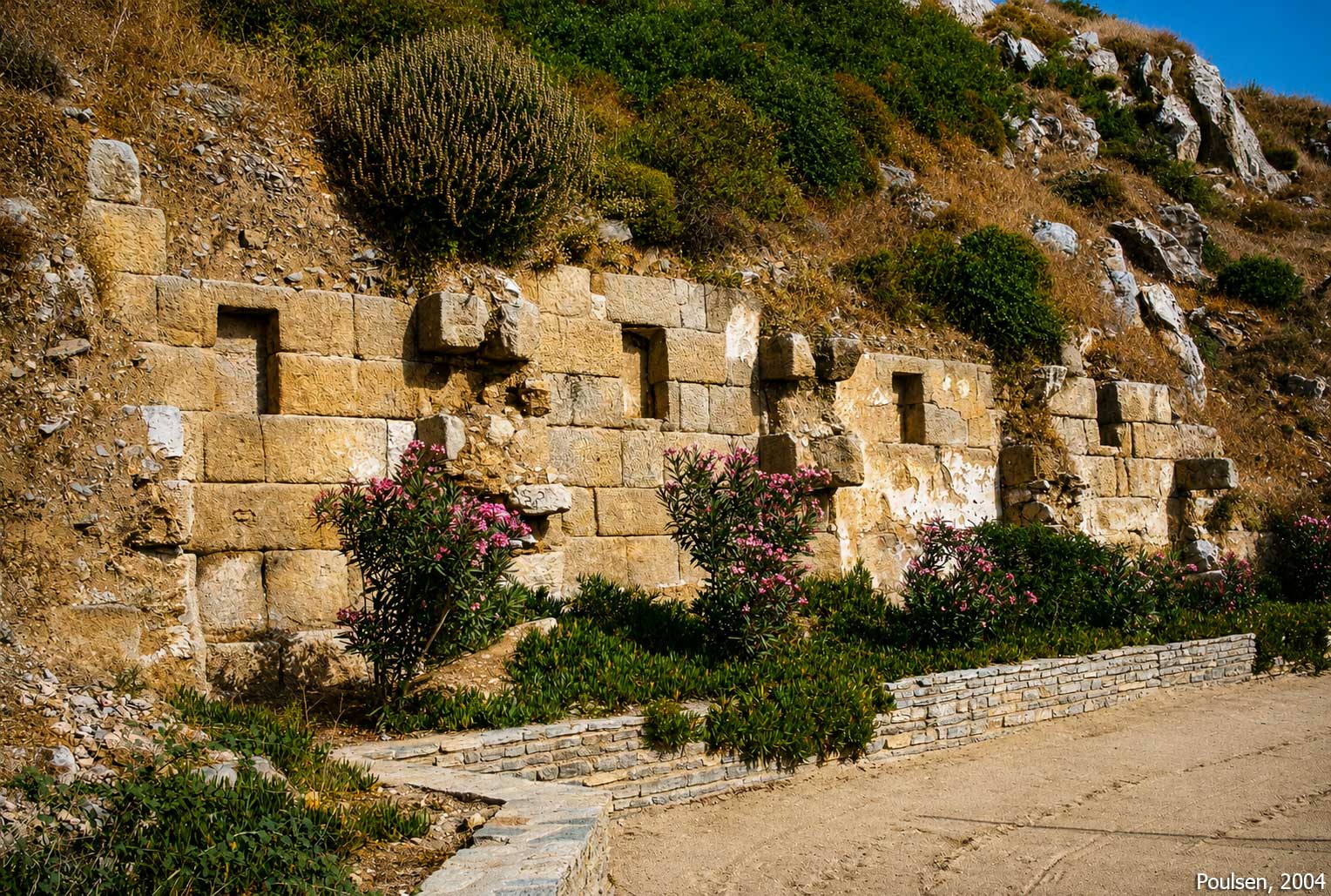
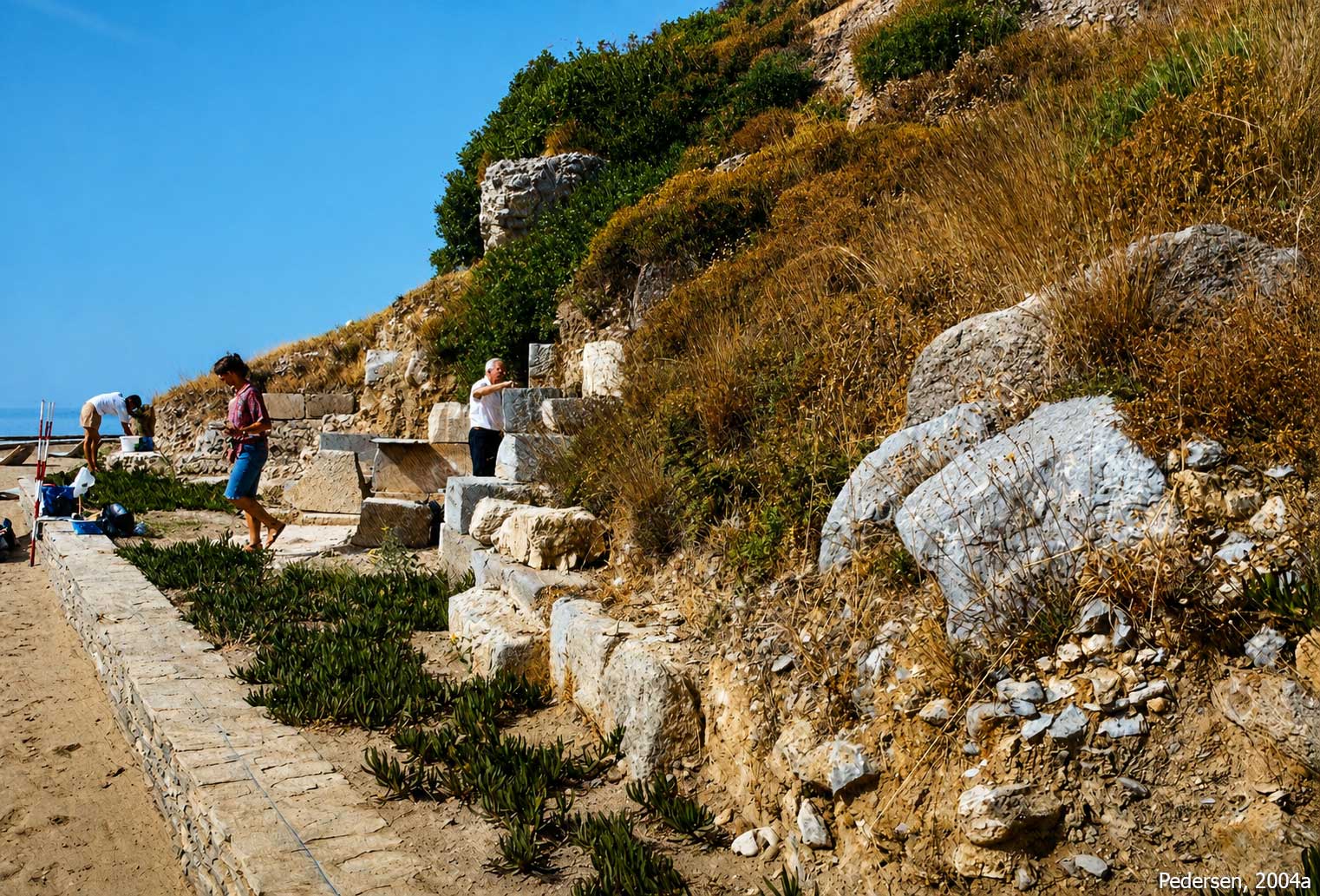
References:
Carstens, A. M. 2009. Karia and the Hekatomnids: The Creation of a Dynasty, Oxford.
Corso, A. 2021. “The masters of the Maussolleion of Halikarnassos,” in Karia and the Dodekanese: Cultural Interrelations in the Southeast Aegean. Vol. I, eds. P. Pedersen et al., Oxford, 41–52.
Henry, O. 2020. “A survey of Carian Monumental Tombs and Mausolea,” in The Carians, From Seafarers to City Builders, eds. O. C. Henry & A. Belgin-Henry, İstanbul, 296–319.
Hornblower, S. 1982. Mausolus, Oxford.
Isager, S. 1998. “The Pride of Halikarnassos: Editio Princeps of an Inscription from Salmakis,” Zeitschrift für Papyrologie und Epigraphik 123, 1–23.
Jeppesen, K. 2000-2002. The Maussolleion at Halikarnassos: Reports of the Danish Archaeological Expedition to Bodrum, Vol. 4&5: The Quadrangle, Aarhus.
Newton, C. T. 1863. A History of Discoveries at Halicarnassus, Knidos, and Branchidae I-II, London.
Mayer, L. 1803. Views in the Ottoman Empire, London.
Pedersen, P. 1991. The Maussolleion at Halikarnassos: Reports of the Danish Archaeological Expedition to Bodrum, Vol. 3: The Maussolleion Terrace and Accessory Structures, Aarhus.
Pedersen, P. 2020. “Halicarnassus – The Metropolis of Karia: The City of Herodotus and Maussollos,” in The Carians, From Seafarers to City Builders, eds. O. C. Henry & A. Belgin-Henry, İstanbul, 344–367.
Pedersen, P. 2021. “From Classical to Hellenistic: the Maussolleion and the Ionian Renaissance,” in Karia and the Dodekanese: Cultural Interrelations in the Southeast Aegean. Vol. I, eds. P. Pedersen et al., Oxford, 25–38.
Pedersen, P. 2004a. “The Building Remains at the Salmakis Fountain I,” in The Salmakis Inscription and Hellenistic Halikarnassos, eds. S. Isager & P. Pedersen, Odense, 15–30.
Pedersen, P. 2004b. “Halikarnassos and the Ptolemies II. The Architecture of Hellenistic Halikarnassos,” in The Salmakis Inscription and Hellenistic Halikarnassos, eds. S. Isager & P. Pedersen, Odense, 145–164.
Poulsen, B. 2004. “The Building Remains at the Salmakis Fountain II,” in The Salmakis Inscription and Hellenistic Halikarnassos, eds. S. Isager & P. Pedersen, Odense, 31–42.
Choiseul-Gouffier, M. G. F. 1782. Voyage Pittoresque de la Grece, Paris.
Pedersen, P. 2010. “The City Walls of Halikarnassos,” in Hellenistic Karia, eds. R. van Bremen & J-M. Carbon, Bordeaux, 269–316.
Images:
British Museum
M. G. Choiseul-Gouffier, 1782
L. Mayer, 1803
B. Poulsen, 2004
P. Pedersen, 2004, 2010
Bora Bilgin, 2024, 2025, 2026
Tayfun Bilgin, 2025
Reha Özer, 2025