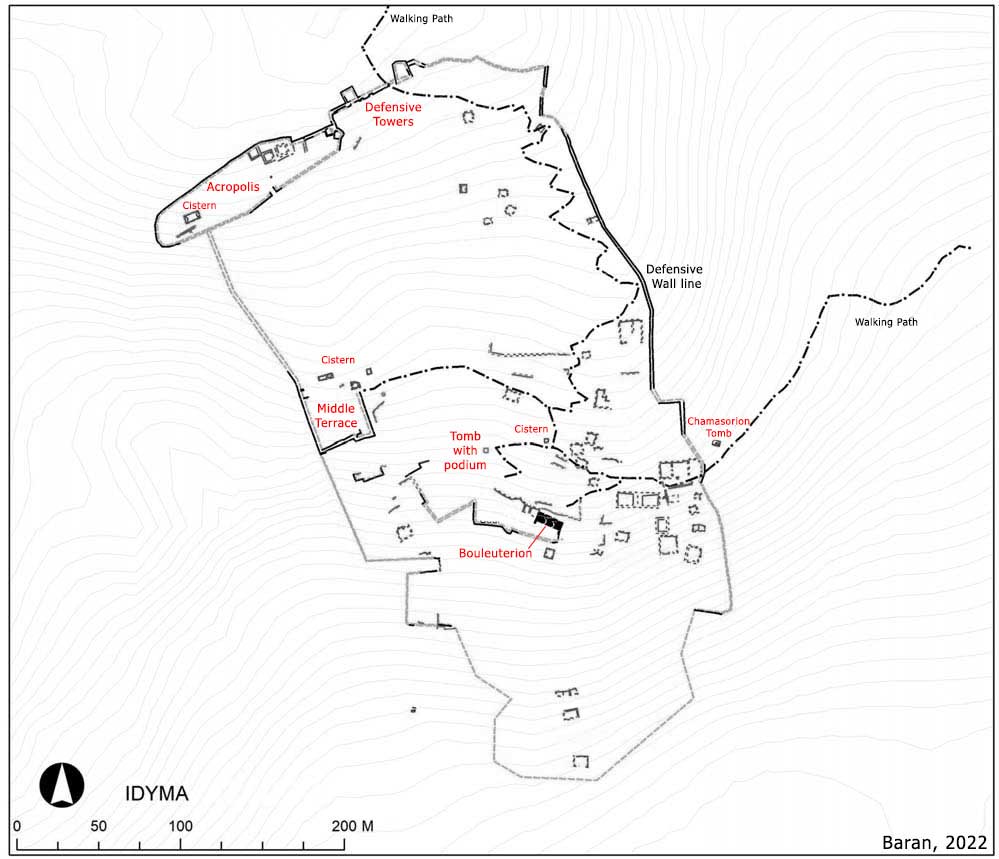
The early settlement of the ancient city of Idyma is situated near Gökova in Muğla. The city was established on the slopes of Küçük Asar Tepe (acropolis), controlling a route connecting the coastline to the interior hinterland. The settlement is historically associated with the river Idymos (modern Çaydere), which flows near the city. In the Late Hellenistic period, the population began to migrate from the steep acropolis to flatter areas near Akyaka, located on a lower hill near the creek, which is called Akyaka Castle today.
Archaeological evidence, including 7th-century BCE ceramics and archaic fortification walls, indicates the settlement’s early character. In the 5th century BCE, Idyma was a member of the Delian League; Athenian tribute lists record the city and a tyrant named Paktyes. During this era, Idyma was one of the few cities to possess a mint, striking silver and bronze coins, some featuring a horned youth often identified as the river god Idymos.
By the 4th century BCE, Idyma fell under the sphere of Rhodes, and became a part of the Rhodian Peraia (mainland territory). The city headed a federation known as the koinon of the Idymians, which included surrounding settlements. While Idyma did not play a major role in Roman history, epigraphic evidence suggests it continued to exist, and Roman structures such as a basilica and farms have been identified in the vicinity. Excavations at the Idyma-Akyaka Castle (located on a lower hill near the creek) reveal uninterrupted habitation from the 7th century BCE to the 7th century CE, followed by a re-occupation in the 11th century. The extant castle structure was built as a garrison in the 12th century CE and later utilized by the Menteşe Emirate and the Ottomans. The city was defended by a robust fortification system, with walls of archaic origin still visible, particularly under the medieval Akyaka Castle.
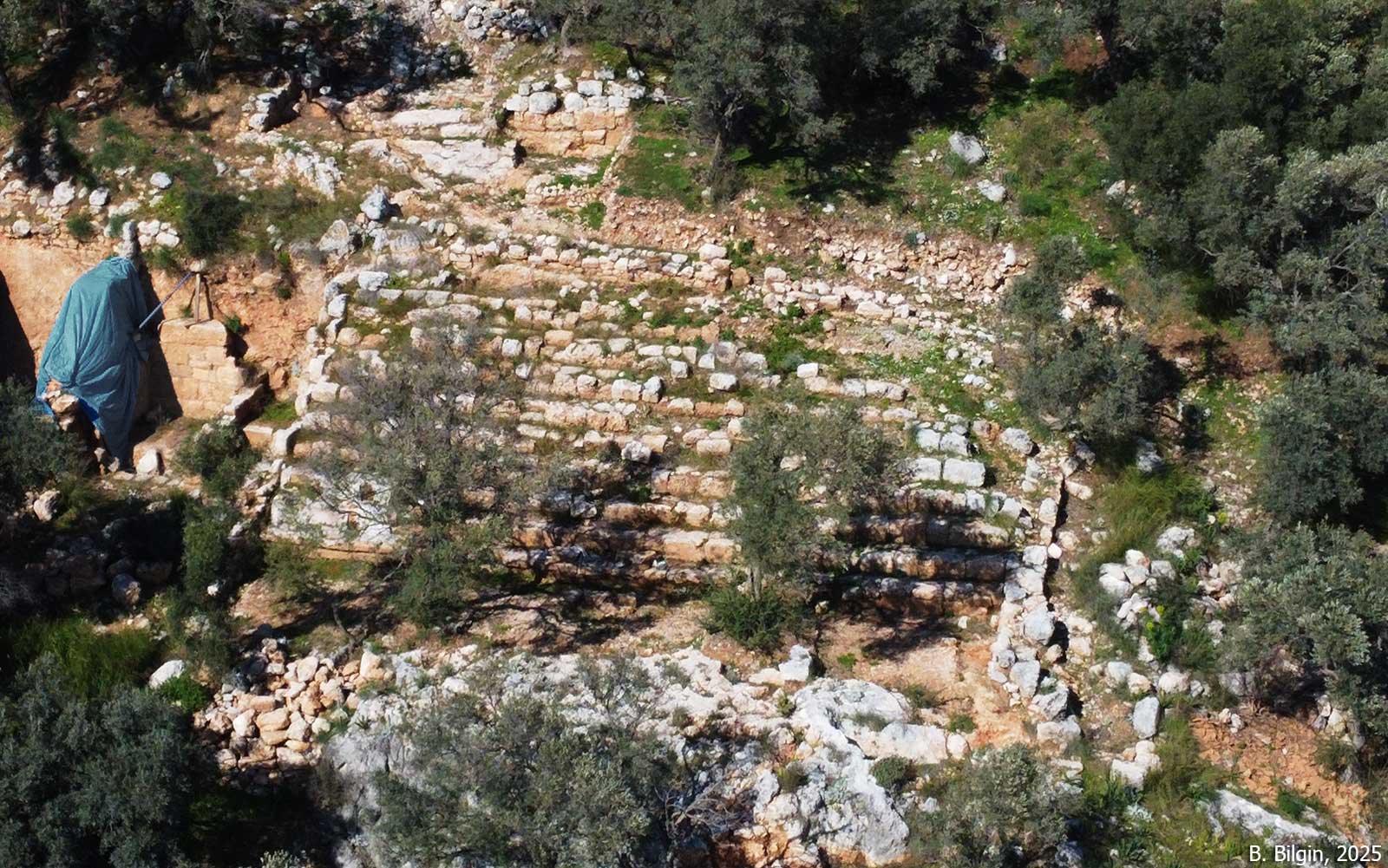
Recent excavations (2020–2022) have uncovered significant public structures in the early settlement (acropolis) of Idyma: A theatrical building with straight rows of seats, interpreted as a bouleuterion, and a building adjacent to the bouleuterion identified as a probable temple.
In the 16th century Piri Reis and in the 17th century Evliya Çelebi mentions about Idyma ruins. The correct identification of the city as Idyma was made by Diehl and Cousin (1886) thanks to an inscription they found. Systematic archaeological field surveys initiated by Kaan İren in 2004, and comprehensive excavations began in 2020 led by Abdulkadir Baran.





İnişdibi Rock Tombs
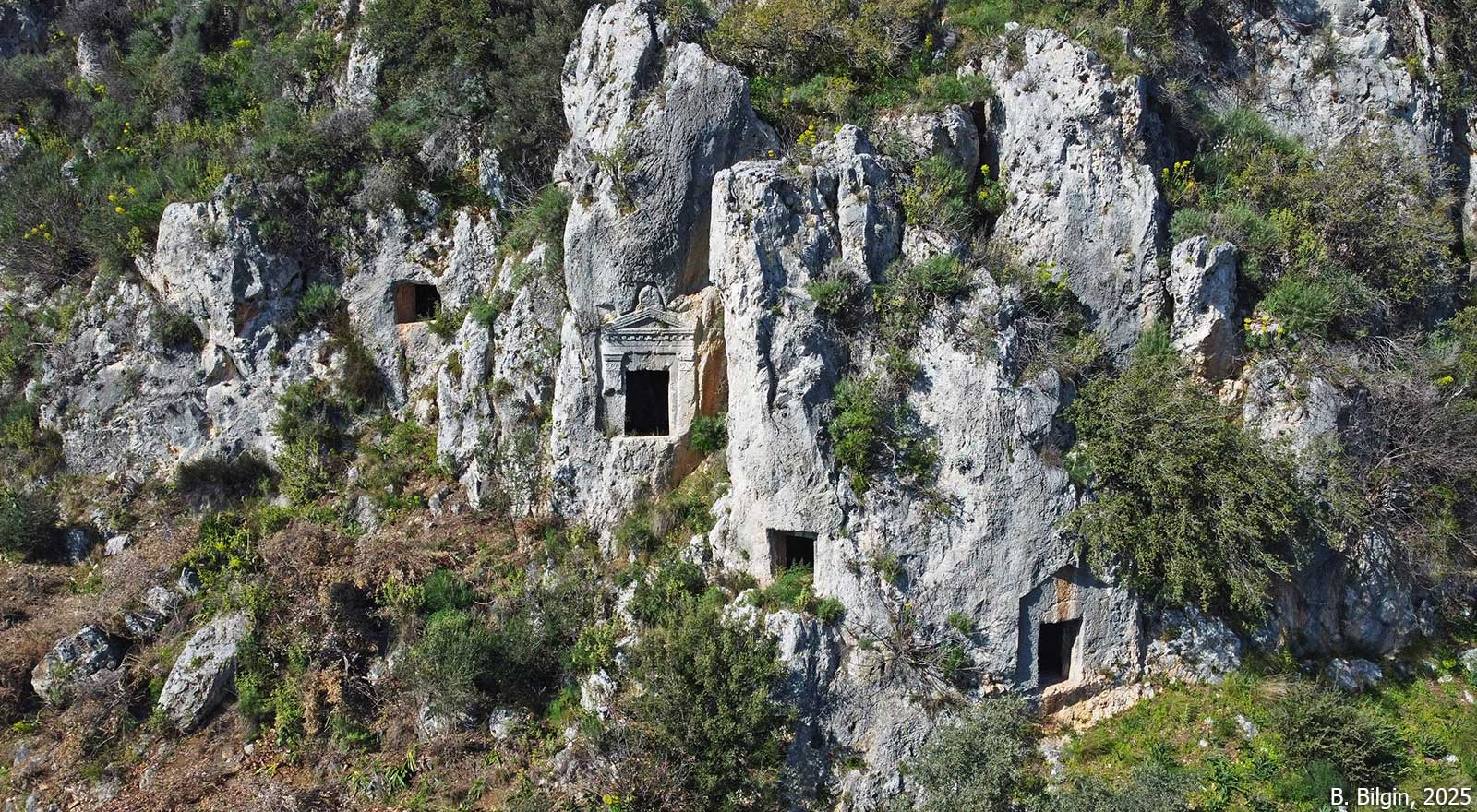
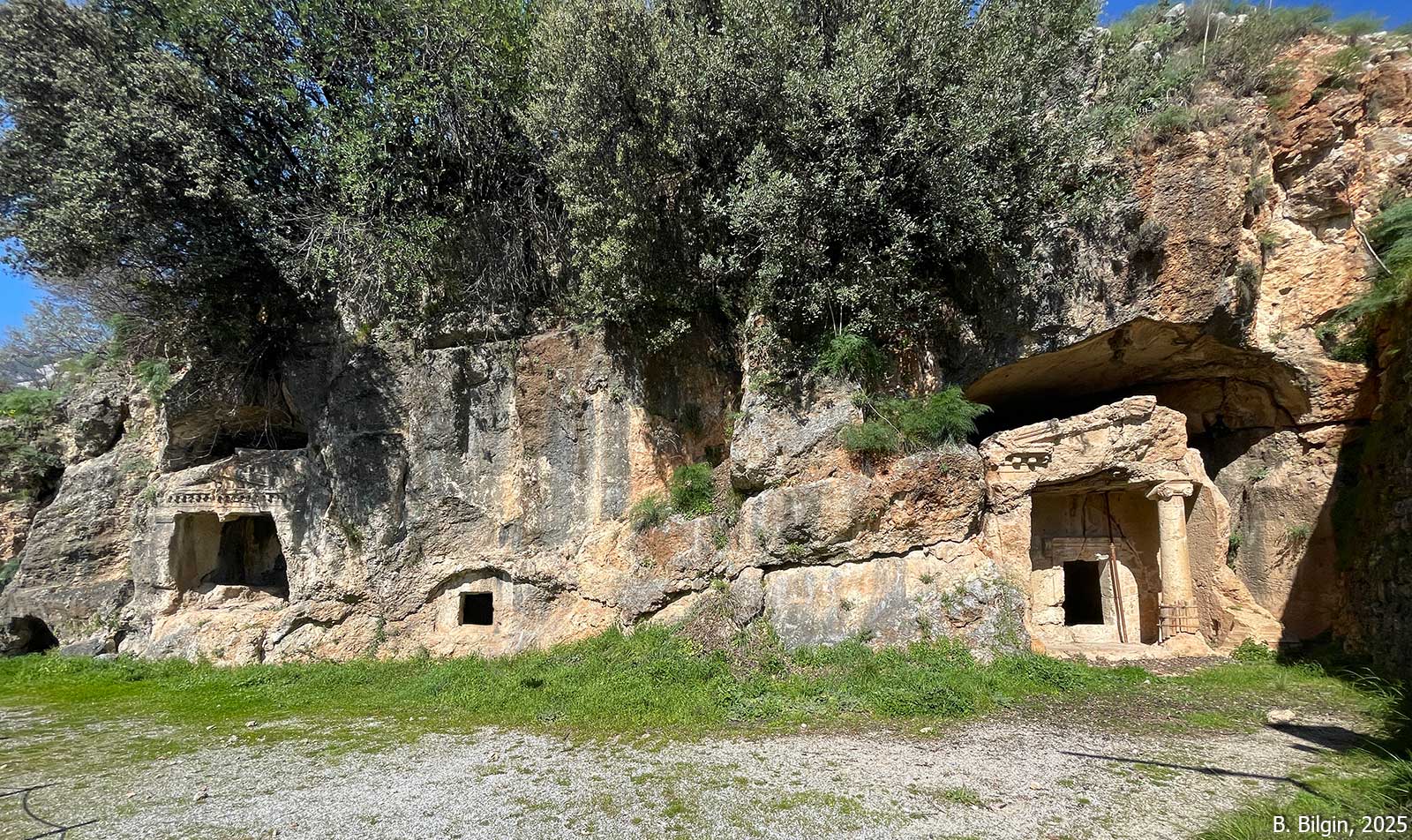
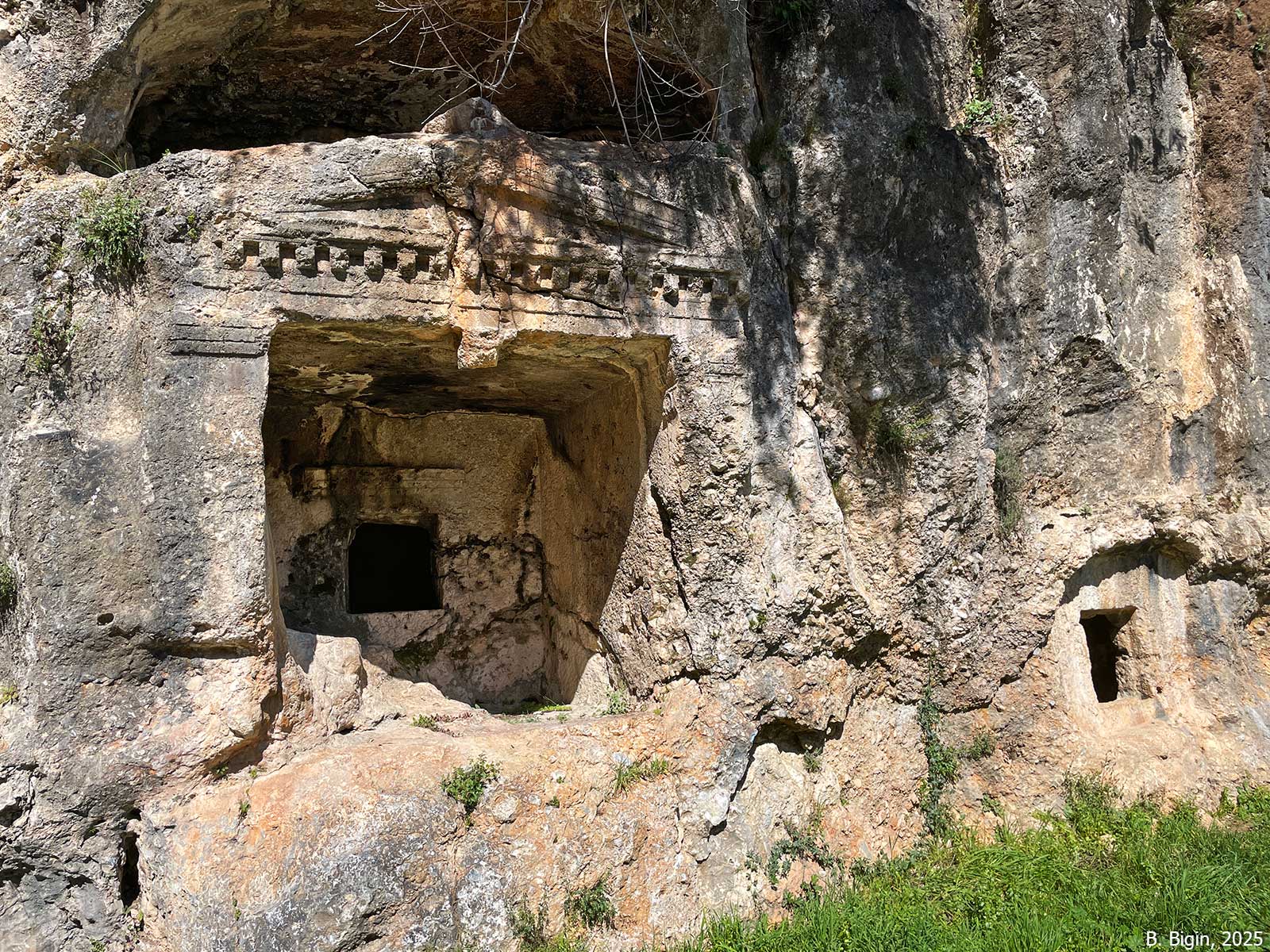
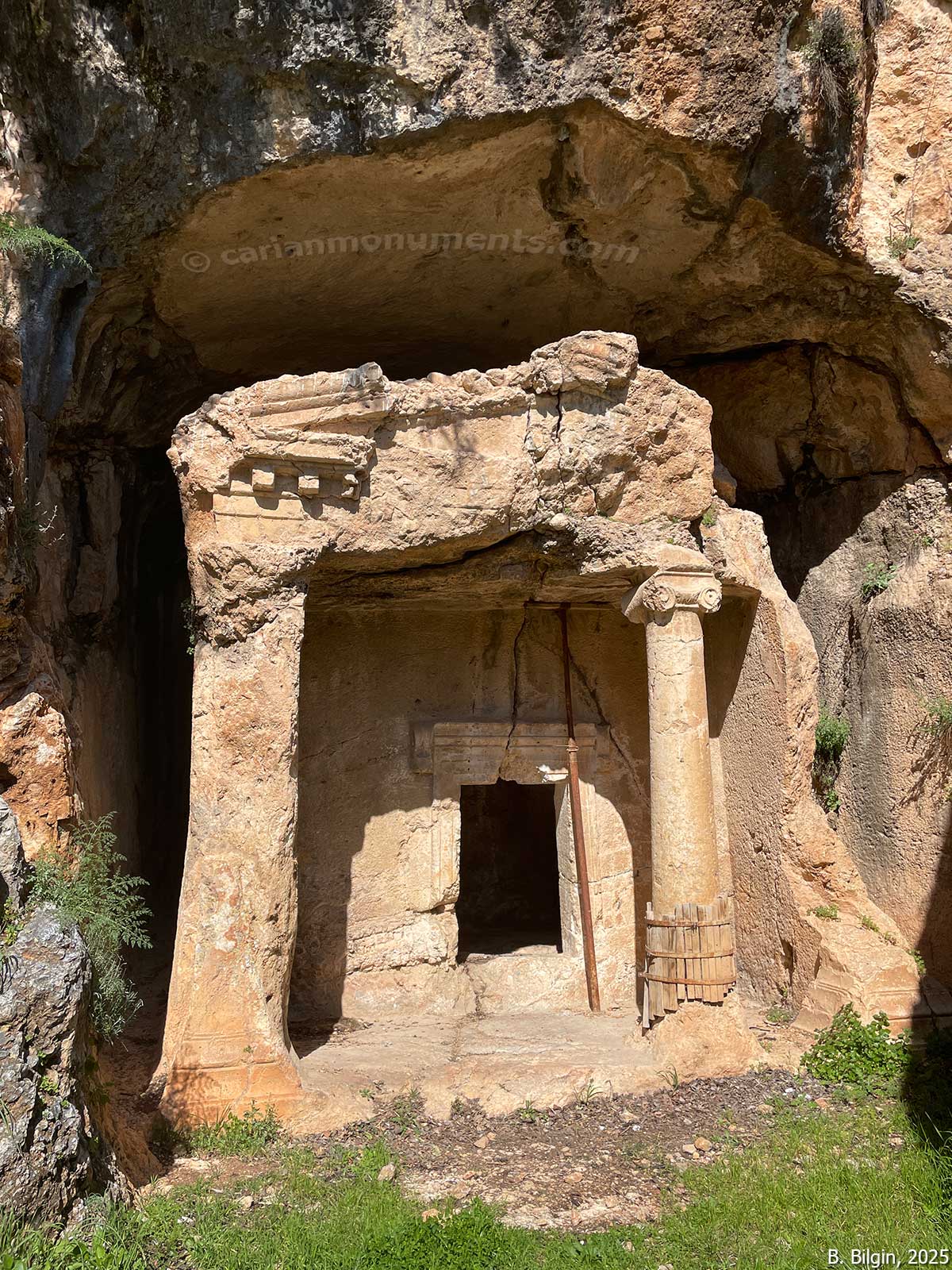
The İnişdibi Rock Tombs are a prominent group of rock-cut sepulchers located in the İnişdibi locality of Akyaka, situated along the banks of the stream that likely served as the ancient city’s coastline. Dating primarily to the 4th century BCE, these tombs exemplify Carian funerary architecture, with some featuring elaborate “temple-type” facades complete with triangular pediments and Ionic columns. Notable among them is a tomb surprisingly displaying a solitary central column and another designed with two columns, although one is damaged. While early 20th-century travelers recorded five tombs in this cluster, recent archaeological work has revealed only four tombs.
References:
Baran, A. 2022. “Excavations of the Ancient City of Idyma,” ANMED 20, 19–22.
Demir, A. Y., A. Atakişi & T. Köroğlu. 2023. “Death and Burial: In the Light of the Graves Recovered from the Ancient City of Idyma – Akyaka Castle and its Surroundings,” Istanbul Anthropological Review 3, 1–30.
İren, K. 2013. “Preliminary Report on the Archaeological Field Survey in Idyma and its Vicinity,” in Euploia: La Lycie et la Carie antiques: Dynamiques des territoires, échanges et identités, eds. P. Brun et al., Bordeaux, 345–358.
Images:
A. Baran, 2022
Bora Bilgin, 2025, 2026
tayfun Bilgin, 2026