Sinuri was a local Carian sanctuary located approximately 15 km southeast of the ancient city of Mylasa (modern Milas) on a hill known as Asar Tepe. Unlike other major regional sites, Sinuri remained a distinctly indigenous cult center that was never syncretized with a Greek deity. Unlike Zeus Labraundos, Sinuri retained his indigenous name throughout antiquity. Archaeological evidence, including a relief found at the site, suggests the god’s primary attribute was the labrys (double axe), a traditional Carian symbol.
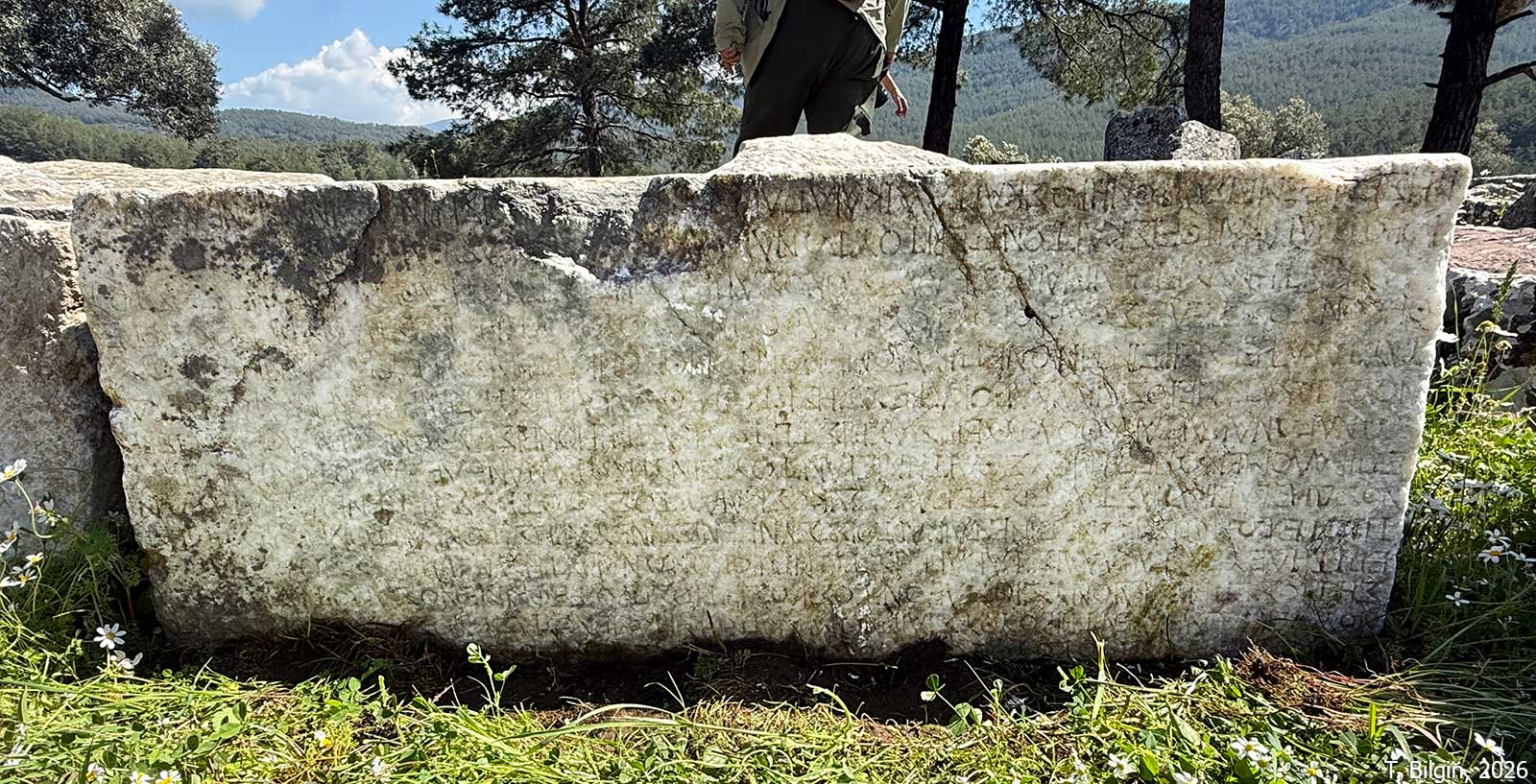
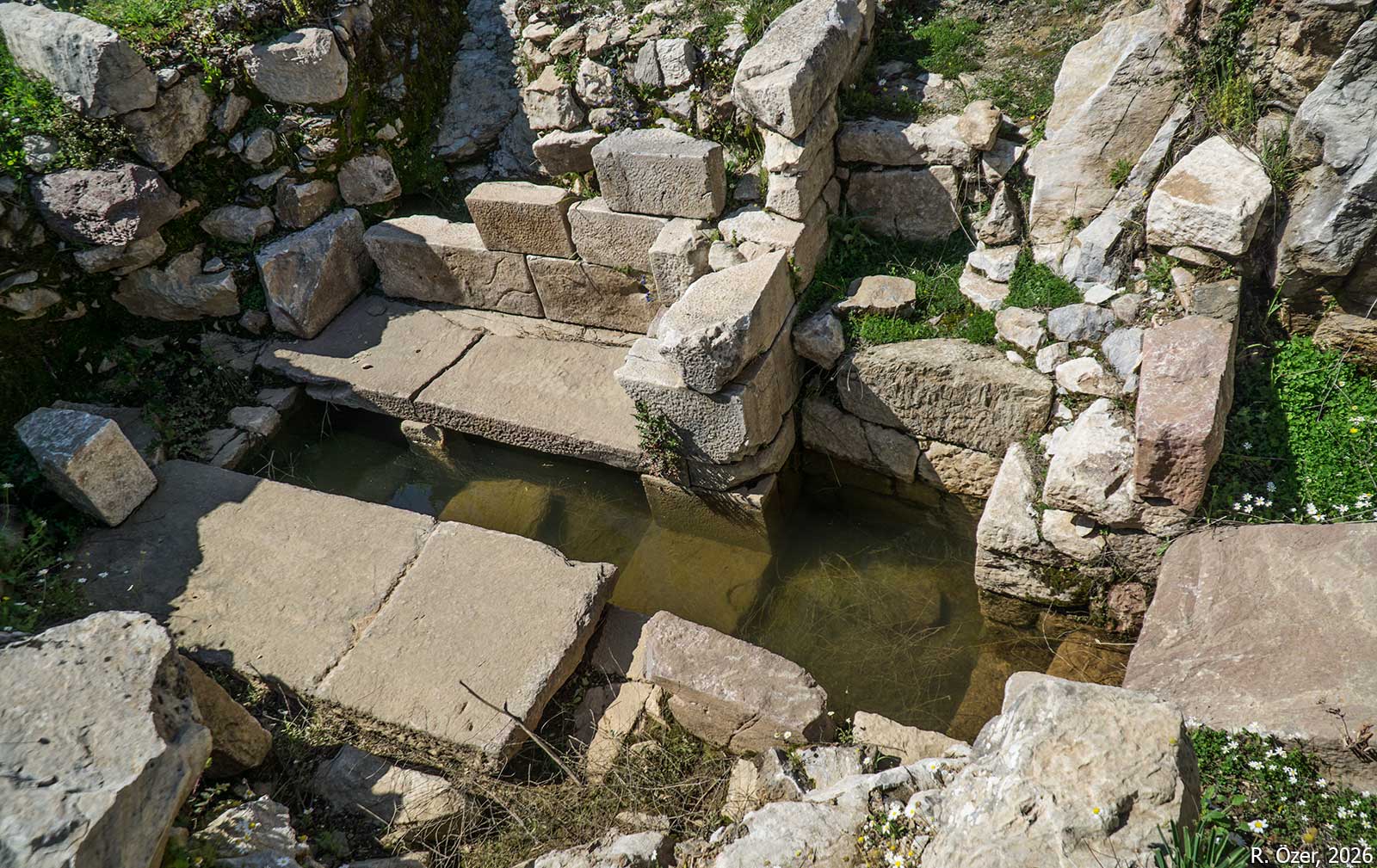
Religious activity dates to at least the 7th century BCE, characterized by a rock-cut altar and a robust stone temenos wall. By the 4th century BCE, the Hecatomnid satraps monumentalized the site. Hecatomnus dedicated an altar table and a doorway, and the precinct was expanded with fine ashlar terracing. A “second bloom” occurred in the 2nd and 1st centuries BCE, marked by the construction of a Doric stoa and a surge in epigraphic habits. The site was eventually repurposed for a Christian basilica, which utilized spolia from the ancient sanctuary.
A defining feature of Sinuri was its administration by a syngeneia (kinship group) rather than the polis directly. The sanctuary functioned as a “microcosm” of the city, managed by two successive groups. The group called Pelekos Syngeneia was operated as a largely autonomous unit with direct political ties to the Hecatomnid rulers in the 4th century BCE. By the 3rd century BCE, control shifted to the Pormounos Syngeneia. While subordinate to Mylasa, this community mimicked urban institutions, electing its own treasurers and legal representatives to manage the shrine.



References:
Arslan, A. 2018. Mylasa’da Yerel Tanrılar ve Kutsal Alanlar, Unpublished Master’s Thesis, Aydın Menderes Üniversitesi Sosyal Bilimler Enstitüsü, Aydın.
Ateşlier, S. 2020. “Sinuri,” in The Carians, From Seafarers to City Builders, eds. O. J. Henry & A. Belgin-Henry, İstanbul, 116–123.
Williamson, C. G. 2013. “Public space beyond the city. The sanctuaries of Labraunda and Sinuri in the chora of Mylasa,” in Public Space in the Postclassical City (Caeculus 7), eds. C. P. Dickenson & O. M. Van Nijf, Leuven, 1–36.
Williamson, C. G. 2016. “A Carian Shrine in a Hellenising World: The Sanctuary of Sinuri, near Mylasa,” in Between Tarhuntas and Zeus Polieus: Cultural Crossroads in the Temples and Cults of Graeco-Roman Anatolia (Colloquia Antiqua 17), eds. M. P. de Hoz et al., Leuven, 75–100.
Williamson, C. G. 2021. Urban Rituals in Sacred Landscapes in Hellenistic Asia Minor, Leiden/Boston.
Images:
A. Arslan, 2018
Bora Bilgin, 2026
Tayfun Bilgin, 2026
Reha Özer, 2026