C.Ki 1
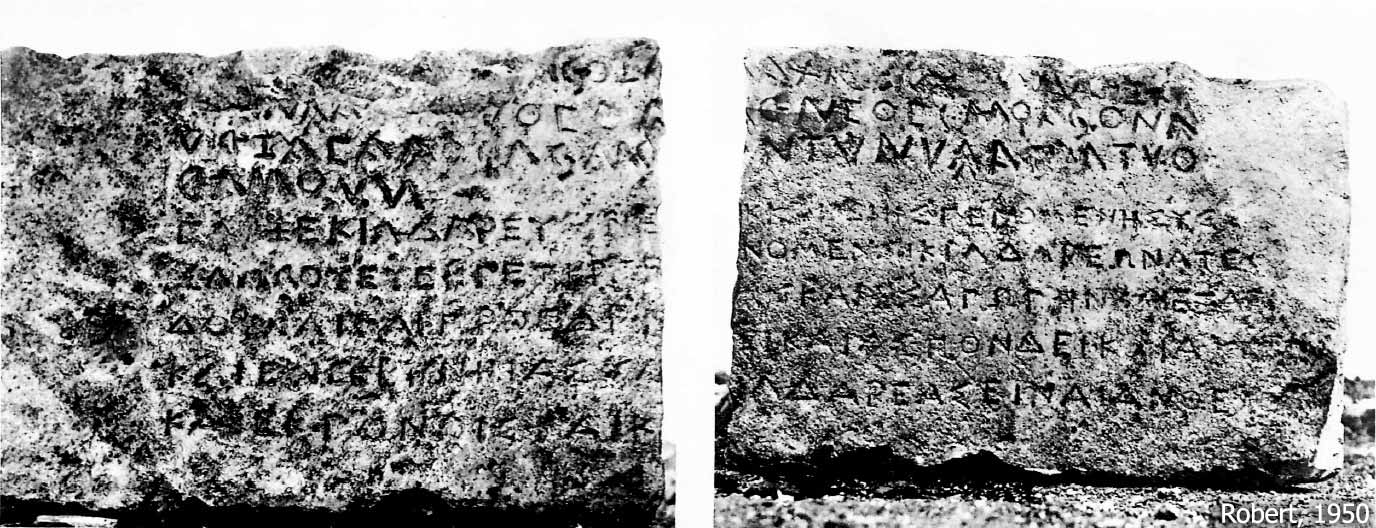
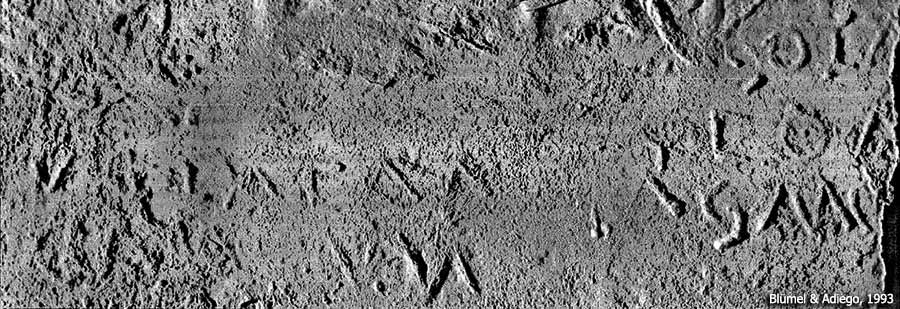
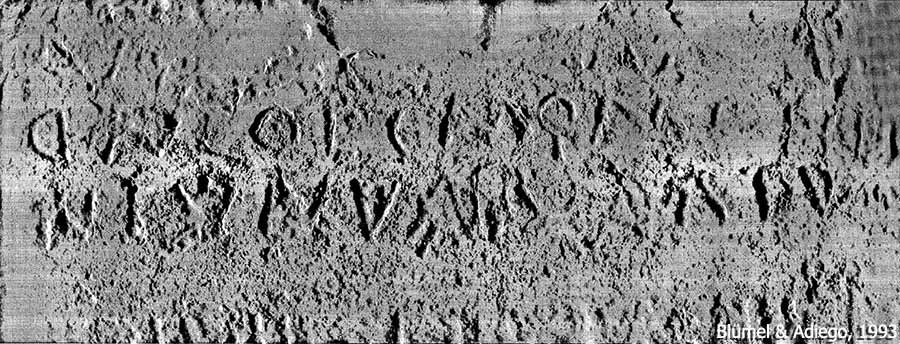
The limestone block in two pieces (combined: 36 x 115 x 18 cm) was discovered in 1934 by Louis Robert near Kildara, next to a cistern. It was seen in 1990s used as a lintel at the door of the cistern and is probably still there. On the block, the four-line fragmentary Carian text at the top is followed by a five-line Greek inscription, seemingly repeating the same information, an honorary decree by the city of Kildara for Hyss[ollos] son of Samos. The inscription probably dates to the 4th century BCE.

(→)
1 […]loλbak̑a[…] kiλ[ara? …?]
2 […]uδa[…] trqδi mr qrds talomδ[…]
3 kiλara δ [q?]ybls dmTnmkδa[.]aTuq[…]
4 iasoum
Greek text:
1 ἔδοξε Κιλδαρεῦσιν, ἐκκλησίης γενομένης· Ὑσσ[ωλλωι?]
2 Σαμωου εὐεργέτηι γενομένωι Κιλδαρέων ἀτέ[λειαν]
3 δοῦναι καὶ προεδρίαν καὶ ἐσαγωγὴν καὶ ἐξαγω[γὴν]
4 καὶ ἐν εἰρήνηι ἀσυλεὶ καὶ ἀσπονδεὶ καὶ αὐτῶι
5 καὶ ἐκγόνοις· καὶ Κιλδαρέας εἶναι ἂν θέ[λωσιν?]
“It was resolved by the Kildareans, when an assembly had taken place: to Hyss[ollos?] son of Samouas, who has become a benefactor of the Kildareans, to grant [exemption from taxes], and the right of front seating, and the right of importing and exporting, and in peacetime inviolability and freedom from military billeting/requisition, both to him and to his descendants; and that they may be Kildareans, if they wish.”
References:
Adiego, I.- J. 2007. The Carian Language, Leiden/Boston. (C.Ki 1)
Blümel, W. & Adiego, I.-J. 1993. “Die karische Inschrift von Kildara,” Kadmos 32, 87–95.
Deroy, L. 1955. “Les inscriptions cariennes de Carie,” L’Antiquité Classique 24, 305–335. (318)
Robert, L. 1950. “Inscriptions inédites en langue carienne,” Hellenica VIII, 5–22 and plts. I–XXX. (14–16 and plts. VI-2, VIII-1, IX-2, X)
Images:
L. Robert, 1950
W. Blümel & I.-J. Adiego, 1993