C.Hd 1
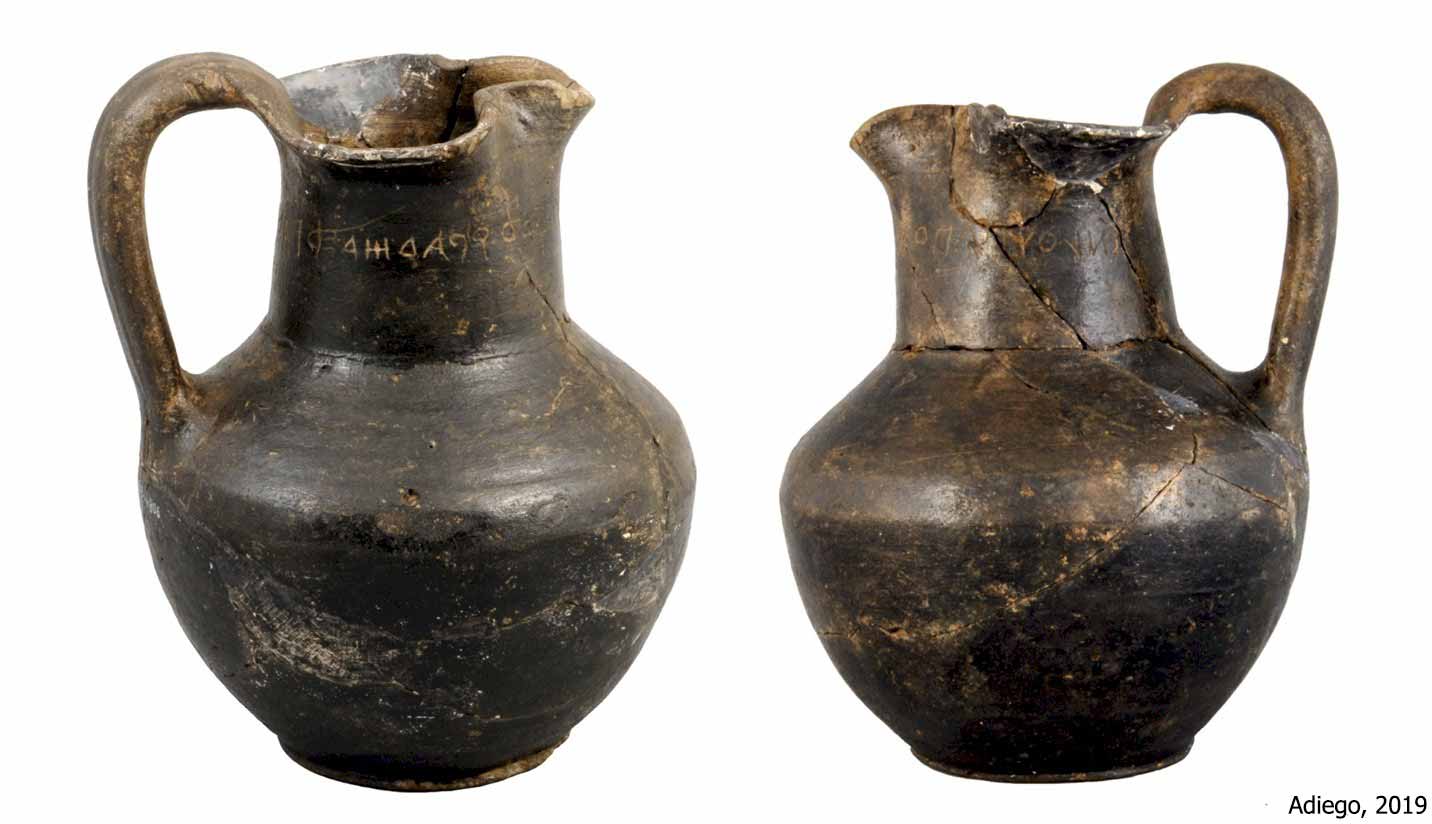
The inscription was discovered during clandestine excavations in the village of Damlıboğaz (ancient Hydai), located near Mylasa. It is carved into the shoulder of a pottery oinochoe (wine jug) that was likely part of a burial assemblage. The vessel is now a centerpiece of the Sadberk Hanım Museum in Istanbul (Inv. Ark 919-14806). The inscription is the longest archaic Carian text found in Caria and records a personal name using archaic characters (such as j and v). Linguistically, it contains the sequence mla-ne, which provides a link to the phraseology used in the archaic Iasos crater (C.Ia 3). It is dated to the late 7th or early 6th century BCE.

(←)
1 dmuonś leos mlane ýśrotbaljayšraka
References:
Adiego, I.- X. 2019. “’Archaic’ Carian,” in Karia Arkhaia. La Carie, des origines à la période pré-hekatomnide. 4èmes Rencontres d’archéologie de l’IFÉA. Istanbul, 14-16 novembre 2013, eds. O. Henry, K. Konuk, Istanbul, 23–41. (24–26)
Türkteki, S. & Tekoğlu, R. 2012. “Une inscription carienne sur oenochoé au Musée de Sadberk Hanım,” Kadmos 51, 2012, 99–113.
Images:
S. Türkteki & R. Tekoğlu, 2012
I.-X. Adiego, 2019