Knidos (Cnidus) was a prominent ancient city located at the tip of the Datça (Reşadiye) Peninsula, positioned where the Aegean and Mediterranean seas meet. The city, which prospered through trade, became the religious center of the Dorian Hexapolis and gained renown for its advanced urban planning and the legendary Statue of Aphrodite.
Archaeological findings suggests that the habitation in the region dates back to the Minoan and Mycenaean periods (2nd millennium BCE). It is thought that Knidos was colonized during the Dorian invasions in the 12th century BCE. According to Herodotus, Knidos was founded by Lacedaemonian (Spartan) colonists, and was a member and religious center of Dorian Hexapolis federation, which was established along with five other Dorian cities in the region. There is also a longstanding academic debate regarding the location of the city. Researchers suggest the city may have originally been located at Datça-Burgaz and moved to its current location at Tekir Point in the 4th century BCE.
The 4th century BCE marked a golden age of construction for Knidos, heavily influenced by the Hecatomnid Dynasty (rulers of Caria). This period, known as the “Ionian Renaissance,” saw a revival of archaic Ionian cultural elements blended with new architectural innovations. In this period Knidos moved closer to the Carian culture community from the previous Greek/Dorian identity. Knidos remained prosperous in the Hellenistic and Roman periods. During the Mithridates Wars, they supported Rome and gained various privileges together with “civitas libera” (free city) status. However, the city suffered during Goth attacks in the 3rd century CE and Arab raids in the 7th century CE, leading to economic contraction and eventual abandonment.
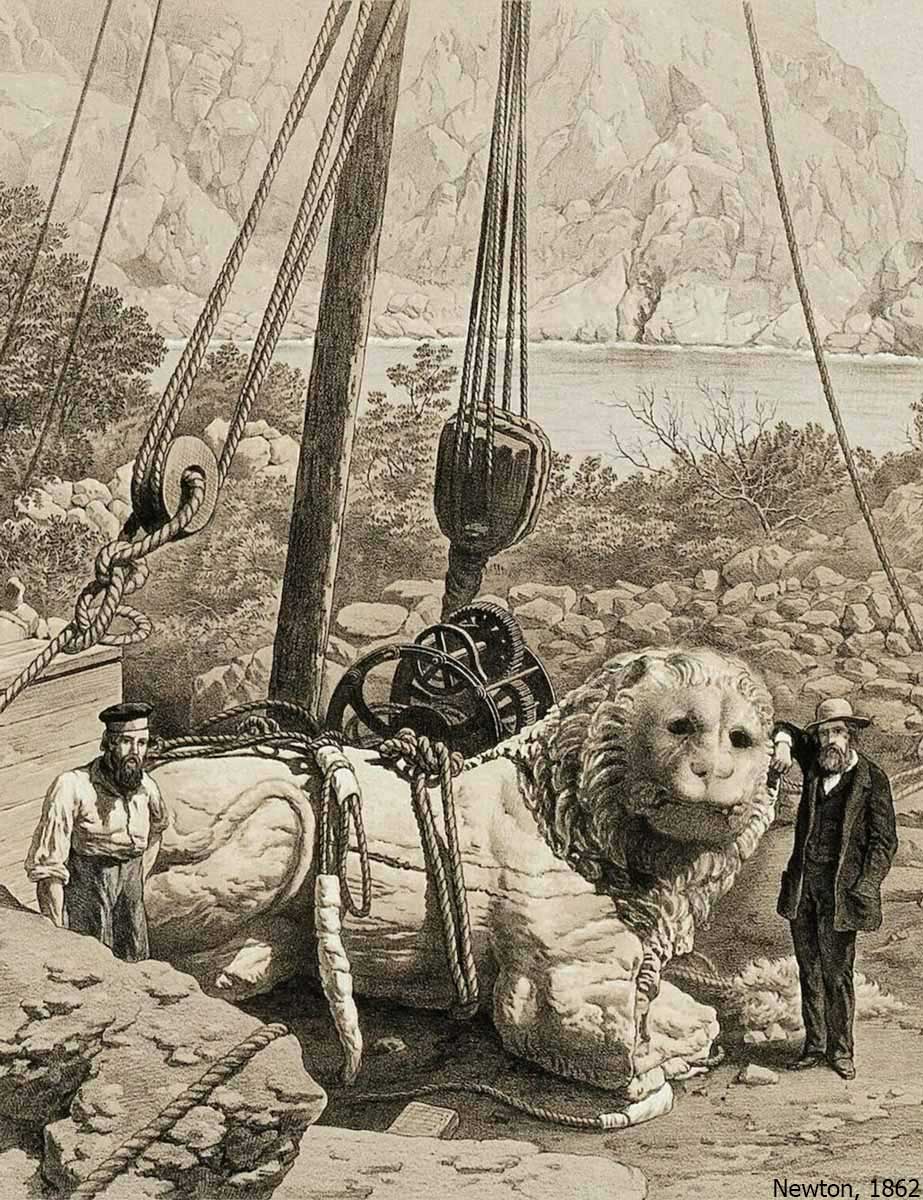
Early explorations at the site were conducted by the Society of Dilettanti and Charles Newton (1858–1859), who excavated the Lion Tomb and the Demeter Sanctuary and transported many finds to the British Museum. The first systematic excavations were carried out between 1967 and 1977.
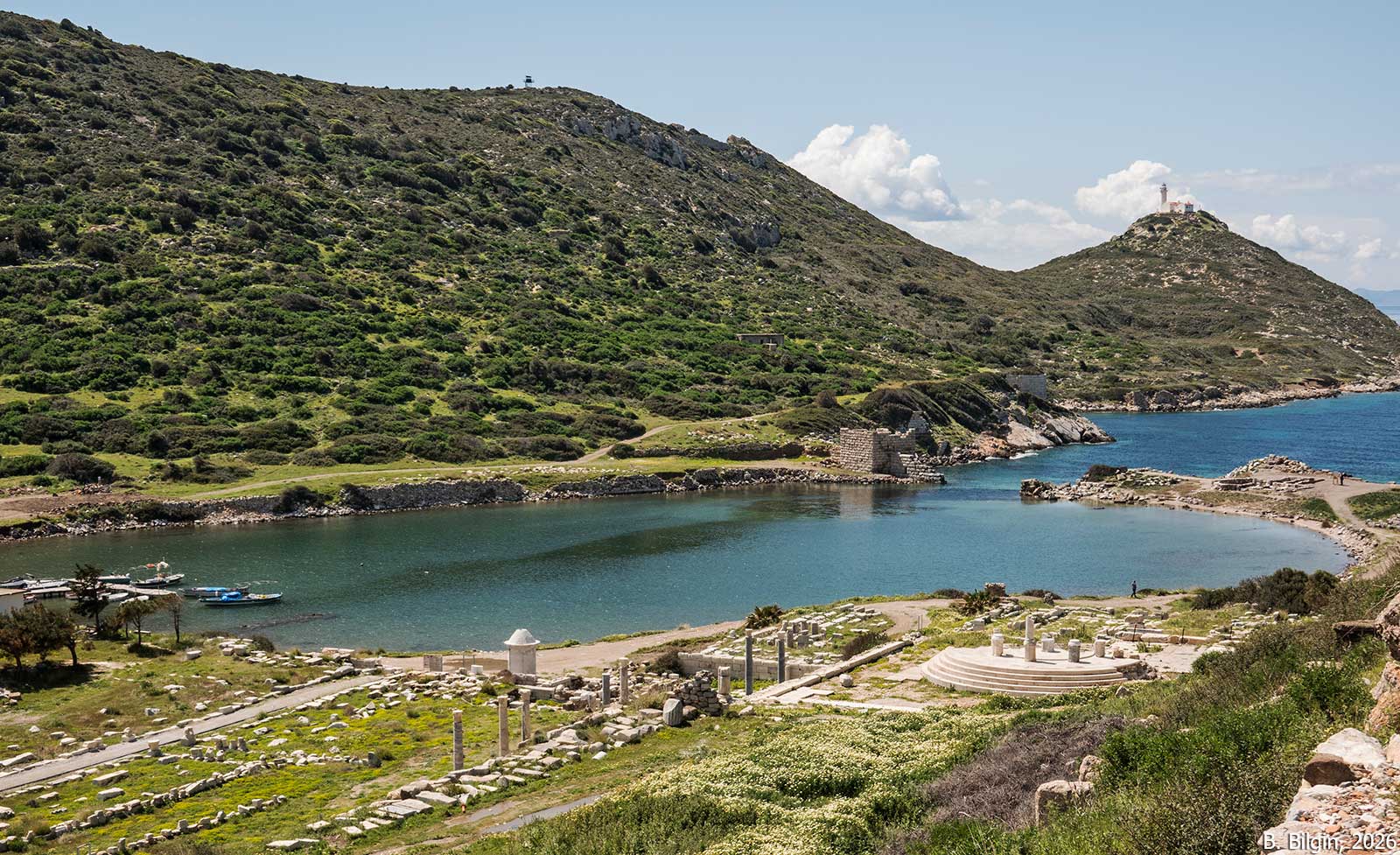
Knidos is defined by its unique topography, which ancient geographers like Strabo described as a “double city”. The city was established partly on the mainland and partly on the island of Kap Krio (modern Deveboynu), connected by an isthmus. This formation created two distinct natural harbors: the Northern Harbor was used for military purposes, specifically for triremes, and the Southern Harbor was a commercial hub that facilitated the city’s extensive trade network.
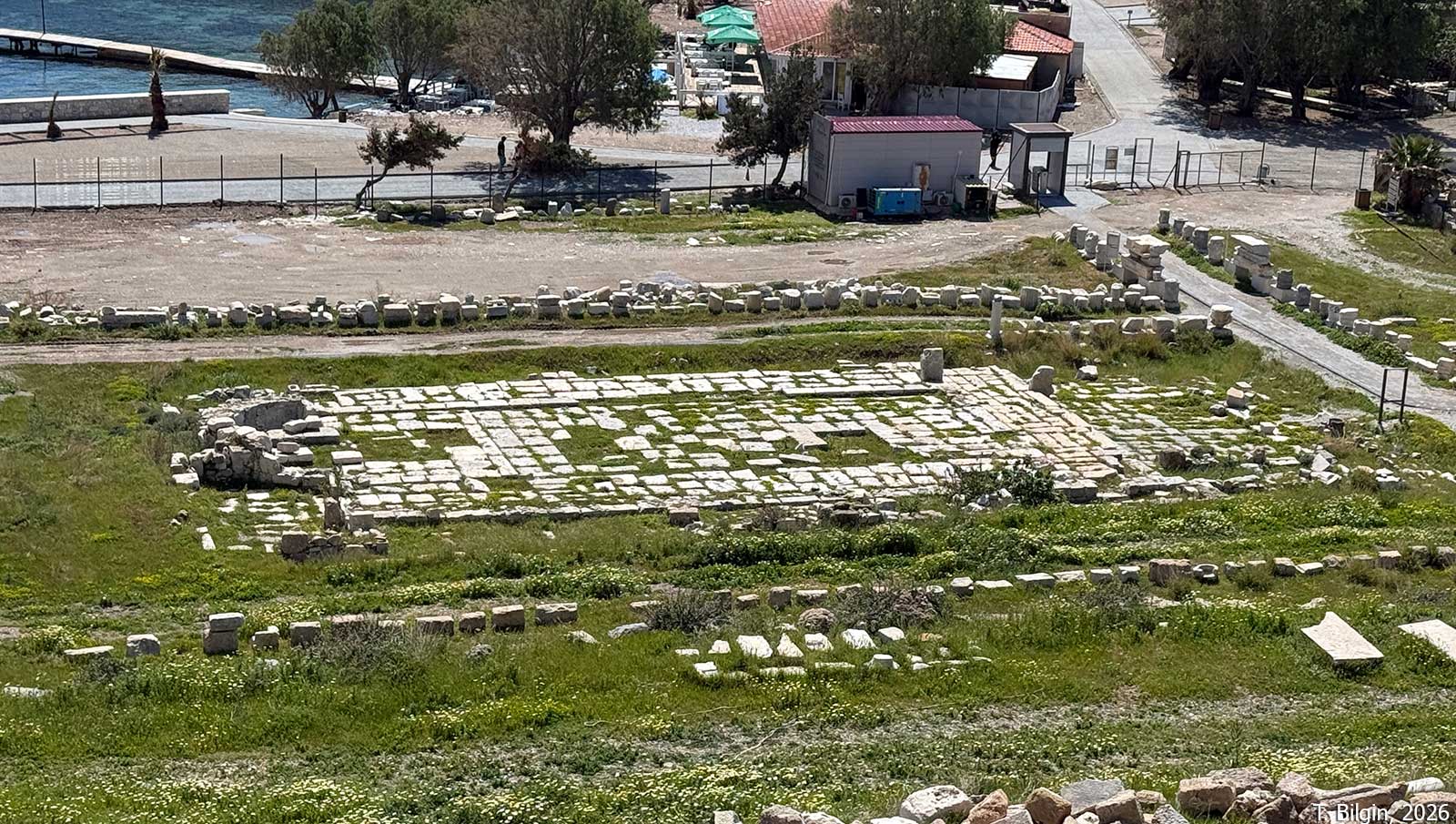
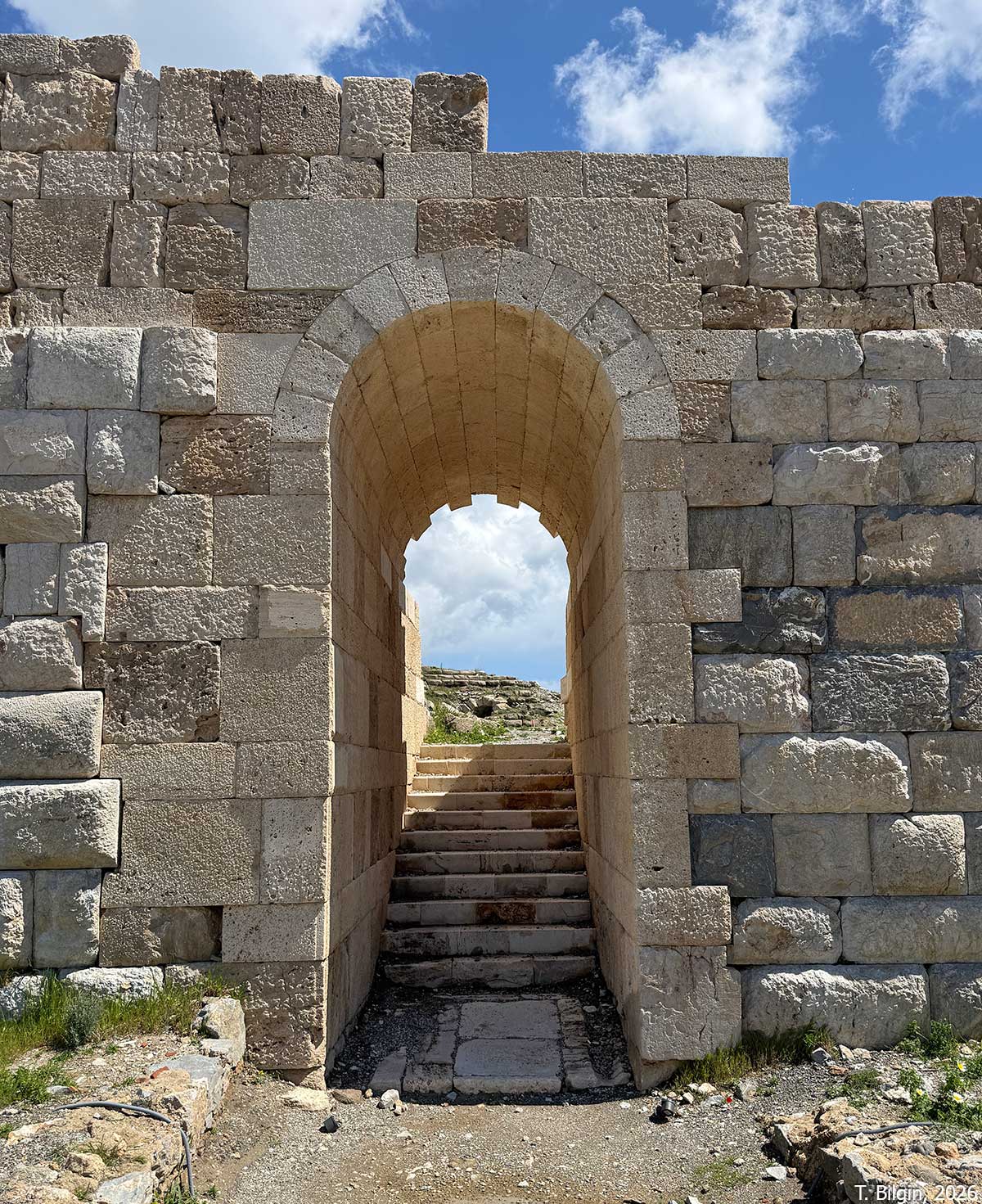
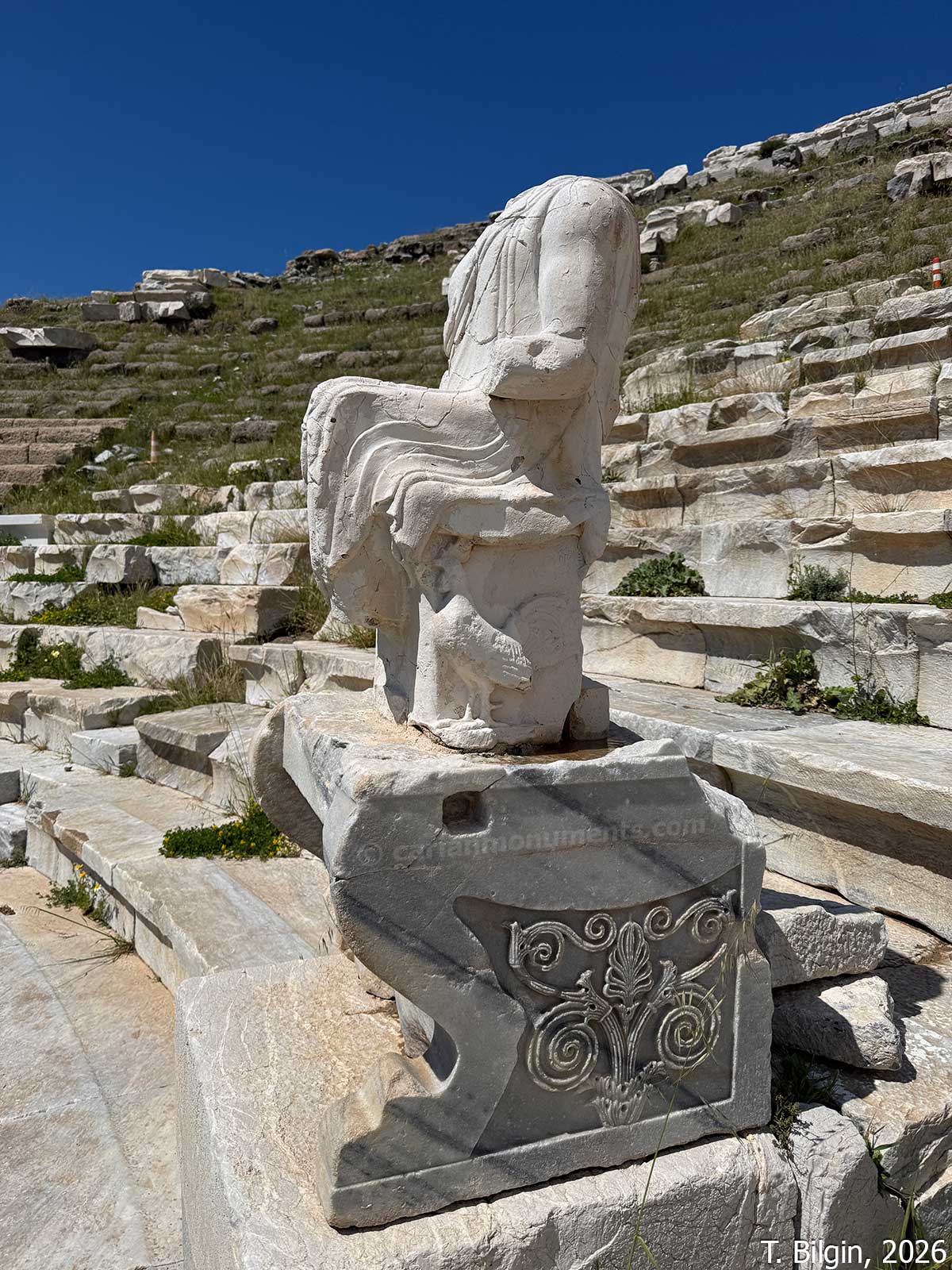
Due to the steep terrain of the mainland, the city utilized a terrace system. Major public buildings like the theater, agoras, and temples were situated on the mainland, utilizing leveled terraces, while residential areas occupied the flatter sections. The city followed a Hippodamian (grid) plan, reflecting advanced urban design principles.







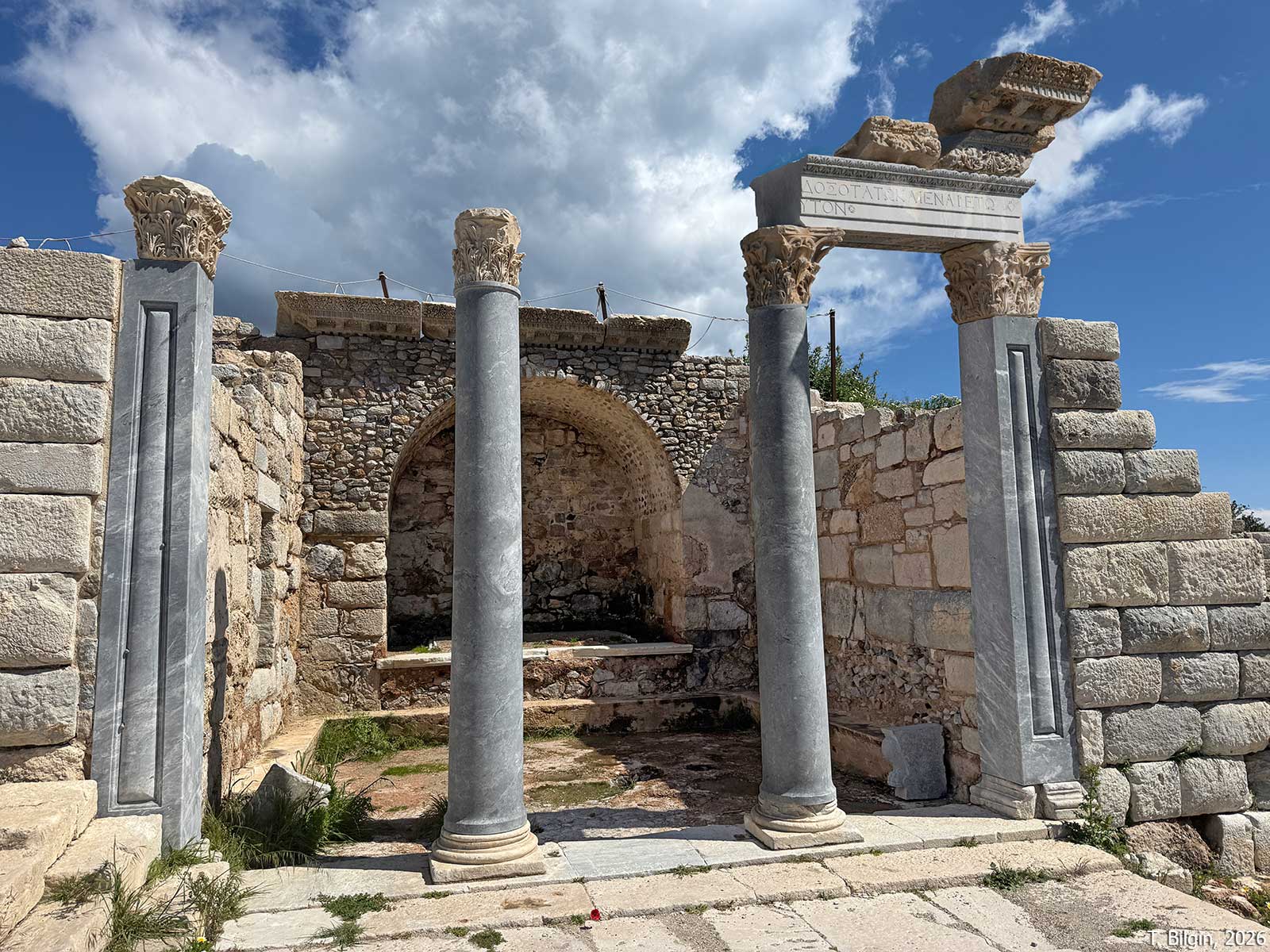
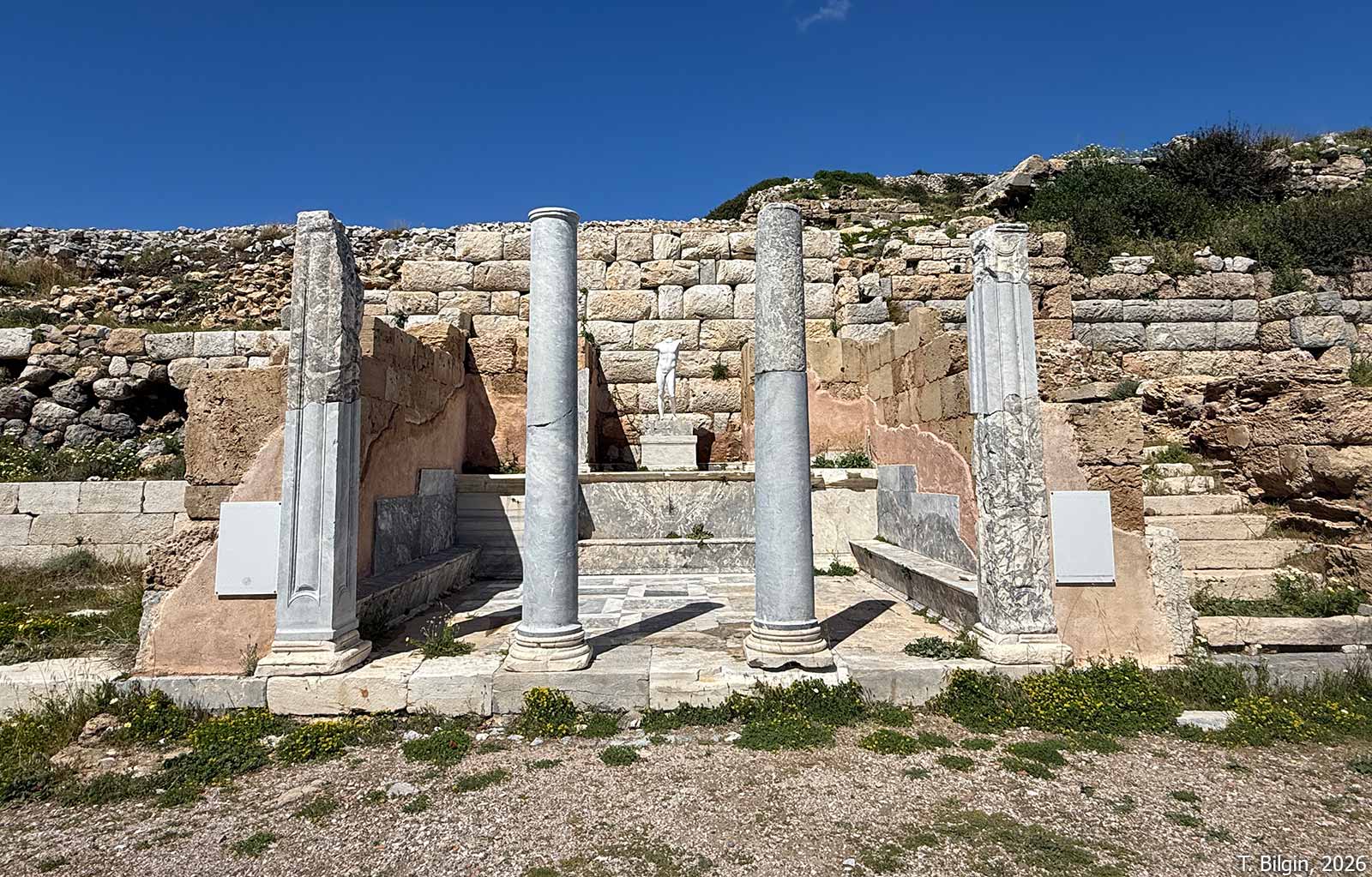
The Aphrodit of Knidos
The Aphrodite of Knidos, a masterpiece sculpted by Praxiteles in the 4th century BCE, achieved legendary status as the first life-sized nude depiction of the goddess, becoming the city’s defining symbol after the Knidians accepted the nude version that the people of Kos had rejected. While the original statue is lost and known only through Roman copies, its original location remains a subject of archaeological discourse; the Round Temple, situated on the city’s highest terrace, was famously identified as the statue’s sanctuary by American archaeologist Iris C. Love in the 1970s, who also controversially claimed to have discovered the statue’s head. However, contemporary scholars argue that Love’s designation of this circular structure as the Temple of Aphrodite was erroneous.


The Lion Tomb
The Lion Tomb is a monumental tomb structure built on a rocky hill rising from the seashore a few kilometers southeast of Knidos. It was famously crowned by a colossal marble lion—weighing approximately 6 to 7 tons—that once surmounted its stepped pyramidal roof in clear imitation of the Mausoleum at Halicarnassus. The tomb site excavated by Charles Newton between 1858 and 1859, and the lion statue was transported to the British Museum. The tomb building has a square exterior plan resting on a high podium and a three-stepped crepidoma, enclosing a circular interior chamber. The tomb’s facade was constructed from local gray limestone in a pseudo-tetrastyle arrangement featuring Doric architectural elements, such as a triglyph-metope frieze and shield motifs carved between the central columns. Although Newton originally hypothesized that the monument commemorated the dead from the naval victory of 394 BC, contemporary scholarship and stylistic analysis of the architecture generally date its construction to the late 4th century BCE or the Early Hellenistic period.



References:
Antiquities of Ionia Vol. III, The Society of Dilettanti, London 1797.
Büyüközer, A. 2022. “Knidos ve Ionia Rönesansı,” TÜBA-AR 30, 65–89.
Doksanaltı, E. M., İ. Karaoğlan, & D. O. Tozluca. 2018. Knidos: Denizlerin Buluştuğu Kent, Ankara.
Doksanaltı, E. M. 2020. “Cnidus,” in The Carians, From Seafarers to City Builders, eds. O. J. Henry & A. Belgin-Henry, İstanbul, pp. 390–405.
Newton, C. T. 1863. A History of Discoveries at Halicarnassus, Cnidus, and Branchidae I-II, London.
Images:
Society of Dilettanti, 1797
C. Newton, 1862
Bora Bilgin, 2025, 2026
Ertuğrul Anıl, 2026
Tayfun Bilgin, 2026
Reha Özer, 2026