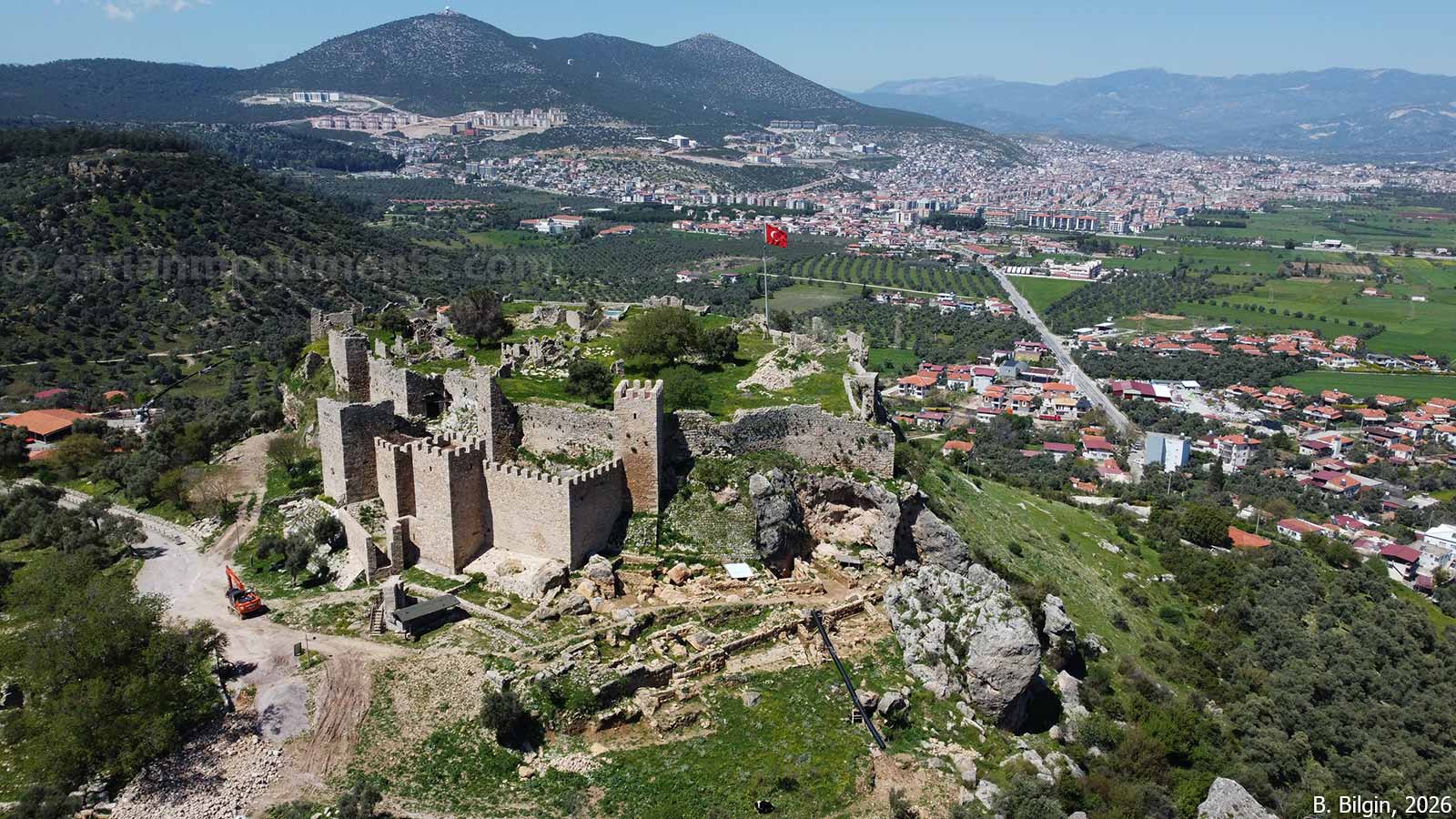
The city Mylasa is located on the western edge of the Milas plain, at the center of the modern city of Milas. The area has been continuously inhabited since antiquity. As in the present day, in antiquity it lay at a junction point that connected the coastal harbor settlements with the inland cities.
In historical sources earliest mention of Mylasa date to the 7th century BCE. Developing and growing as a city-state, Mylasa remained for a time under the rule of the powerful Lydian kingdom to the north before the Persian invasion in the 6th century BCE. In the 4th century BCE, the local Hecatomnid dynasty of Mylasa, acting as Persian satraps of the region, brought all of Caria under its control. Until King Mausolus established his new capital at Halicarnassus, Mylasa served as the administrative center of Caria. At times during the Hellenistic and Roman periods the city also served as a provincial center.
The history of research dates back to the 17th century. Jacob Spon, who visited the city in 1675, was the first to state that this place was the ancient city of Mylasa. Because it lies beneath the modern urban fabric, large-scale excavations of the ancient city have not been possible. In the 1990s, detailed surface surveys were carried out in the city and across the Milas plain by Frank Rumscheid. The Hecatomnid tomb at Uzunyuva, however, could only be identified in the 2000s following illegal excavations carried out by looters.
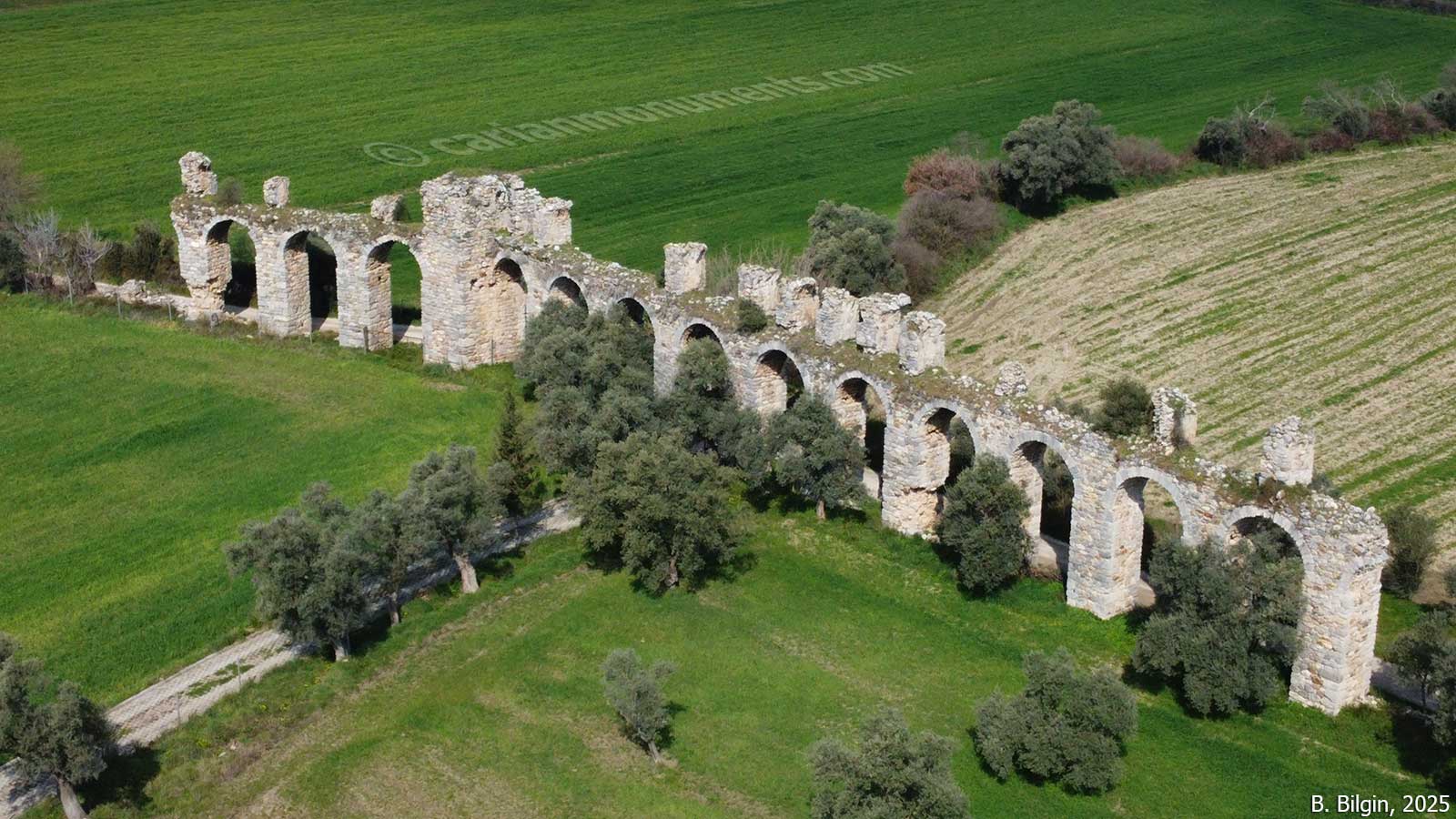
Apart from the Hecatomnid period Uzunyuva monumental tomb and the likely Hellenistic period Berberini rock-cut tomb, most of the surviving structures belong to the Roman period: the Baltalı Gate, the Column of Menandros, the Gümüşkesen monumental tomb, aqueducts, and bath buildings.






Hekatomneion
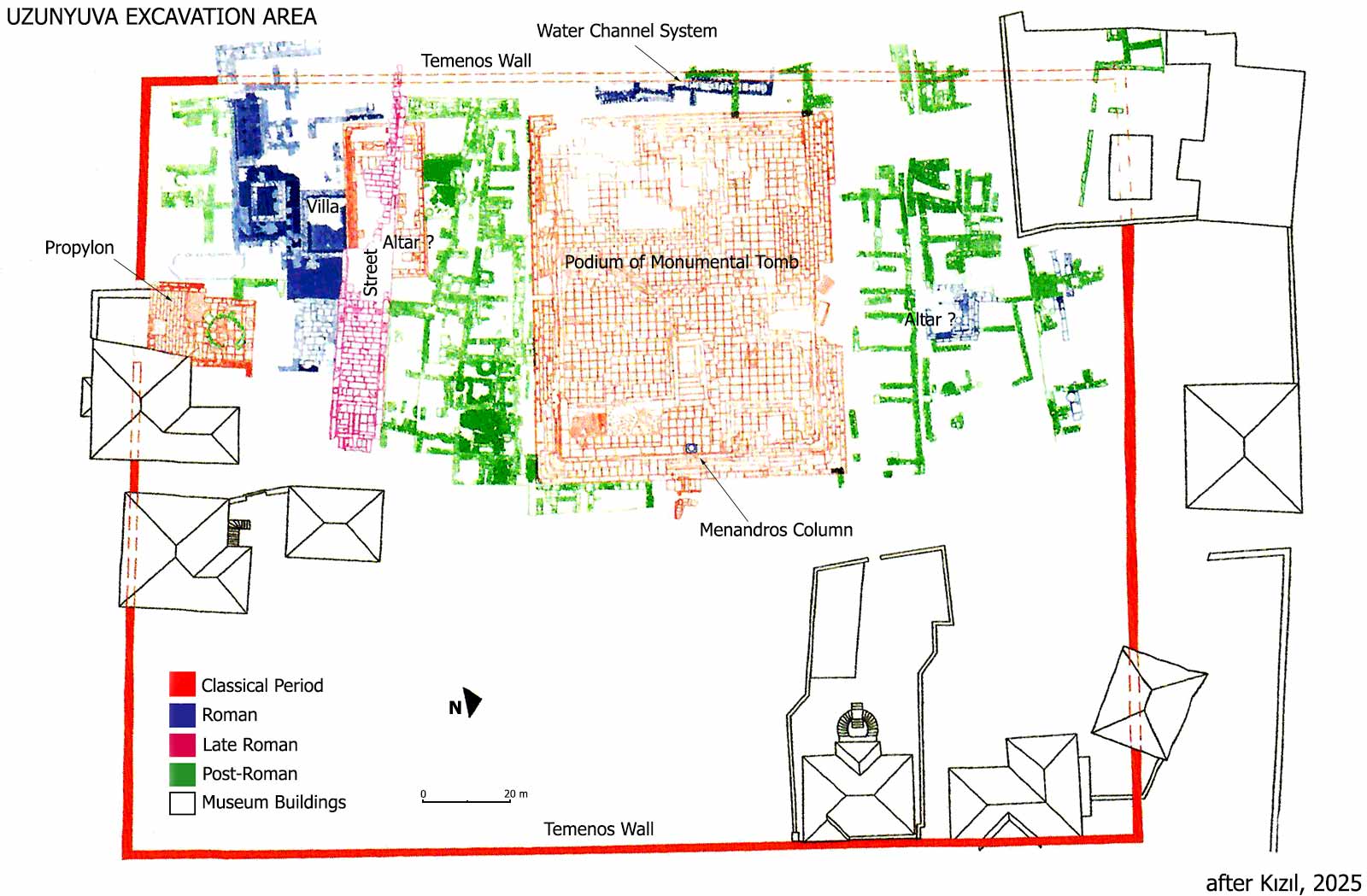
The Hecatomneion is a monumental tomb located in the center of Mylasa (modern Milas), representing one of the most significant archaeological finds of the 21st century. It is believed to be the tomb of Hecatomnus, the first satrap of the Hecatomnid dynasty and father of Mausolus. Locally known as Uzunyuva (Turkish for “Tall Nest”) due to the stork nests atop the honorary column that was erected on the middle axis of the complex in the Roman period. The complex features an enormous artificial terrace measuring approximately 90.5 by 117 meters. The monument is thought to be a prototype for the Mausoleum of Halicarnassus, one of the Seven Wonders of the Ancient World.
The tomb’s architectural design includes a rectangular platform rising on a six-step crepidoma. Below the surface, the structure contains a 9.30-meter-long dromos leading through a stone door (stomion) to a burial chamber constructed directly into the rock. Archaeological evidence suggests the monument remained unfinished at the podium level, likely because Mausolus relocated the Carian capital to Halicarnassus around 370 BCE.
Inside the burial chamber are a marble sarcophagus and wall paintings applied directly to the stone. The sarcophagus reliefs depict a banquet scene featuring Hecatomnus and his wife Aba, a lion hunt likely representing Mausolus, and scenes of familial mourning. Additionally, the chamber walls are decorated with painted friezes in a miniature style depicting mythological battles such as the Amazonomachia. Adjacent to the podium stands a large monumental altar, most possibly dedicated by Mausolus to his ancestors.



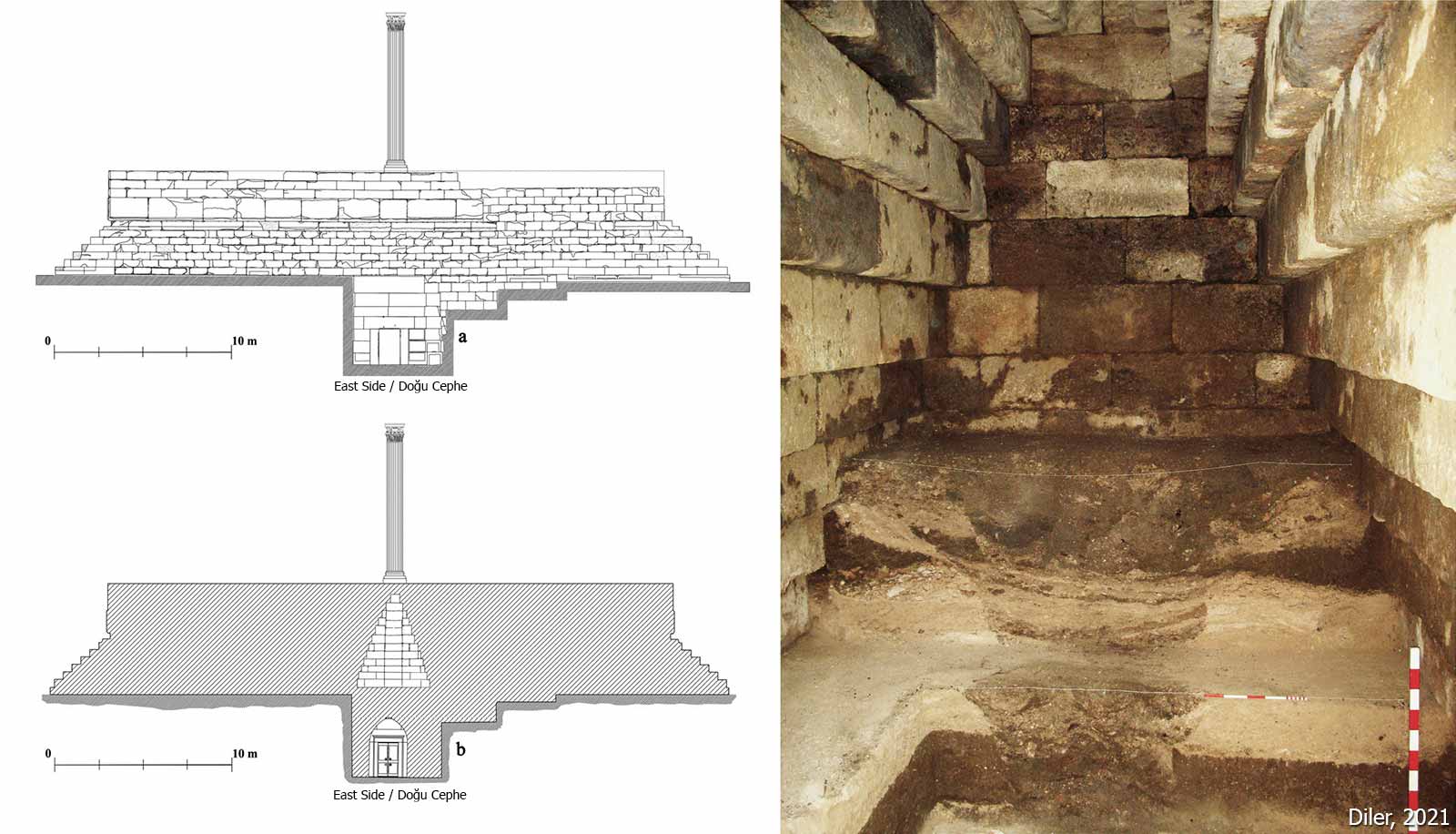


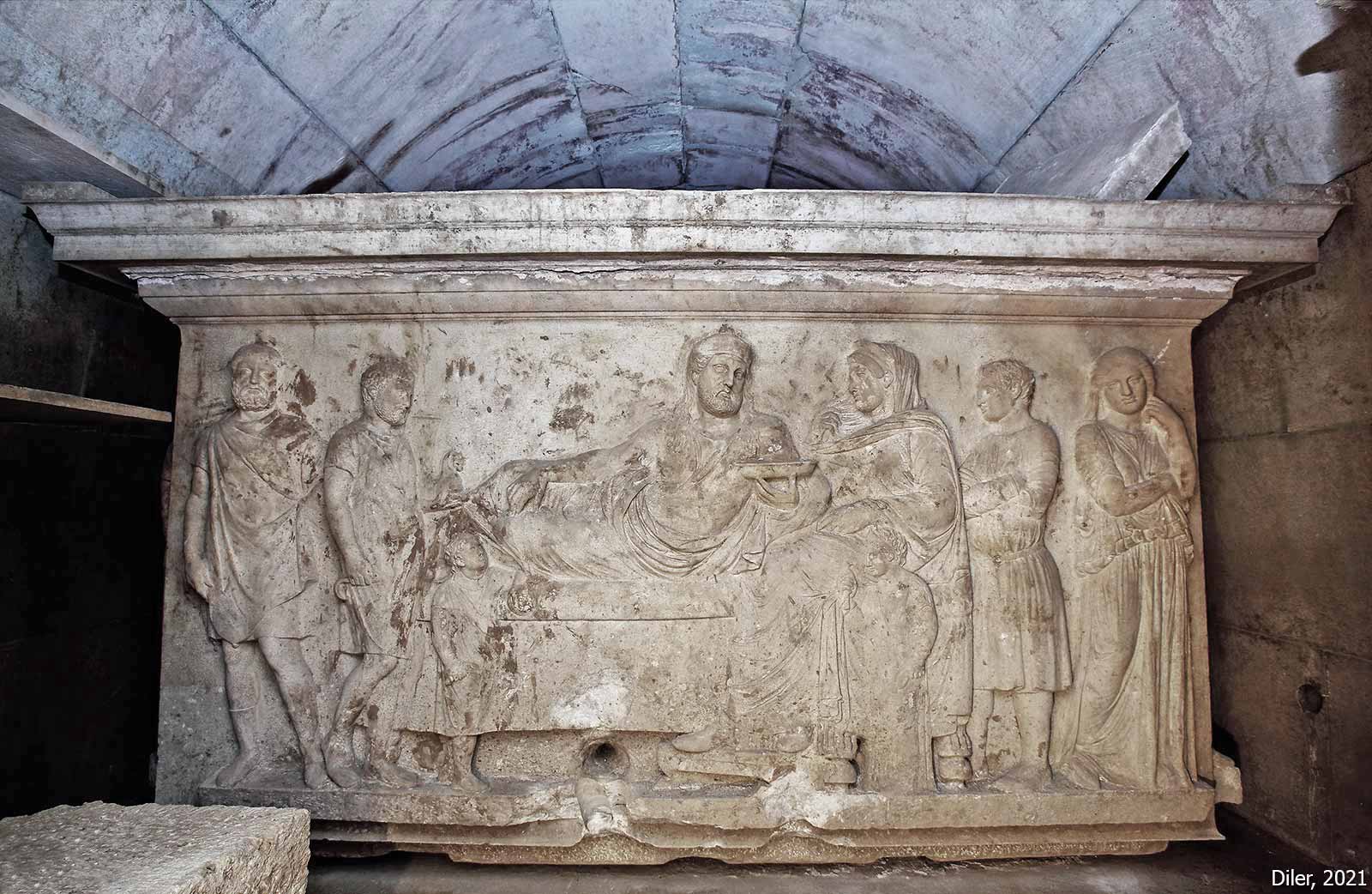

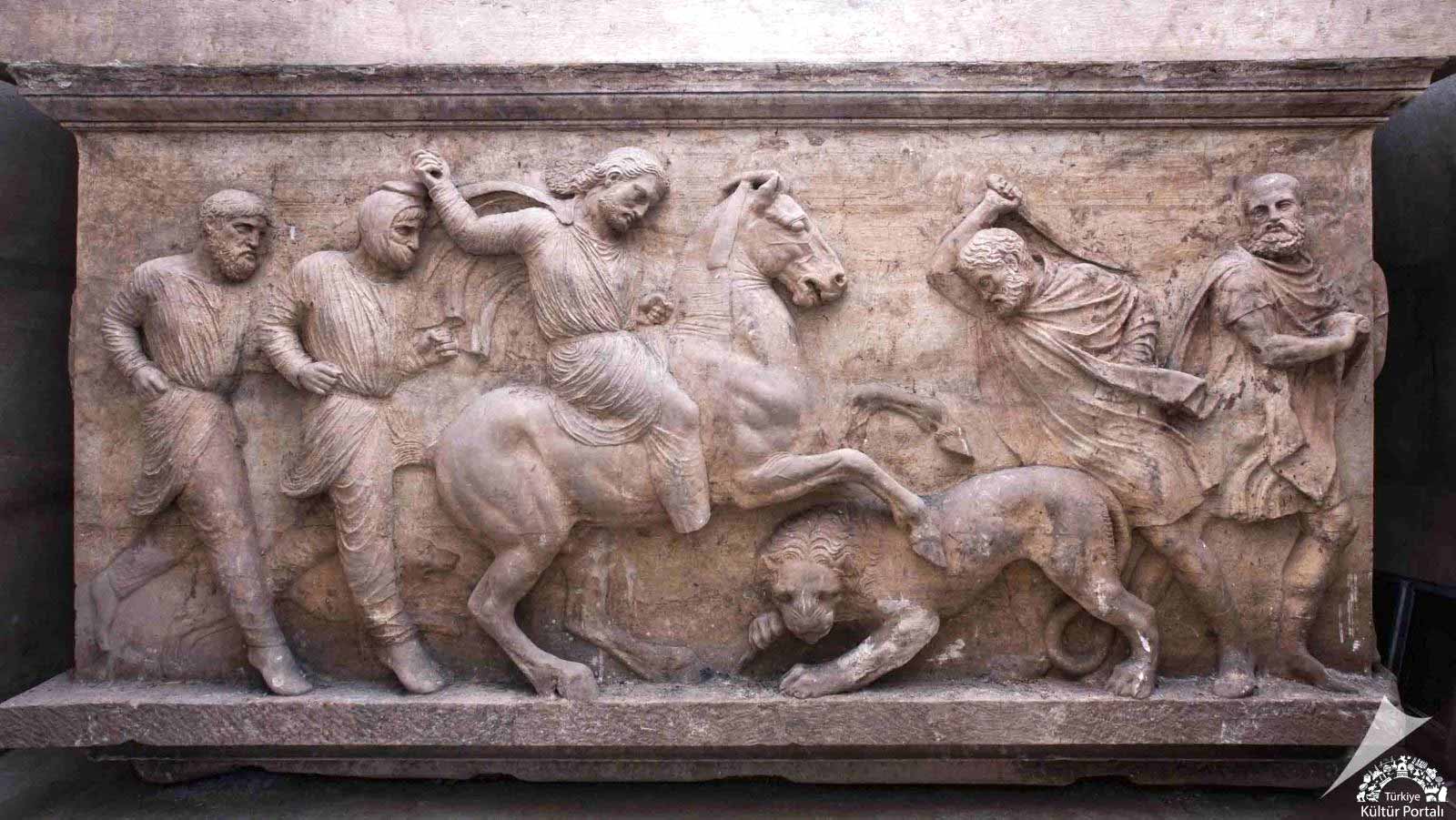


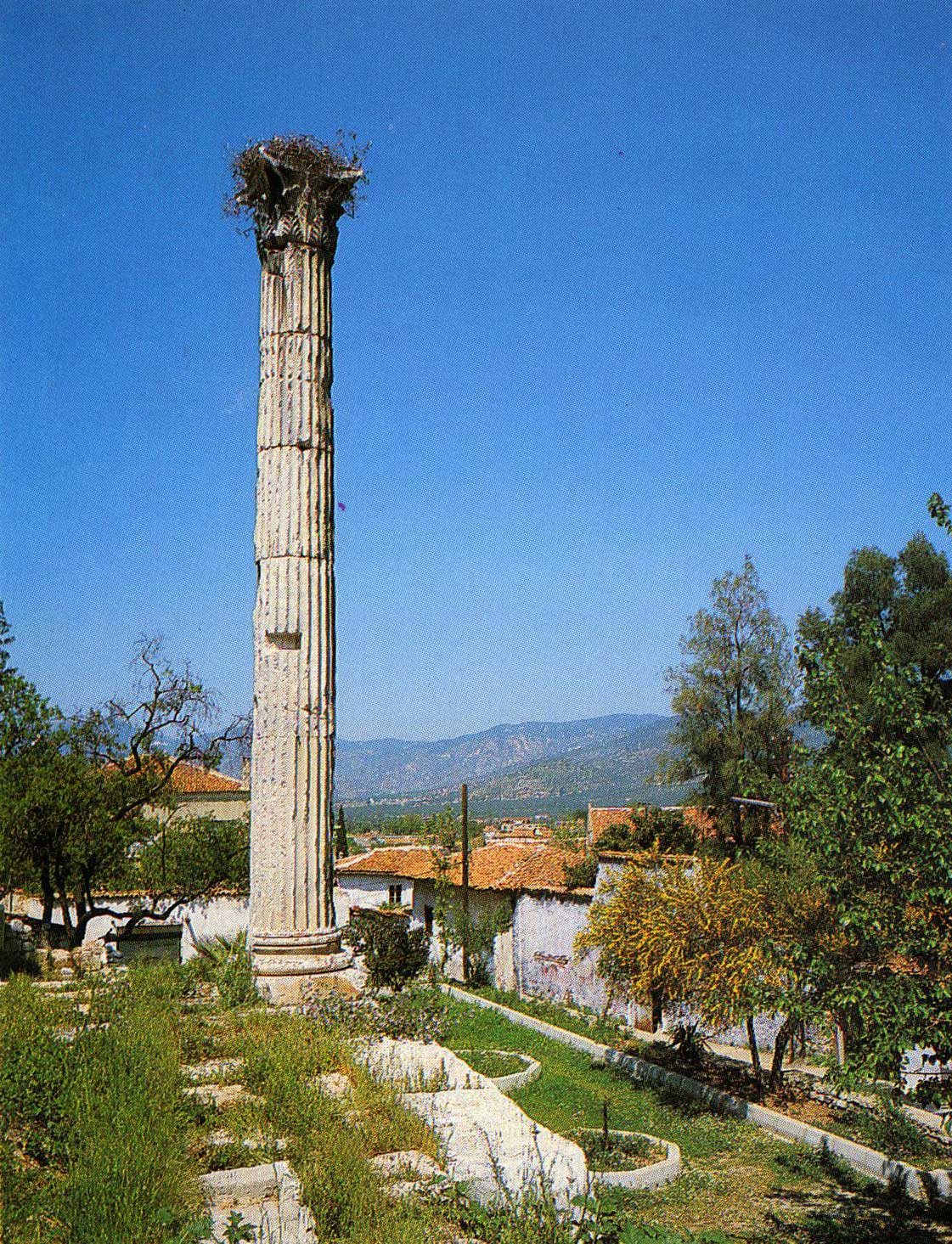
The Honorary Column of Menandros (Uzunyuva)
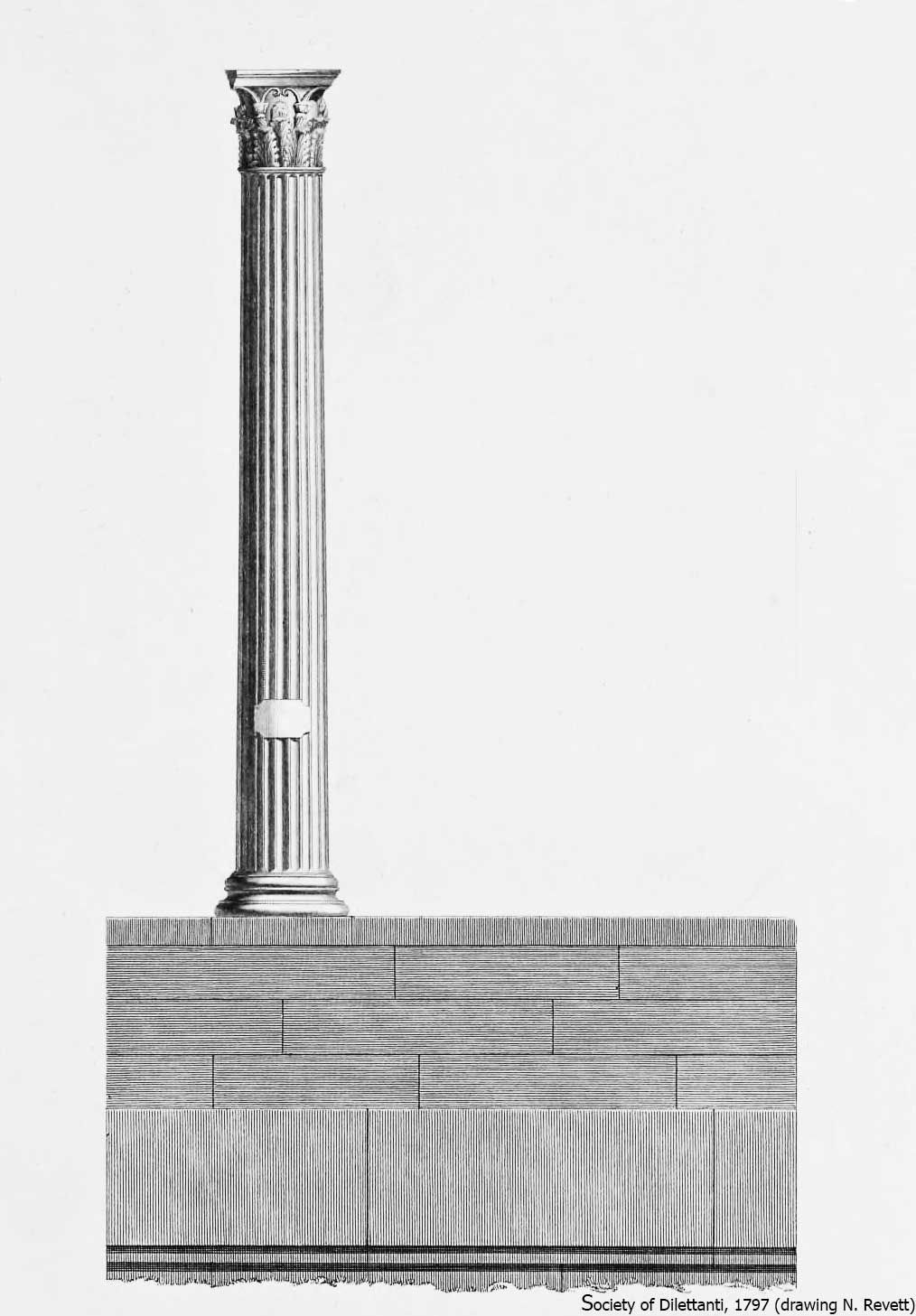
The Honorary Column of Menandros is a monumental Corinthian column located on the eastern edge of the podium of the Hecatomneion in Milas (ancient Mylasa). Standing 8.22 meters high, the structure consists of an Attic-Ionic base, a fluted shaft composed of five drums, and a Corinthian capital. The monument is locally known as Uzunyuva (“Tall Nest”) due to a stork nest often built atop the capital.
Based on the stylistic features of the capital and historical records, the column is dated to the Augustan period (late 1st century BCE to early 1st century CE). It was erected centuries after the Hecatomneion was built and has no structural function regarding the tomb’s podium; rather, it served as a pedestal for a statue of Menandros.
A Greek inscription originally located on a rectangular panel on the column’s shaft identified the honoree as Menandros, son of Ouliades and grandson of Euthydemos, a famous Mylasan orator and leader. The inscription, recorded by early travelers like Jacob Spon and John Kovel, stated that the people of Mylasa honored him as a “benefactor of his home town and descendant of benefactors”. The text is no longer visible today because a house owner in the 19th century chiseled it off to stop travelers from trespassing to read it.
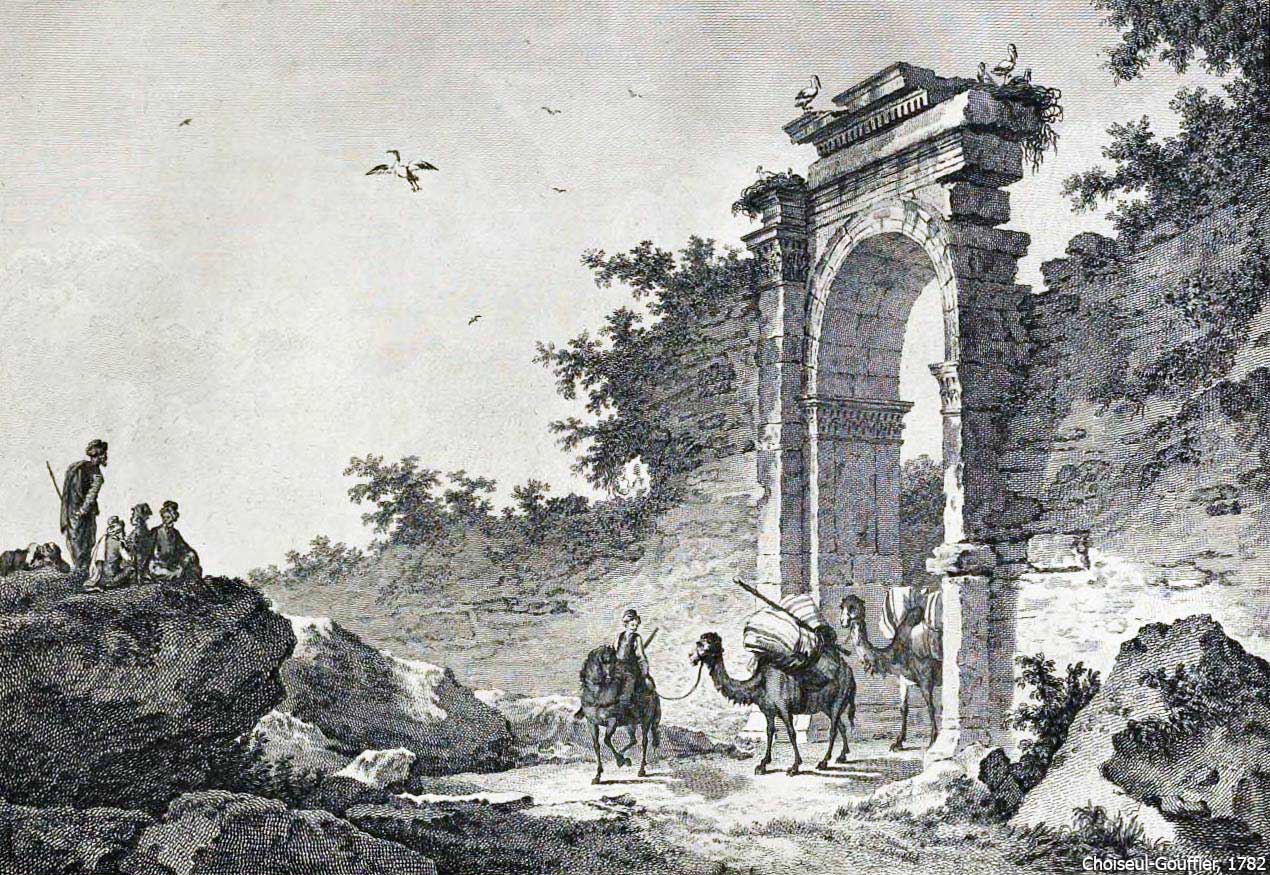
Baltalı Kapı (The Labrys Gate)
The Baltalı Kapı is a monumental Roman arch gate located in the Hacıapti district of modern Milas (ancient Mylasa). Constructed from white marble quarried from Mount Sodra, the structure stands approximately 6.45 meters high and was originally integrated with a contemporary aqueduct system.
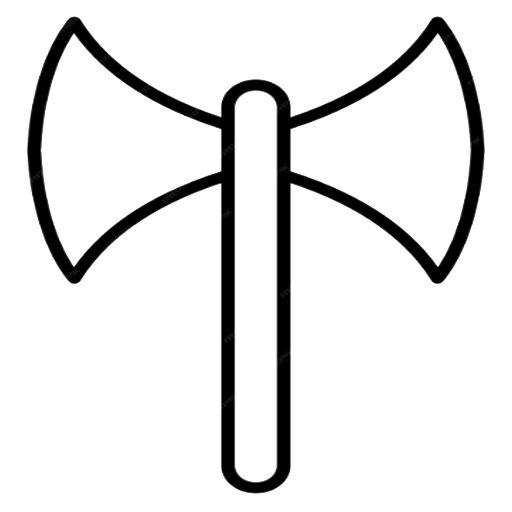
The monument derives its local name from the relief of a Labrys (double-headed axe) carved into the keystone of the northern arch, a symbol associated with the Carian deity Zeus Labraundos. The gate features piers topped with Corinthian capitals decorated with acanthus leaves and tongue patterns. Stylistic analysis of the deep drilling and geometric gaps in the acanthus leaves suggests the monument dates to the late 2nd century CE.
Functionally, the Baltalı Kapı was not a defensive city gate, as no connecting fortification walls have been discovered in the area. Instead, it likely served a religious purpose. The Labrys depicted on the keystone features eyes, interpreted as the “eyes of Zeus” looking northward toward the sanctuary of Labraunda. Consequently, the gate is believed to have marked a ceremonial starting point on the sacred way for pilgrims traveling from Mylasa to Labraunda. While early travelers documented an architrave and frieze above the arch, these elements are no longer in situ.


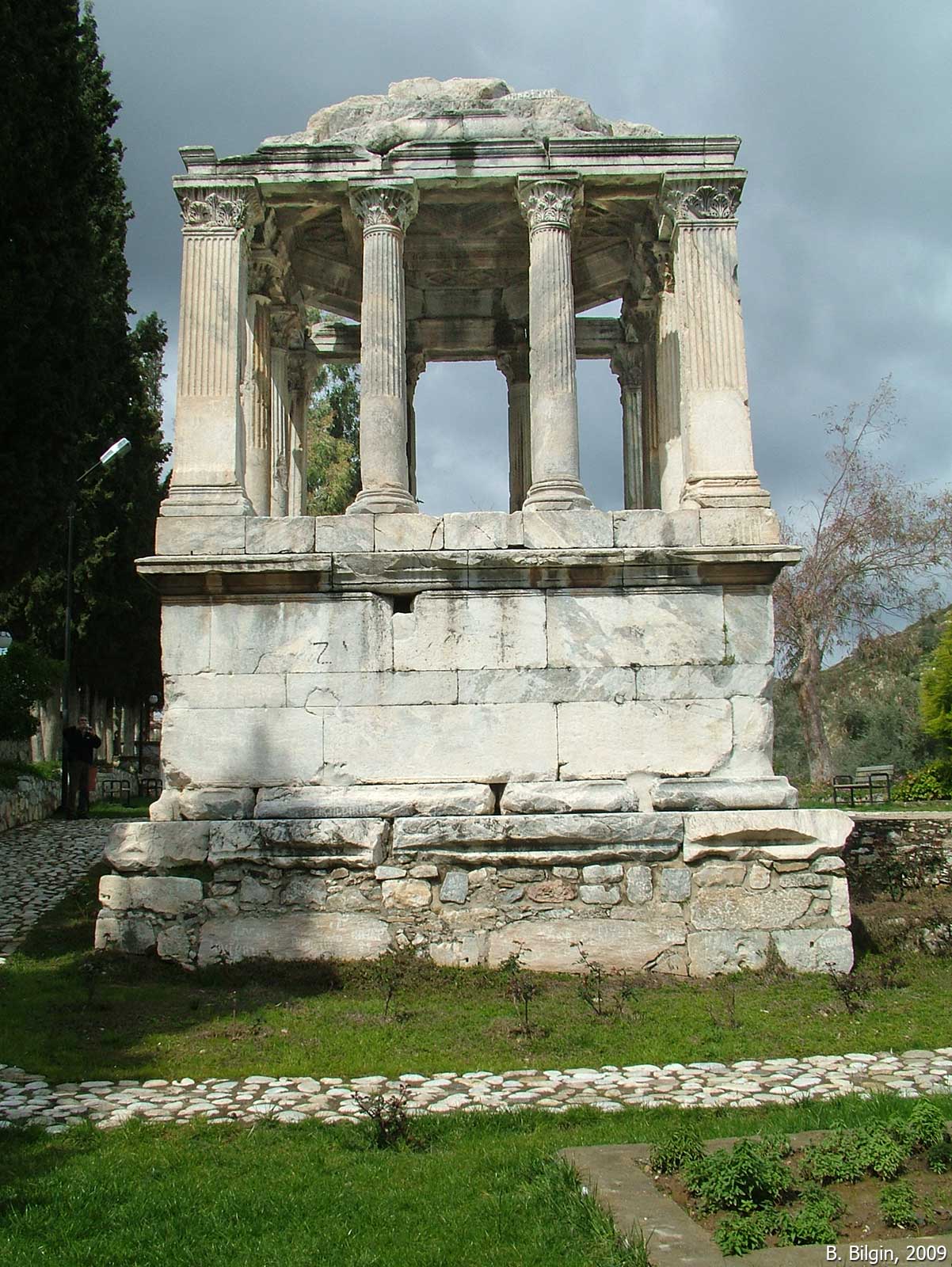
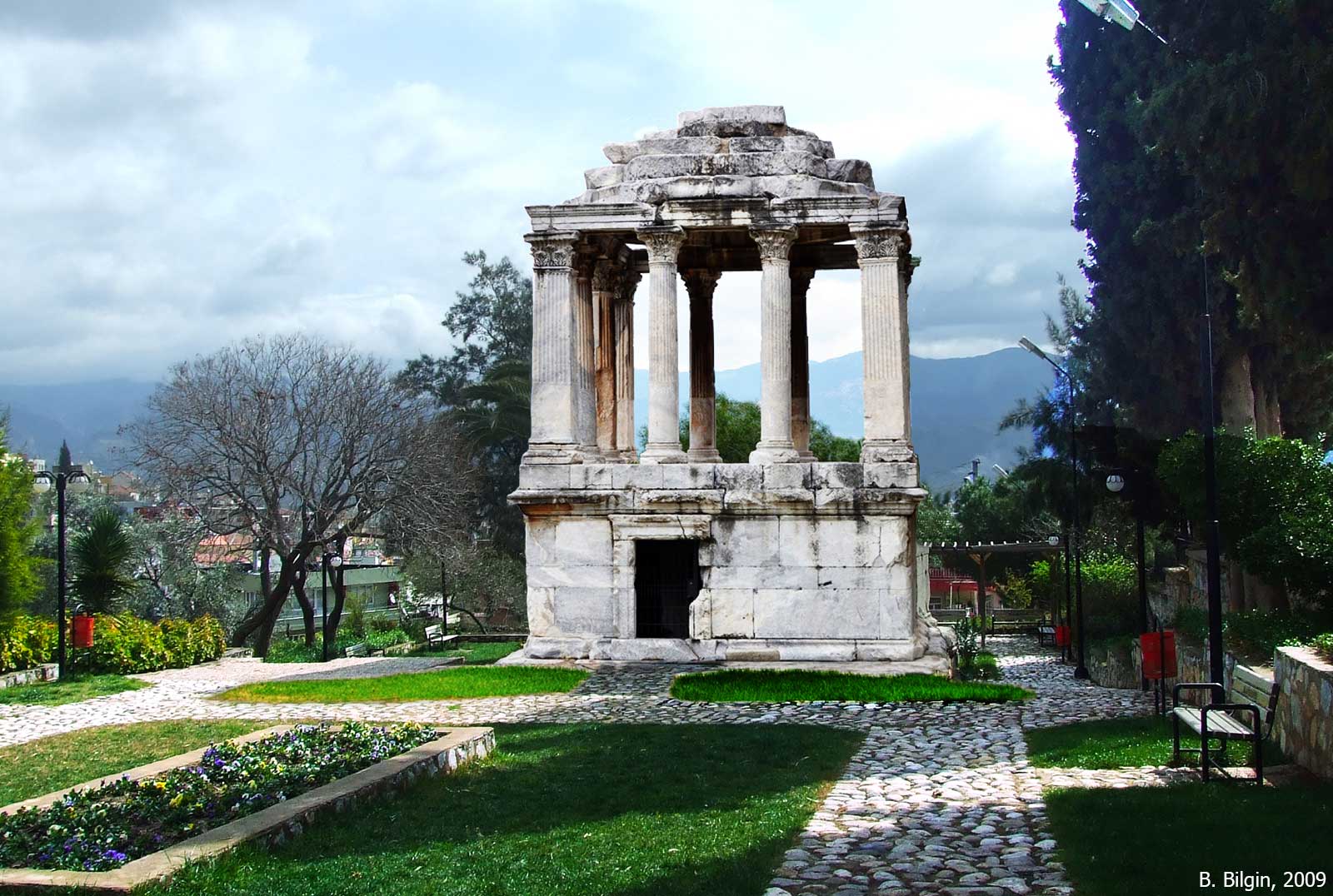
Gümüşkesen Tomb
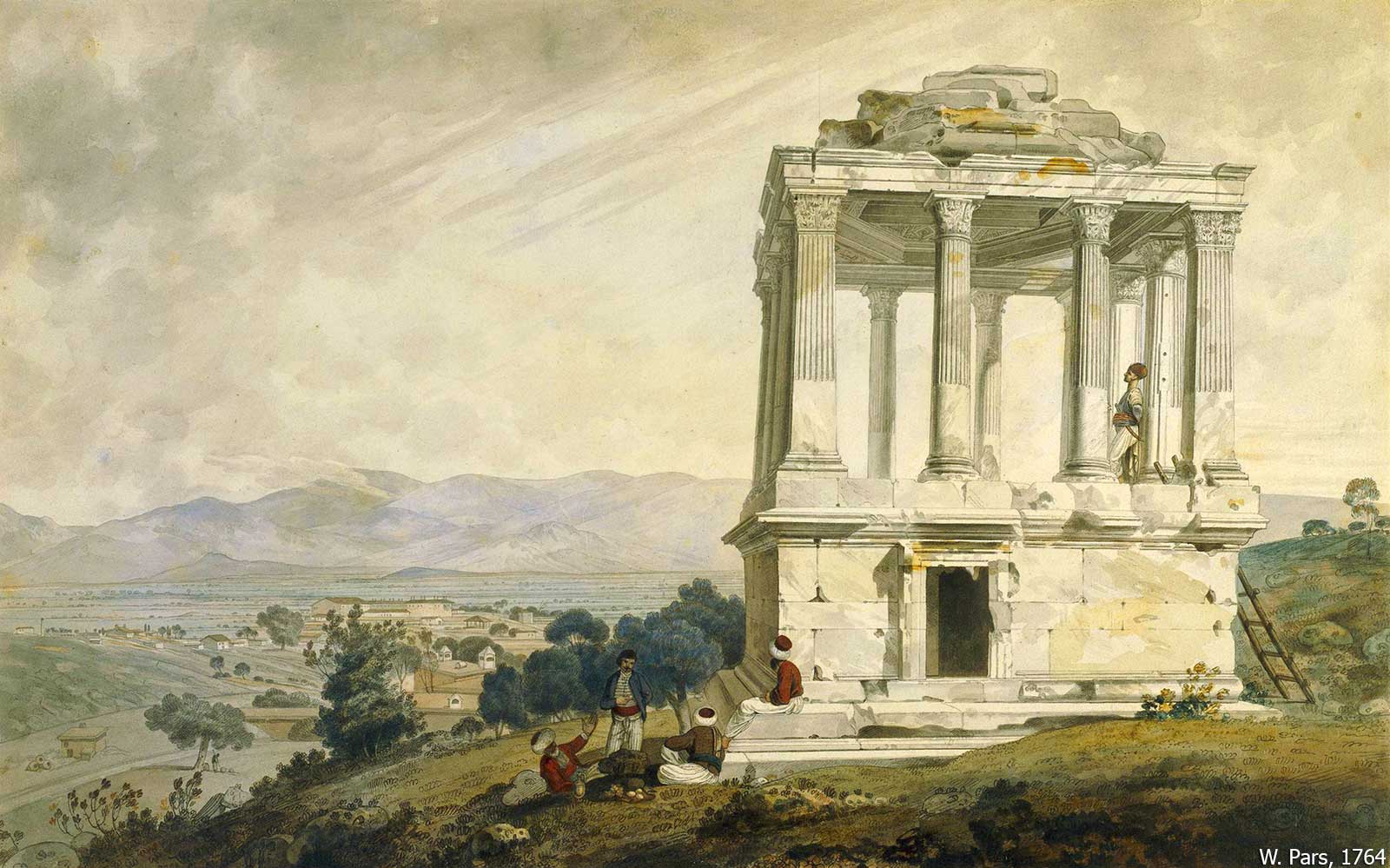
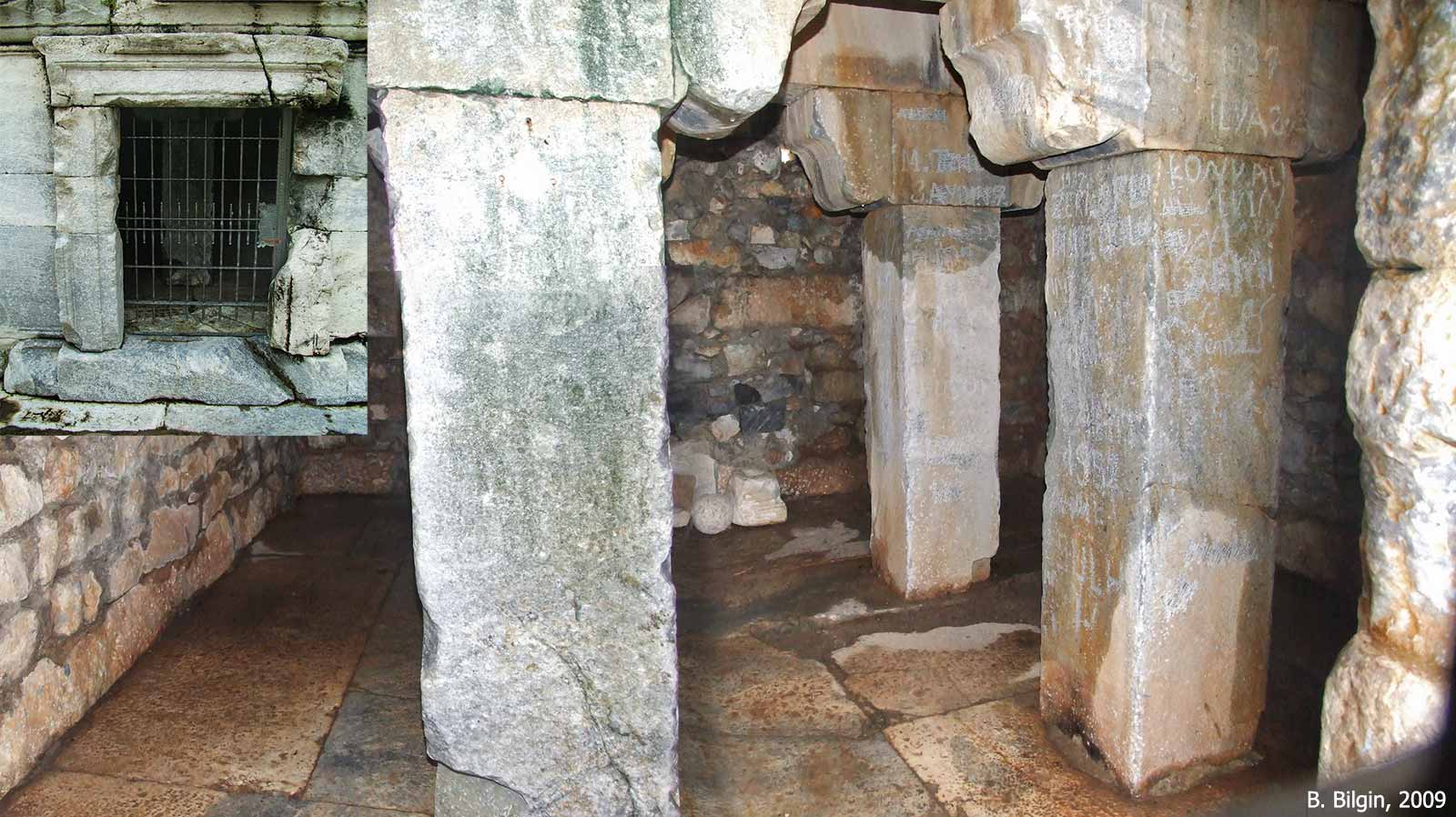
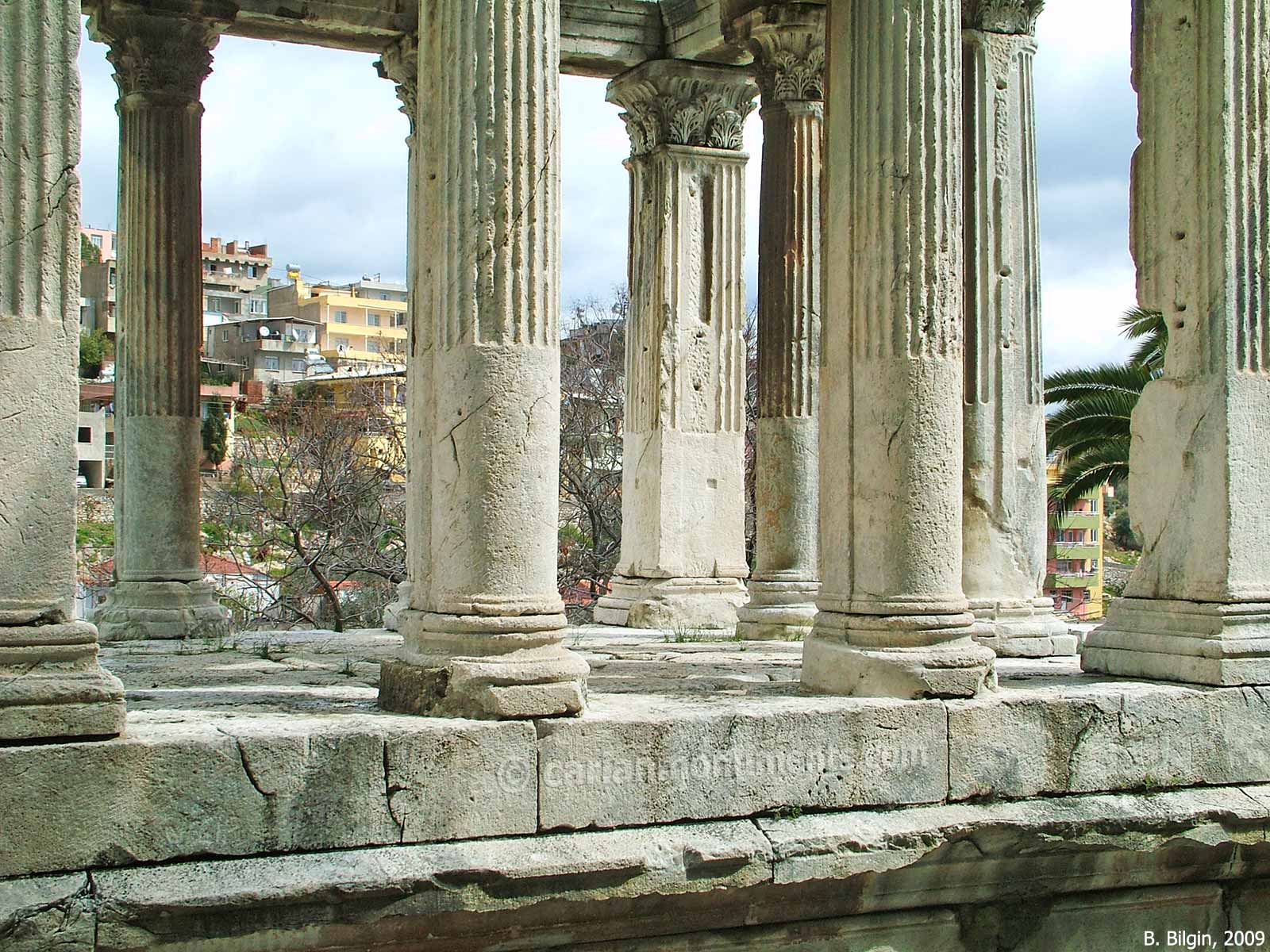
The Gümüşkesen Tomb is a well-preserved Roman mausoleum located at the eastern foot of Mount Sodra in Milas (ancient Mylasa), situated in what was the western necropolis of the ancient city. Tomb owner is unknown since there is no inscription on it. It takes its name from Gümüşkesen street, on which it is located.
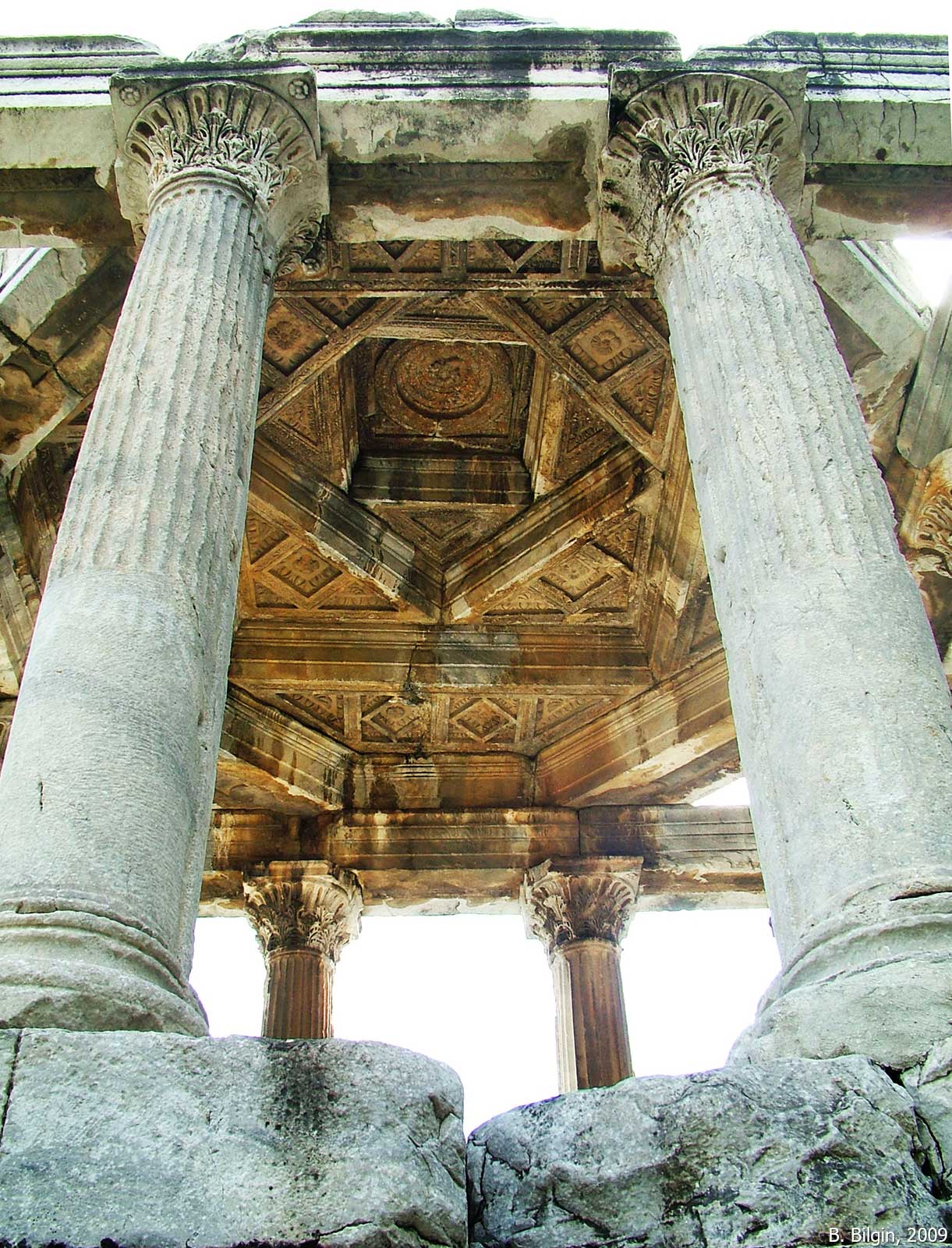
Architecturally, the monument is a two-story structure featuring a high podium, a colonnaded middle section, and a stepped pyramidal roof. Like many monumental structures in ancient Mylasa, it was built with marble quarried from Mount Sodra. Its construction technique utilizes upright runner blocks with horizontal binder blocks set between them, a masonry style it shares with the nearby Baltalı Kapı (The Labrys Gate). The roof consists of five rows of beams placed crosswise on top of each other, forming a pyramidal composition. The ceiling of the monument is decorated with geometric and floral motifs. It is also possible that there was once a statue on top of the pyramidal roof.
The tomb dates to the first half of the 2nd century CE. Scholars suggest that the Roman citizen who built Gümüşkesen was likely inspired by the Maussolleion and that the tomb is a small-scale replica of the Mausoleum of Halicarnassus.
Berberini Tomb
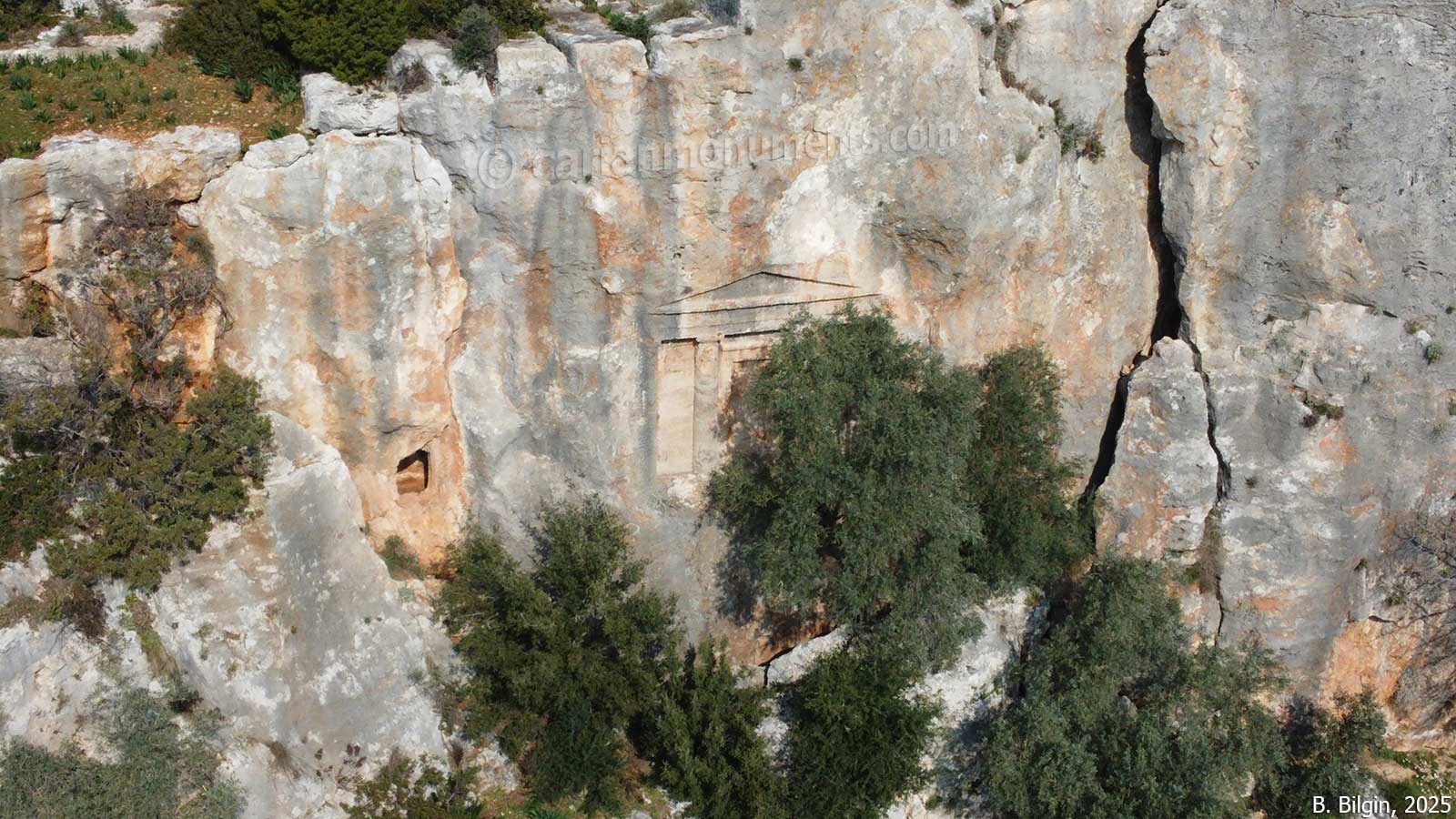
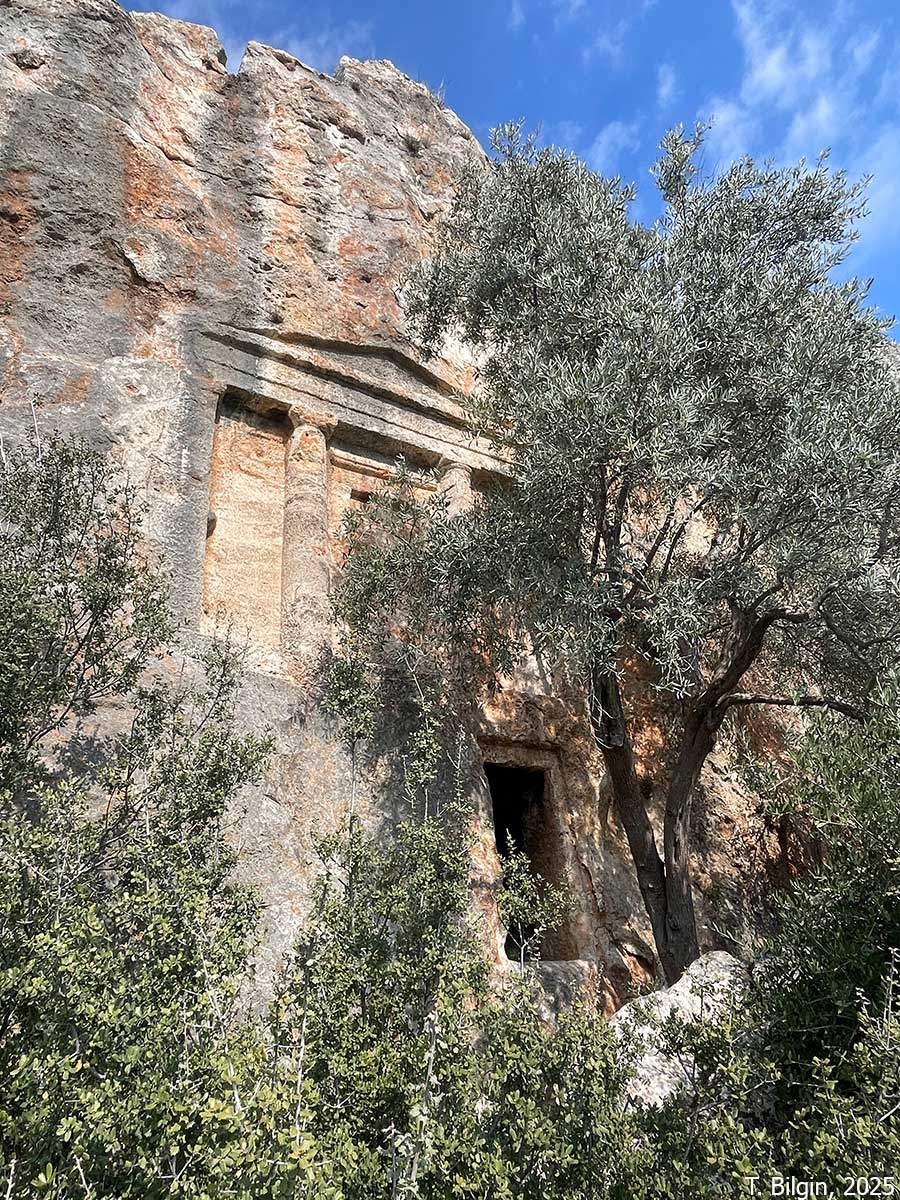
The Berberini Tomb (also known as Berber İni) is a monumental rock-cut tomb located approximately 3 km southwest of Mylasa (modern Milas) on the southern side of the road leading to the coast. It serves as a boundary marker for the city’s main necropolis, which extends from Hıdırlık Hill to this monument.
Architecturally, the tomb belongs to the “temple-tomb” type found in Caria but is distinguished by unique features. Its façade mimics a Greek temple distyle in antis, featuring a Doric colonnade. The Doric columns support an Ionic entablature, which parallels the “architectural experiments” of the Hecatomnid period seen elsewhere. Unlike other Carian rock-cut tombs where columns are detached, the Berberini tomb features half-engaged columns carved directly from the rock face. Furthermore, the “temple door” centrally located on the façade is a blind false door; the actual entrance to the funerary space is located beneath the stylobate. Internally, the tomb is complex, featuring both an antechamber and a burial chamber, a layout rare in Carian rock-cut architecture but comparable to the Mausoleum of Halicarnassus.
Based on the proportions of the Doric capitals and the profile of the echinus, the tomb is dated to the first third of the 4th century BCE (c. 400–360 BCE), coinciding with the early Hecatomnid dynasty. The identity of the tomb’s owner is not known. Earlier suggestions associated it with Hecatomnus, but the discovery of the Hecatomneion suggests Berberini likely belonged to another high-ranking noble or dynastic figure.

References:
Antiquities of Ionia, Vol. II, Society of the Dilettanti, London 1797.
Choiseul-Gouffier, M. G. F. 1782. Voyage Pittoresque de la Grece, Paris.
Diler, A. 2021. “The Hekatomneion in Mylasa: preliminary studies on the cult,” in Karia and the Dodekanese: Cultural Interrelations in the Southeast Aegean – I, eds. P. Pedersen et al., Oxford & Philadelphia, 87-106.
Henry, O. 2010. “Hekatomnos, Persian Satrap or Greek Dynast? The Tomb at Berber İni,” in Hellenistic Karia, eds. R. van Bremen & J-M Carbon, Bordeaux, 103-121.
Henry, O. 2020. “A survey of Carian Monumental Tombs and Mausolea,” in The Carians, The Carians, From Seafarers to City Builders, eds. O. C. Henry & A. Belgin-Henry, İstanbul, 296–319.
Kızıl, A. 2009. “Das Baltalı Kapı in Mylasa, die Labrys und die Augen des Zeus,” Anatolia Antiqua XVII, 255-264.
Kızıl, A. 2020. “The Sacred Precinct of Uzunyuva and the Architecture of Hekatomneion,” in Uzunyuva Hekatomneion in Mylasa, ed. A. Diler, İstanbul, 115-197.
Kızıl, A. 2025. Karia’nın Kadim Başkenti Mylasa – Milas. Coğrafya, Tarih, Arkeoloji, İstanbul.
Rumscheid, F. 2010. “Maussollos and the ‘Uzun Yuva’ in Mylasa: an unfinished Proto-Maussolleion at the heart of a new urban centre?” in Hellenistic Karia, eds. R. van Bremen & J-M. Carbon, Bordeaux, 69-102.
Rumscheid, F. 2020. “Mylasa,” in The Carians, From Seafarers to City Builders, eds. O. C. Henry & A. Belgin-Henry, İstanbul, 322–343.
Images:
William Pars, 1764
M. G. F. Choiseul-Gouffier, 1782
Society of the Dilettanti, 1797
A. Kızıl, 2020, 2025
A. Diler, 2021
Atlas Magazine, 06/2022
Tayfun Bilgin, 2025
Reha Özer, 2025
Bora Bilgin, 2009, 2025, 2026