Pedasa, located in the Gökçeler locality of modern Bodrum, was one of the eight principal Lelegian cities established on the Halicarnassus Peninsula. Ancient literary sources identify the Lelegians as ancestors of the Carians; however, archaeological evidence suggests they possessed a distinct cultural identity characterized by unique architectural forms and traditions. Historically, Pedasa is notable as the only Carian city to offer sustained resistance against Persian invasions in 546 BCE and during the Ionian Revolt in 499 BCE. While the city lost its political independence following the synoikism (consolidation) initiated by Mausolus in the 4th century BCE, archaeological data indicates habitation continued into the Byzantine period.
The archaeological investigation of Pedasa began in 1896 when researchers W. R. Paton and J. L. Myres first localized and identified the city. The site was further surveyed in the mid-20th century by G. E. Bean and J. M. Cook, while W. Radt conducted extensive surface surveys in the 1970s, focusing on the region’s distinctive Lelegian architecture and settlement models. Systematic scientific excavations were launched in 2007 by Adnan Diler, making Pedasa the first Lelegian city to be investigated through comprehensive archaeological excavation.
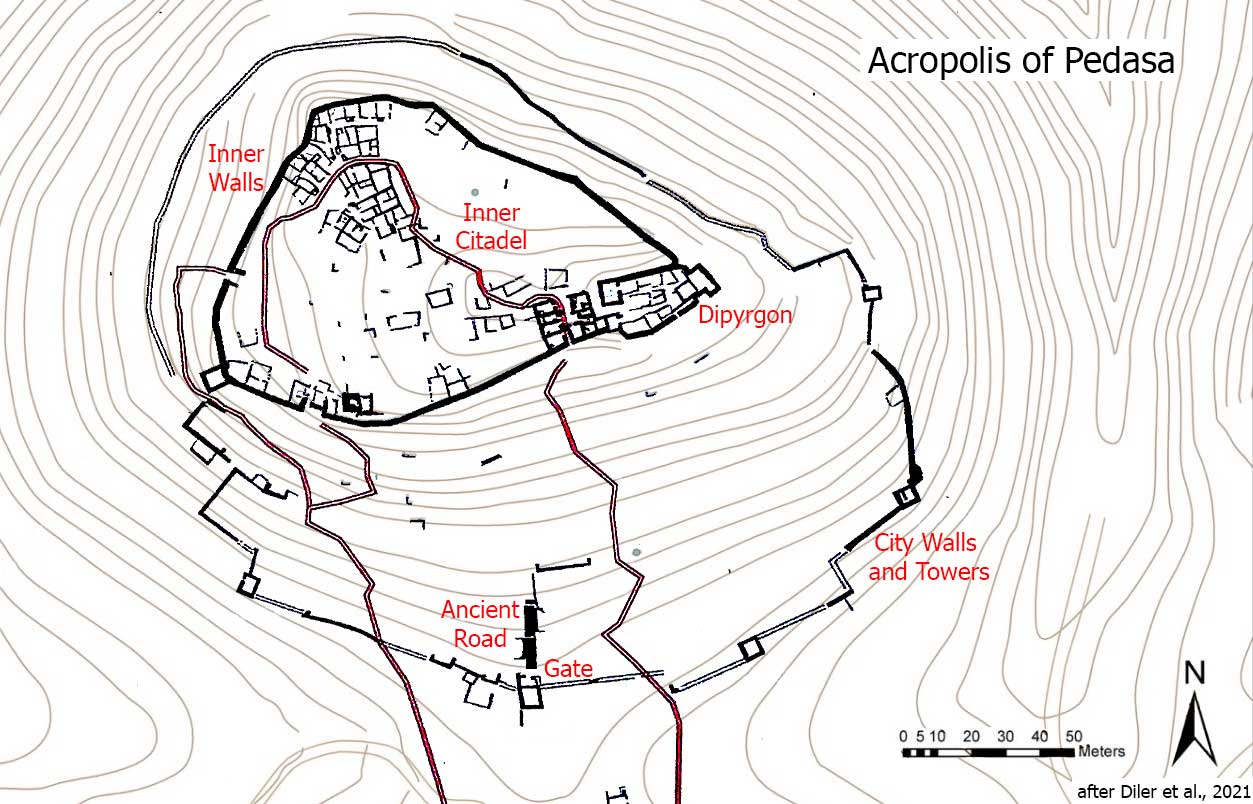
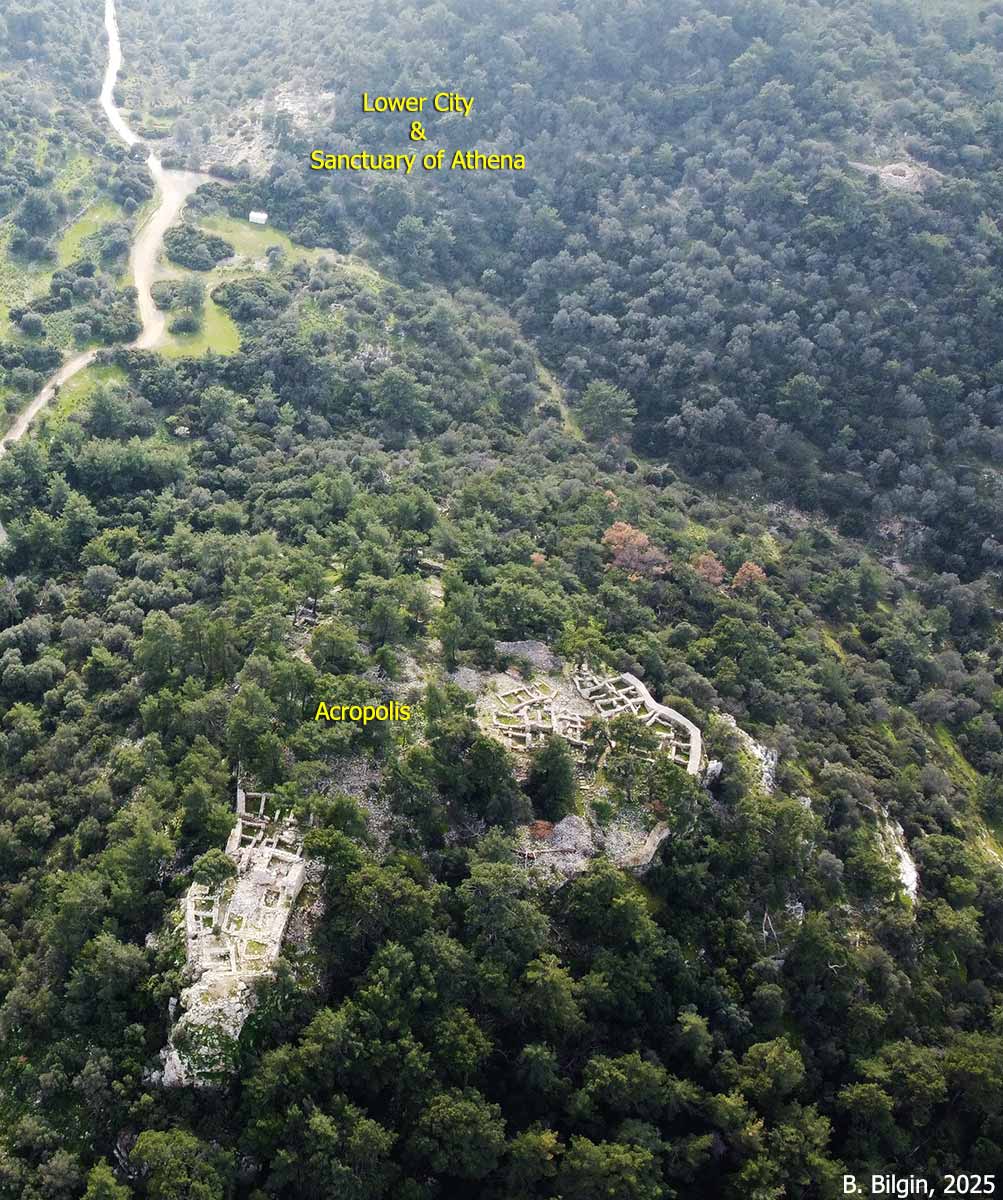
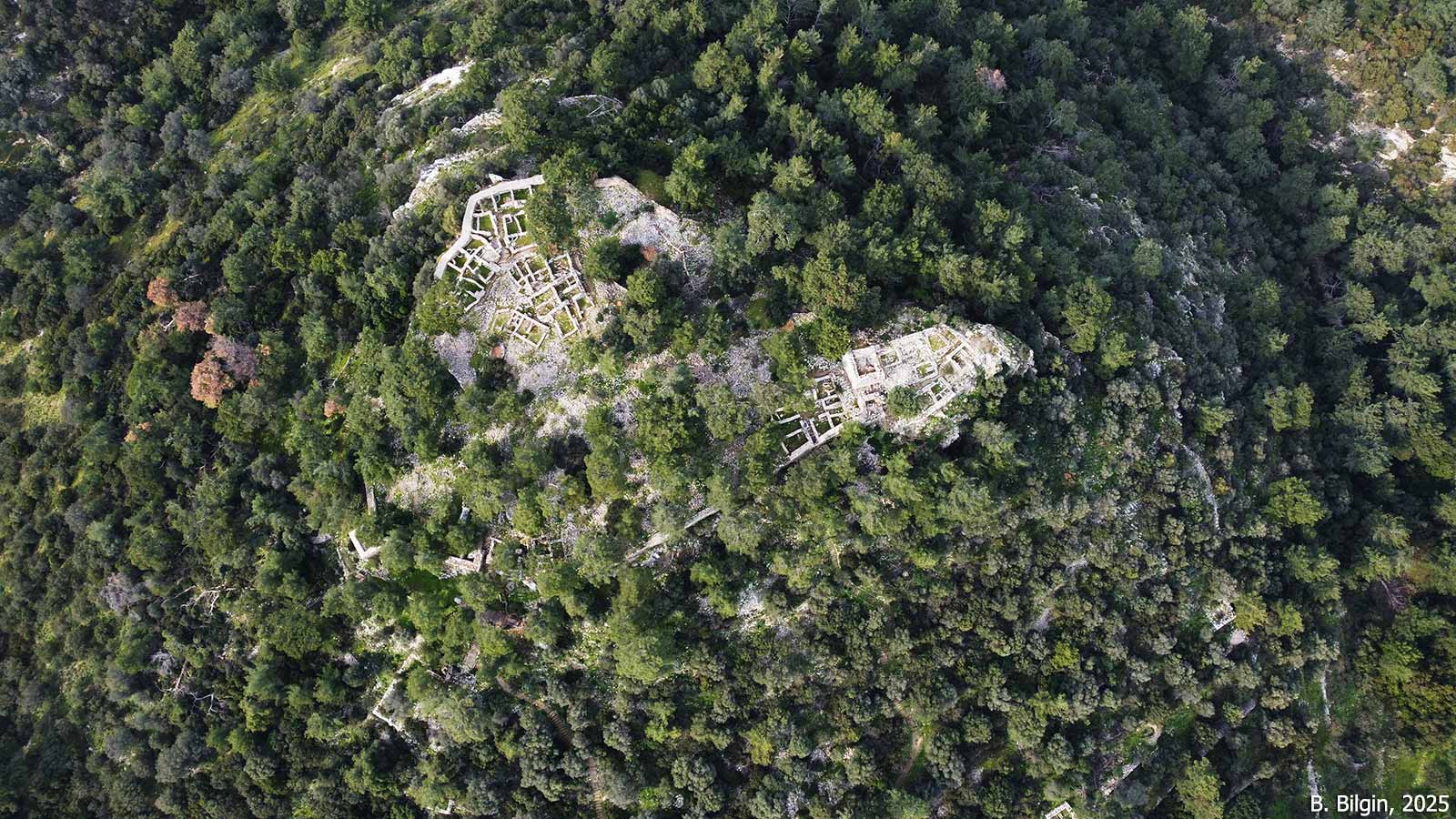
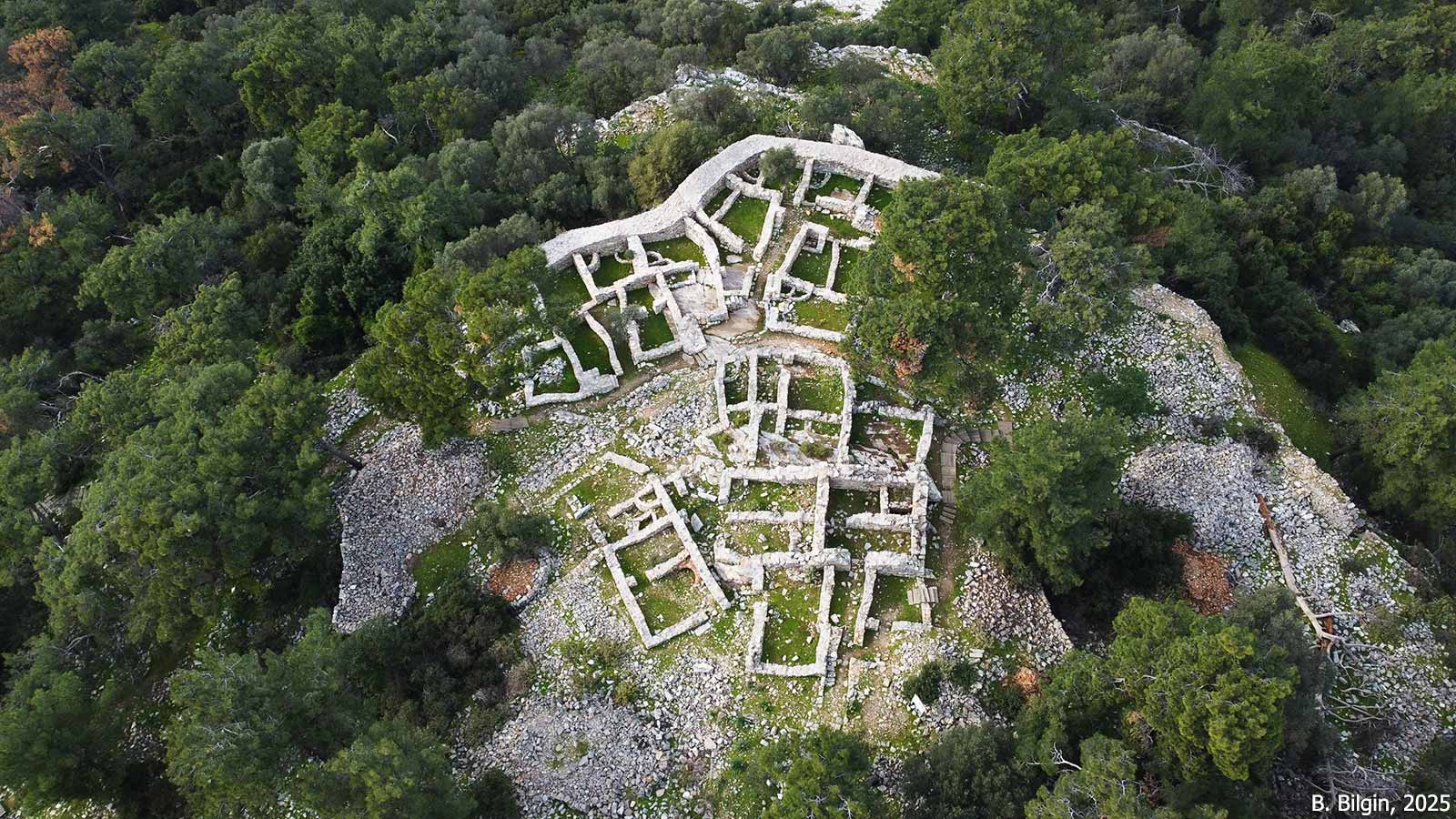
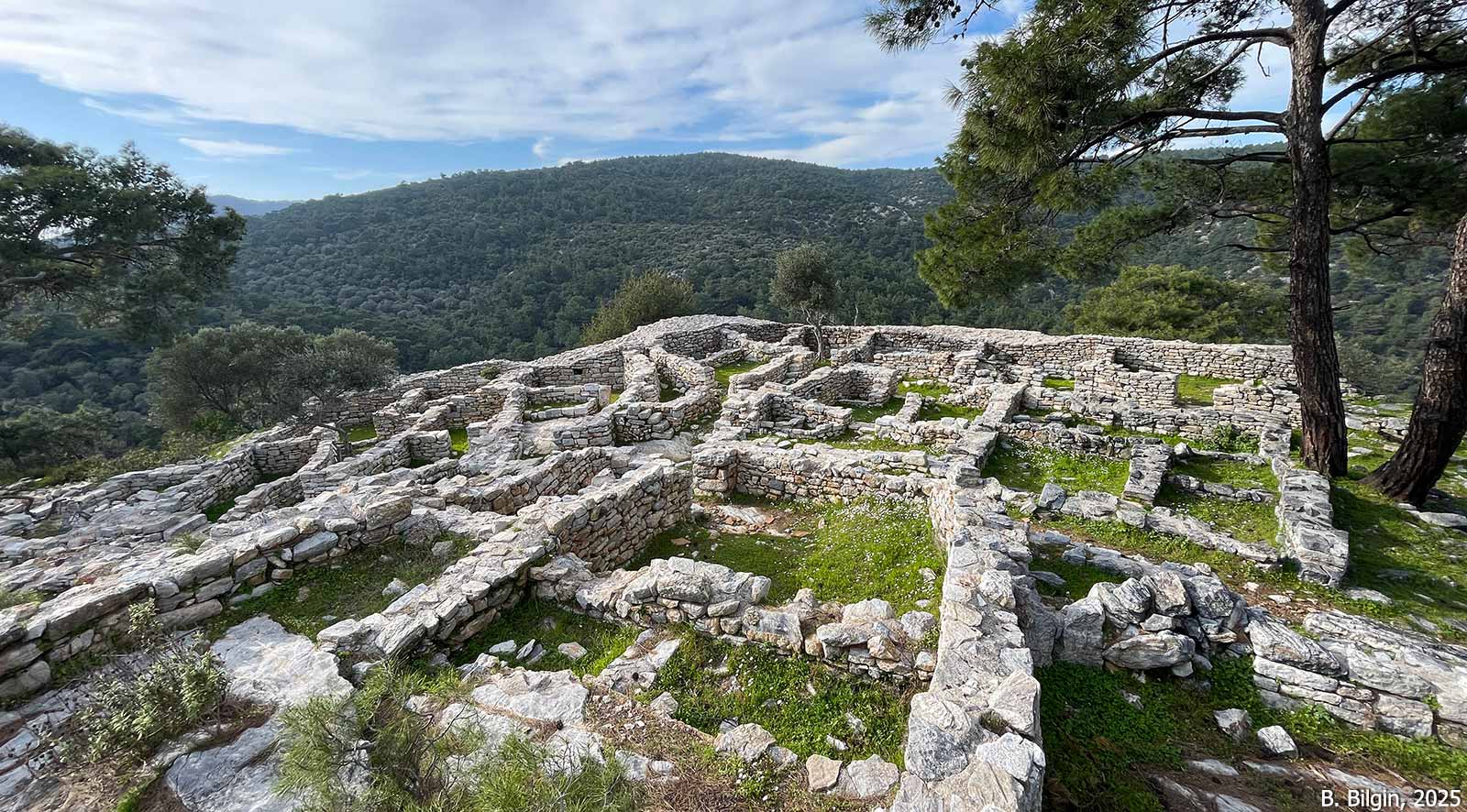
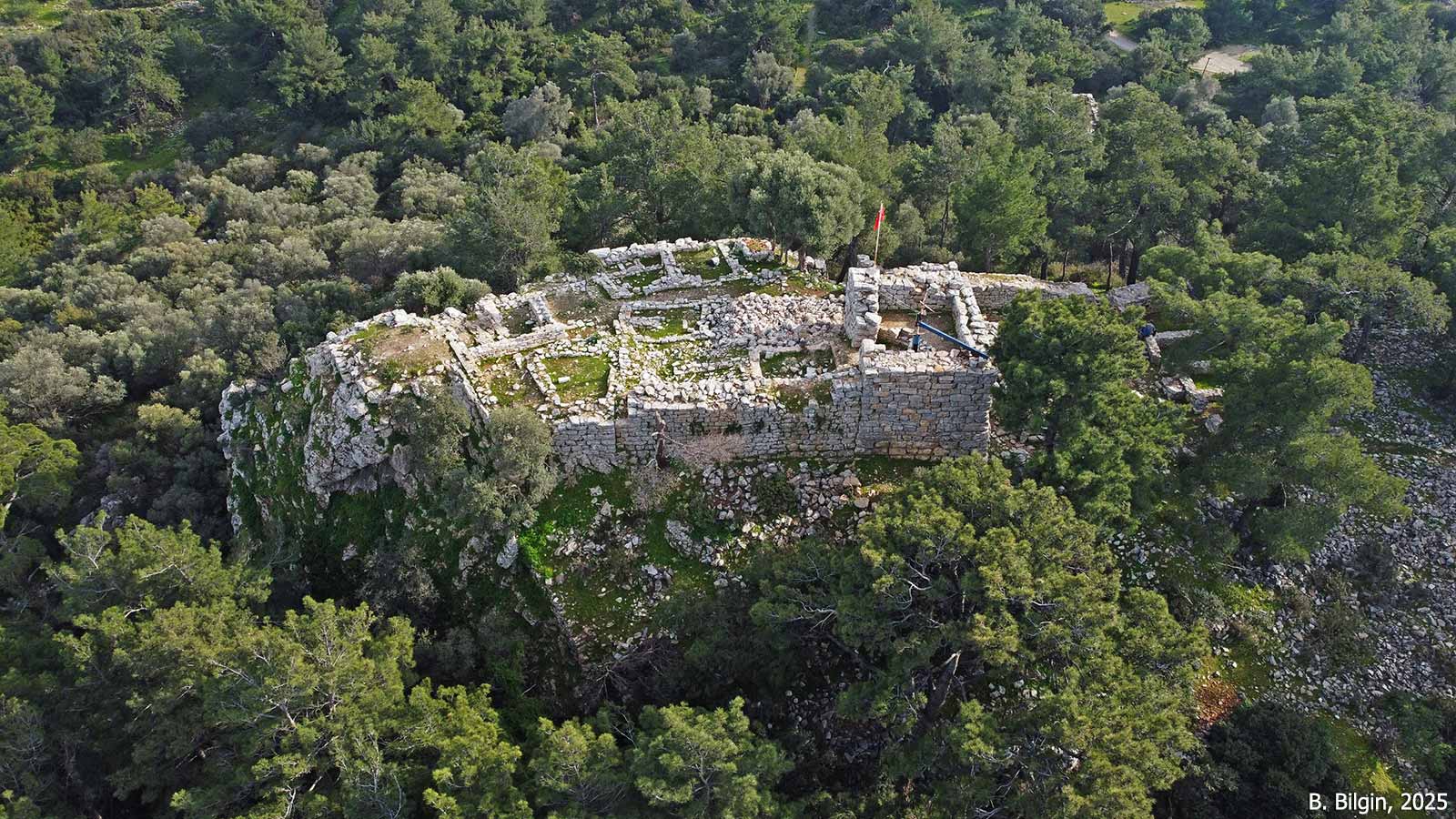
The settlement pattern of Pedasa is dispersed across rugged terrain, utilizing ridges and hills for defense. The urban center is the acropolis (Gökçeler Kalesi), which features a concentric defense system of inner and outer fortification walls reinforced by towers. Within the inner citadel lies the Dipyrgon, a double-towered structure identified as a dynastic residence. Beyond the citadel, the rural landscape is characterized by “compounds”—circular, composite farmsteads built with dry-stone masonry and corbeled vaults, serving both agricultural and defensive functions.
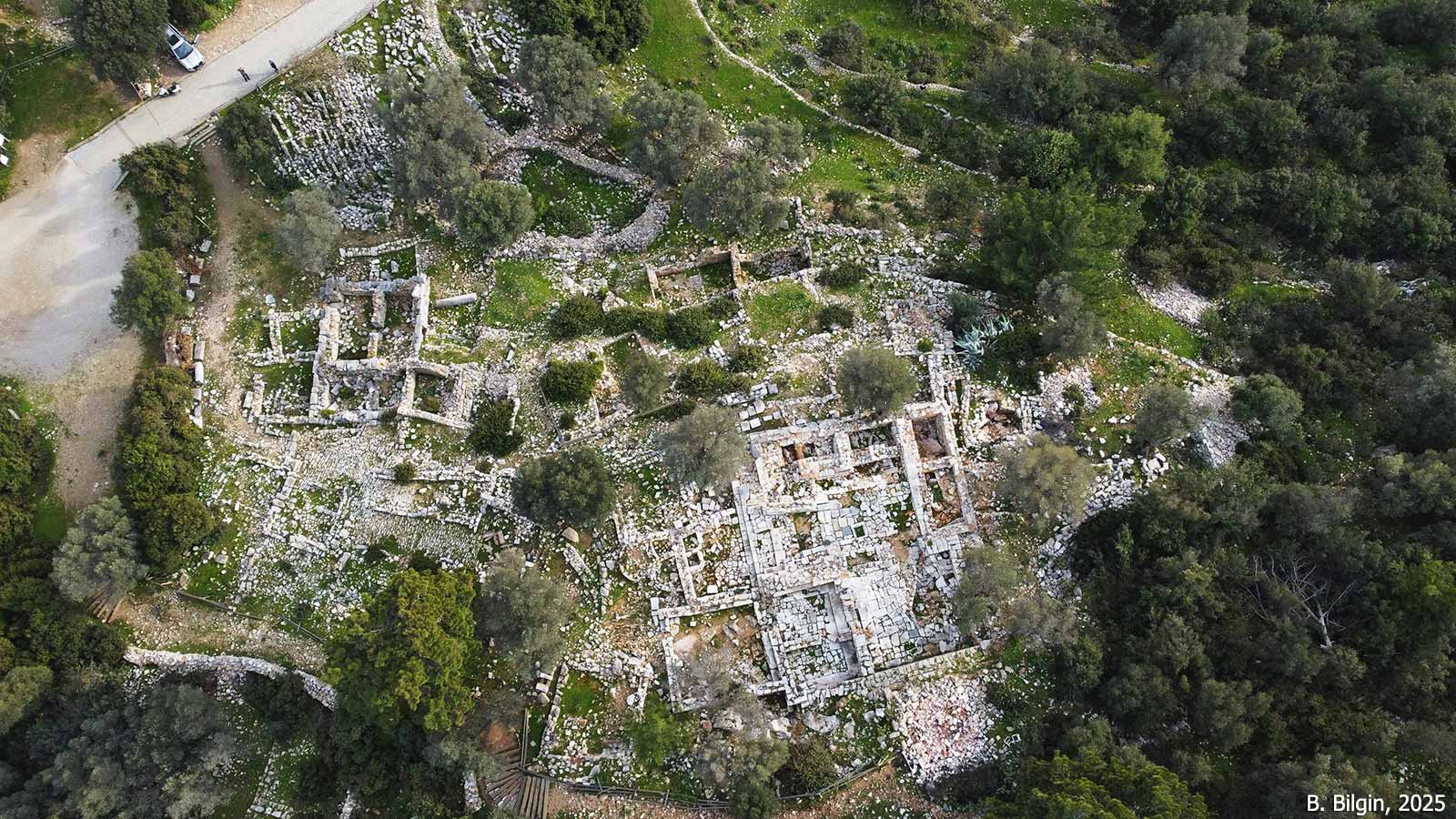
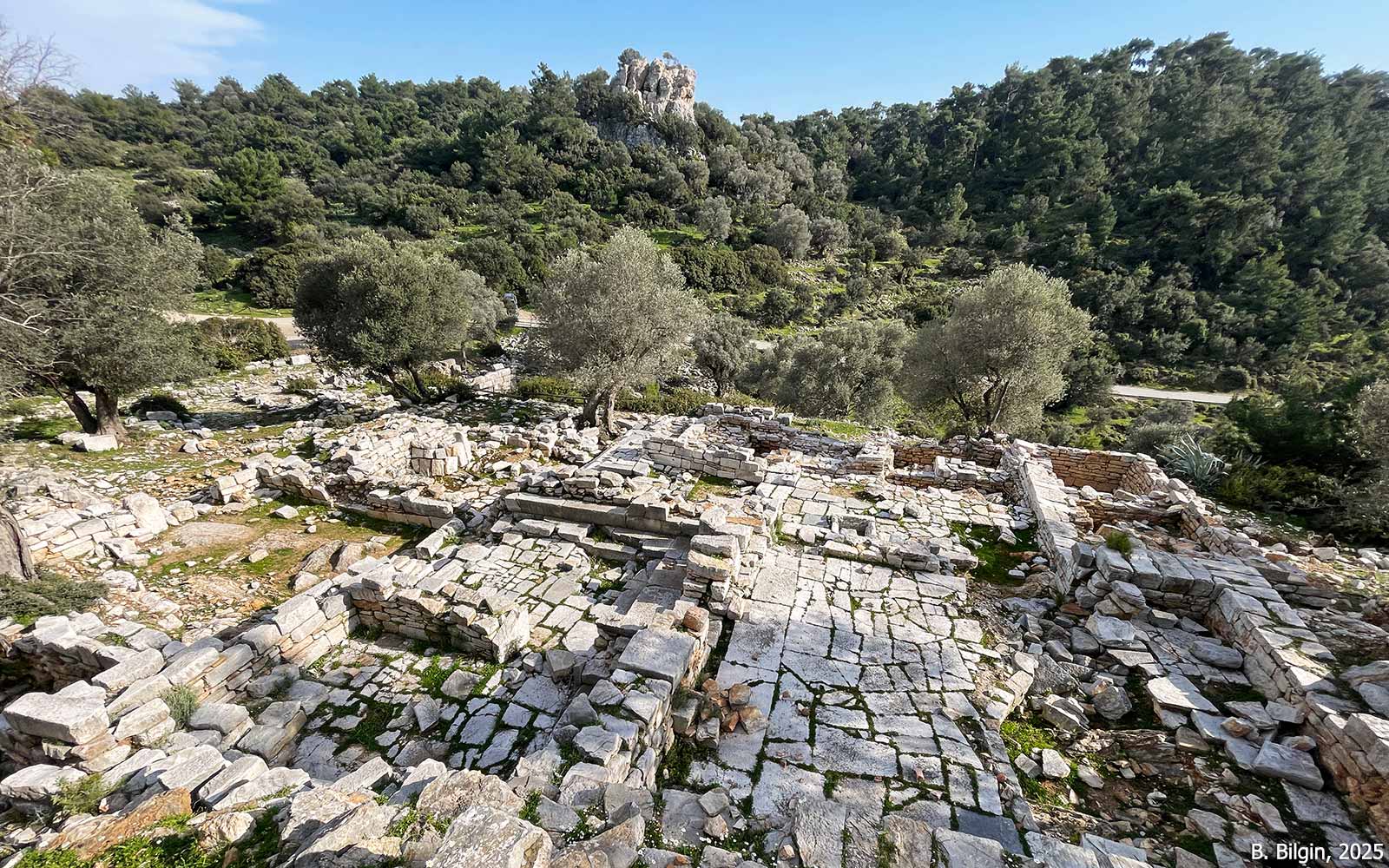
Religious life centered on the Sanctuary of Athena, located outside the acropolis fortifications. Active from the 10th century BCE through the Roman period, the sanctuary featured a temple in antis constructed on a terrace. Excavations have yielded significant votives, including a 2nd-century BCE statue of Athena and inscriptions confirming the site’s identity. Herodotos records a local legend regarding this sanctuary, stating that the priestess of Athena would grow a beard to signal impending omens. Additionally, recent excavations identified an Open Air Sanctuary (Altar Tepesi) featuring a rock-cut altar and a circular temenos wall, which yielded horse-and-rider figurines dating from the 8th to 4th centuries BCE.
The necropolis of Pedasa provides insights into Lelegian social structure, distinguished by two primary grave types: stone tumuli and platform graves. The tumuli are monumental family tombs featuring a circular crepis wall, a dromos (entrance passage), and a corbeled burial chamber. Platform graves, unique to the region, are rectangular structures containing multiple stone-lined cists designed for cremation burials. These platforms were used continuously from the Late Bronze Age (12th century BCE) through the Archaic period. Excavations of these tombs, particularly the Warrior Tumulus (T79), have revealed grave goods including weapons and cremation urns.


References:
Diler, A. & S. Topaloğlu. 2019. “Pedasa Açık Hava Kutsal Alanı,” in Doğudan Batıya 70. Yaşında Serap Yaylalı’ya Sunulan Yazılar, eds. A. Erön & E. Erdan, Ankara, 1–16.
Diler, A. 2020. “Taşların Efendisi Leleg Halkının Ana Kenti Pedasa’da Geç Tunç-Erken Demir Çağı’nda Yaşam ve Ölüm,” in The Carians, From Seafarers to City Builders, eds. O. J. Henry & A. Belgin-Henry, İstanbul, 254–273.
Diler, A. et al. 2021. “Pedasa Kazı ve Araştırmaları,” bitig Edebiyat Fakültesi Dergisi 1/1, 182–267.
Images:
A. Diler, 2021
Bora Bilgin, 2025
Tayfun Bilgin, 2025