The ancient city of Thera is situated on the rocky Okkataş hill (Taşyenice) in Ula-Muğla. While early researchers tentatively identified the site as Oula or Kyllandos, extensive surveys conducted between 2011 and 2014 have firmly identified the site as Thera. The city’s territory encompassed the plains of Yerkesik, Yenice, and Ula, secured by a planned defensive network of small-fortified settlements positioned at key road entrances.
Historical sources mention Thera as one of the strongholds held by Orontobates against Alexander the Great in 333 BCE. Archaeological evidence indicates occupation from the late 5th century BCE through the Late Byzantine period, with a peak in the mid-Hellenistic era. During the 2nd century BCE, inscriptions suggest Thera held polis status within the Chrysaoric League, later evolving into the center of a koinon (federation) that served as a central meeting place for surrounding rural villages.
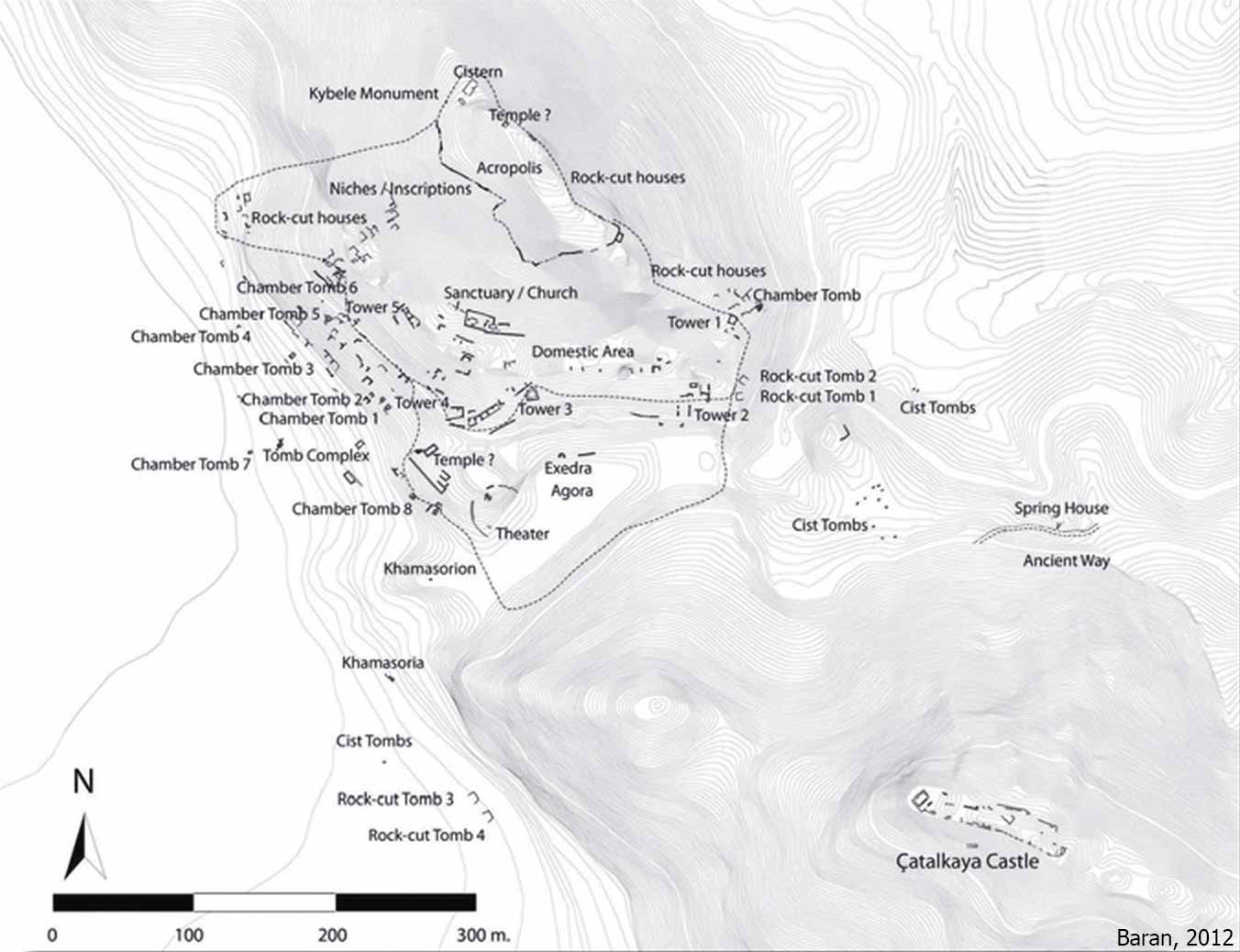
The site has faced catastrophic damage from illicit digging. First systematic researches conducted by A. Baran between 2011 and 2016. The settlement pattern features a fortified acropolis and a lower city arranged on southern terraces. The acropolis is surrounded by inner fortification walls. It contains cisterns, a possible temple foundation, and a rock-cut monument known as the “Kybele Throne.” A small theater with a cavea approximately 40 meters wide is located outside the main fortifications, likely serving as the venue for koinon meetings. Below the theater lies an agora containing an exedra and traces of a stoa. A sanctuary terrace, supported by pseudo-polygonal masonry, shows evidence of a temple later overbuilt by a Byzantine church. The site utilizes a defensive network including an inner ring, an outer ring with towers, and outlying fortresses such as the Çatalkaya Castle to the southeast.
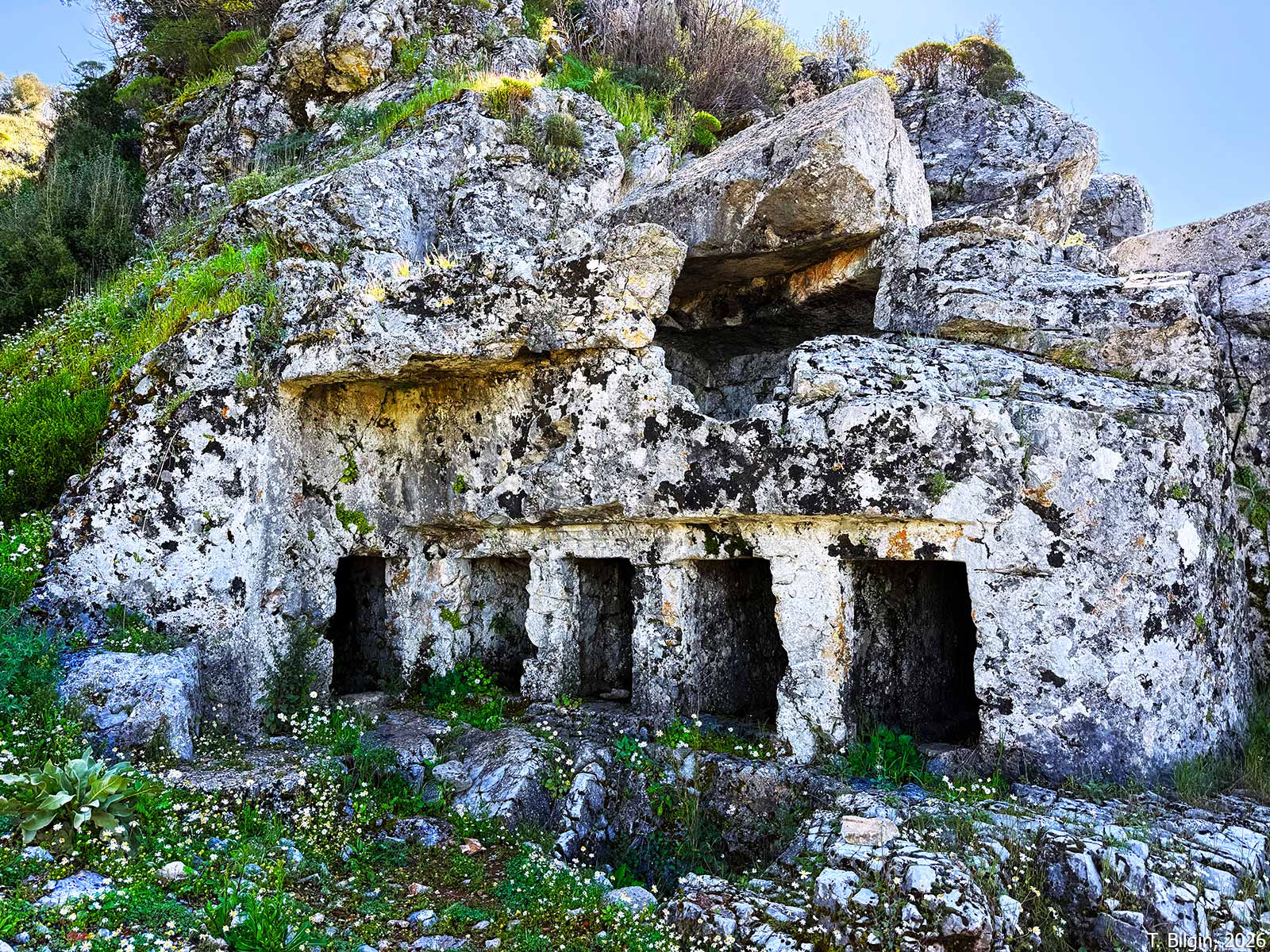
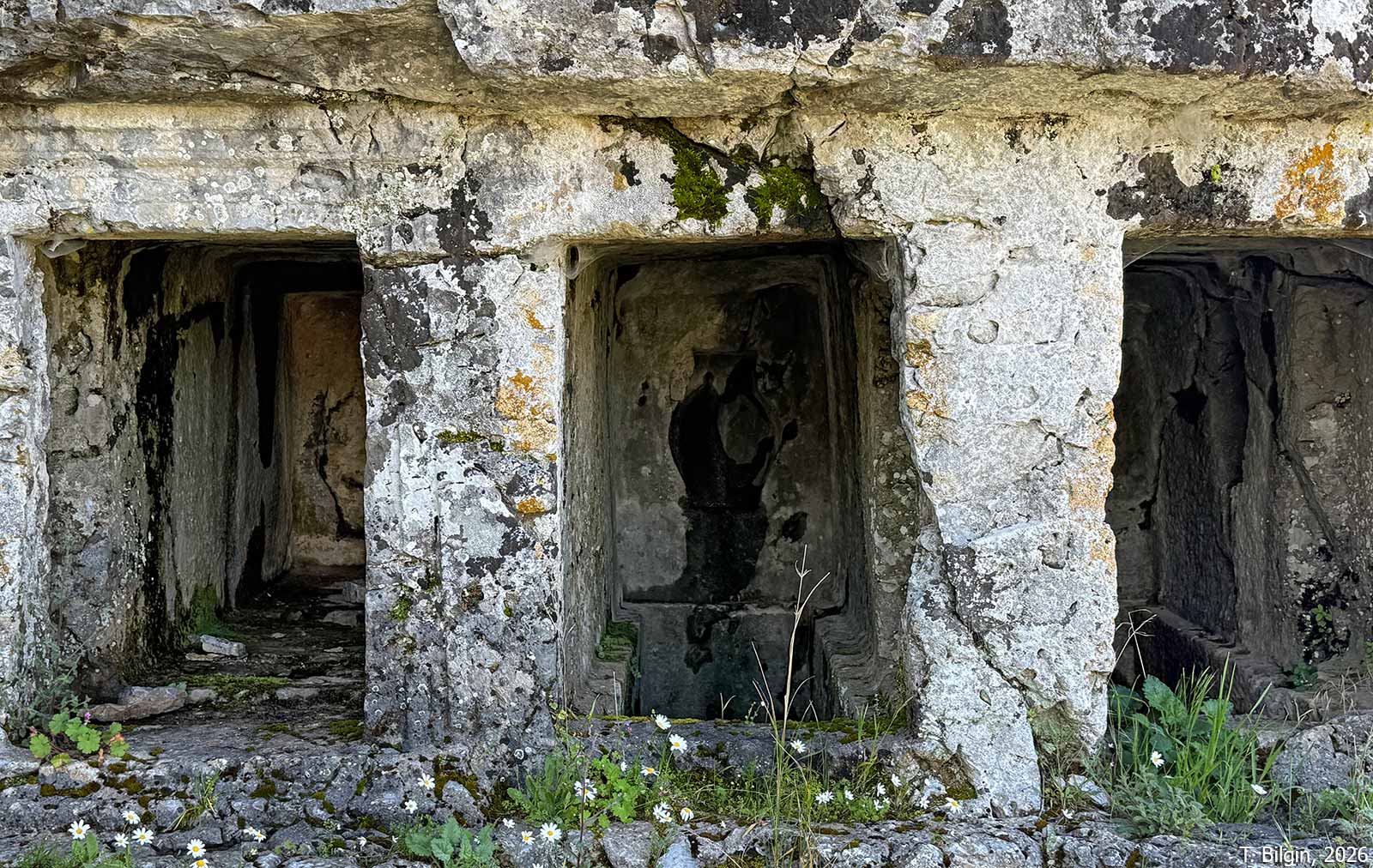
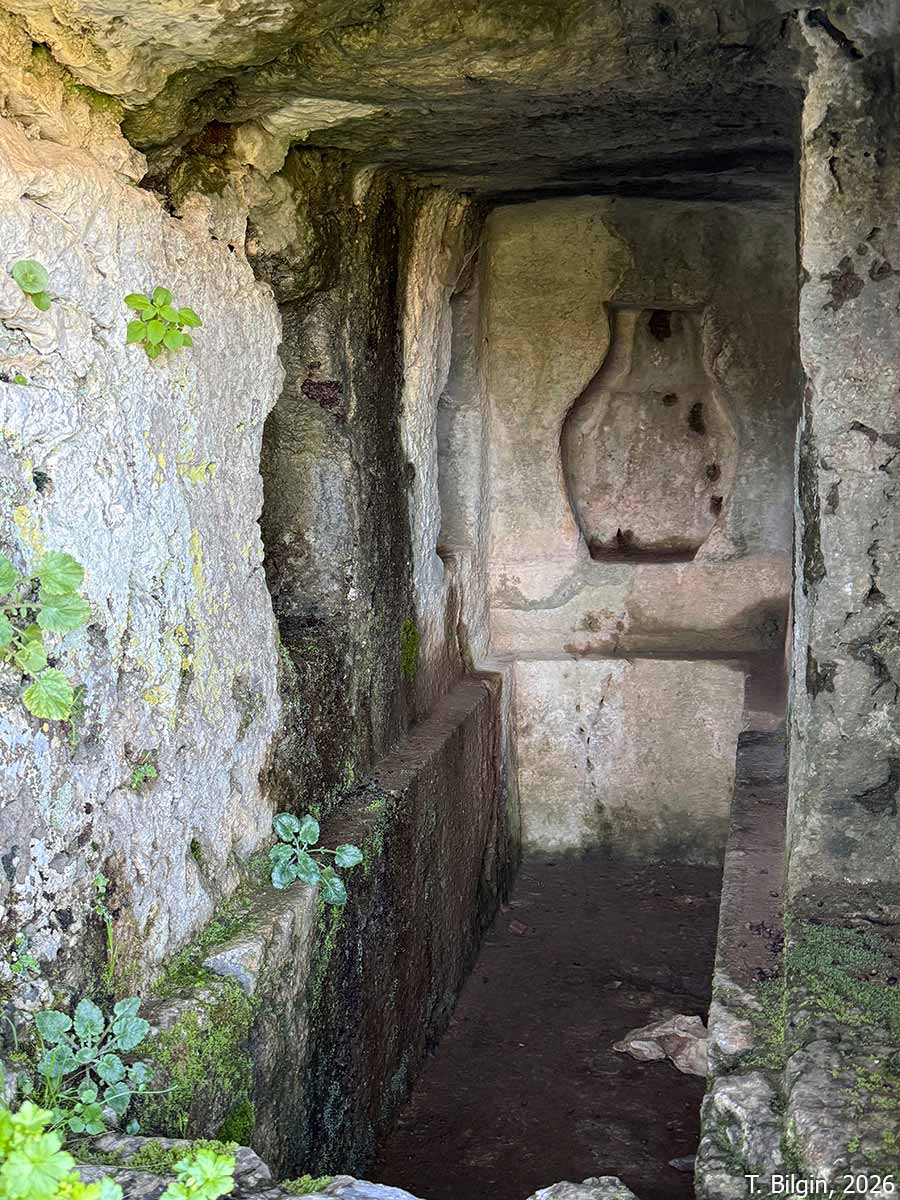
Thera possesses extensive necropolises on its eastern and western slopes. The Eastern Necropolis features rock-cut chamber tombs with temple façades. The Western Necropolis contains a unique “Monumental Tomb Complex” dating to the Early Hellenistic period. This structure is architecturally distinct, featuring two levels: a lower level with five loculi behind a temple façade adorned with a shield relief, and an upper level housing a rock-cut sarcophagus.




References:
Baran, A. 2012. “Okkataş’taki (Muğla) Antik Yerleşim ve Thera (Karia) Antik Kenti Lokalizasyonu Çalışmaları,” in Stratonikeia’dan Lagina’ya (Fs A. A. Tırpan), ed. B. Söğüt, İstanbul, 89–100.
Baran, A. 2012. “Preliminary Results of the 2011 Researches on Thera in Karia,” Anatolia Antiqua XX, 215–226.
Baran, A. 2014. “A Monumental Tomb Complex from Thera in Karia,” in ΛΑΒΡΥΣ: Studies Presented to Pontus Hellström (Boreas 35), eds. L. Karlsson et al.,Uppsala, 387–403.
Baran, A. 2015. “Thera Antik Kenti,” Aktüel Arkeoloji 43, 41–44.
Images:
A. Baran, 2012
Bora Bilgin, 2026
Tayfun Bilgin, 2026