Hyllarima is an ancient inland city located in the northeastern region of Caria, within the modern Kavaklıdere district of Muğla Province, Turkey, near the village of Derebağ (formerly Mesevle). Situated strategically, the city connected Inner Caria to the Meander Valley, lying on the route between Stratoniceia and Aphrodisias. The name Hyllarima (Carian: yλarmi-) is believed to derive from the local deity Zeus Hyllos. Some scholars also suggest a connection to the Hittite toponym Wallarima, appearing in 2nd-millennium BCE texts, which likely referred to the nearby settlement at Asarcık Tepe.
The city is characterized as a “multipolar” settlement, the area dates back to the Early Bronze Age at Asarcık Tepe and the classical city of Hyllarima at the Kapraklar site developed significantly during the 4th century BCE. The city holds importance for understanding Carian history; it recognized the conquest of Alexander the Great and was subsequently influenced by the Seleucids, as evidenced by inscriptions dating to the joint reign of Antiochus I and II (c. 260s BCE). It later fell under Rhodian influence, specifically governed by the dynast Pleistarchus in the 3rd century BCE, who fortified the city. In the Roman era, Hyllarima continued as a religious center for the cult of Zeus Hyllos and eventually became a bishopric under the Byzantine Empire.
Scientific investigation of the site was spearheaded through joint campaigns led by Ender Varinlioğlu and Pierre Debord starting in 1997. Since 2021, new excavations have been conducted by Bekir Özer.
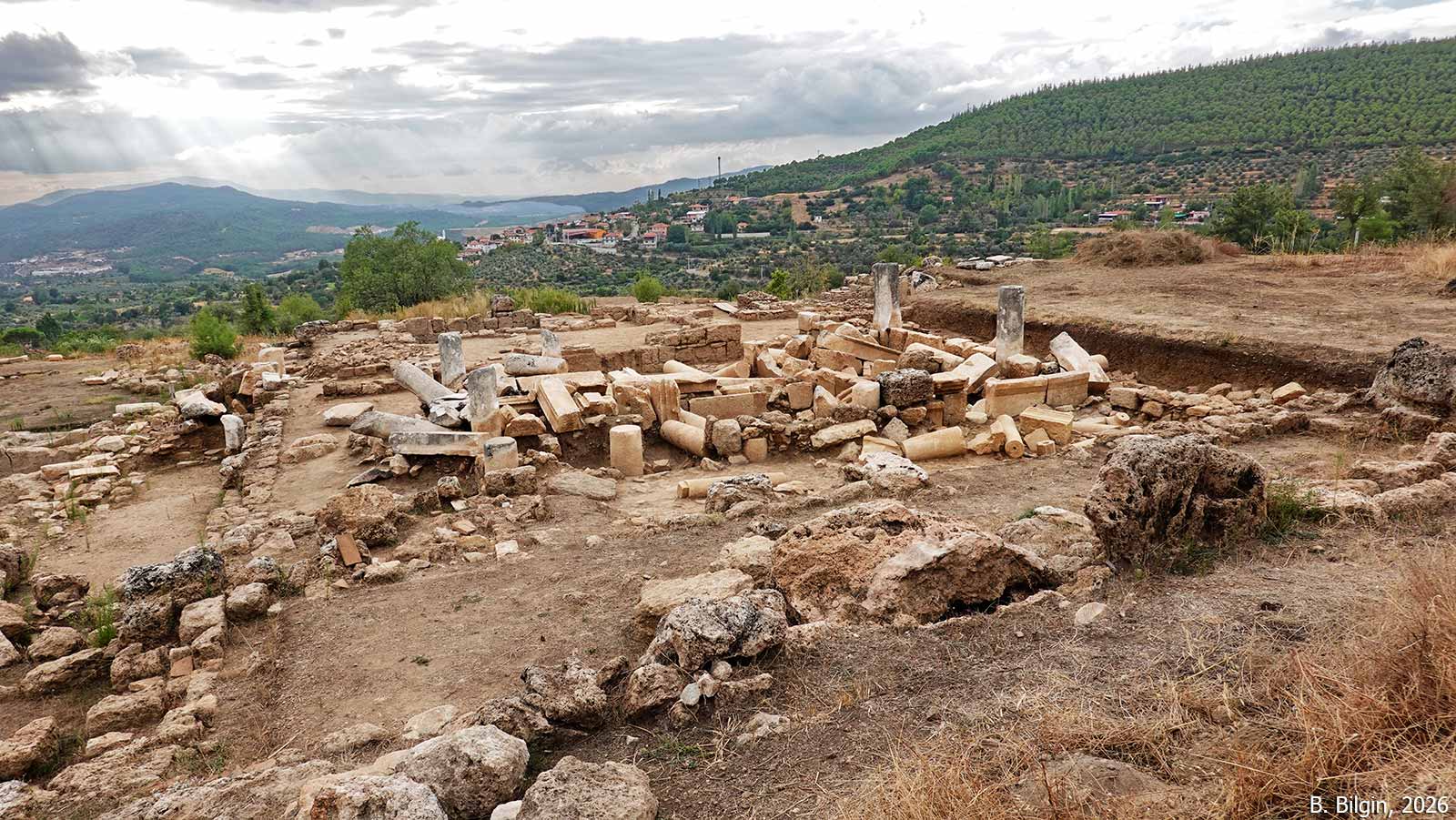
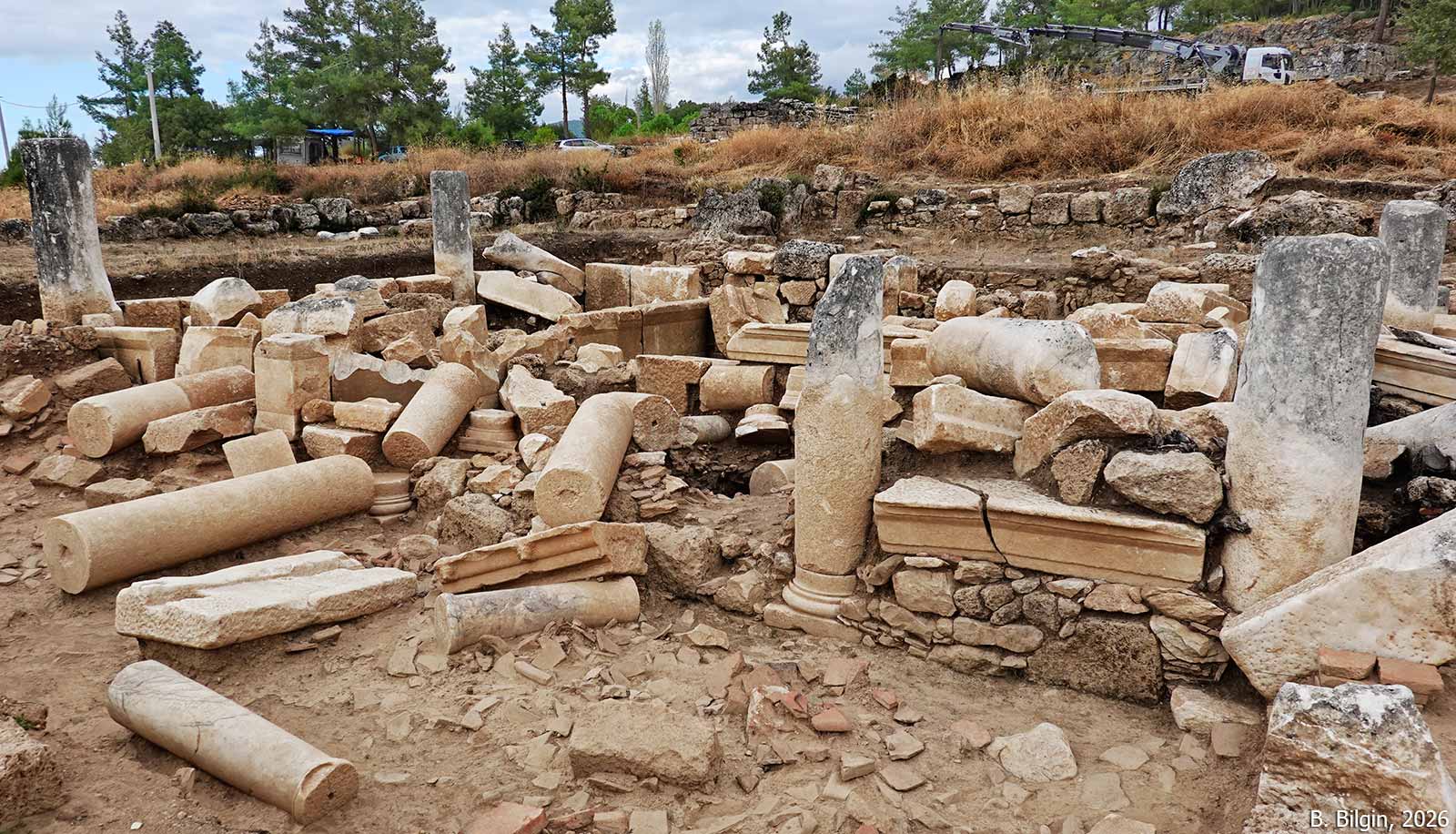
Hyllarima features well-preserved civic and military architecture. The most prominent monument is the theater, constructed in the 2nd century BCE with a capacity of approximately 1,500 to 2,000 spectators, retaining a significant portion of its cavea and a scene building with Doric friezes. The city’s fortifications are notable for their advanced design, including pentagonal and hexagonal towers that reflect the defensive theories of Philon of Byzantium. Other significant structures include an agora with stoas, a Roman-era bouleuterion, a Hellenistic-era tumulus tomb, and a necropolis featuring Roman sarcophagi.


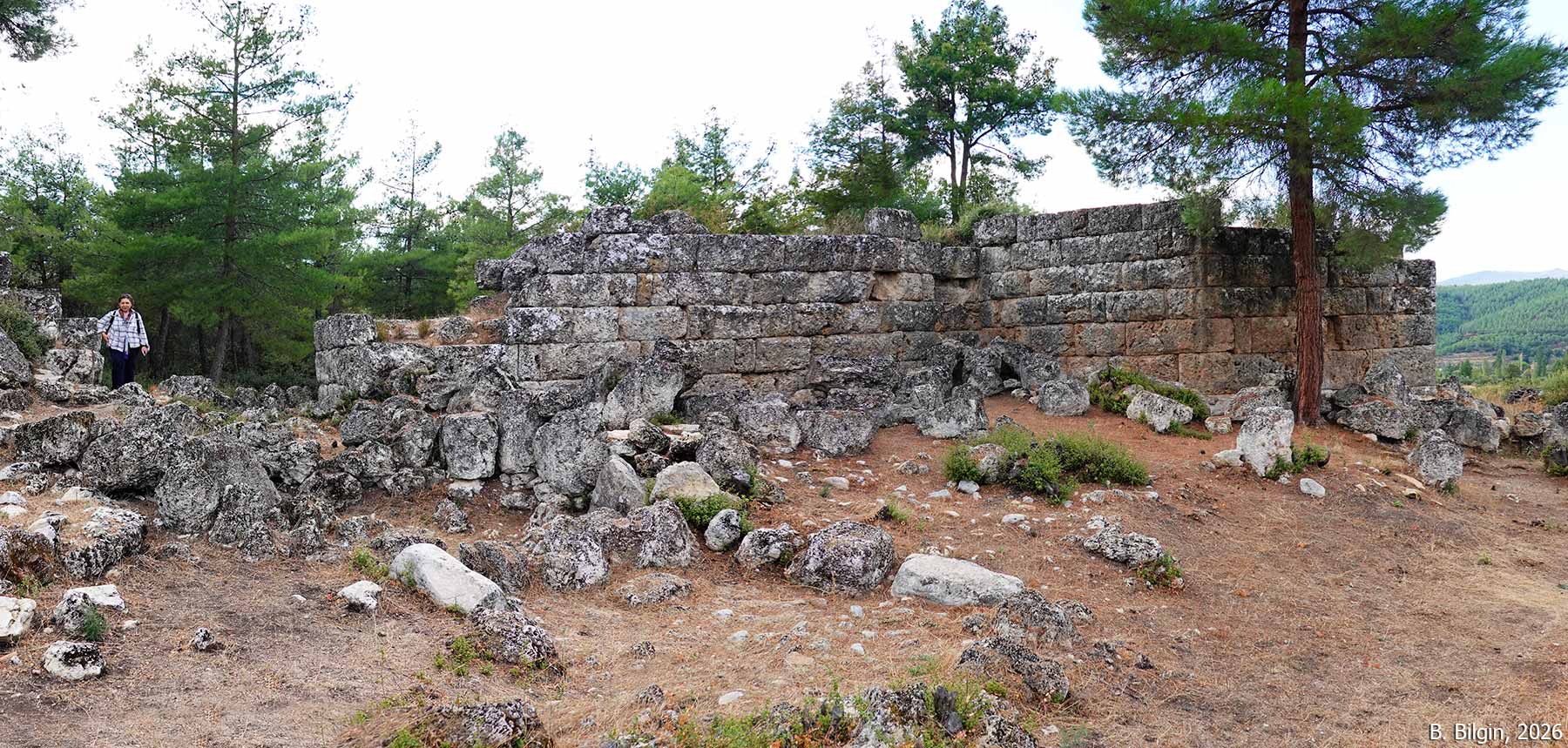
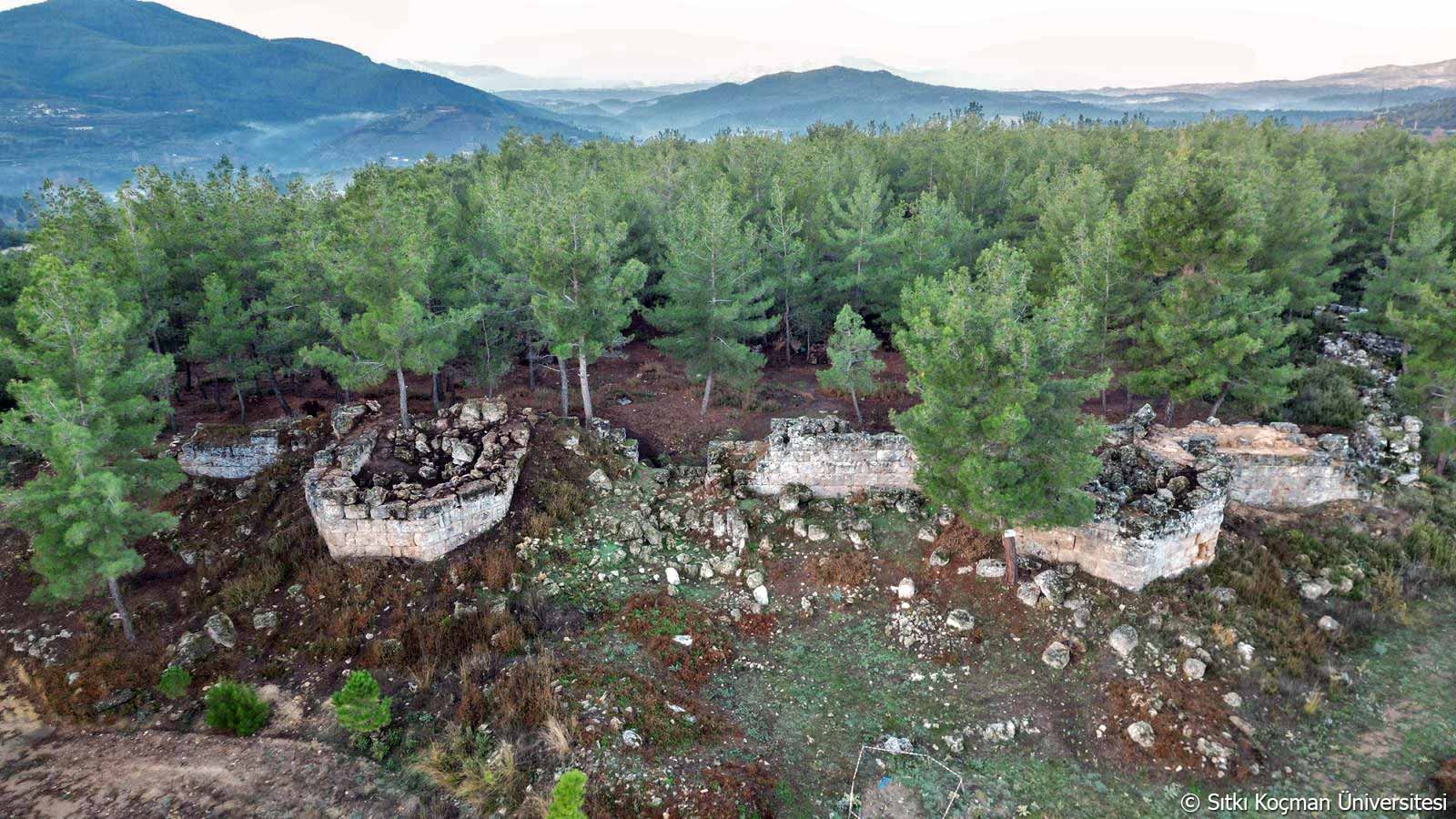
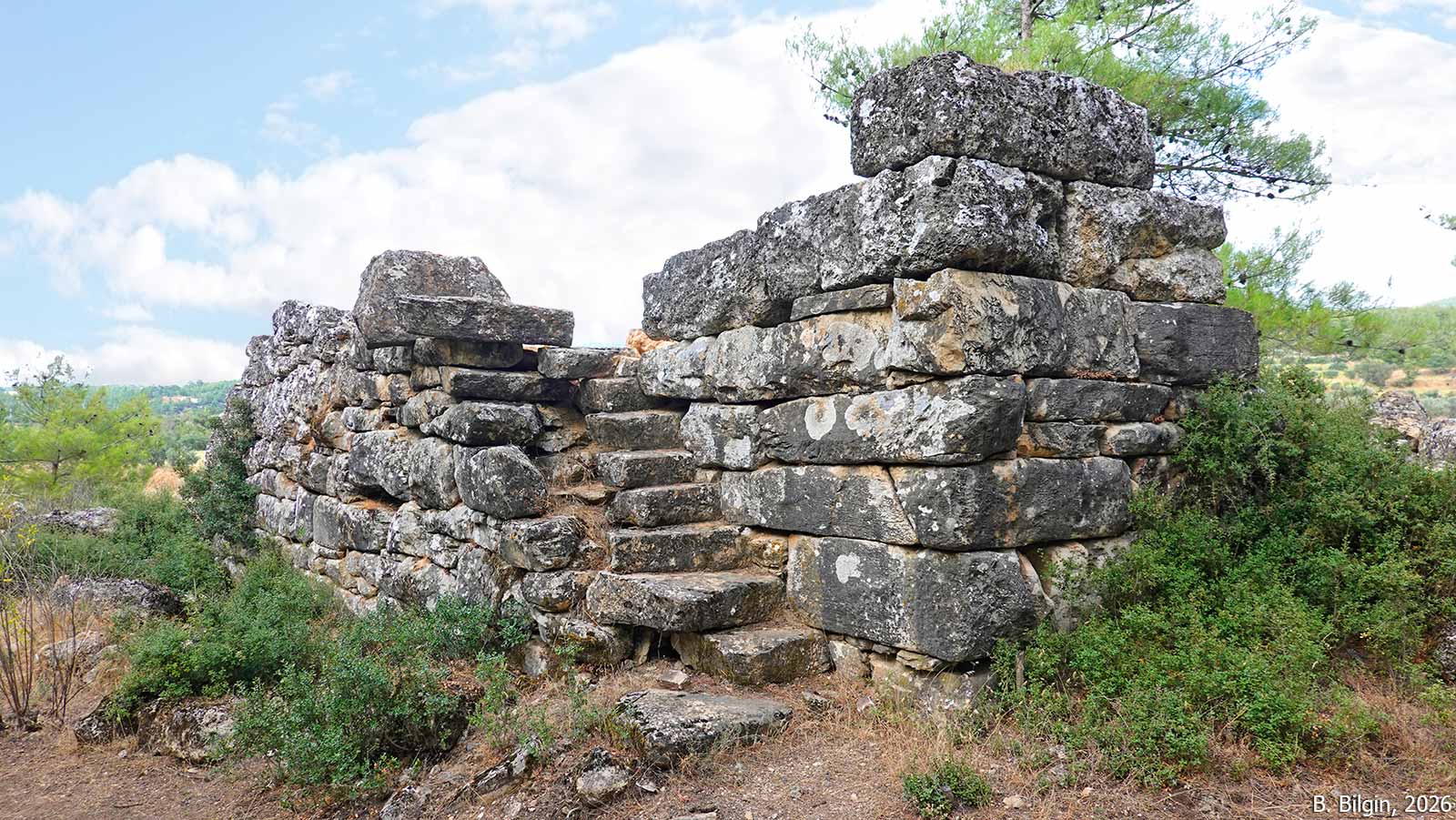
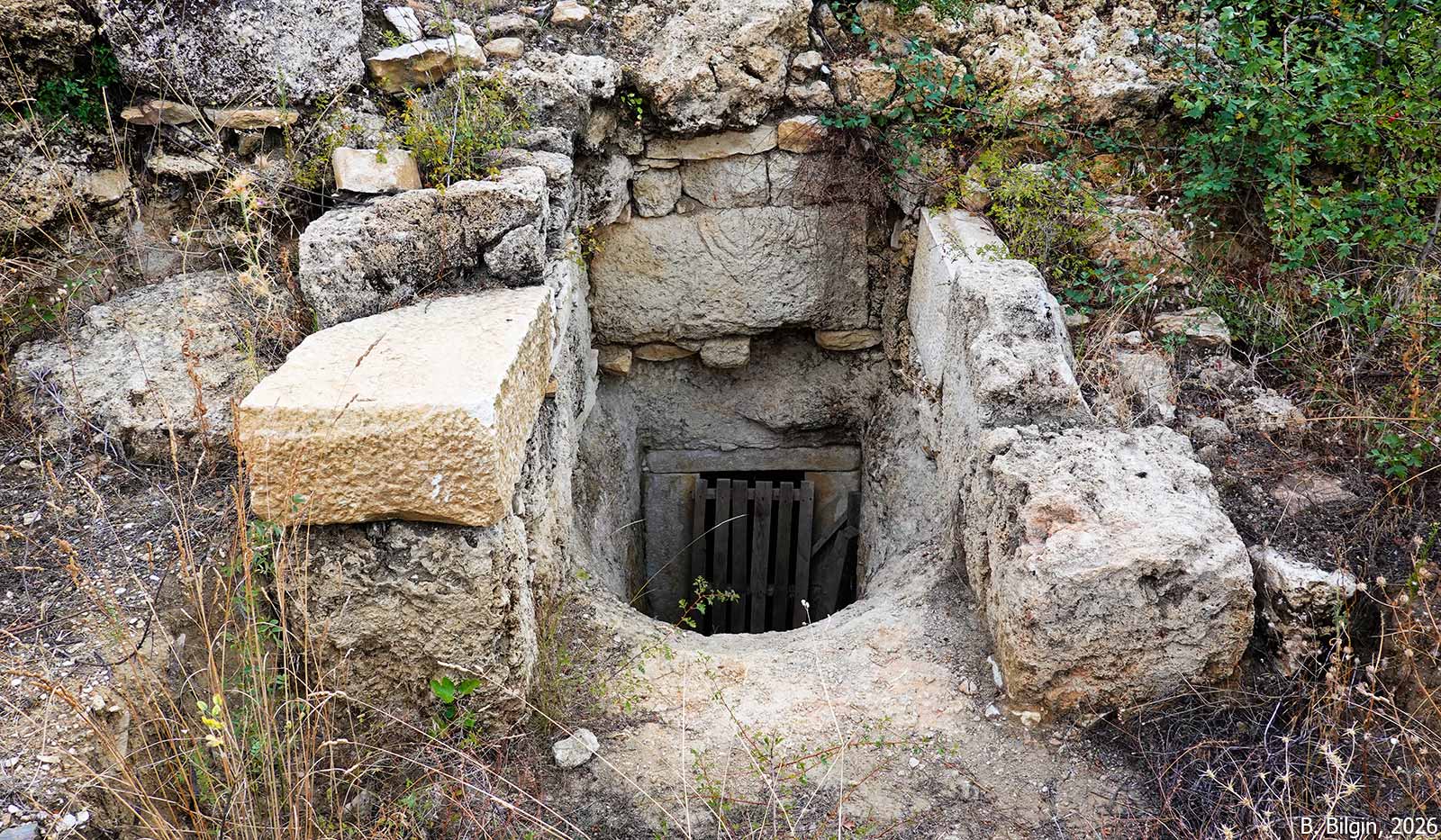
Tumulus Tomb
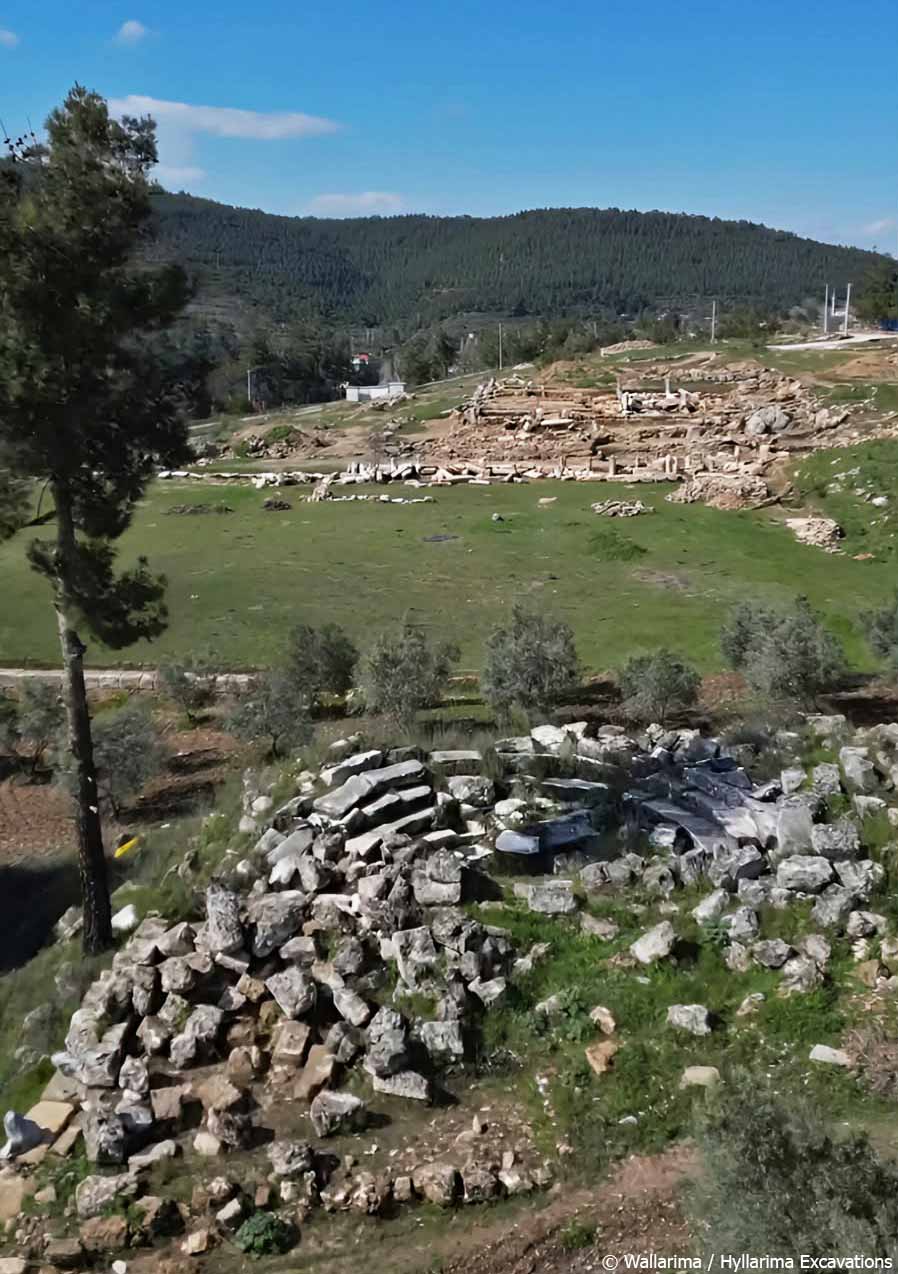
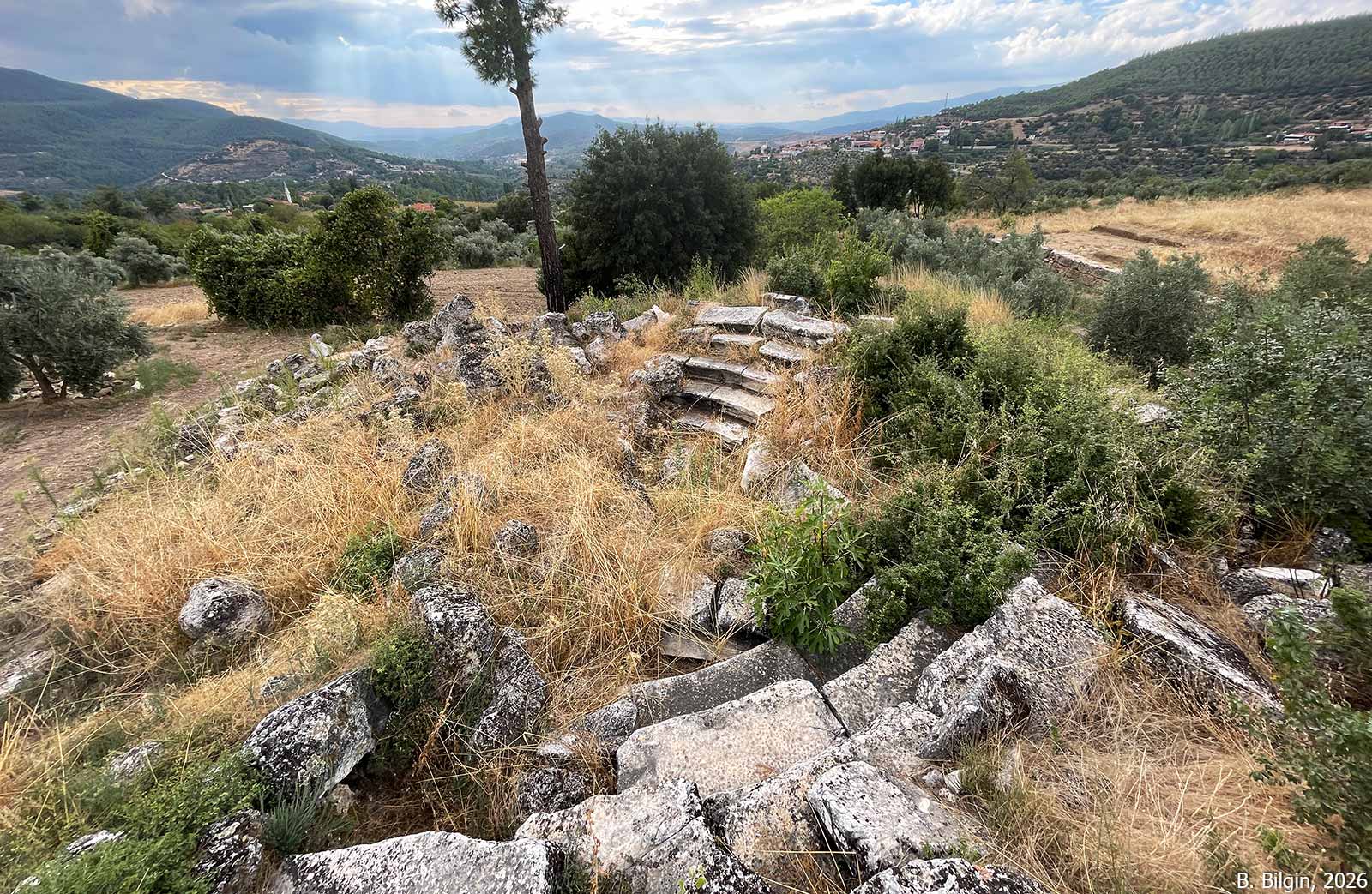
The Tumulus Tomb is one of the most prominent monuments of Hyllarima. Unlike other necropolis areas, it was constructed close to the city center. The supporting walls surrounding the tomb, which measures approximately 28 meters in diameter, are built of finely cut limestone blocks. Due to its location and architecture, it is thought to have been a heroon built for an important figure, such as the city’s founder or ruler. The tomb dates to the Hellenistic period. The burial chambers, constructed one above the other as two separate rooms, have entrances facing west.


References:
Adiego, I.-X., P. Debord & E. Varinlioğlu. 2005. “La Stèle Caro-Grecque d’Hyllarima (Carie),” Revue des études anciennes 107/2, 601–653.
Debord, P. & E. Varinlioğlu. 2018. Hyllarima de Carie : état de la question, Pessac.
Henry, O. 2013. “Un tumulus en ville,” in Le mort dans la ville [Rencontres 2011], ed. O. Henry, 123-134.
Varinlioğlu, E. & P. Debord. 2004. “Hyllarima,” AST 21/1, 65–74.
Varinlioğlu, E. & P. Debord. 2005. “Hyllarima,” AST 22/1, 63–68.
Images:
O. Henry, 2013
P. Debord & E. Varinlioğlu, 2018
Google Earth (M. Osmanoğlu), 2018
Muğla Sıtkı Koçman Üniveristesi, 2019
Wallarima/Hyllarima Excavations, 2025
Bora Bilgin, 2025, 2026