Alinda is situated on the steep slopes of a ridge overlooking the Karpuzlu plain in the modern Karpuzlu district (formerly Demircidere) of Aydın. Historically, scholars have identified Alinda with the city of Iyalanda mentioned in Hittite texts based on phonetic similarities, though recent research suggests Iyalanda may have been located further east in the Meander Valley.
Alinda appears in the 5th-century BCE Delian League tribute lists, paying a substantial sum that indicates significant economic potential early in its history. The city rose to prominence in the 4th century BCE when the deposed Carian queen Ada retreated there after being exiled by her brother Pixodarus, utilizing it as her stronghold due to its formidable defenses. Described by Arrian as one of the strongest fortresses in Caria, Alinda was the site where Ada surrendered the city to Alexander the Great in 334 BCE, forming an alliance that eventually restored her satrapal authority. During the Hellenistic period, specifically the late 3rd century BCE, the city served as the residence of Olympichos, a local dynast and administrator for the Macedonian kings. The city remained inhabited through the Roman and Byzantine periods, eventually becoming a subordinate episcopal center of the Stauropolis (Aphrodisias) metropolis.
Although no full-scale excavations have been conducted, the site underwent surface surveys by V. Özkaya (1997–2001) and the Austrian Academy of Sciences (2007–2011), followed by a new interdisciplinary project initiated in 2020 by Murat Çekilmez.
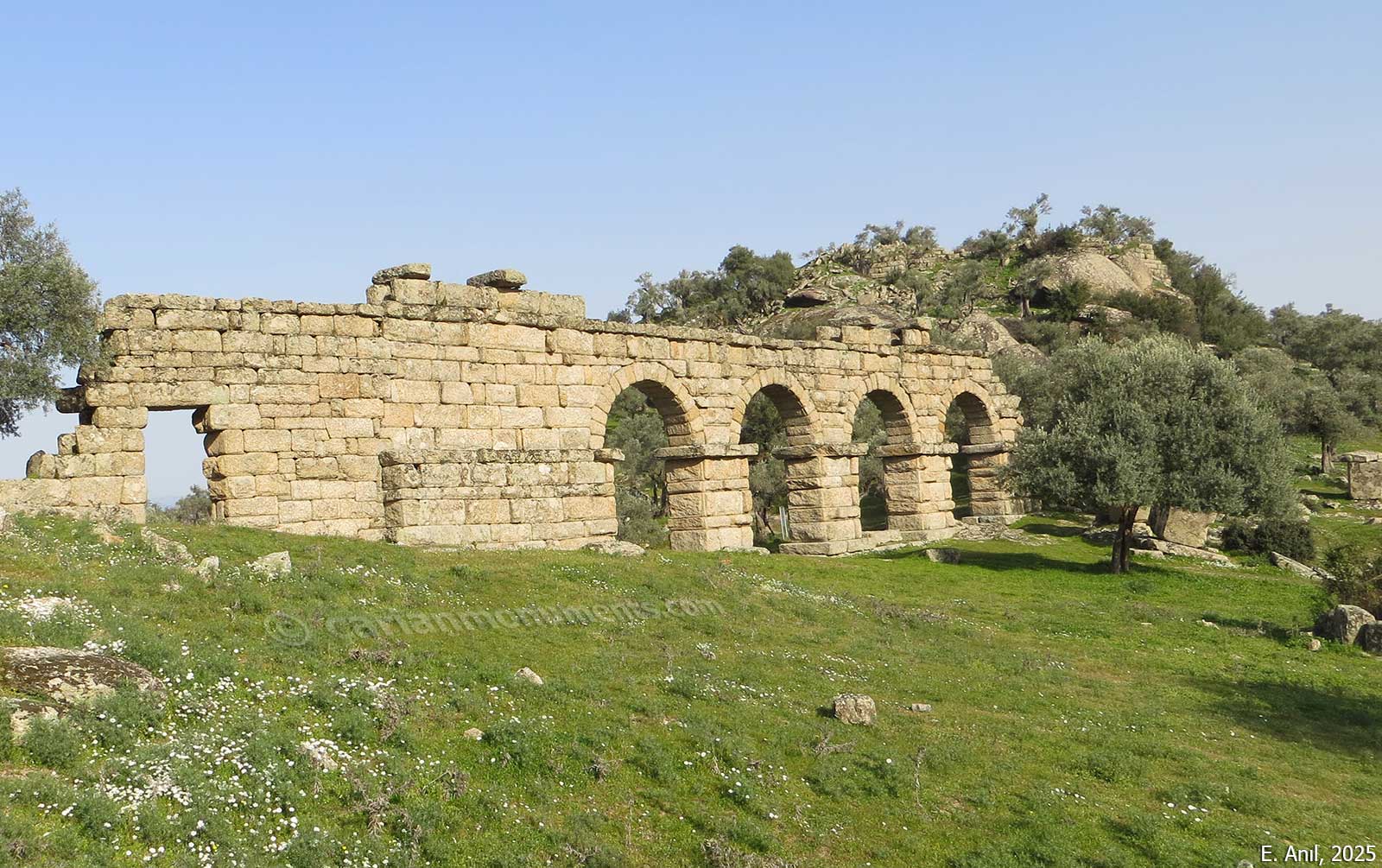
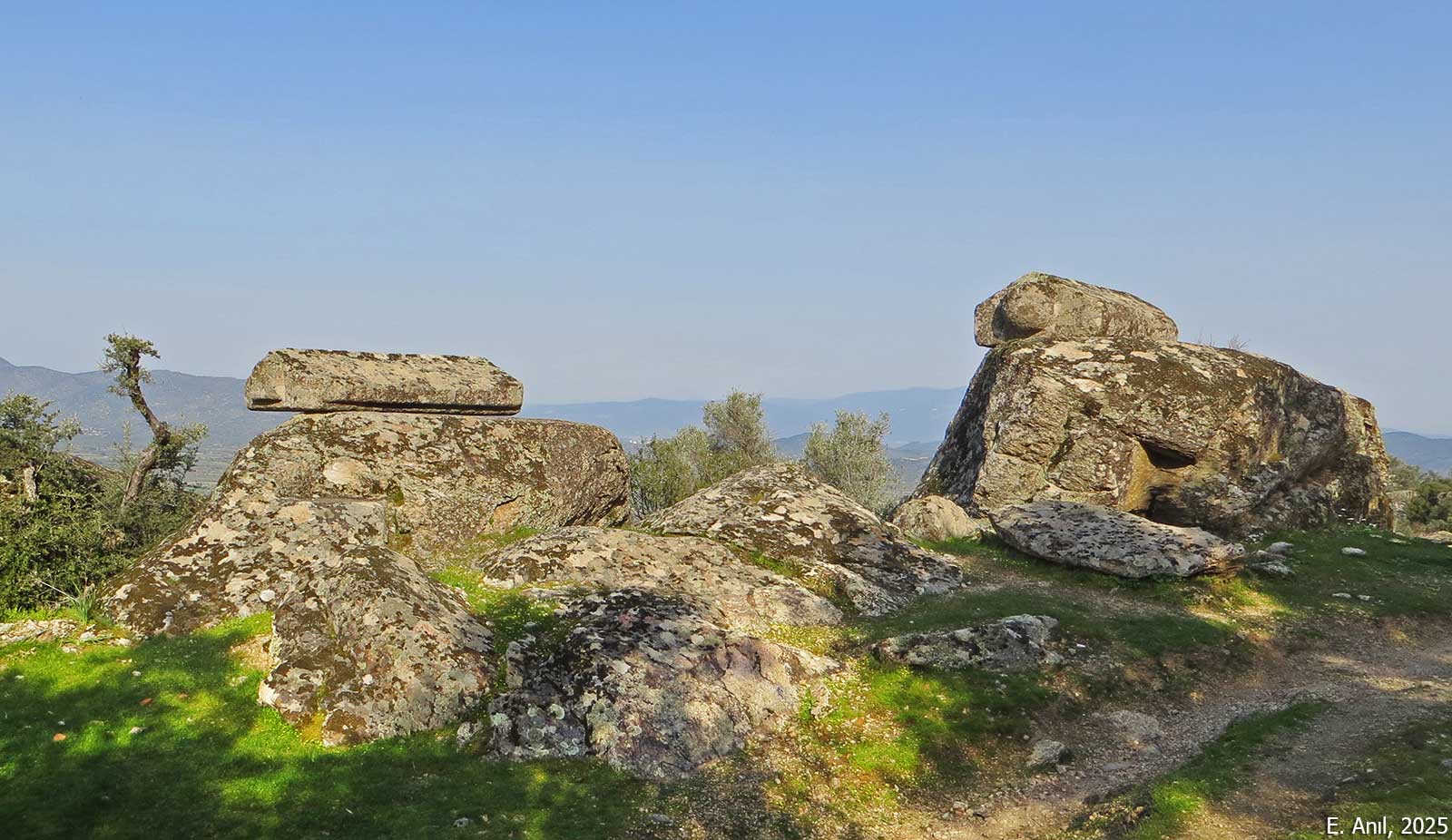
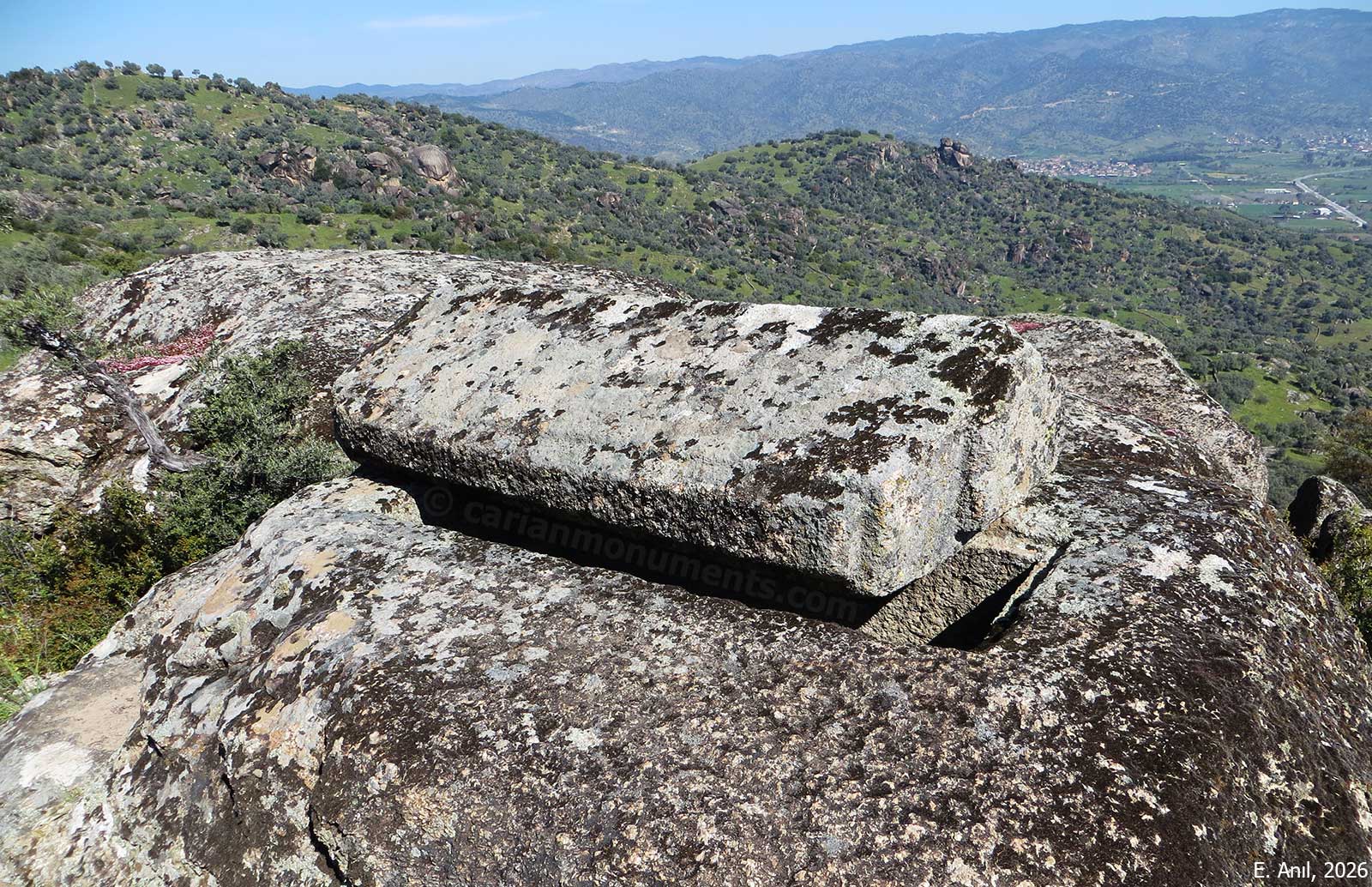
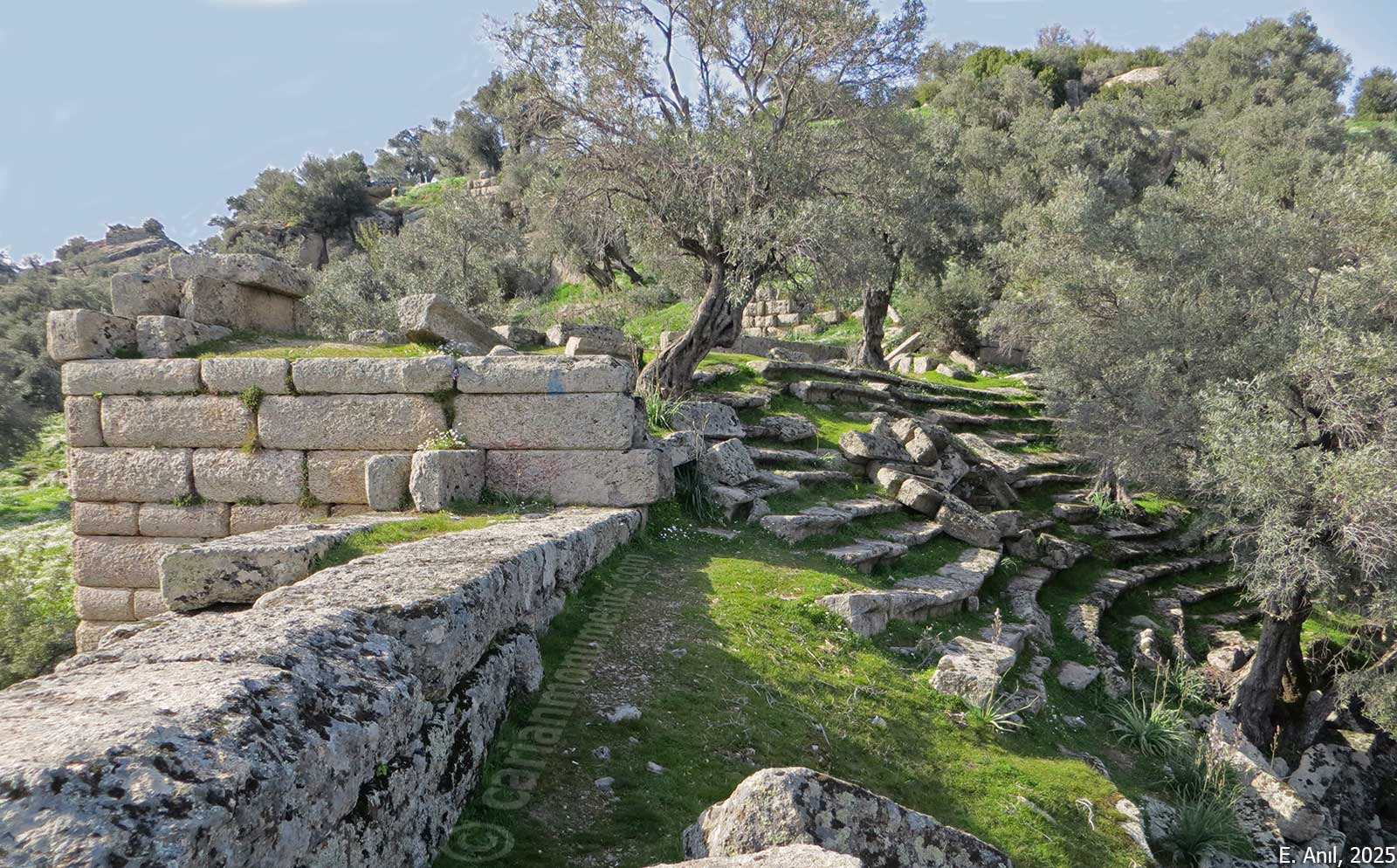
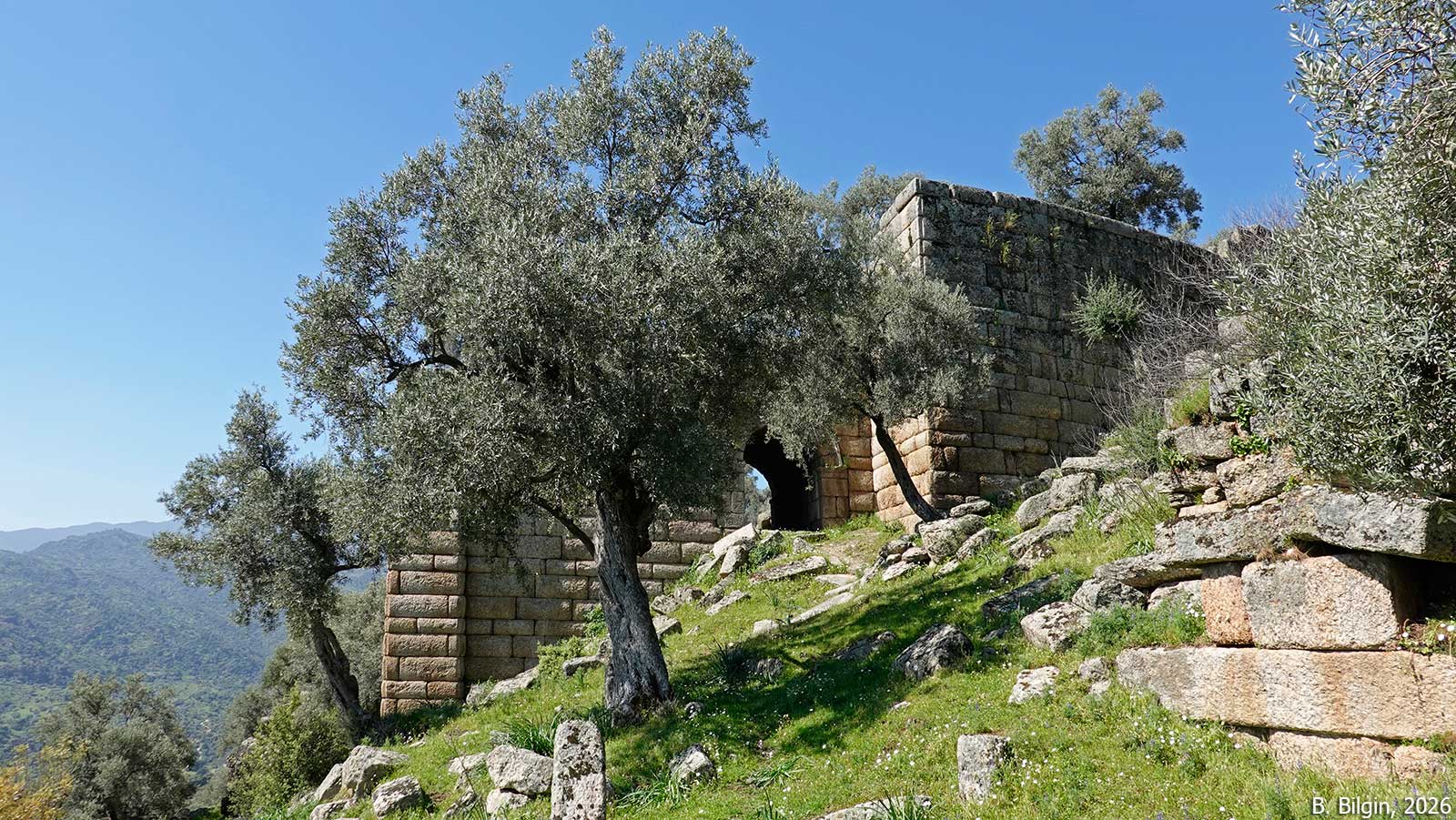
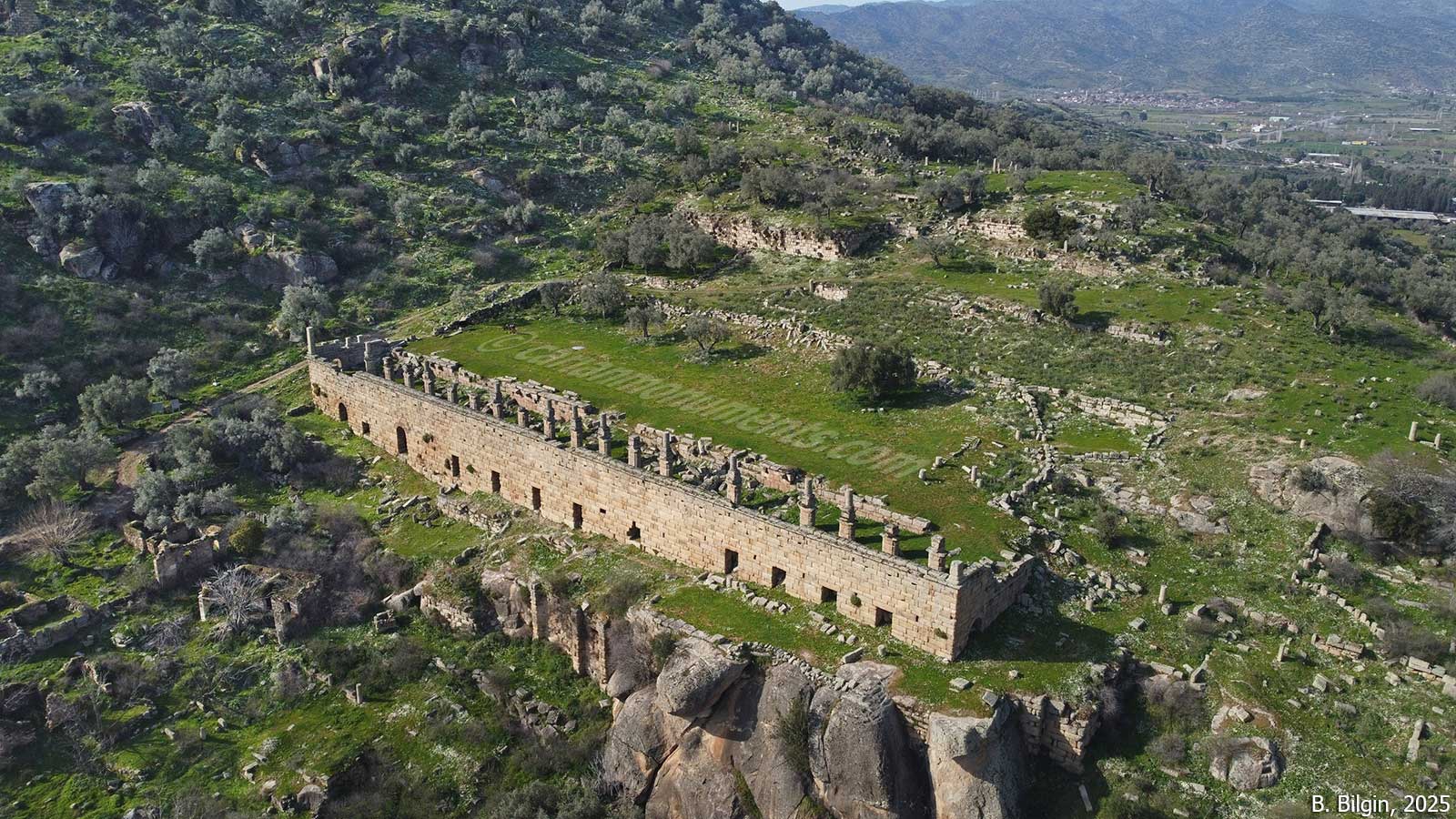
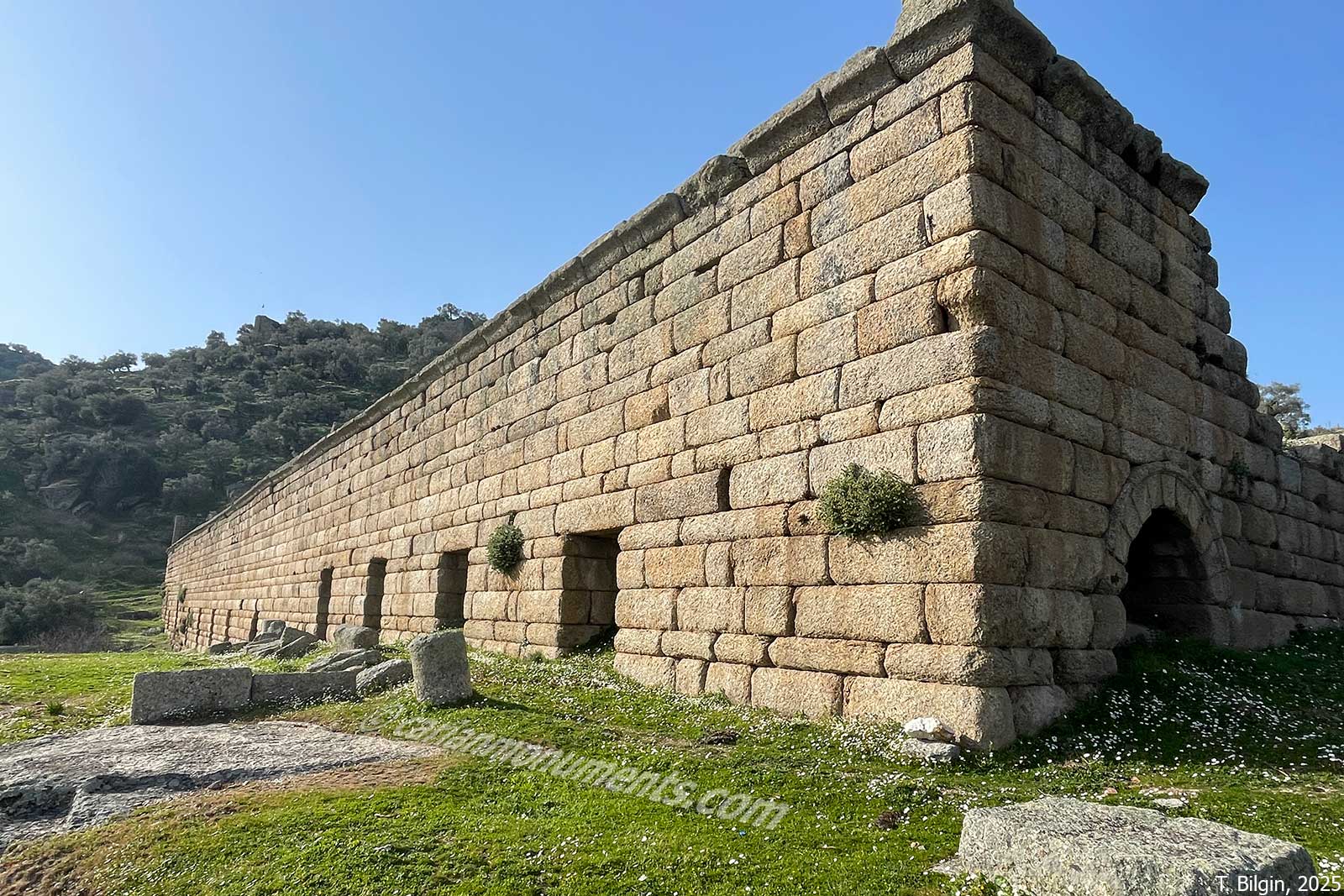
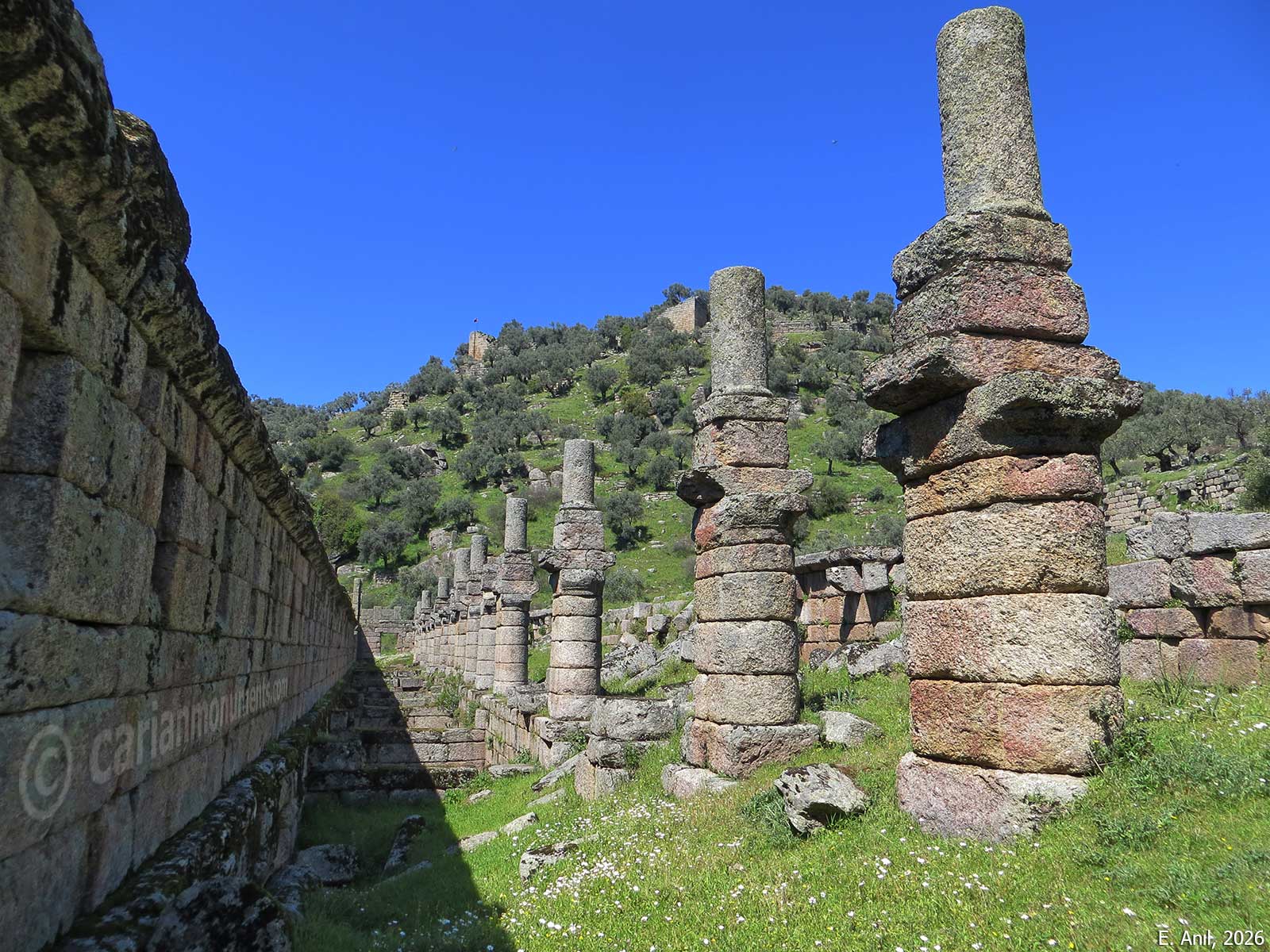
The city is protected by an intricate defensive system likely initiated under the Hecatomnids, comprising a citadel and a lower town circuit featuring well-preserved ashlar masonry towers. The commercial center, agora, is defined by a colossal three-story market building (South Stoa) measuring approximately 100 meters in length, which retains significant portions of its lower storage chambers and retaining walls. The theater is located southwest of the agora and accessed by a paved ancient road. It retains its cavea and analemma walls in good condition and has a raised stage floor that was historically noted by travelers like Trémaux. Another well preserved structure is the aqueduct bridge that spans the saddle west of the citadel, channeling water into a complex network of rock-cut cisterns. While some researchers identify the water system as Roman, recent survey reports refer to it as Hellenistic. Surrounding the city are extensive necropolis areas featuring various tomb types, including sarcophagi and “altar tombs,” which remained in use from the Classical through the Roman periods. The temple, of which only the foundations remain today, is located on the acropolis plateau. Although it is not known to which god it was dedicated, architecturally it shows similarities to the Temple of Zeus in Labraunda, dating from the 4th century BCE. Early travelers mention a stadium north of the agora, but very little trace of it can be seen today.






Alinda Theater





Alinda Agora




References:
Çekilmez, M. & E. Dereboylu Poulain. 2020. “Alinda Antik Kentinde Eski Belgeler ve Yeni Araştırmalar,” in Alinda Araştırmaları I, eds. M. Çekilmez & U. Kapuci, Aydın, 1-32.
Çekilmez, M., et al. 2020. “2020 Yılı Alinda Antik Kenti Merkezi ve Çevresinde Arkeolojik Yüzey Araştırması-Belgeleme Çalışmaları (1. Sezon),” in Alinda Araştırmaları I, eds. M. Çekilmez & U. Kapuci, Aydın, 99-146.
Güngörmüş, Ö. 2020. “Alexander the Great, Ada and Alinda,” in Alinda Araştırmaları I, eds. M. Çekilmez & U. Kapuci, Aydın, pp. 63-74.
Konecny, A. L. & P. Ruggendorfer. 2014. “Alinda in Karia: The Fortifications,” Hesperia 83/4, 709–746.
de Laborde, L. 1838. Voyage de l’Asie Mineure Par Mrs. Alexandere de Laborde, Becker, Hall et Leon de Laborde, Paris.
Ruggendorfer, P. 2020. “Alinda – A Strong Fortified Settlement in Northern Caria,” in The Carians, From Seafarers to City Builders, eds. O. J. Henry & A. Belgin-Henry, İstanbul, 466-479.
Reinach, S. 1888. Voyage archéologique en Grèce et en Asie Mineure, sous la direction de M. Philippe Le Bas (1842-1844), Paris.
Images:
L. de Laborde, 1838
S. Reinach, 1888
A. L. Konecny & P. Ruggendorfer, 2014
Tayfun Bilgin, 2025
Ertuğrul Anıl, 2025, 2026
Bora Bilgin, 2025, 2026
Reha Özer, 2026