Aphrodisias is located in the valley of the Morsynus River (modern Dandalaz), a tributary of the Maeander, in the inland region of ancient Caria. The ancient city lies beneath and adjacent to the modern village of Geyre, which was relocated in the 1970s to facilitate excavation. The site was inhabited from the prehistoric period, with the earliest name of the settlement likely being Nineuda. In the Hellenistic period, the name was changed to Aphrodisias (“City of Aphrodite”). In the Christian era, specifically by the 7th century CE, the name was changed to Stauropolis (“City of the Cross”) to purge pagan associations. By the Middle Byzantine period, the city was often referred to simply as “Caria,” which eventually evolved into the modern name Geyre.
Habitation at the site dates back to the Chalcolithic and Bronze Ages, centered on two mounds: the Acropolis (Theater Hill) and the Pekmez mound. While the early history is obscure due to a lack of literary sources, the site developed around a local sanctuary of a goddess later identified as Aphrodite. The city’s rise to prominence began in the late 1st century BCE due to its loyalty to Rome during the Mithridatic Wars and the Roman Civil Wars. Sulla and Julius Caesar sent valuable offerings to the local Aphrodite. In 39 BCE, Augustus granted the city freedom, tax immunity, and asylum rights for the sanctuary. A key figure in securing these privileges was Caius (Gaius) Julius Zoilos, a freedman of Augustus and a native Aphrodisian who sponsored major urban projects. During the Imperial period (1st and 2nd centuries CE), Aphrodisias flourished as a major urban center with a grid plan, monumental marble architecture, and a renowned school of sculpture. The city hosted festivals, athletic contests, and a vigorous intellectual life, producing philosophers such as Alexander of Aphrodisias.
In the mid-3rd century CE, Aphrodisias became the capital of the joint province of Caria and Phrygia, and subsequently the metropolis of the separate province of Caria. The city remained prosperous into the 6th century, characterized by active civic life and the restoration of public buildings by wealthy citizens. The Temple of Aphrodite was converted into a Christian cathedral, likely in the late 5th century. The collapse of traditional civic life occurred in the early 7th century, precipitated by natural disasters (earthquakes), pestilence, and invasions, leading to the site’s contraction into a rural Byzantine bishopric.
Early travelers such as William Sherard, Charles Texier, and Charles Fellows visited the site primarily to record inscriptions. The first excavations were conducted in 1904–1905 by Paul Gaudin, followed by a brief Italian campaign under Giulio Jacopi in 1937, which uncovered the Propylon of the Sebasteion and the Portico of Tiberius. Systematic archaeological research began in 1961 under Kenan T. Erim who directed the excavations until his death in 1990. Since 1991, the project has continued under the directorship of R. R. R. Smith.
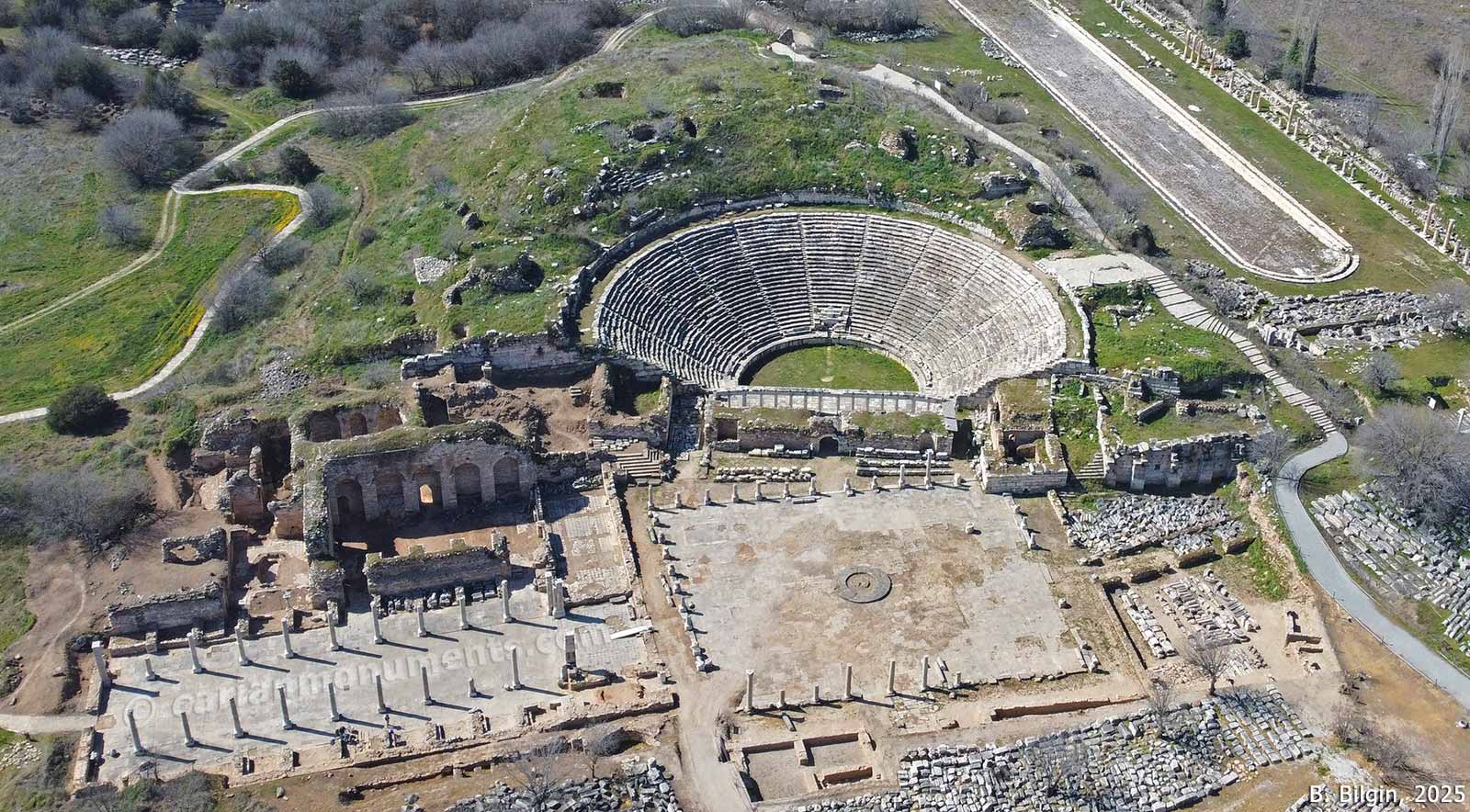
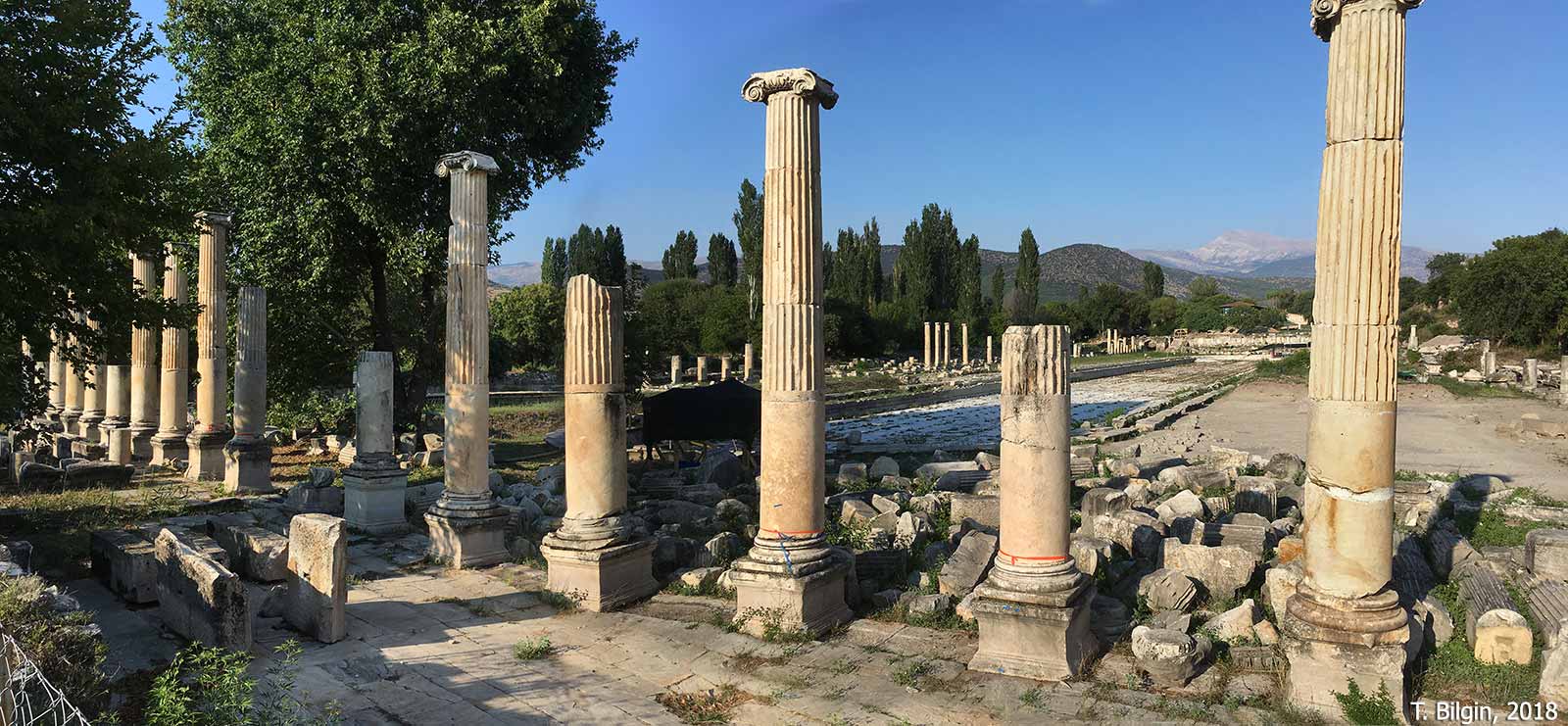
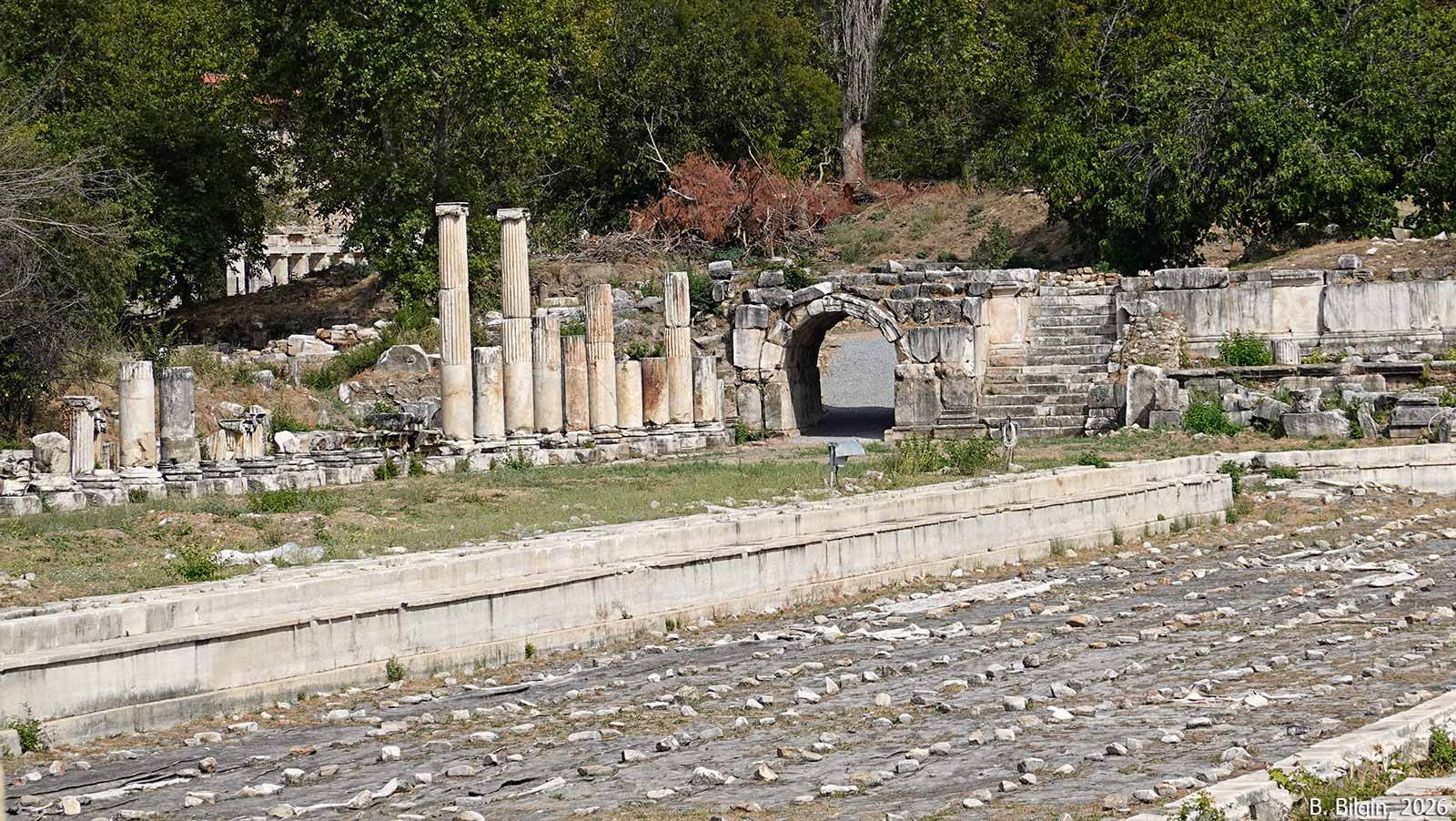
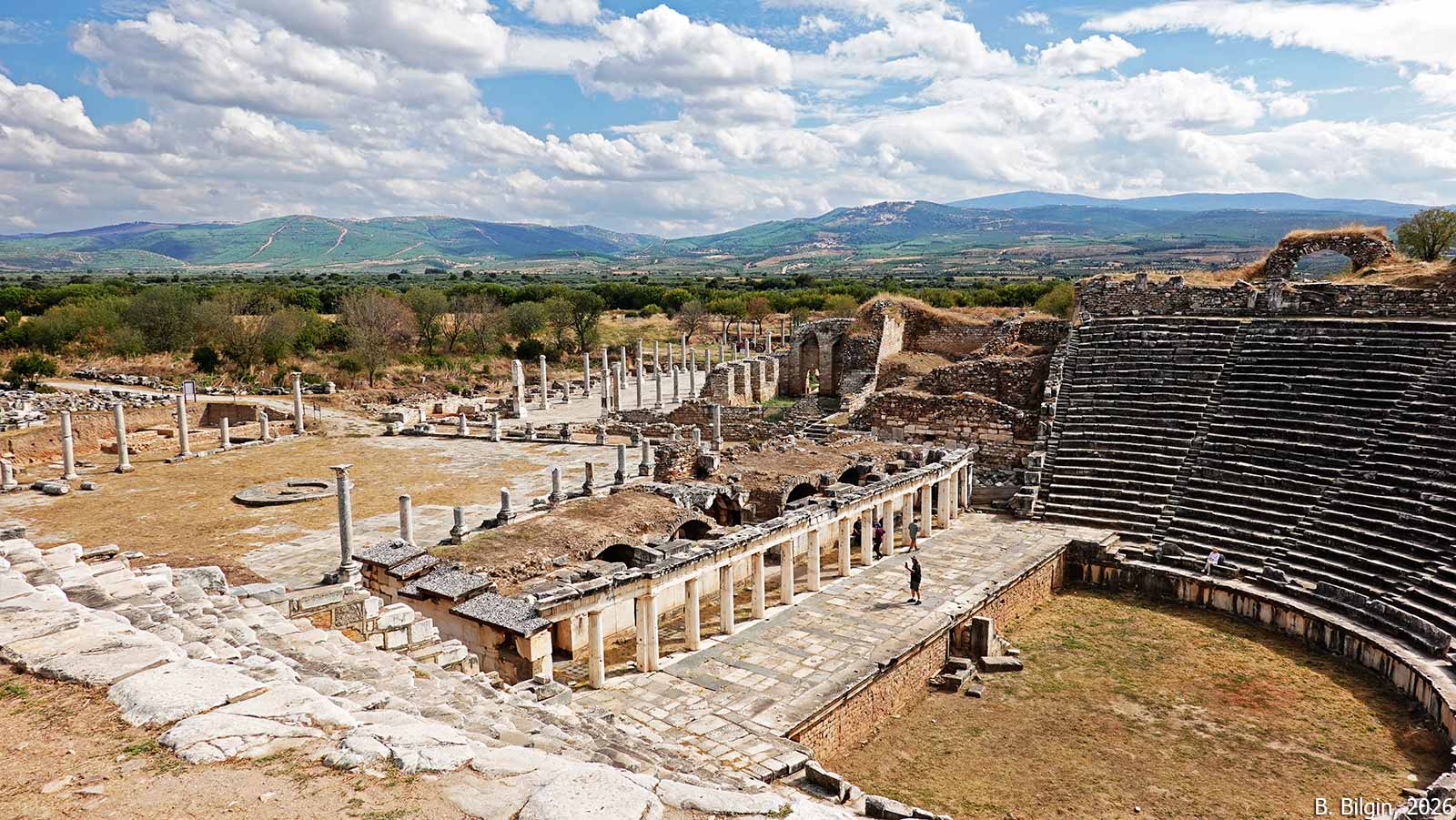
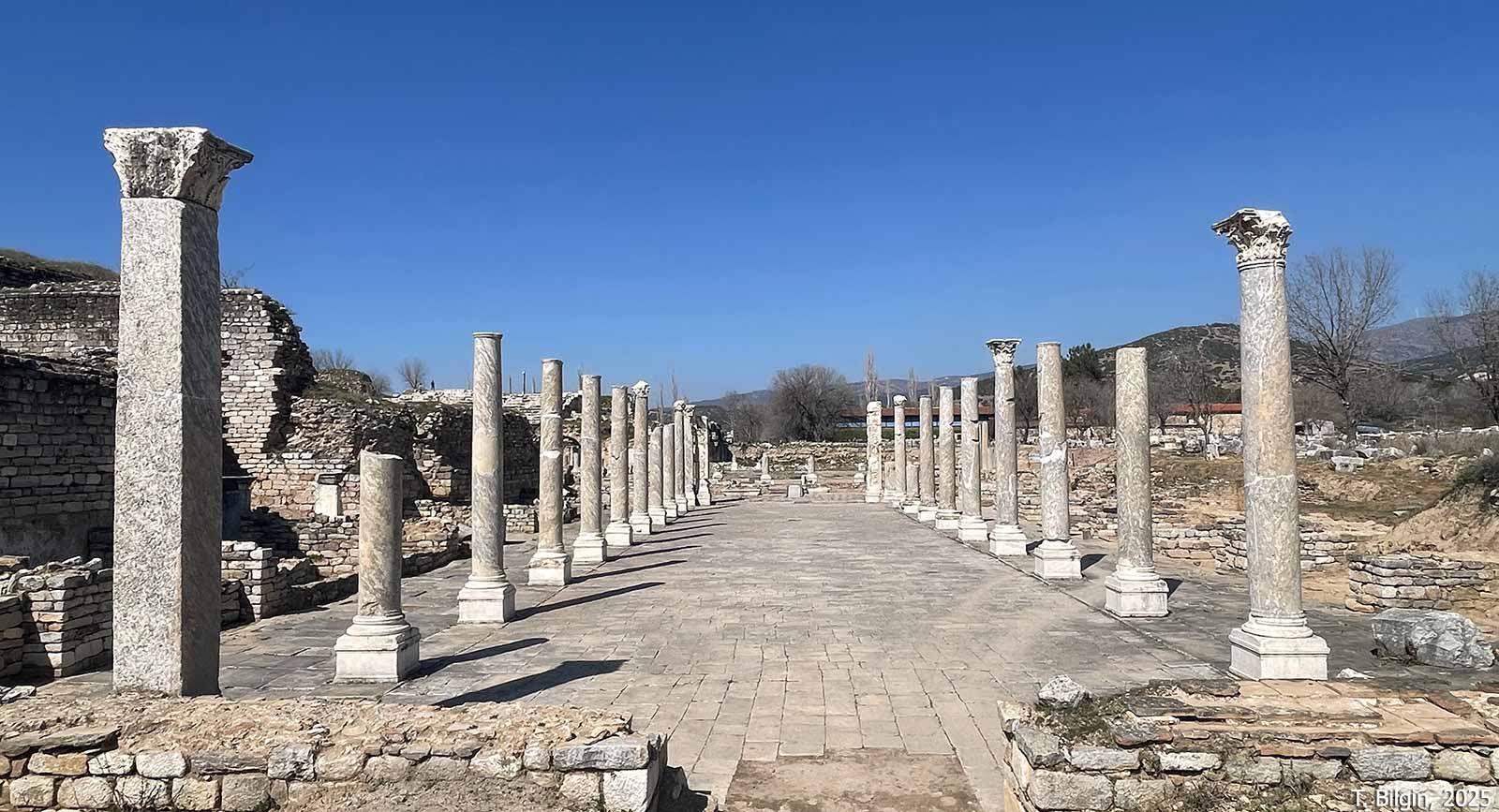
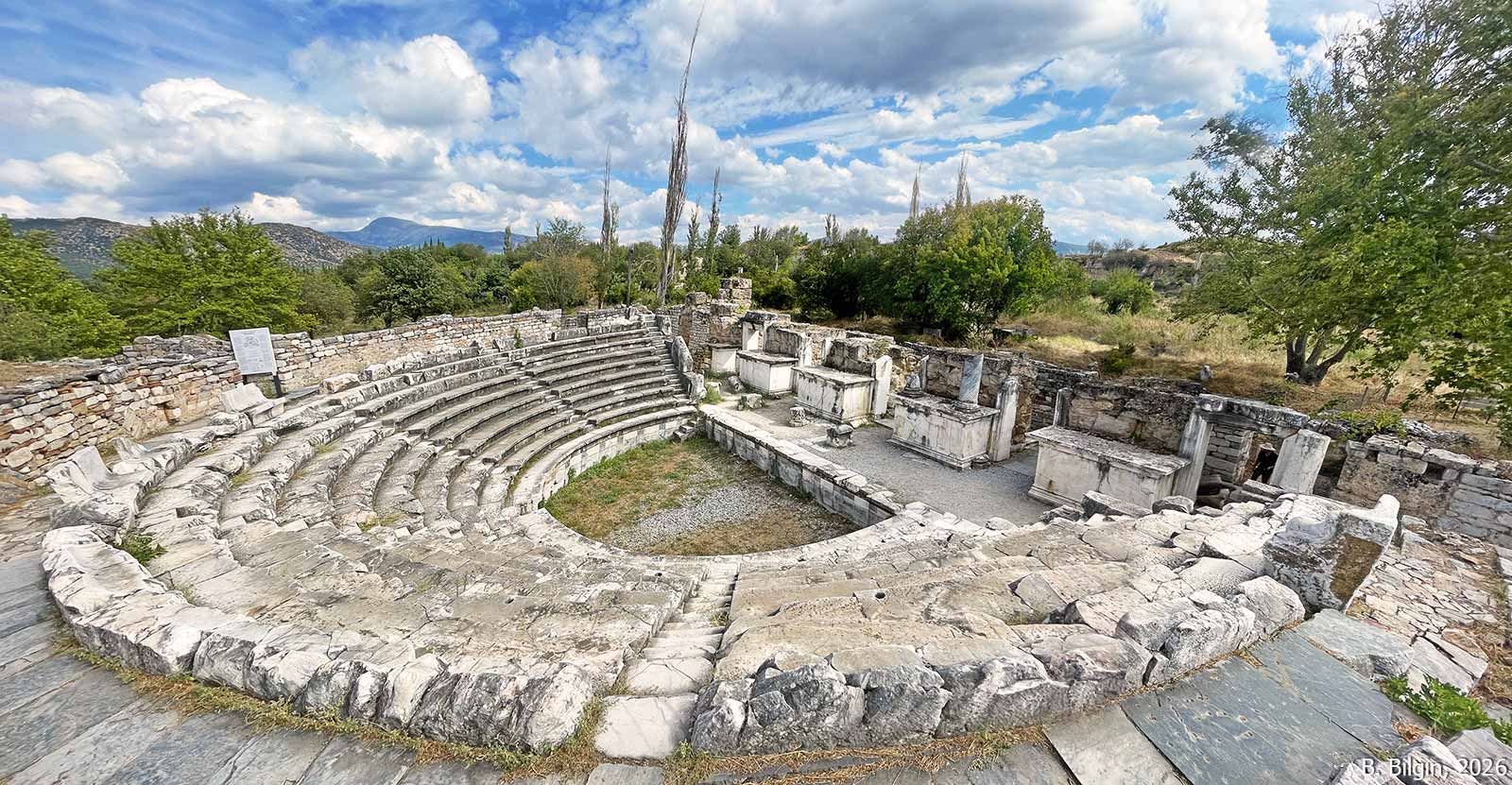
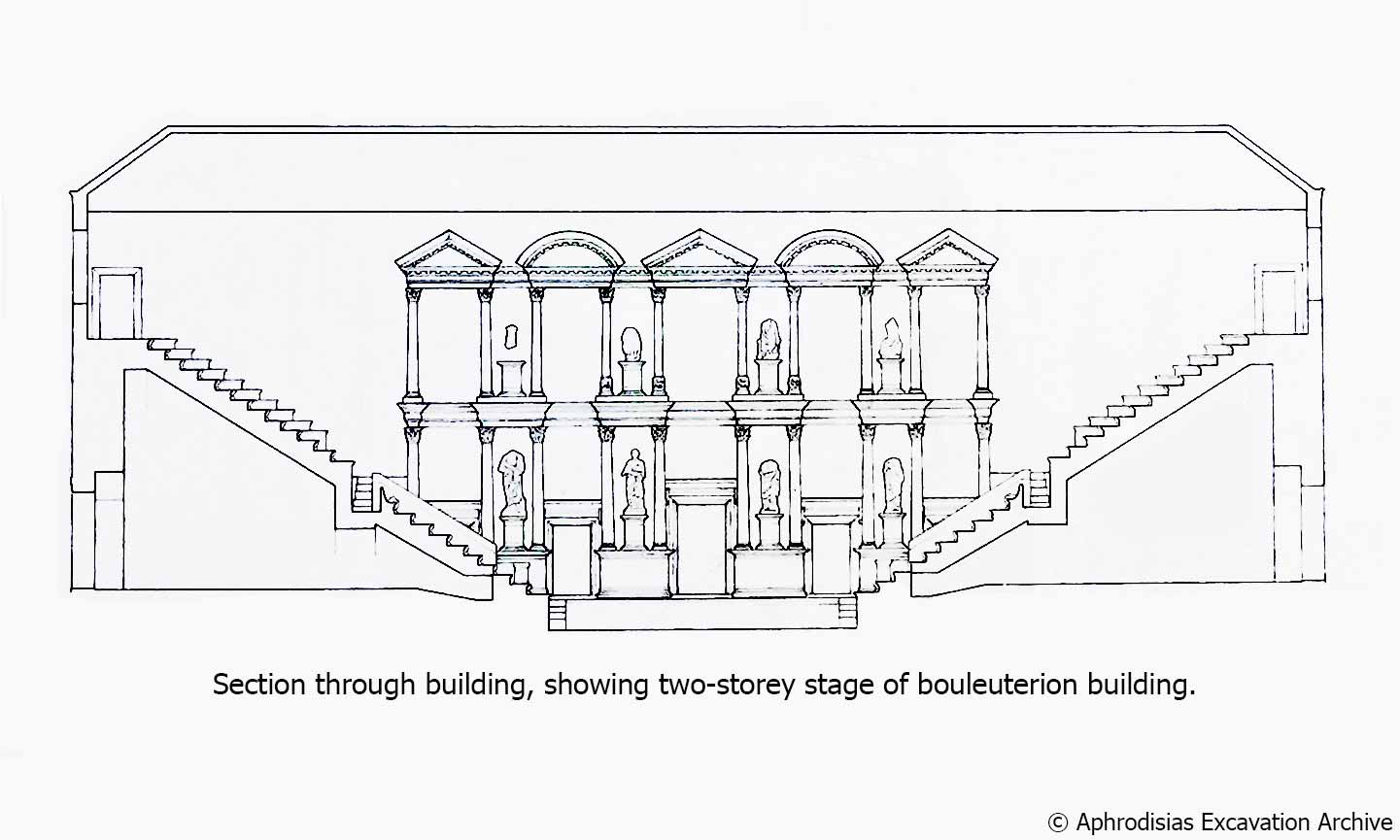
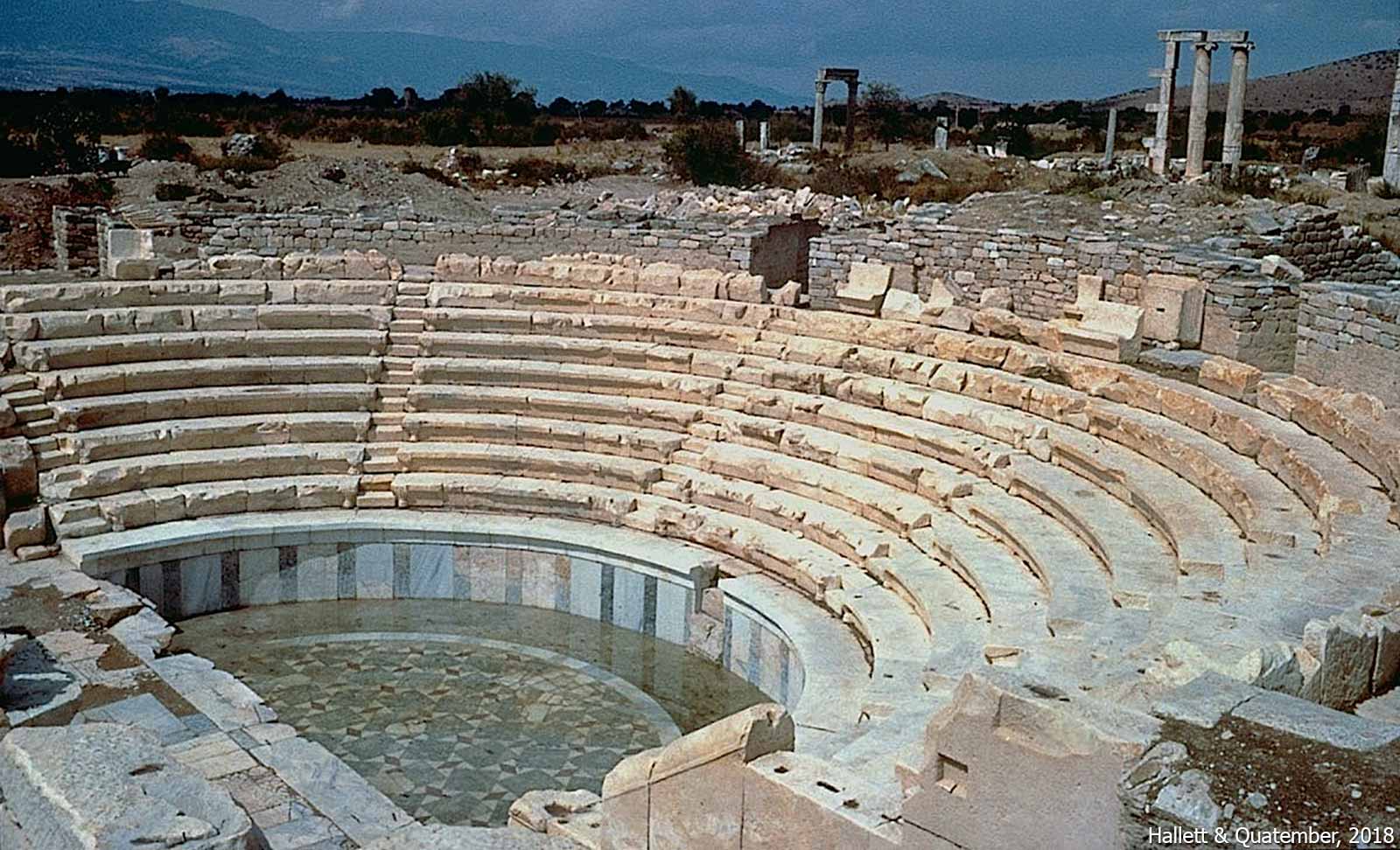
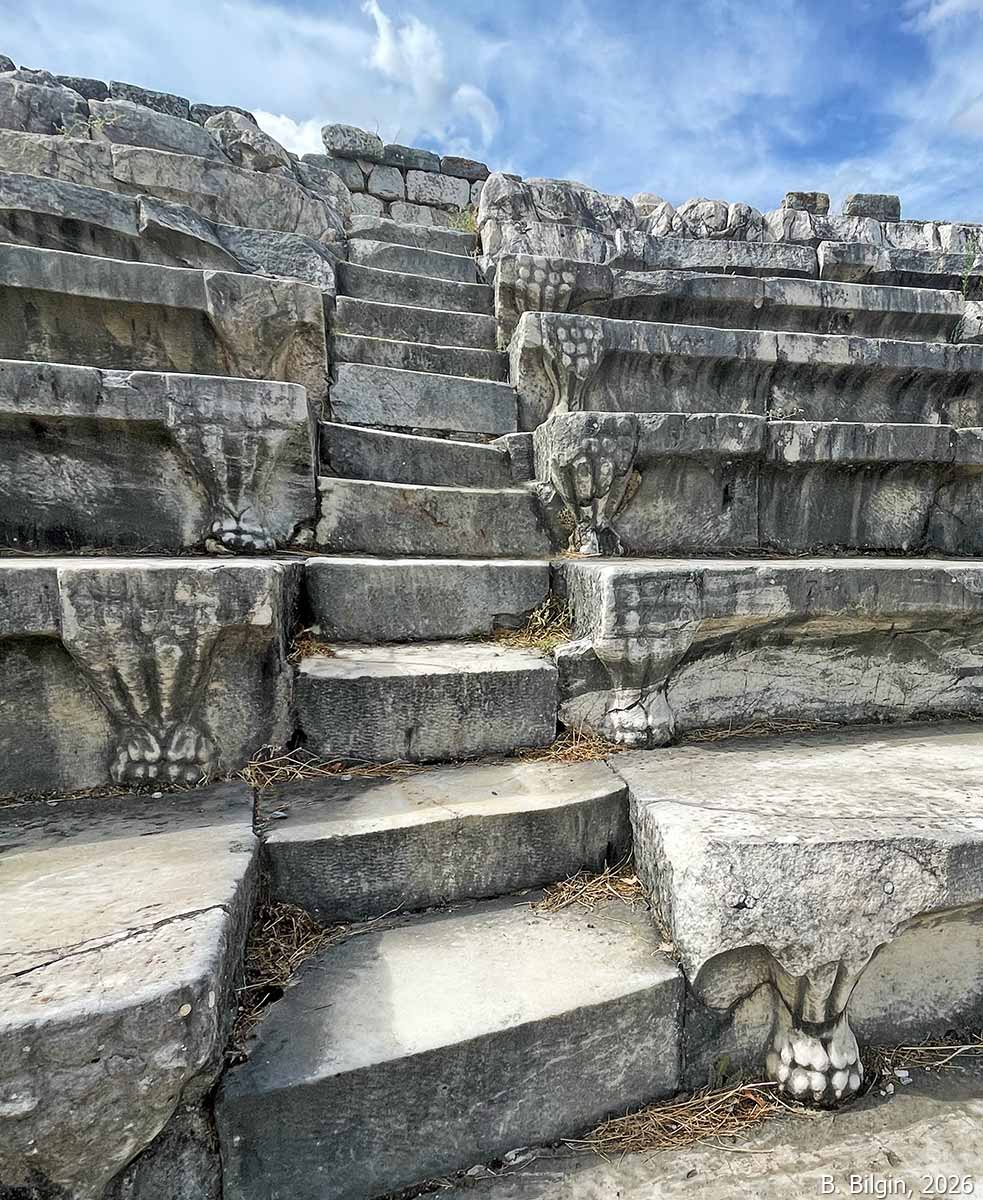
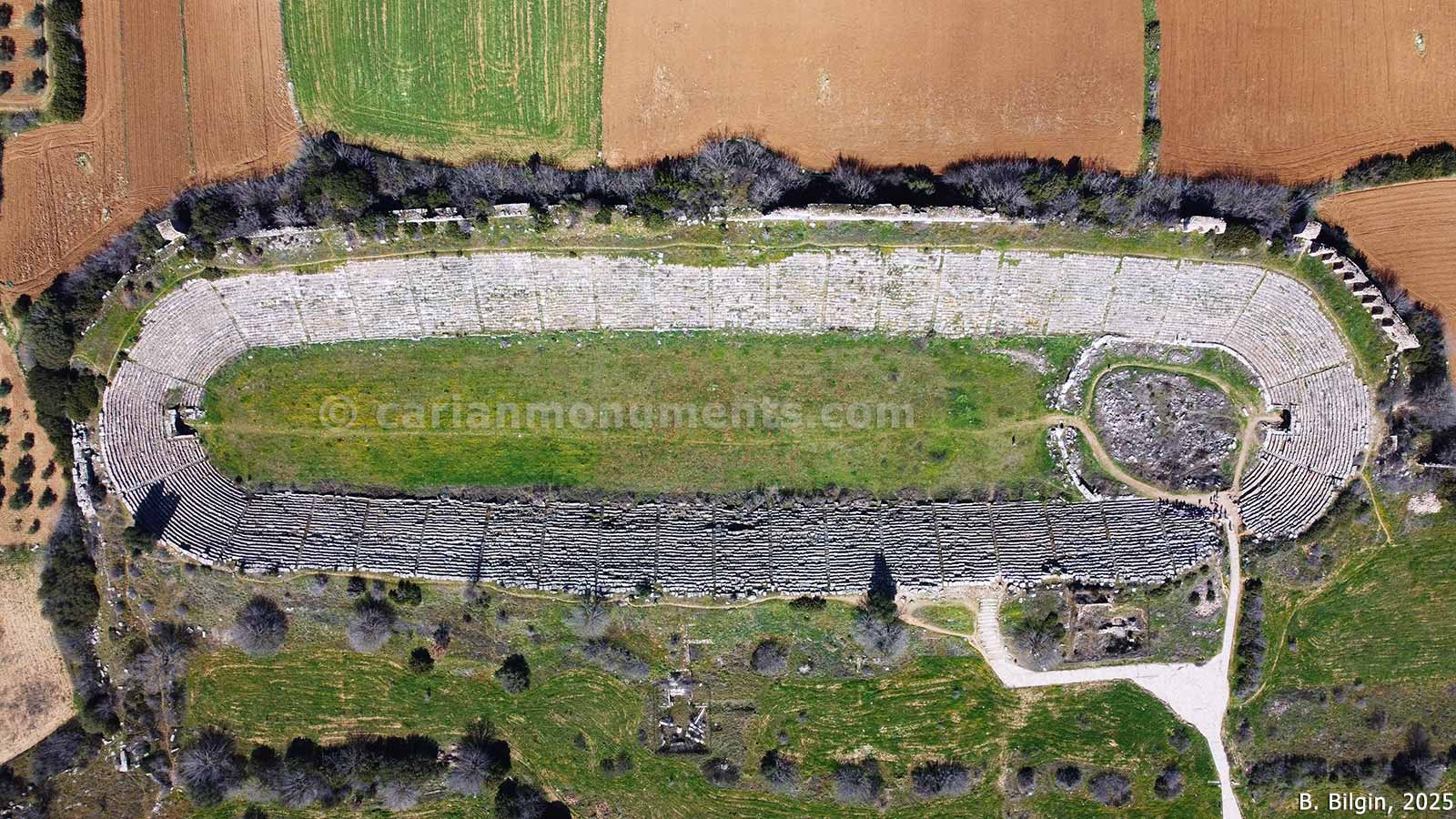
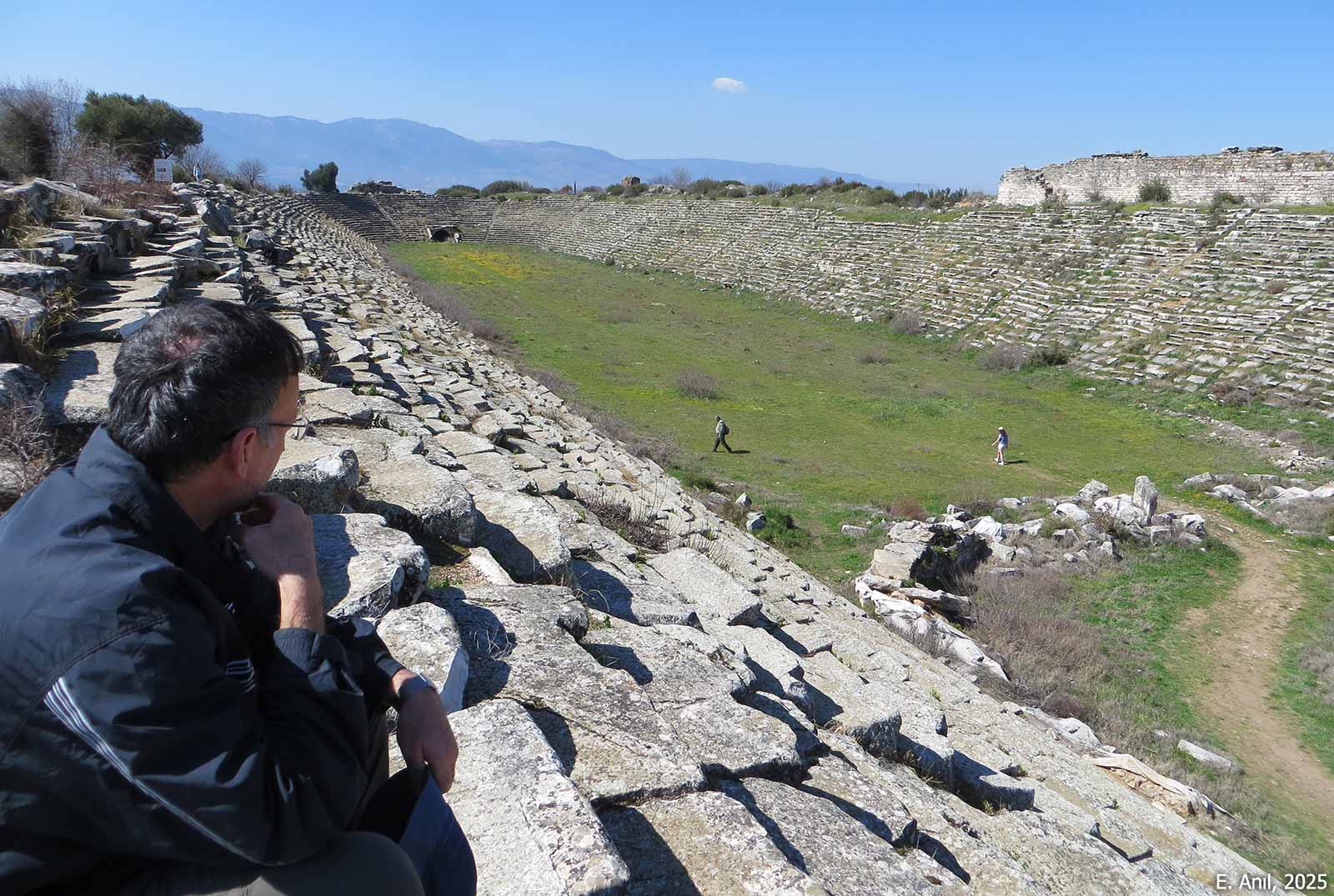
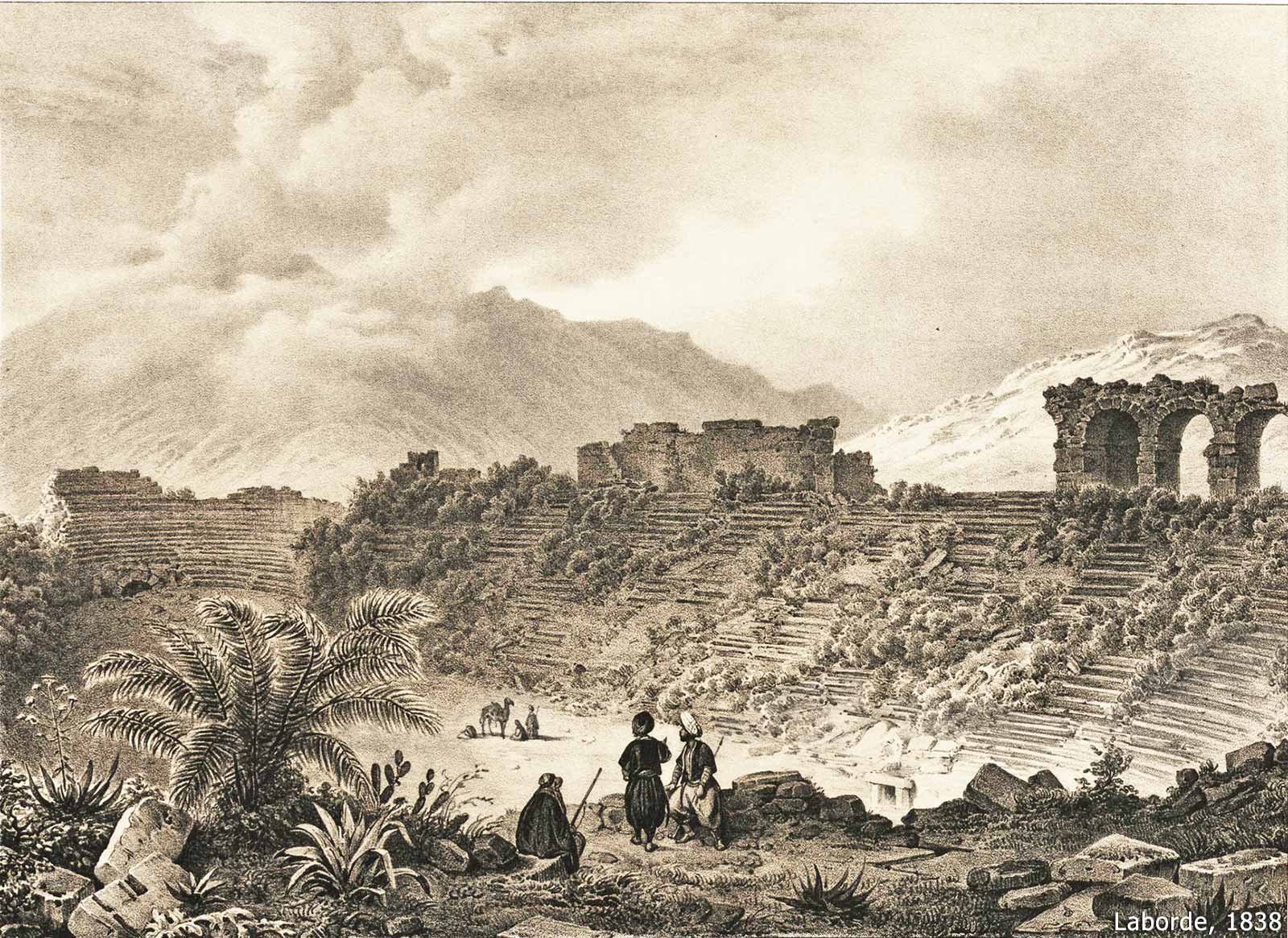
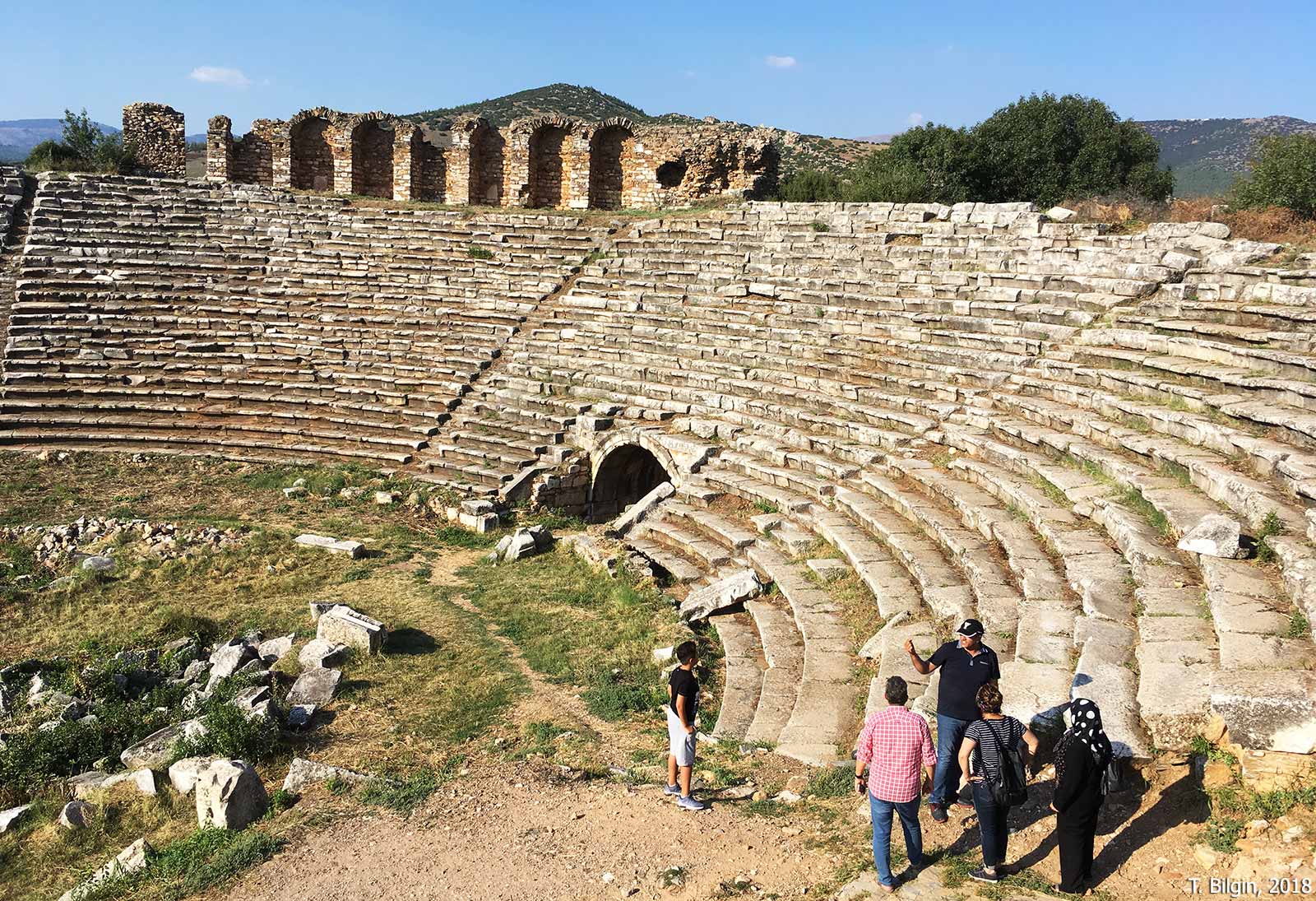
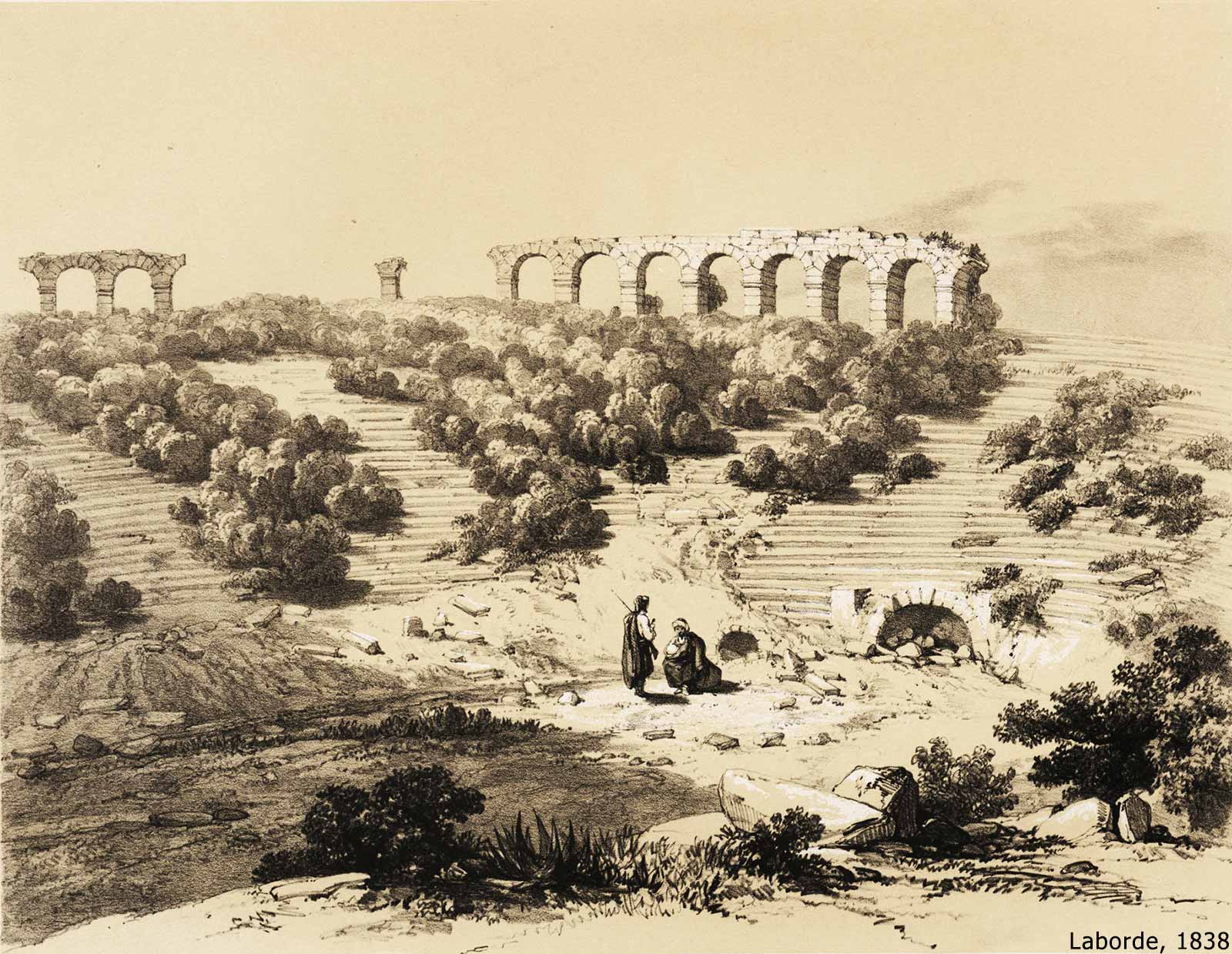
Aphrodisias boasts a wealth of well-preserved monuments that reflect its prosperity from the Late Hellenistic period through Late Antiquity. The Temple of Aphrodite (see below) was built in marble in the 1st century BCE and converted into a Christian basilica around 500 CE. To the south lies the urban park (south agora), a massive public square featuring a 170-meter-long pool surrounded by palm trees and the Portico of Tiberius. At the park’s east end stands the agora gate, which was transformed into a monumental fountain (nymphaeum) in the 5th century CE. The civic center included the civil basilica (a Flavian multi-purpose hall displaying Diocletian’s Price Edict and reliefs of the city’s legendary founders) and the bouleuterion, a roofed, semicircular auditorium renowned for its marble seating and stage architecture. Entertainment venues included the theater, built in the late Hellenistic period with a stage dedicated by C. Julius Zoilos and featuring the famous “Archive Wall” of imperial correspondence, and the stadium, an exceptionally preserved 30,000-seat arena whose eastern end was later adapted into an amphitheater for gladiator games. Other notable structures include the Hadrianic Baths, a massive complex with a sculpture gallery; the tetrastoon, a plaza built east of the theater in the 360s CE; and the city walls, constructed in the mid-4th century using recycled masonry from earlier tombs and buildings. The city’s exceptional marble sculpture collection, including the frieze of the Zoilos Monument and the magnificent relief panels from the Sebasteion complex are exhibited in Aphrodisias Museum.
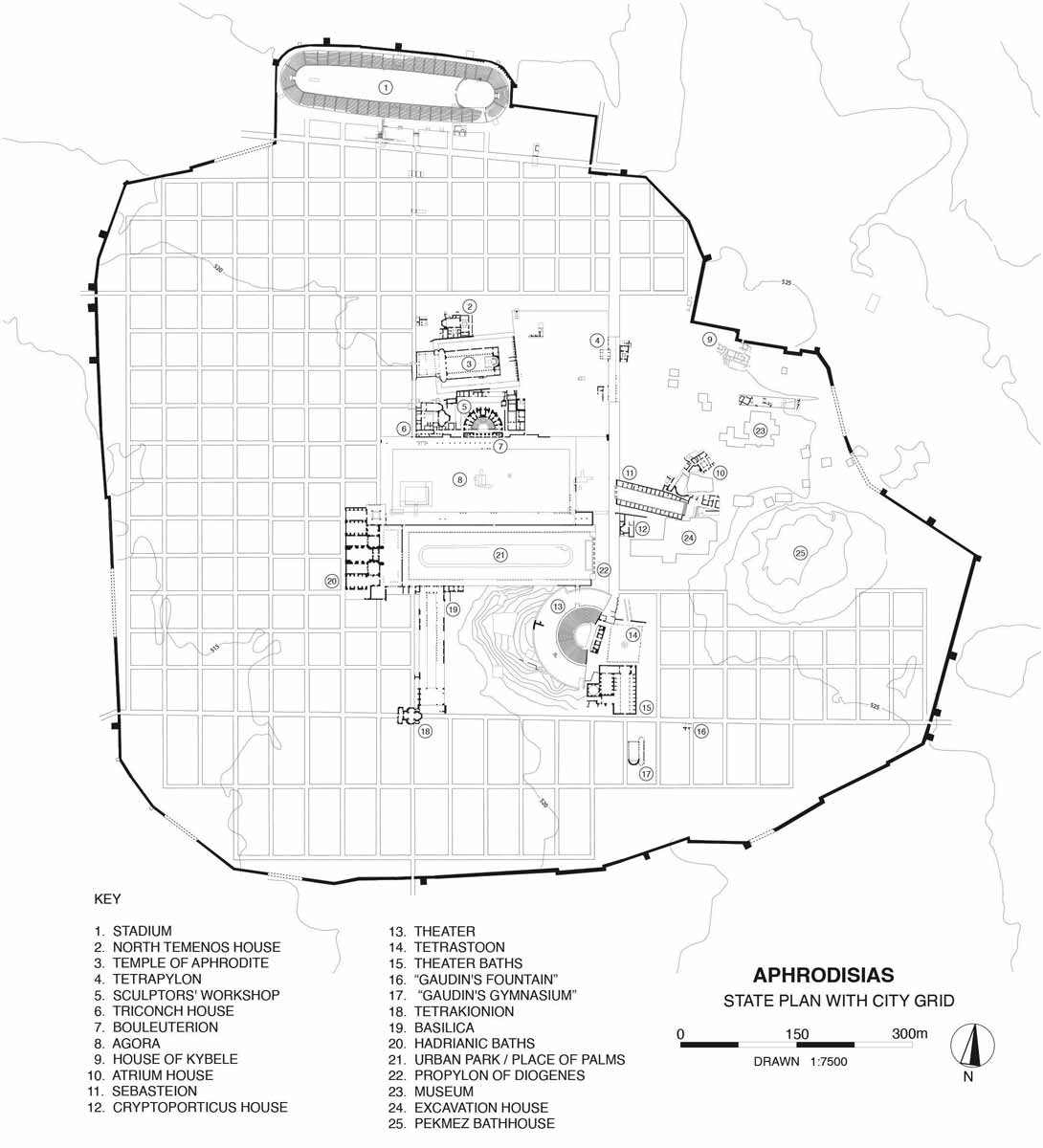
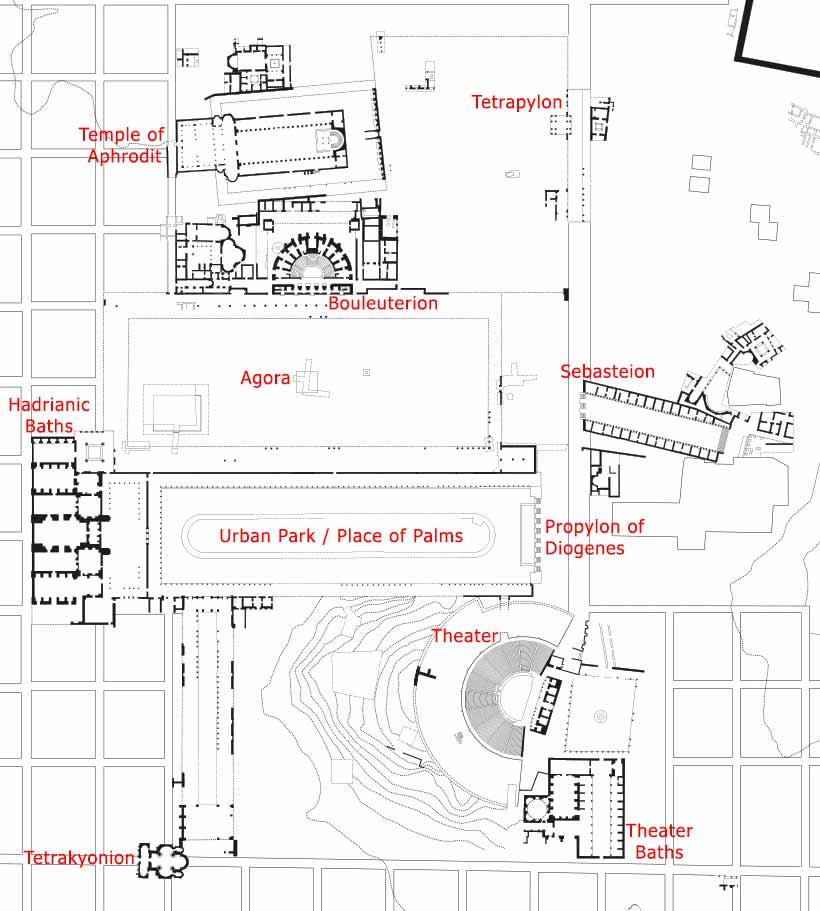

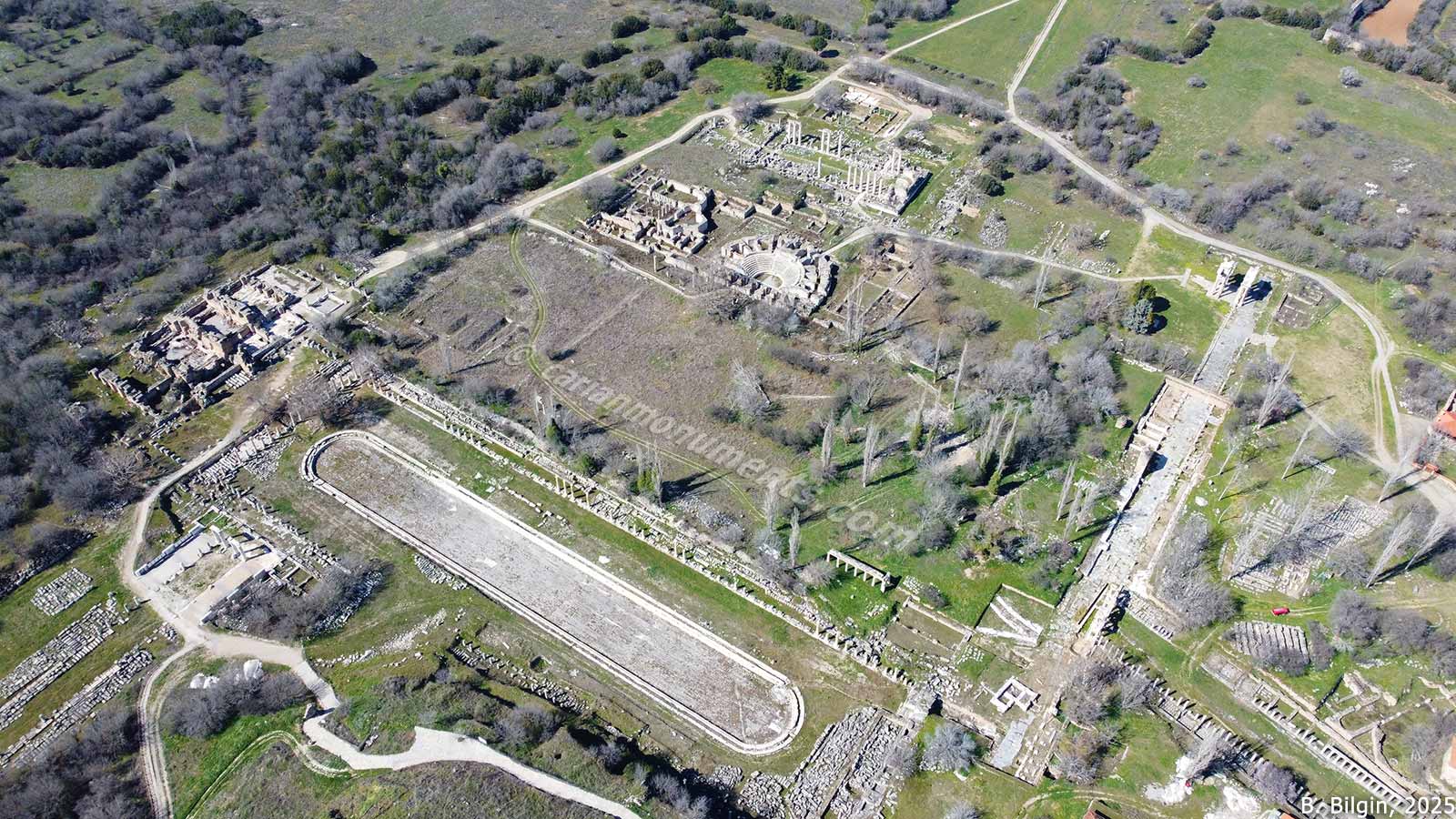






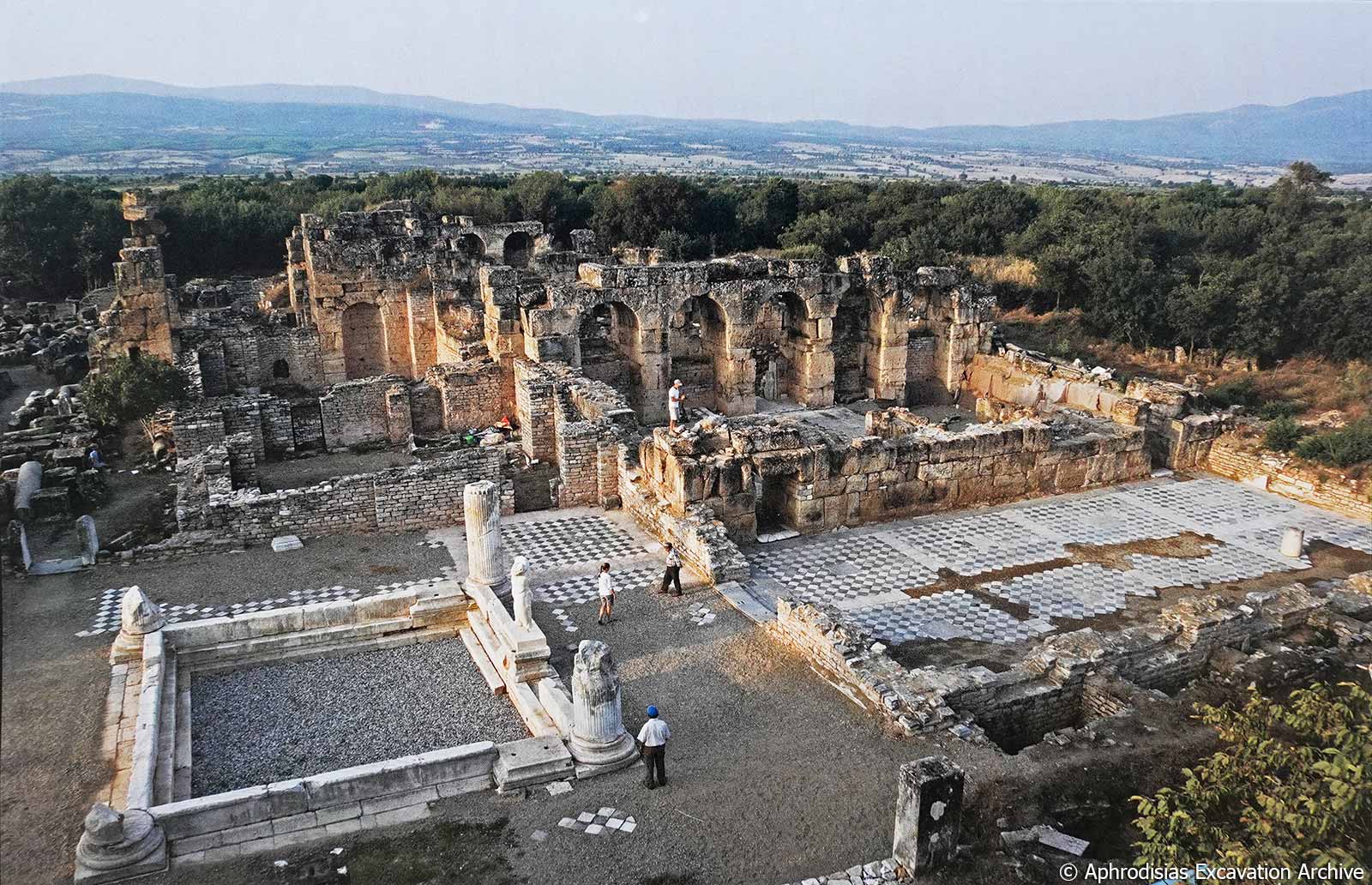
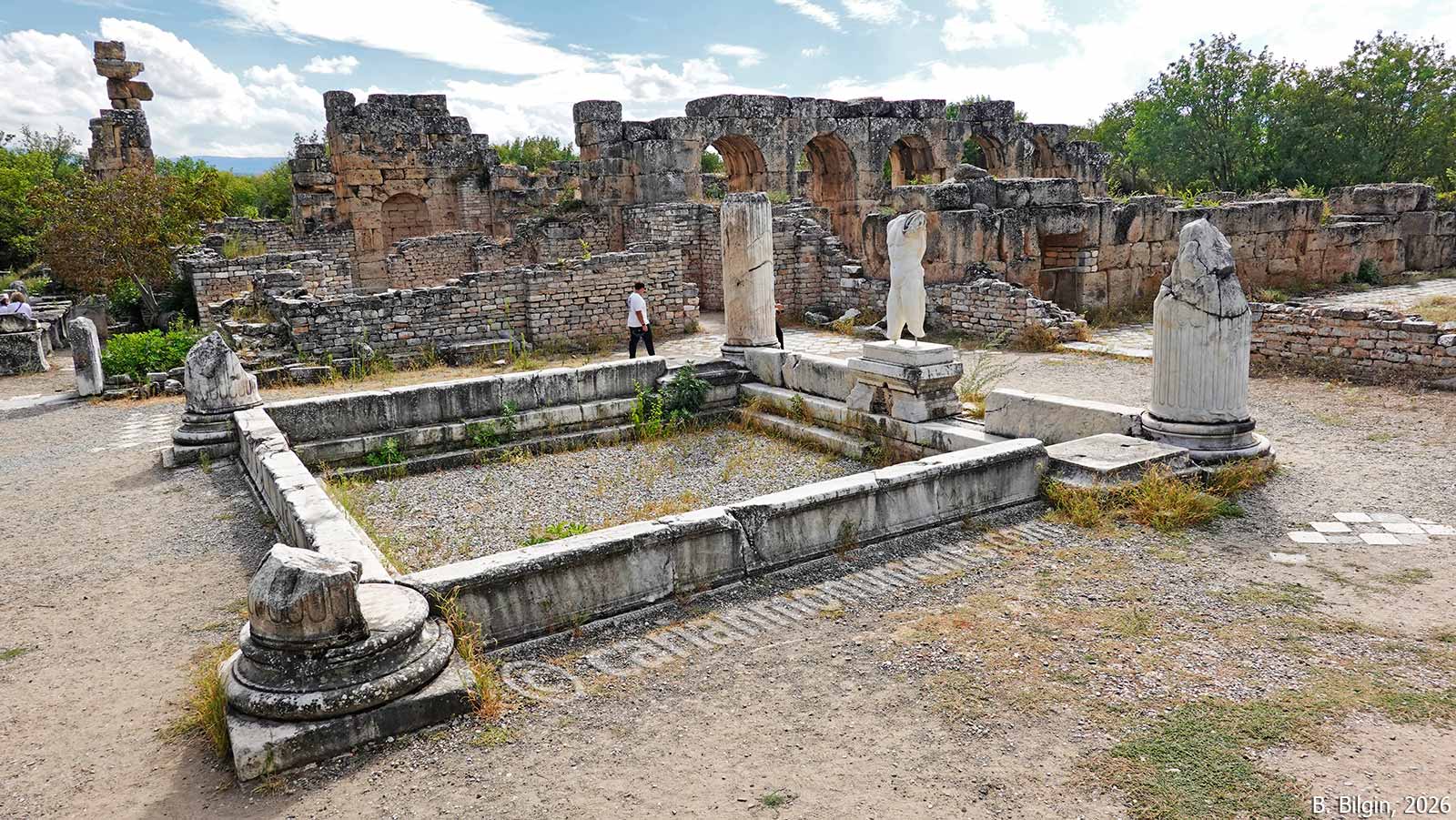
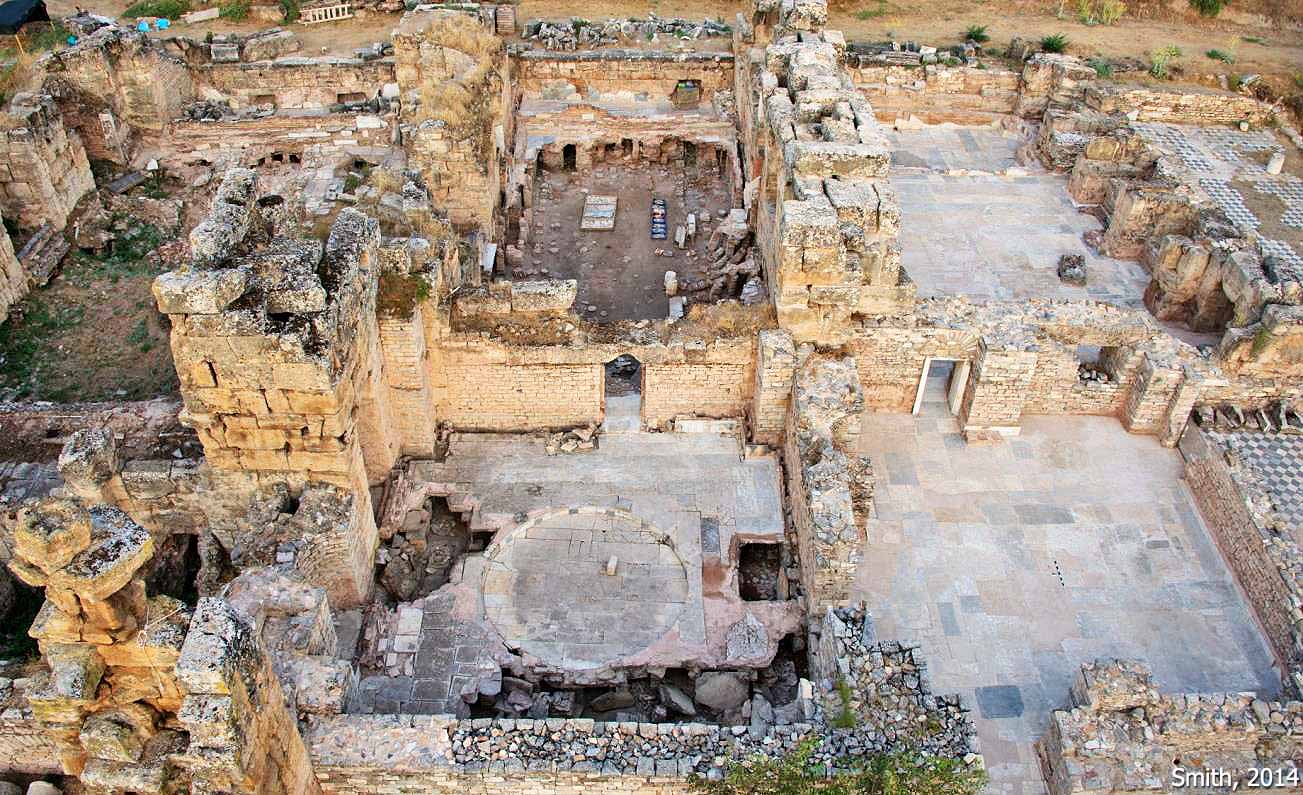
Temple of Aphrodit
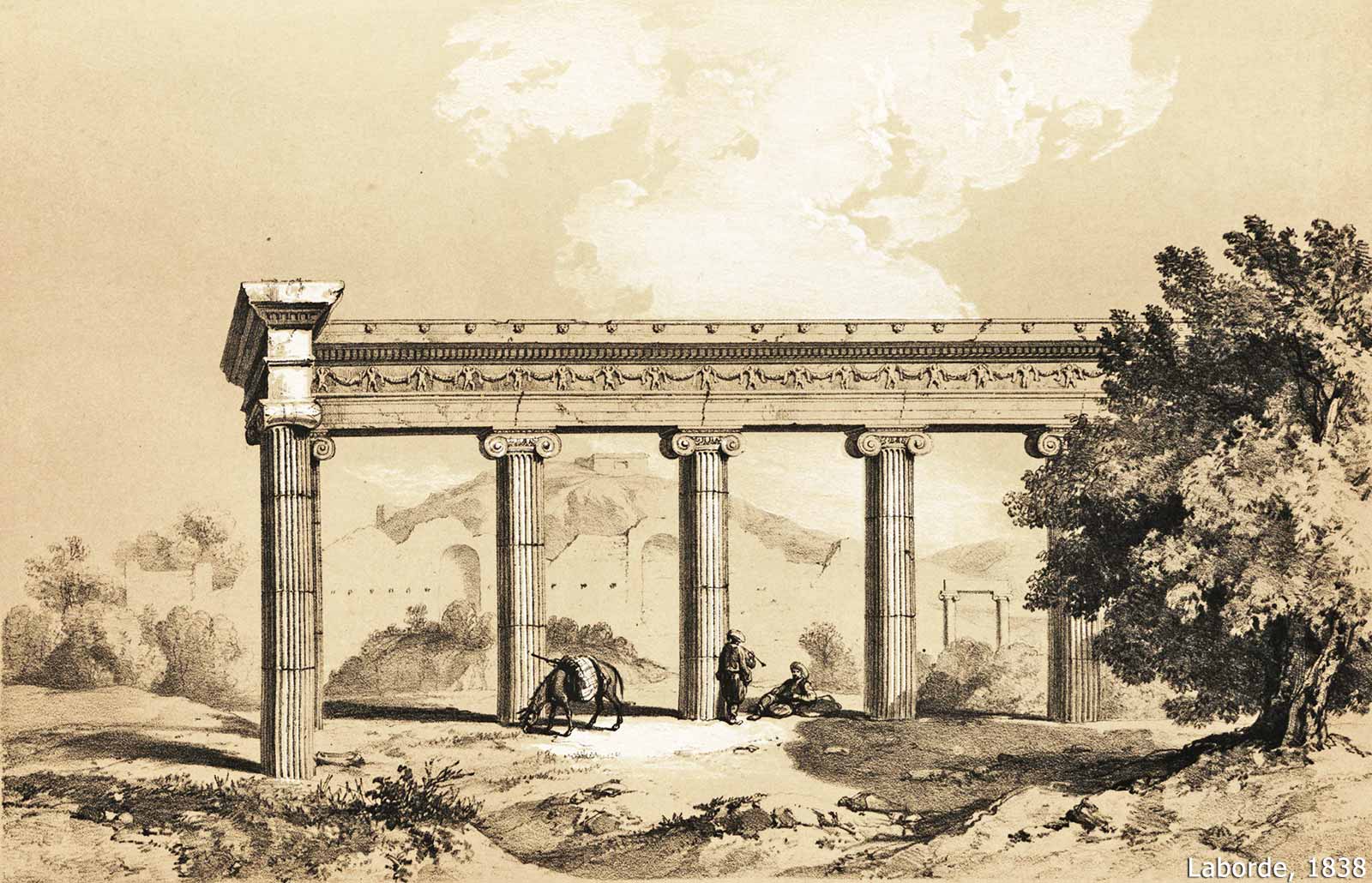
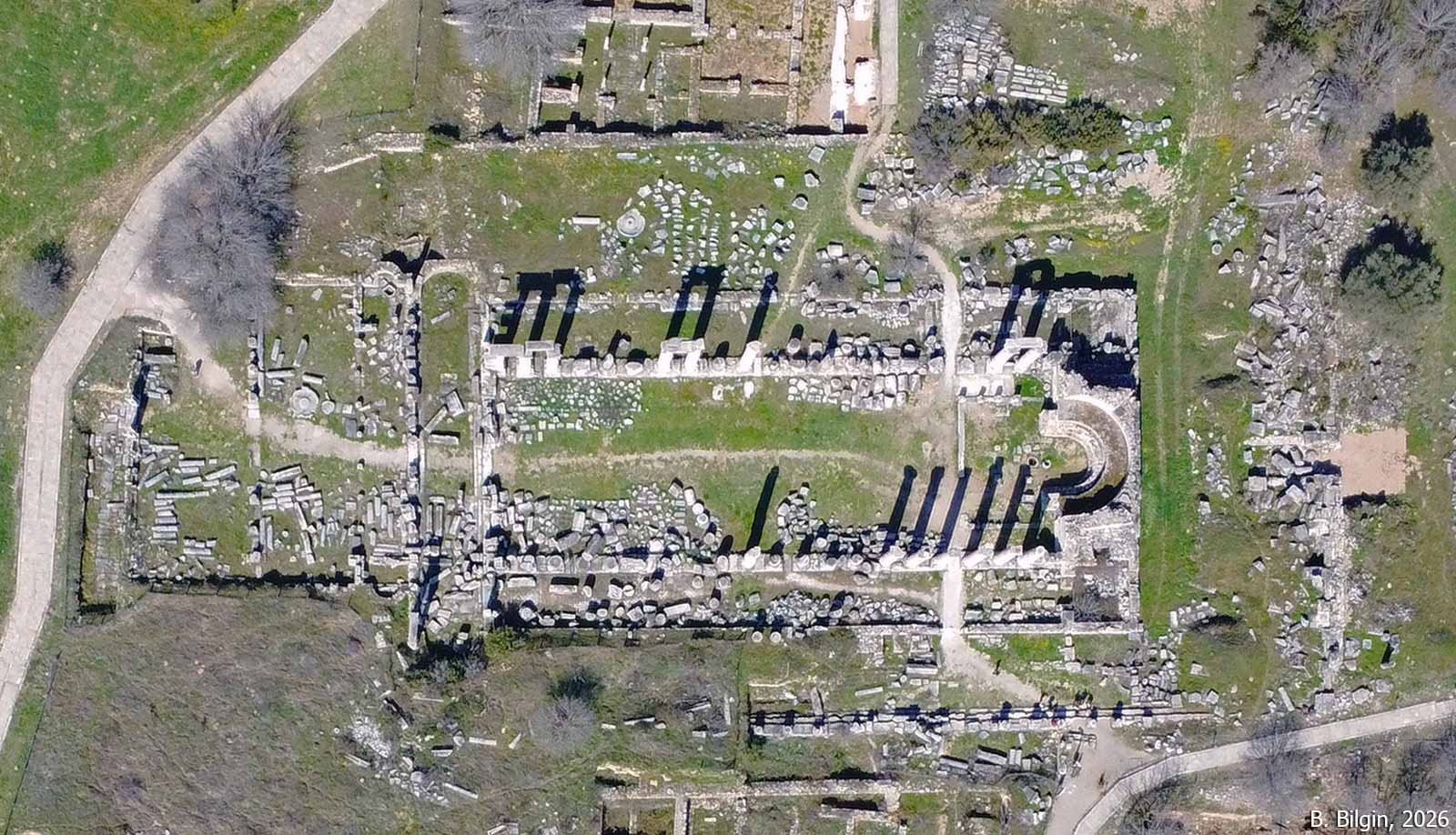
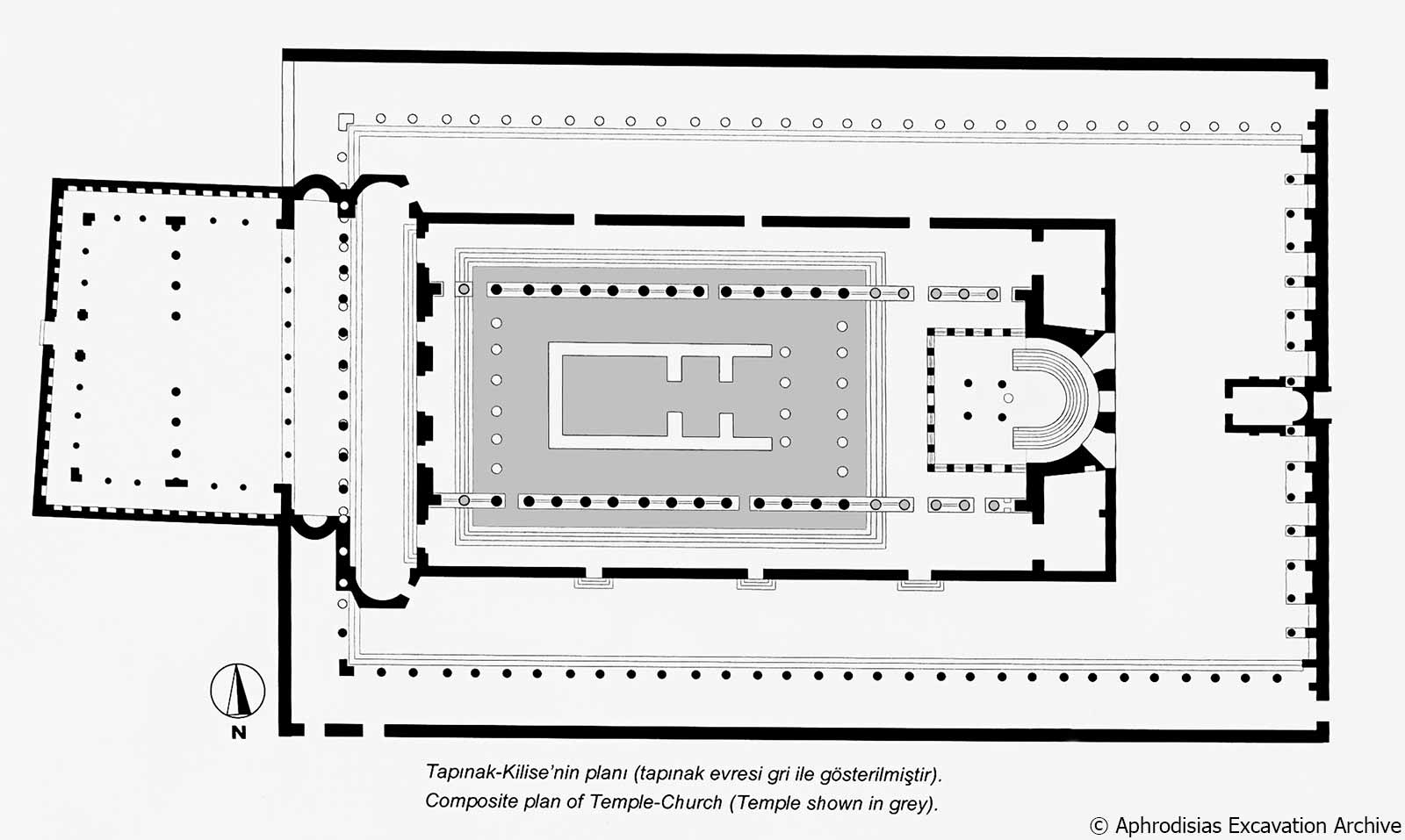
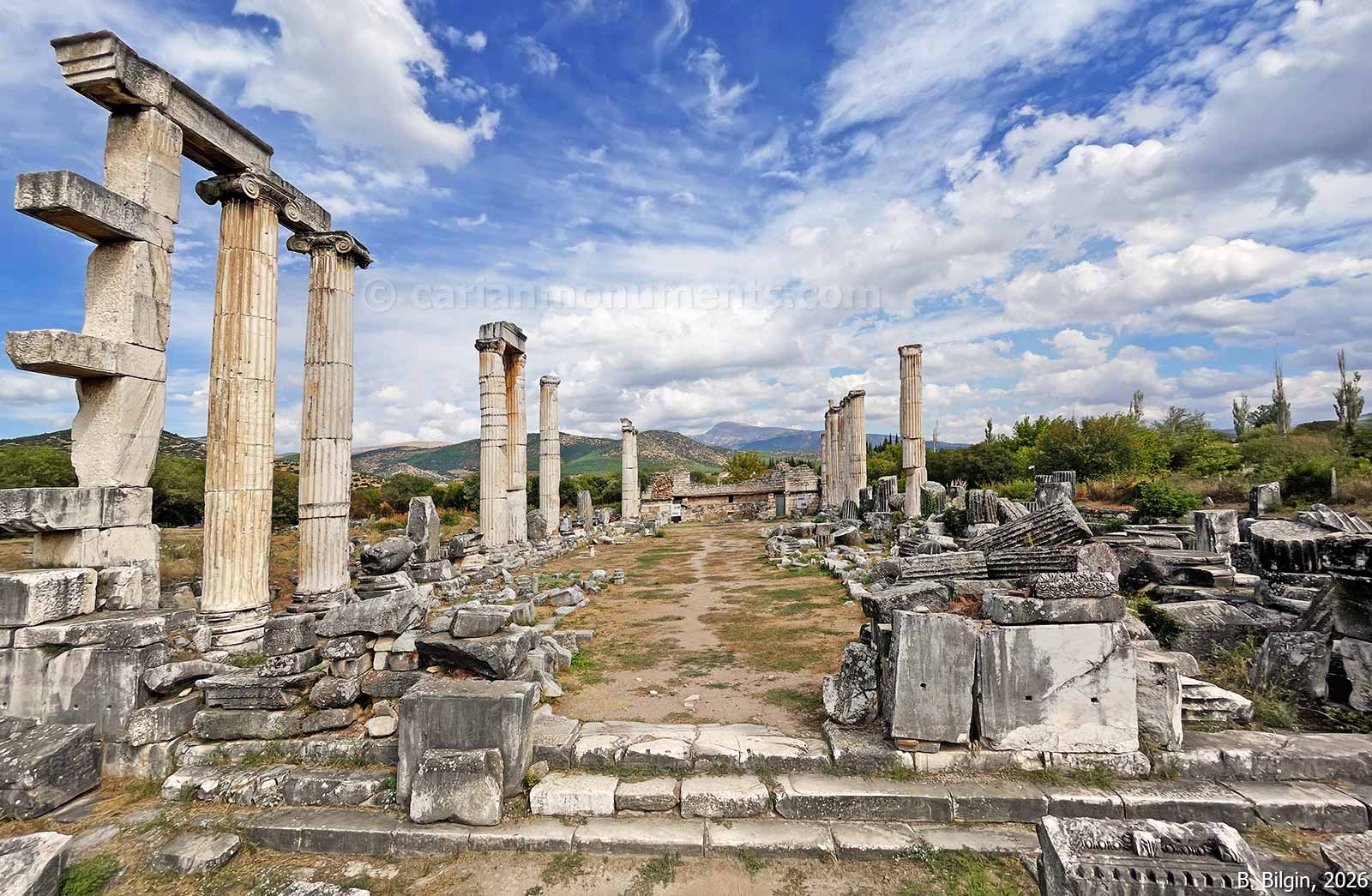
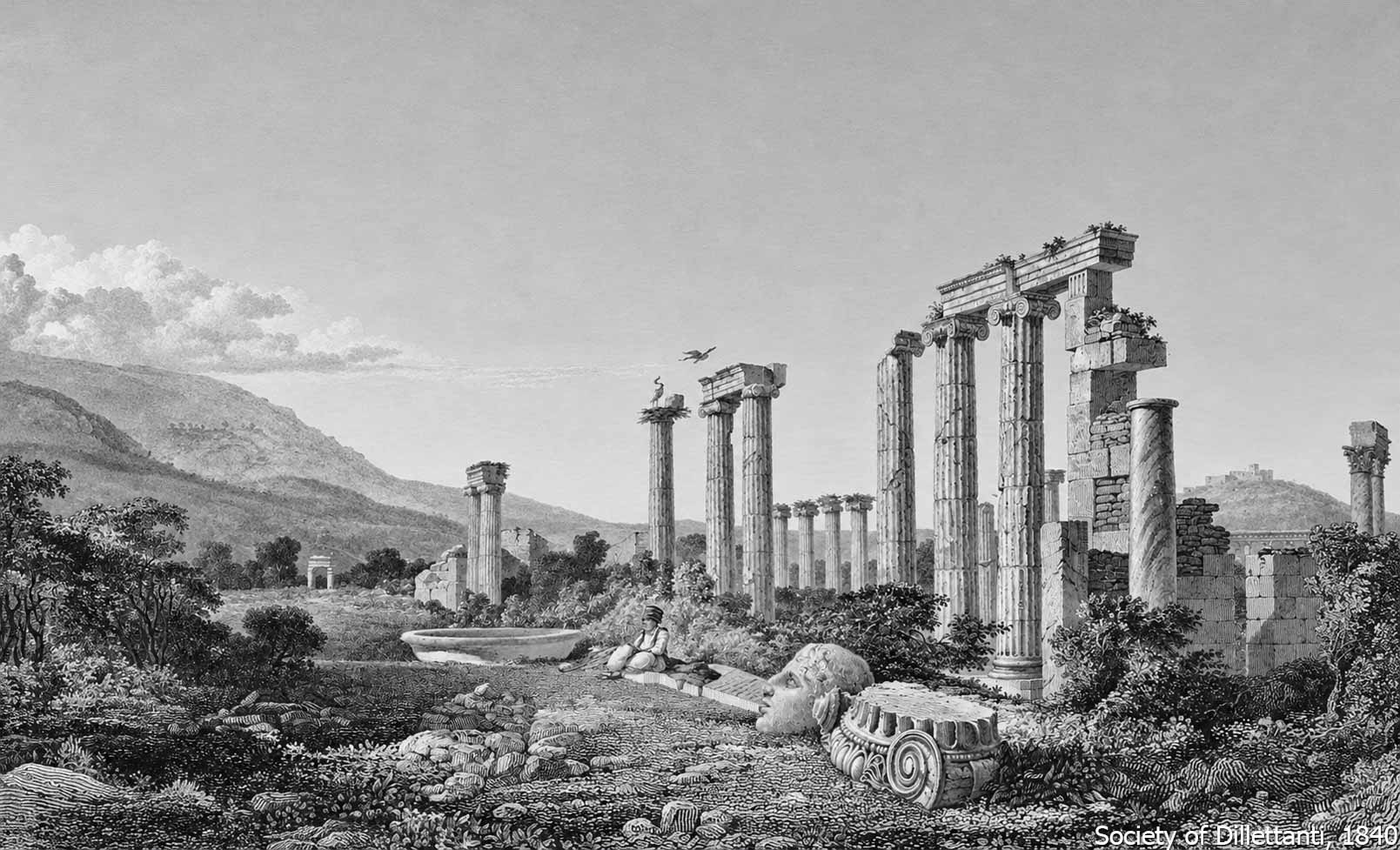
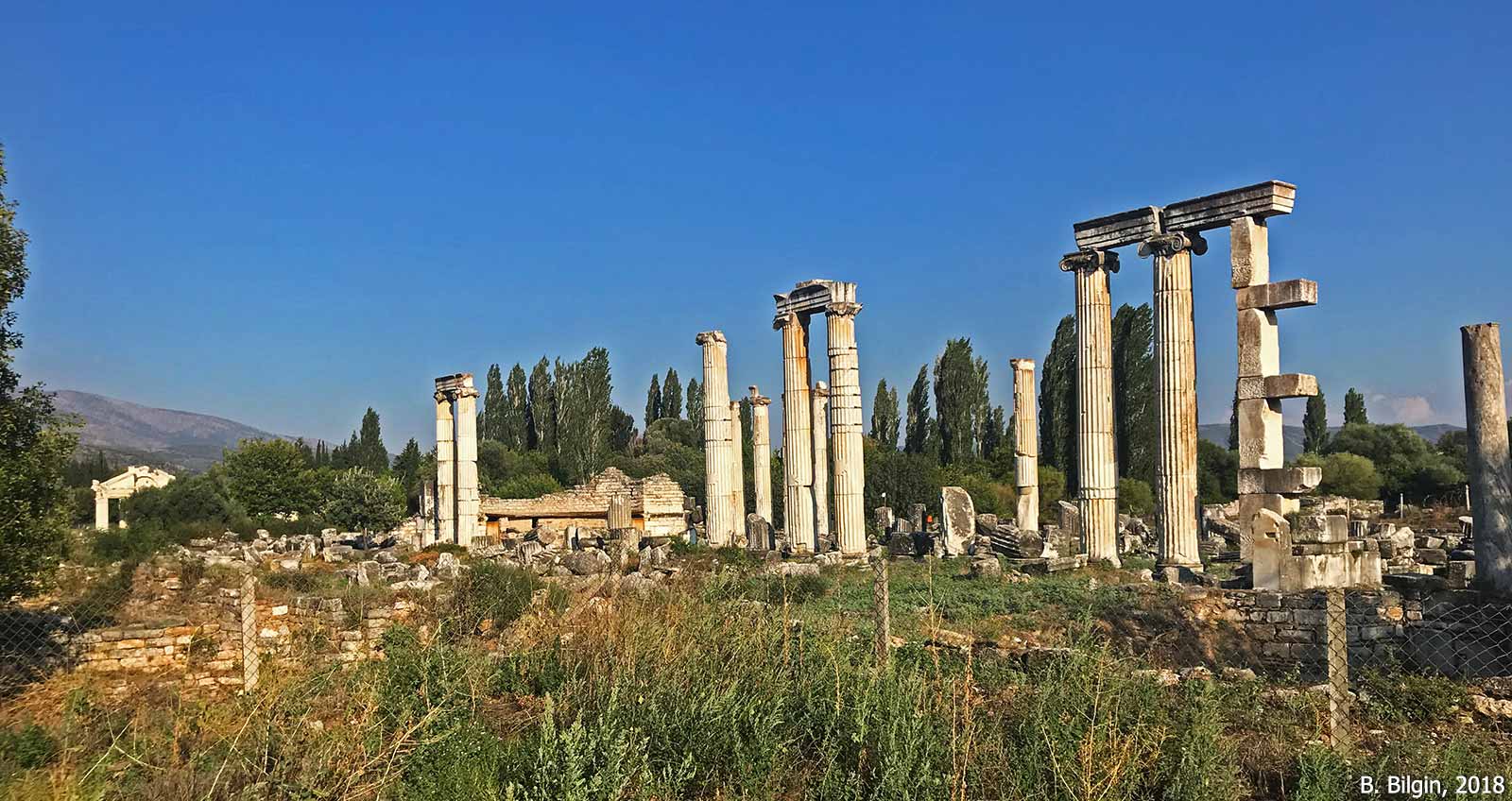
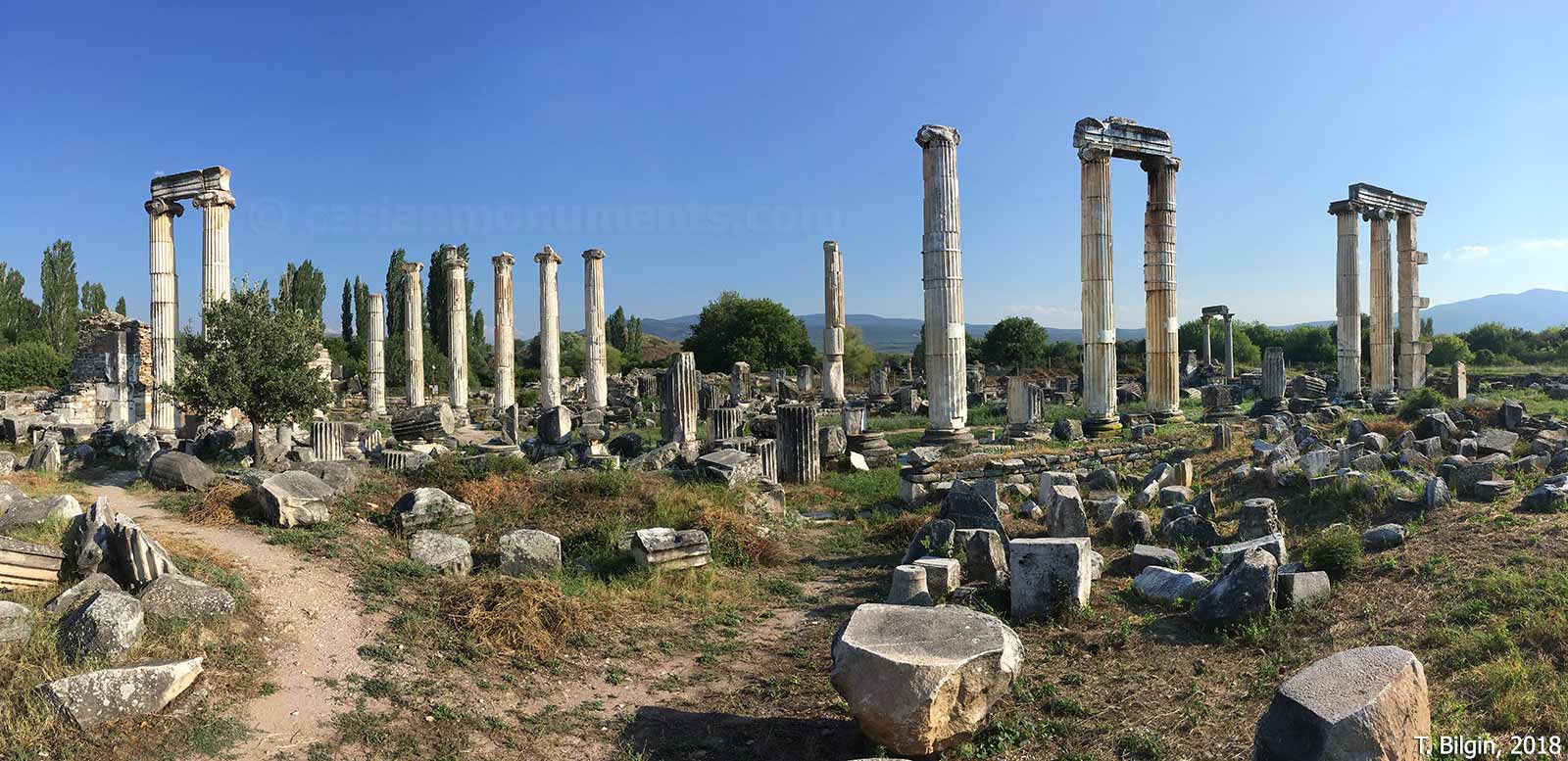
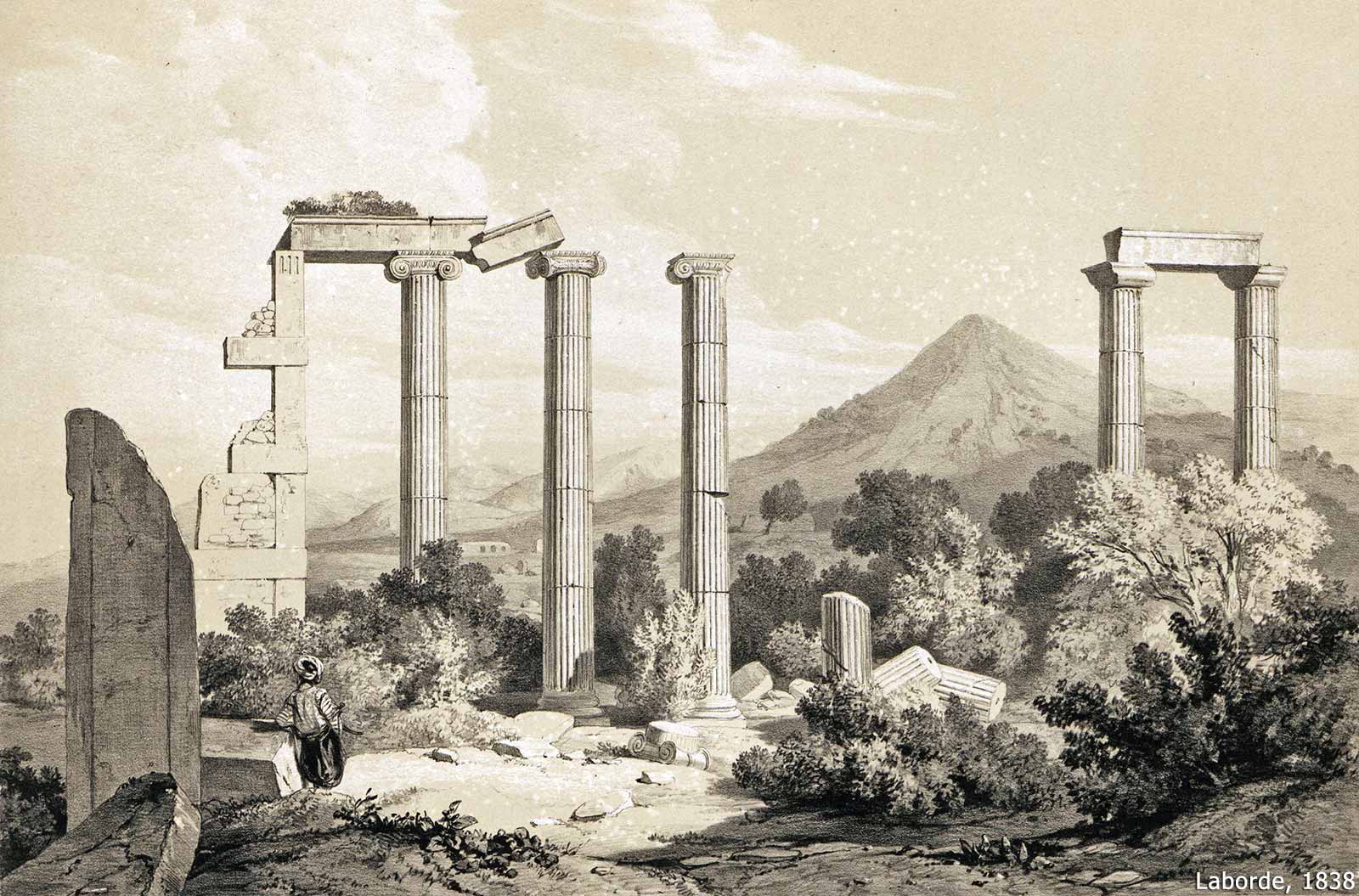
The Temple of Aphrodite was the focal point of the city, originating from a local sanctuary with evidence of activity dating back to 6th century BCE. The first monumental marble temple was constructed in the late 1st century BCE, sponsored by the freedman C. Julius Zoilos, originally designed as a prostyle building. During the Imperial period, specifically in the 1st century CE, the temple was expanded into a pseudodipteral plan with Corinthian columns, and in the 2nd century CE, it was enclosed by a colonnaded temenos. The sanctuary possessed prestigious rights of asylum, recognized by Julius Caesar—who dedicated a golden Eros to the goddess—and formally confirmed by the Roman Senate in 39 BCE. In a remarkable feat of engineering during Late Antiquity (c. 500 CE), the temple was converted into a Christian cathedral dedicated to St. Michael; the columns from the temple’s short ends were moved to the long sides to extend the nave, effectively turning the pagan structure “inside out” to function as a basilica.
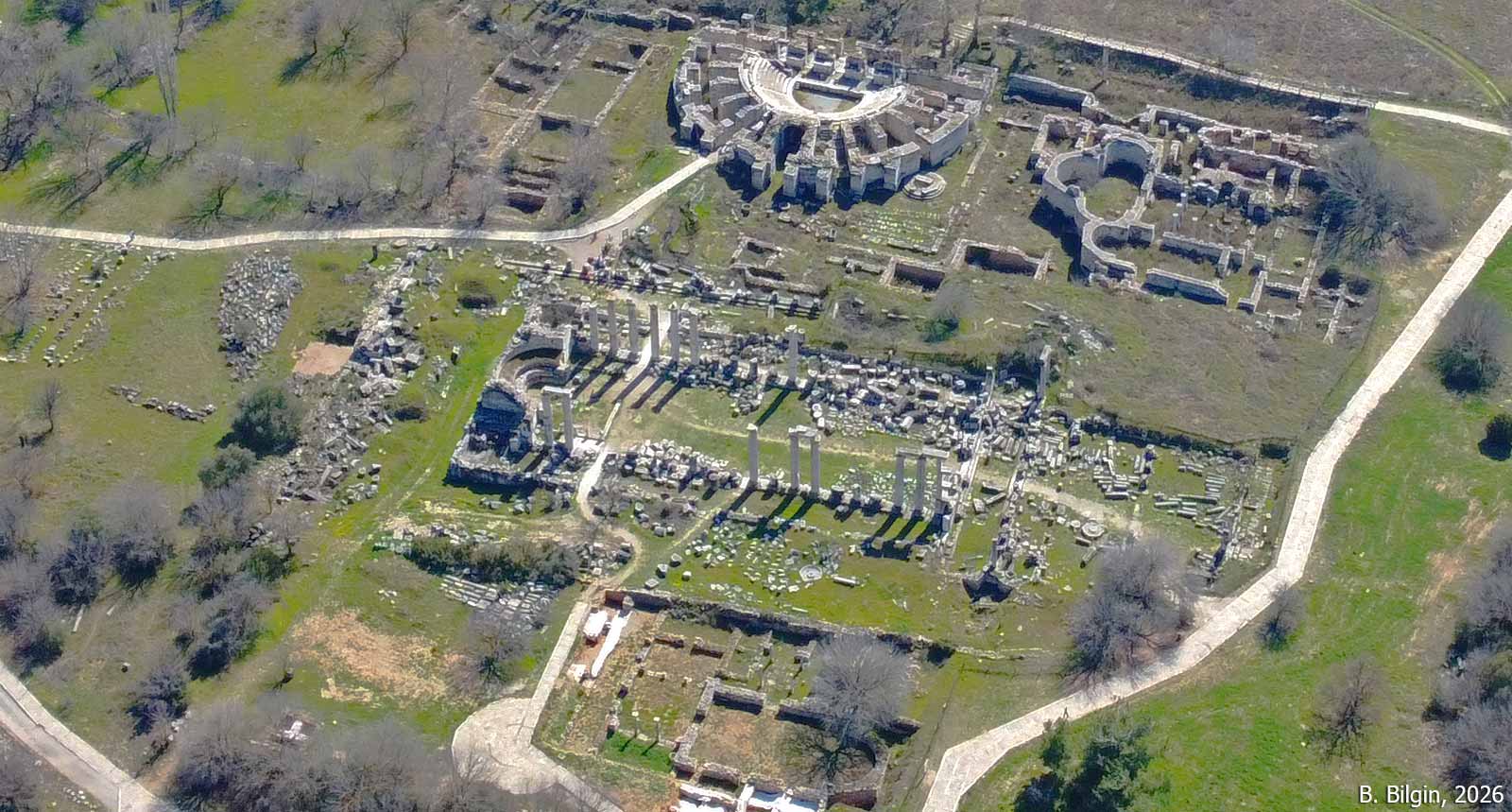
Sebasteion
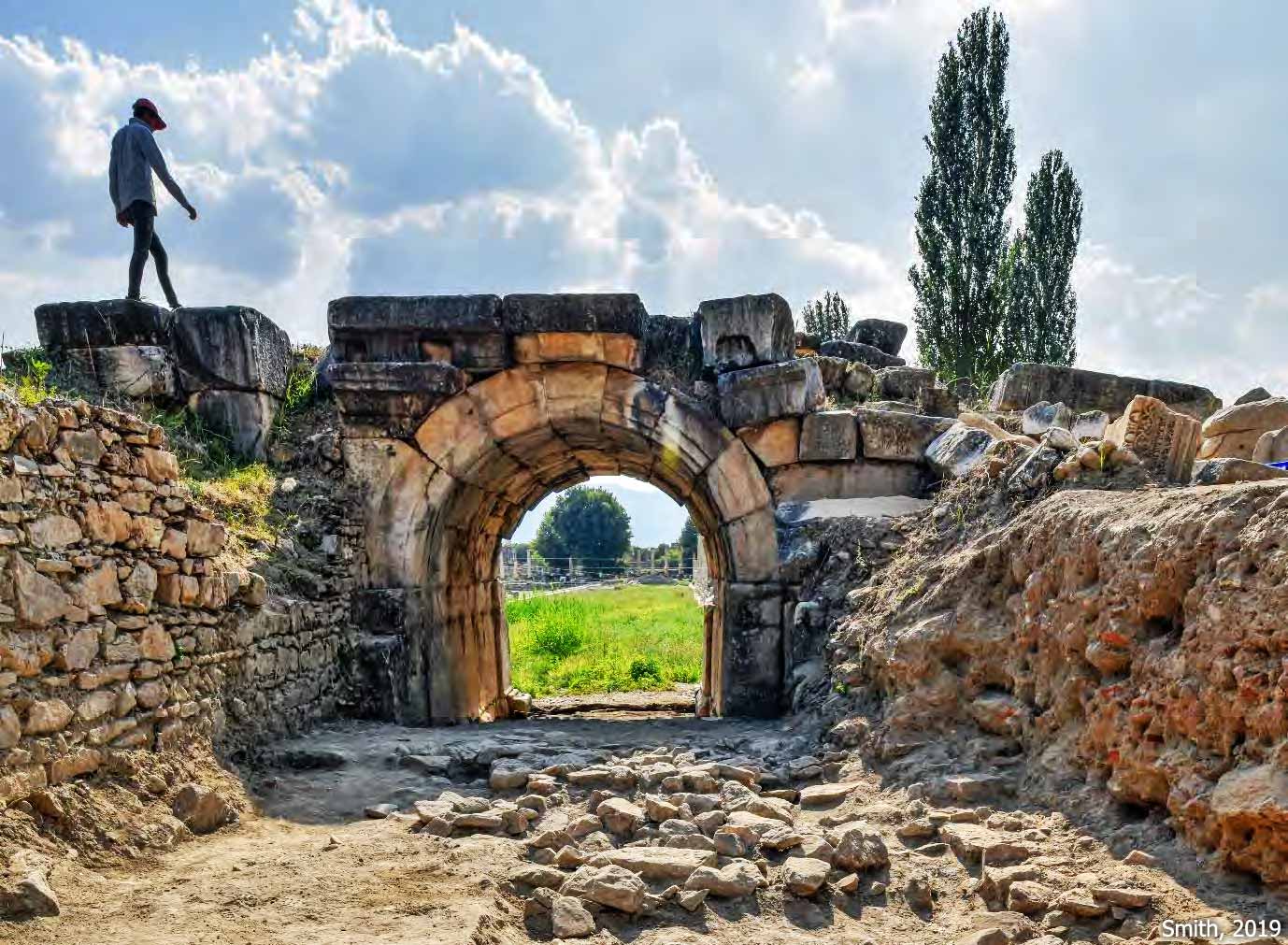
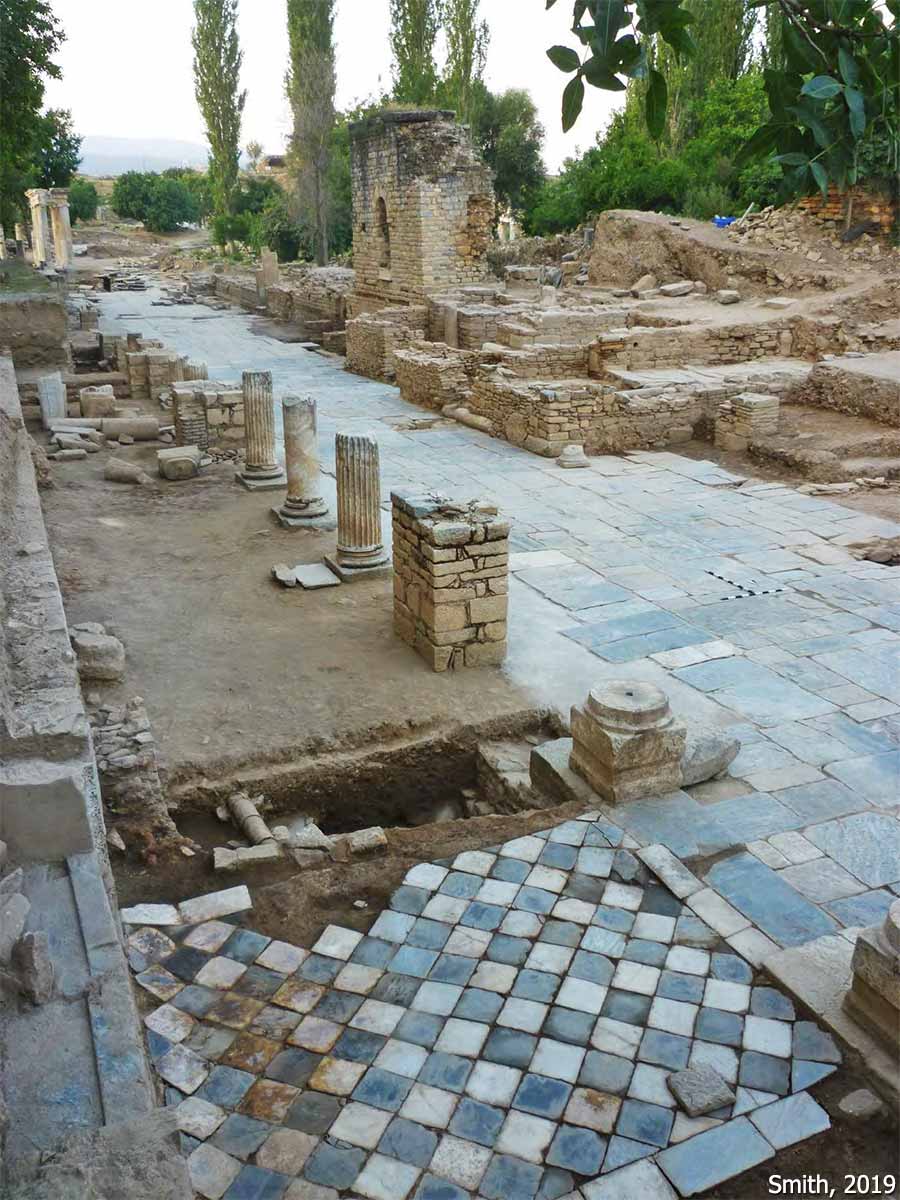
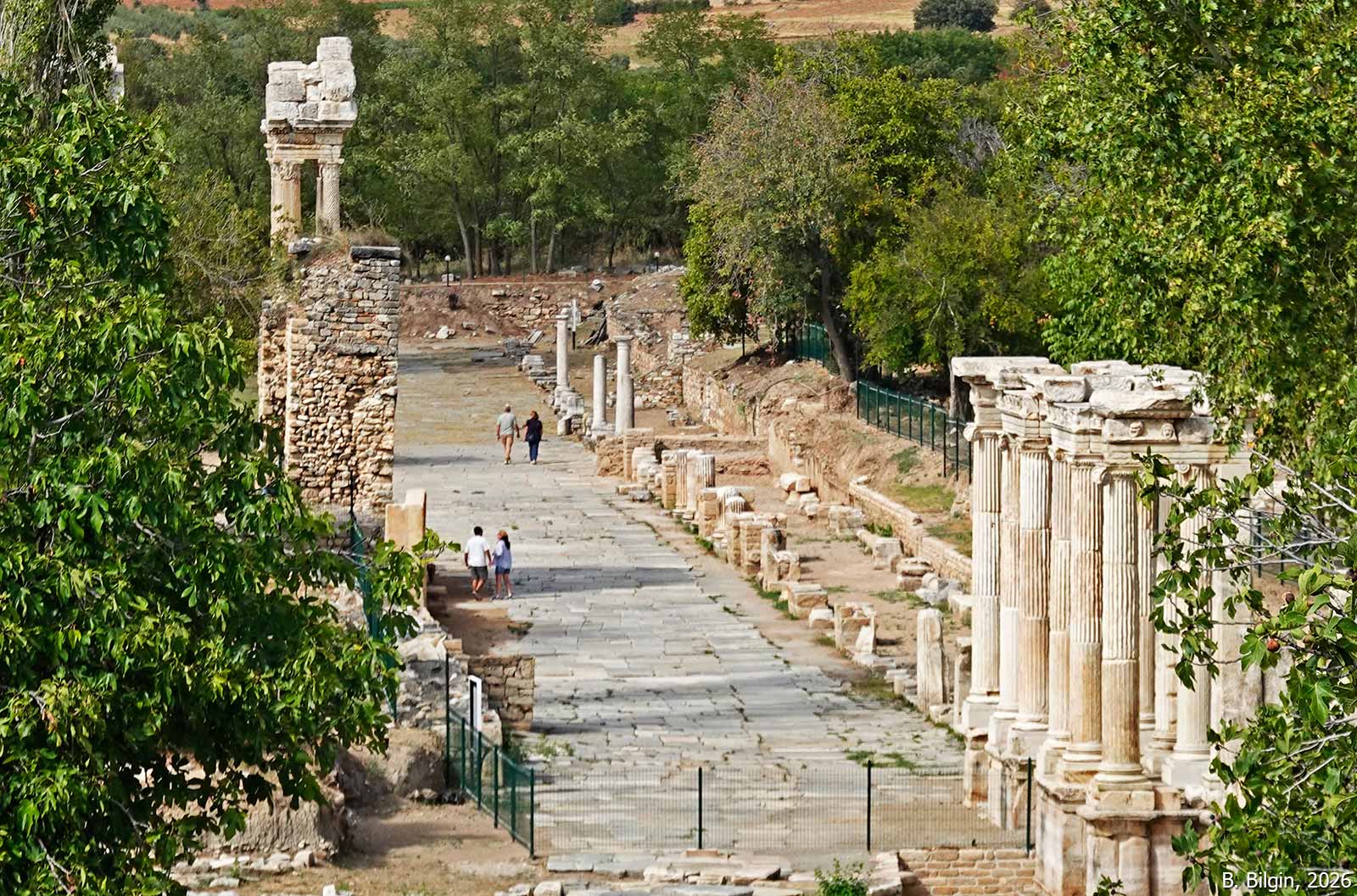
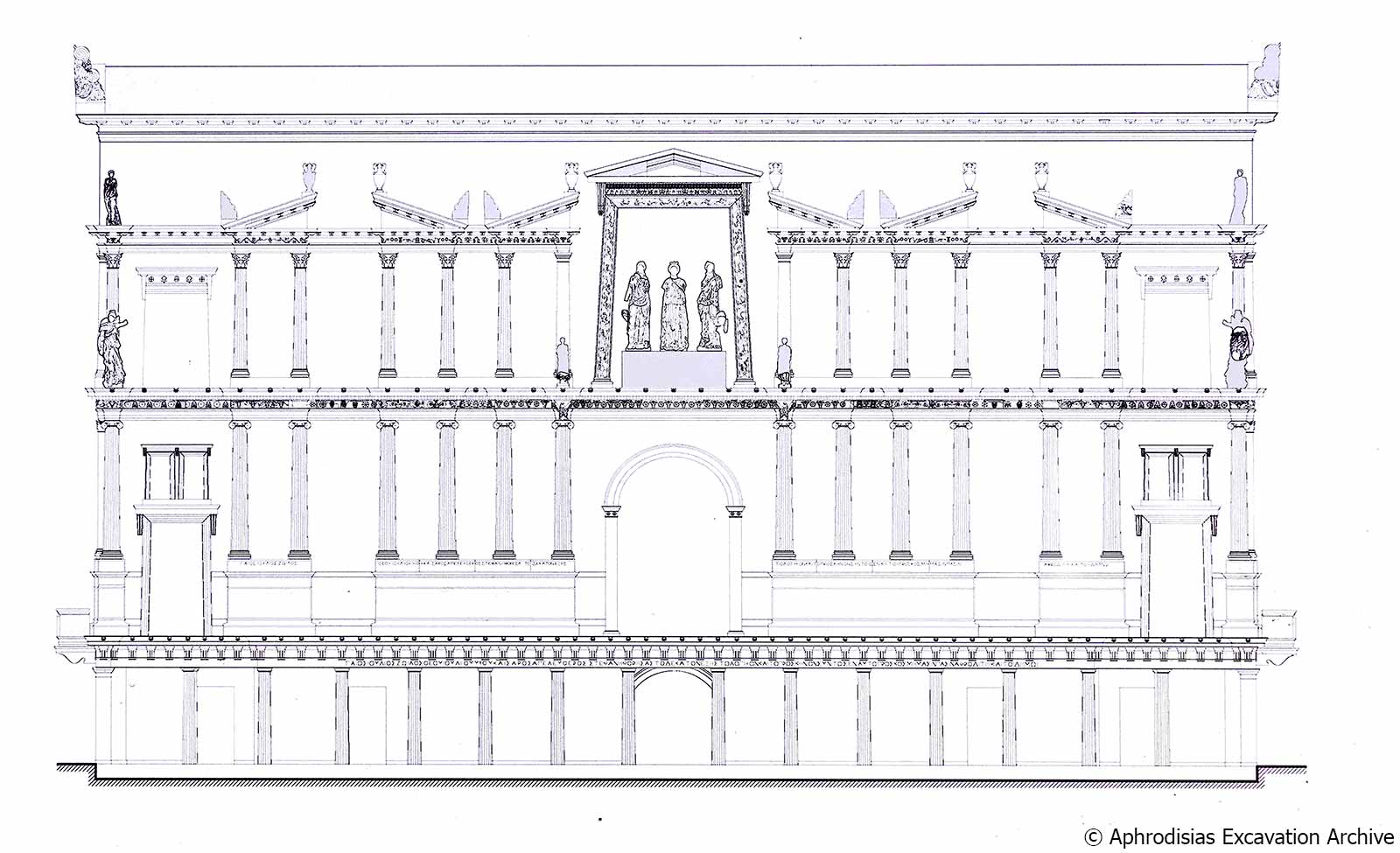
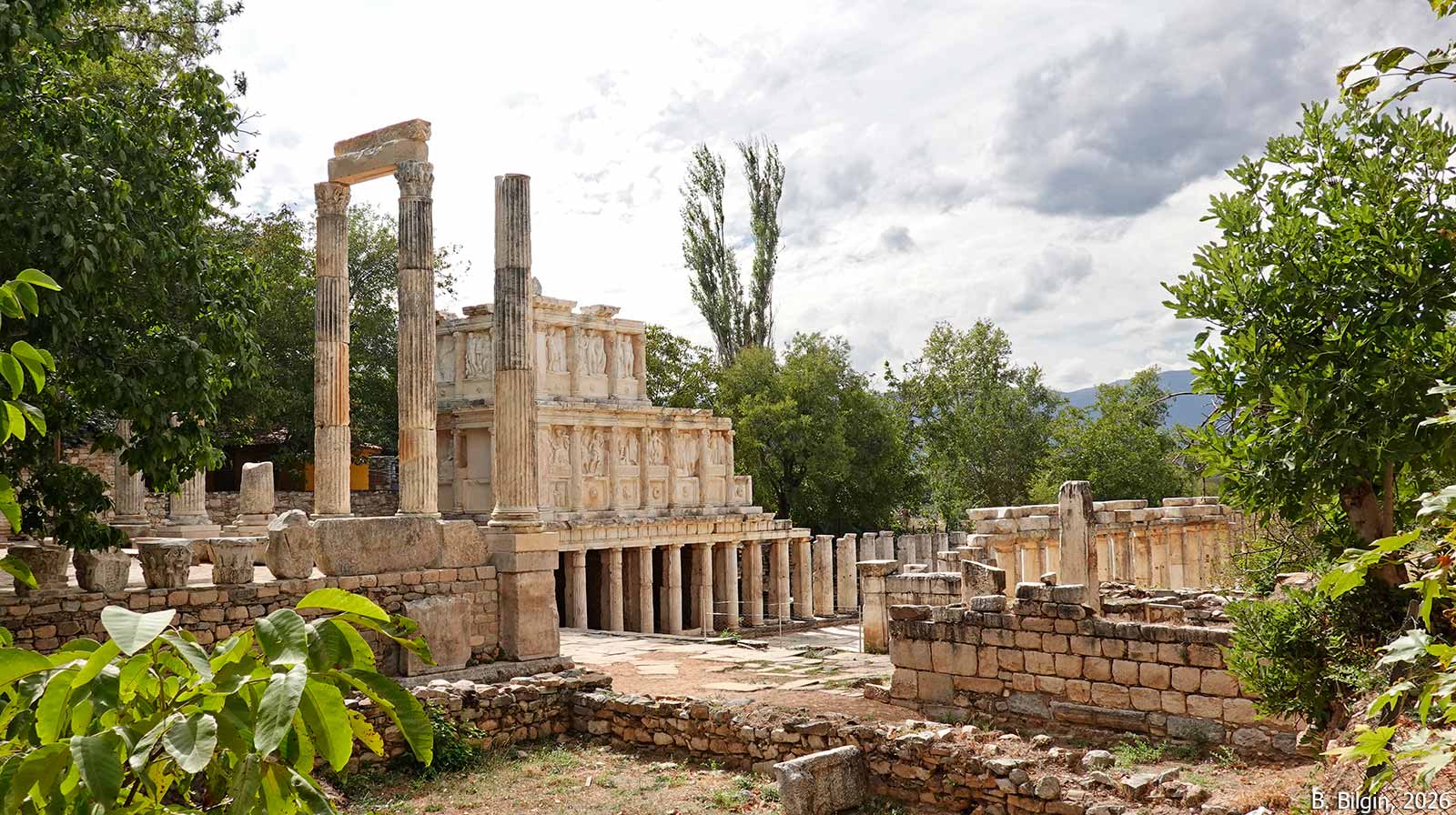
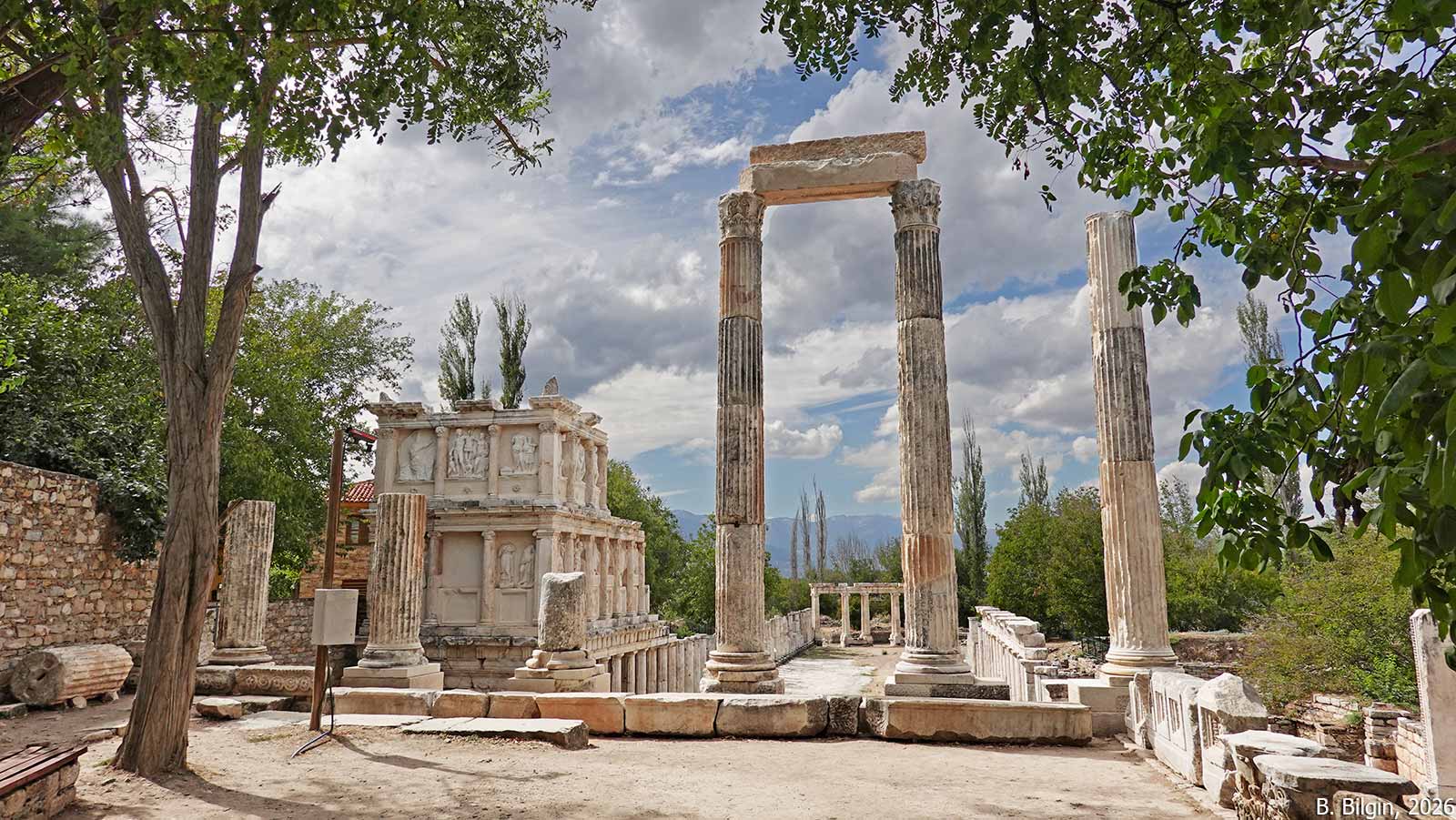
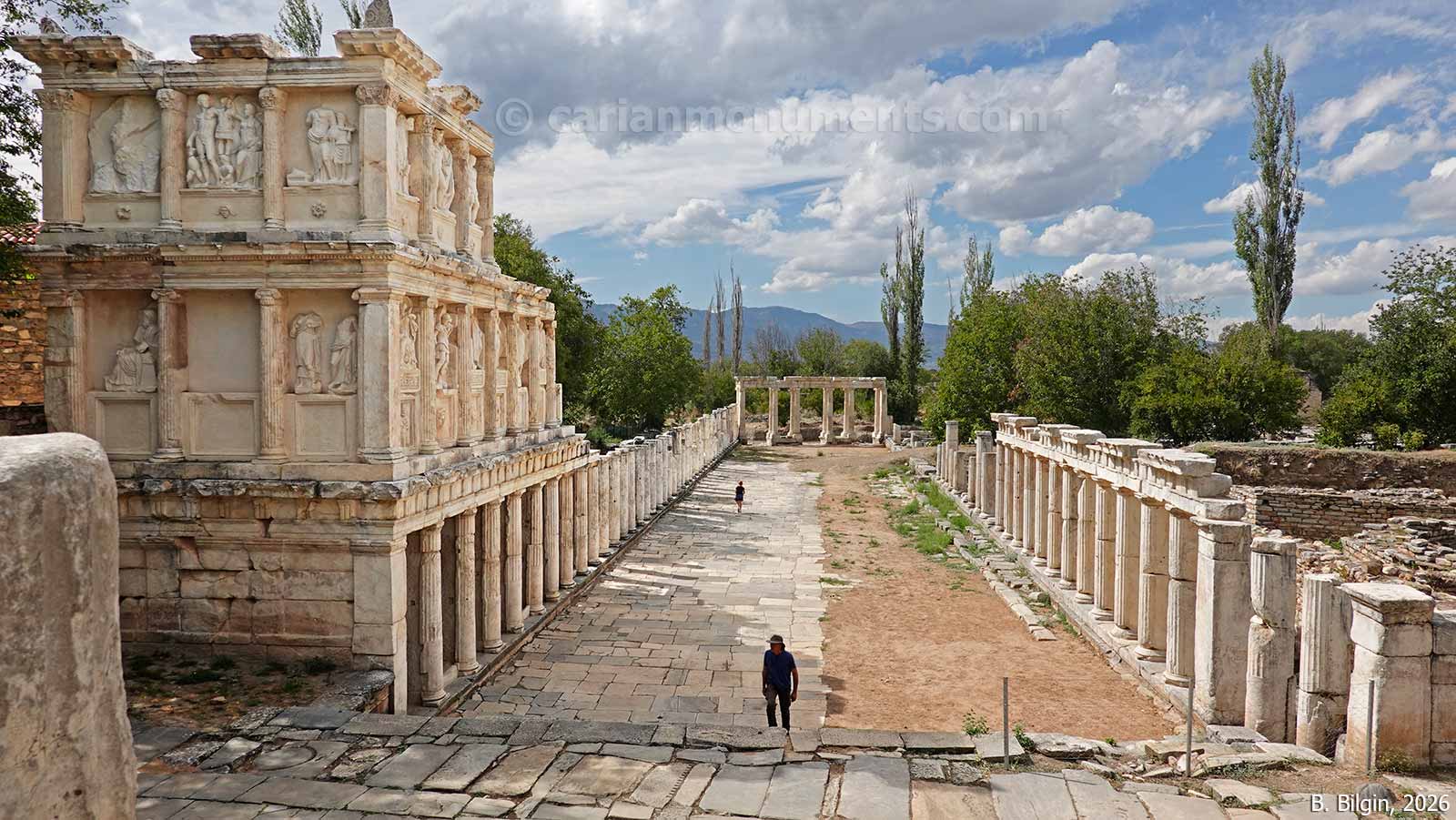
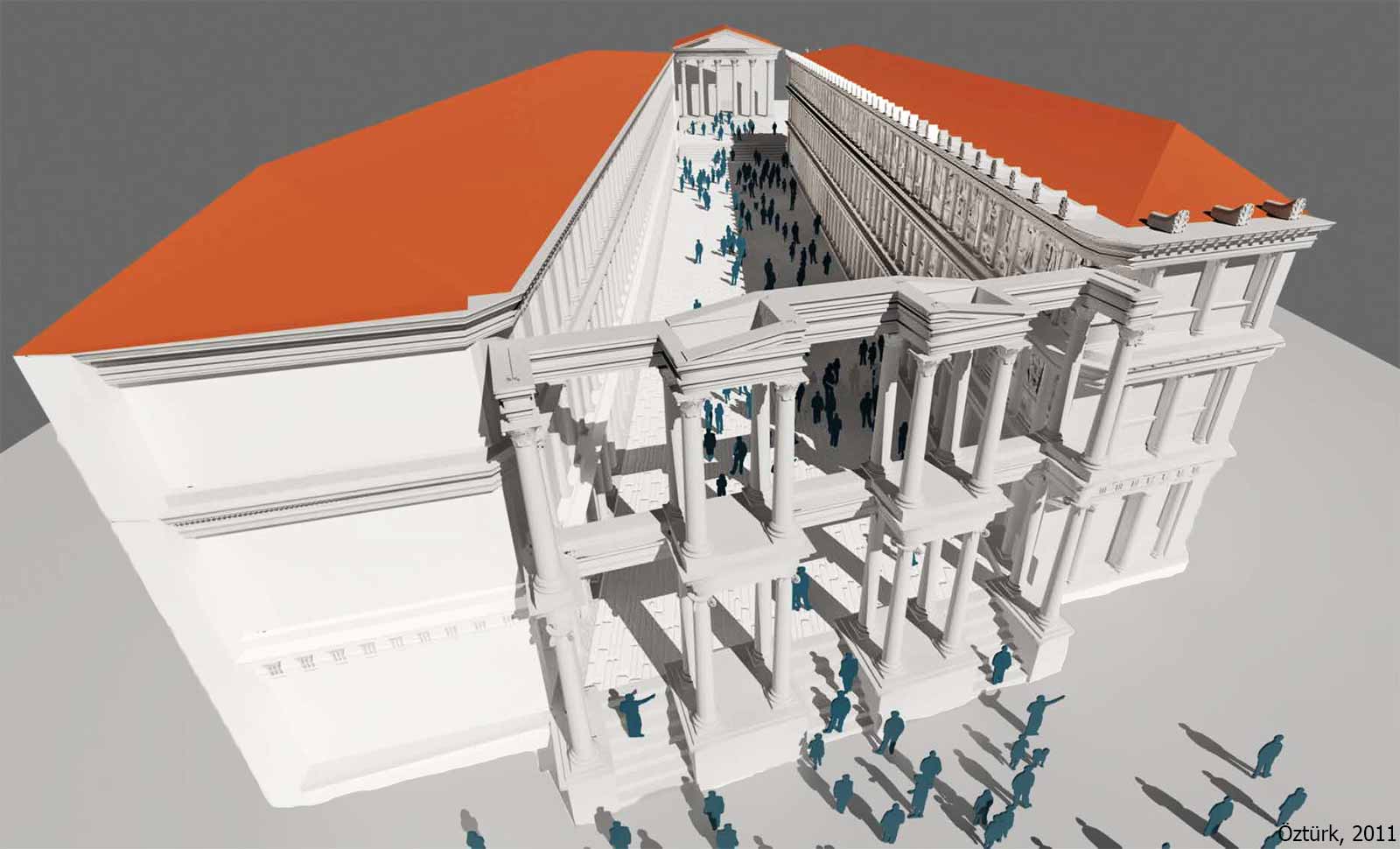
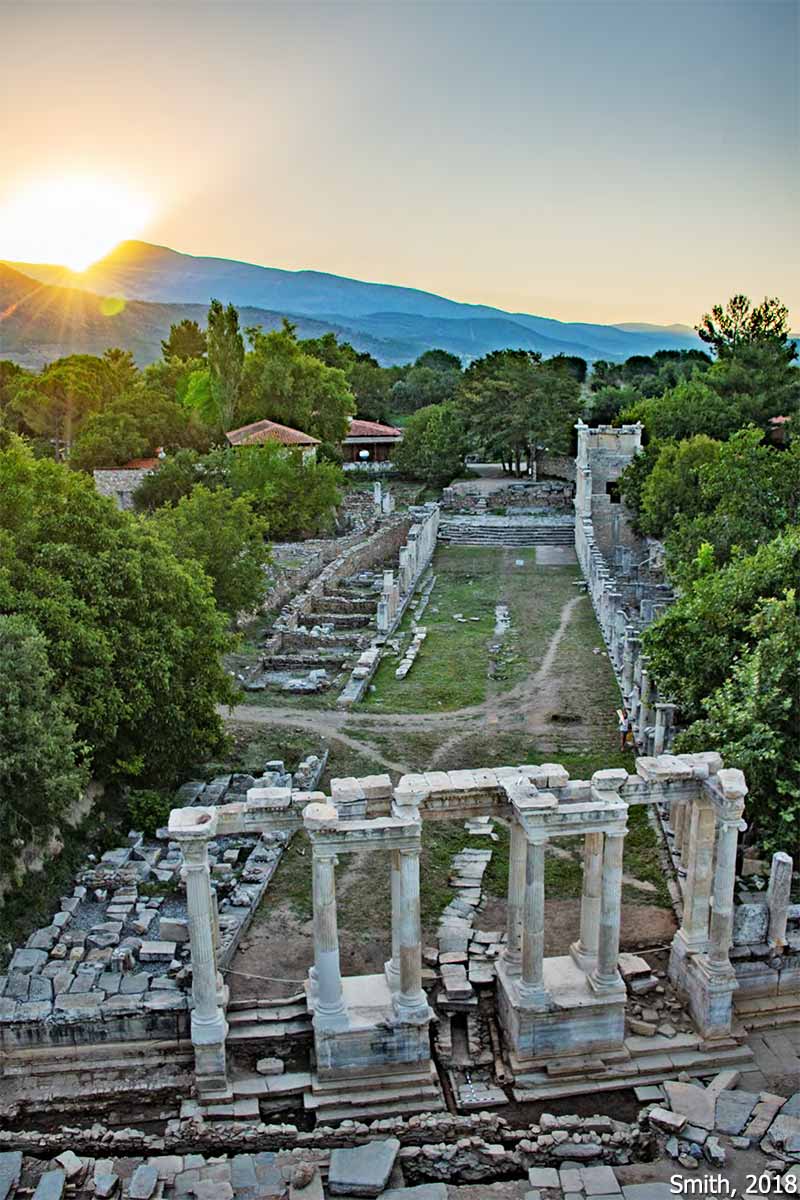
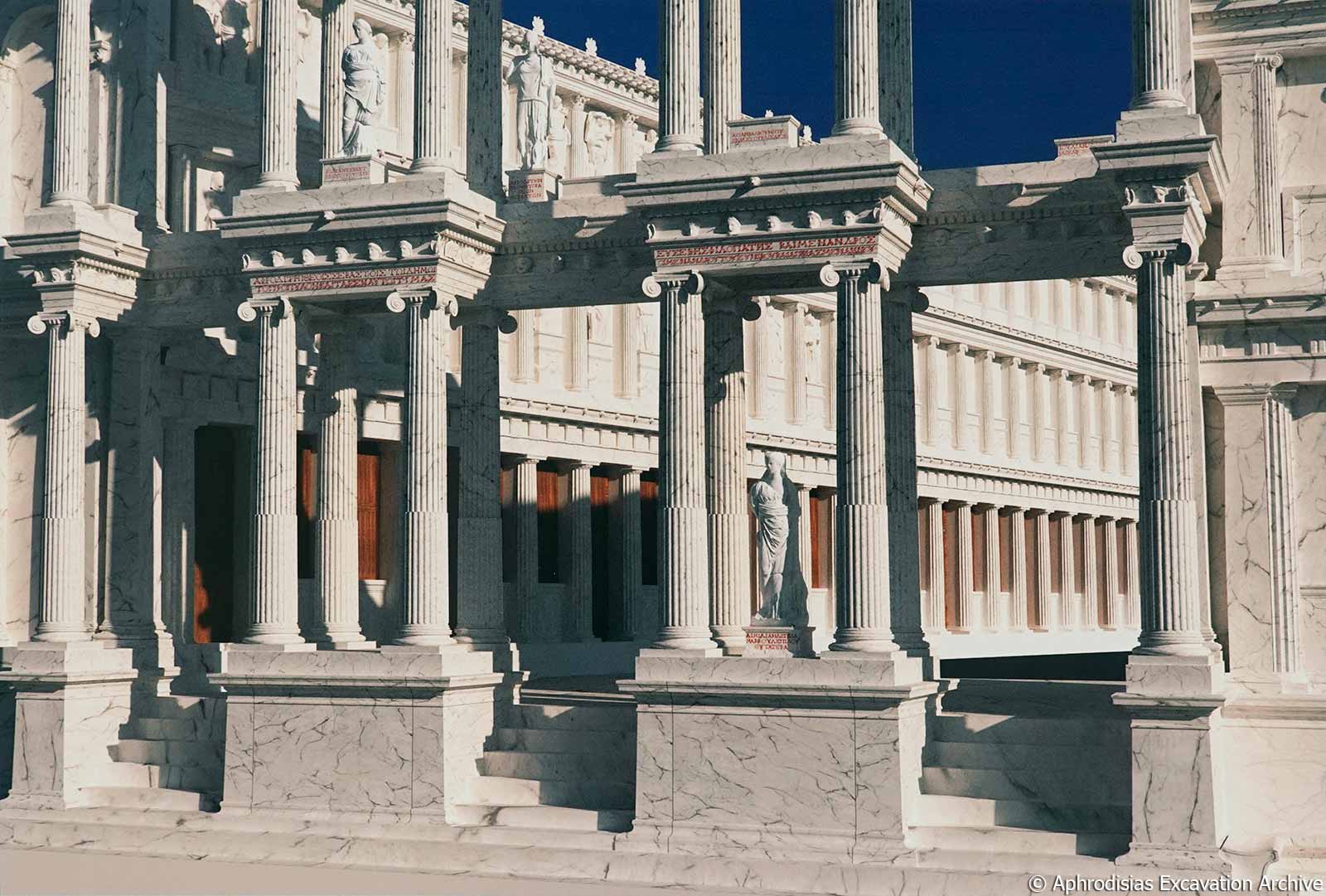
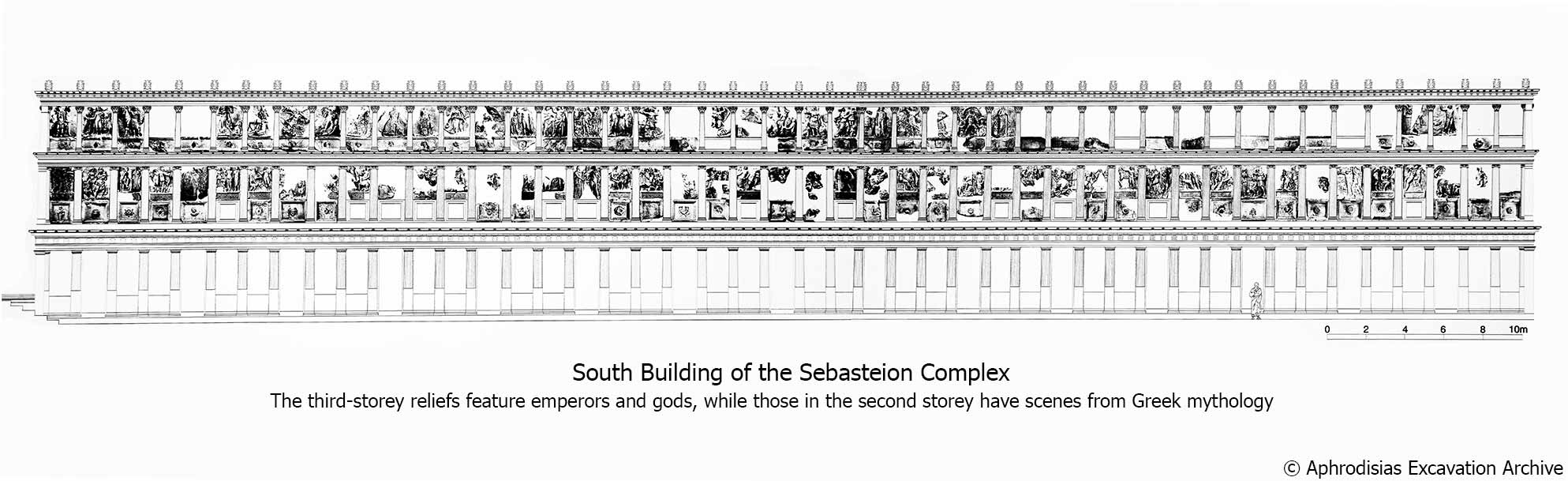
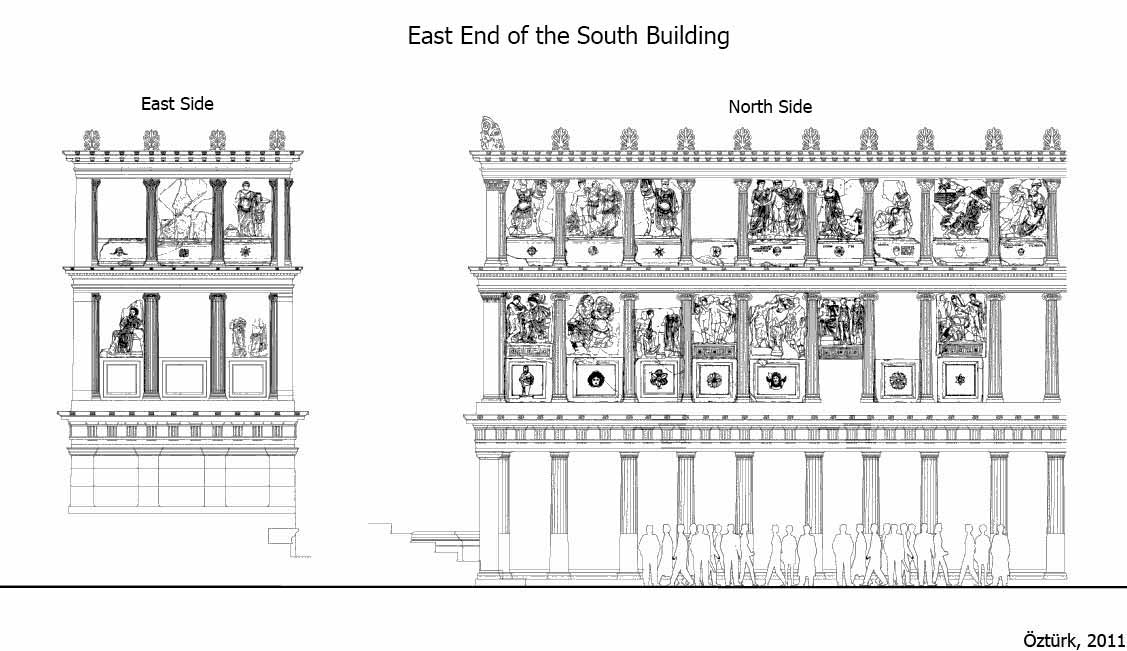
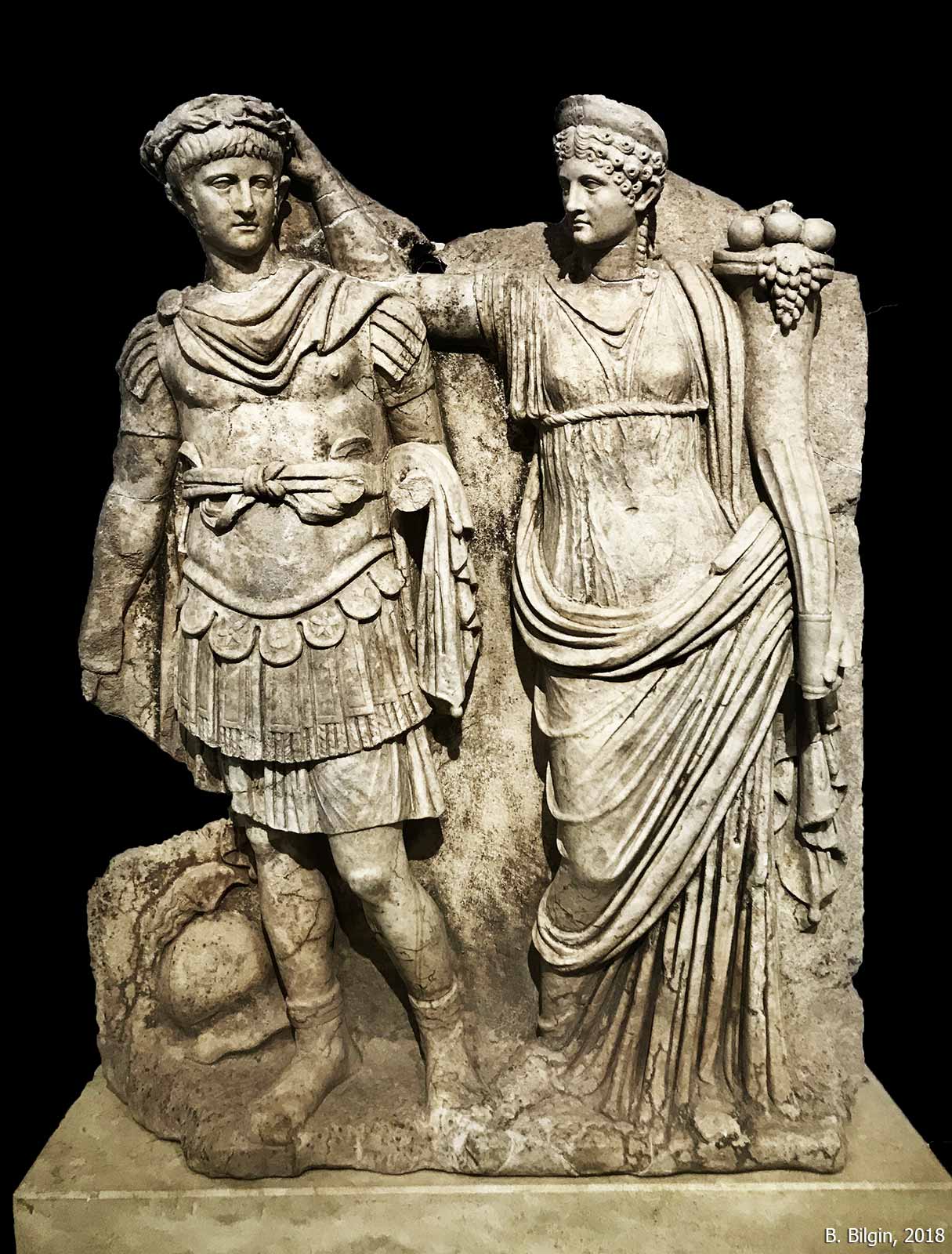
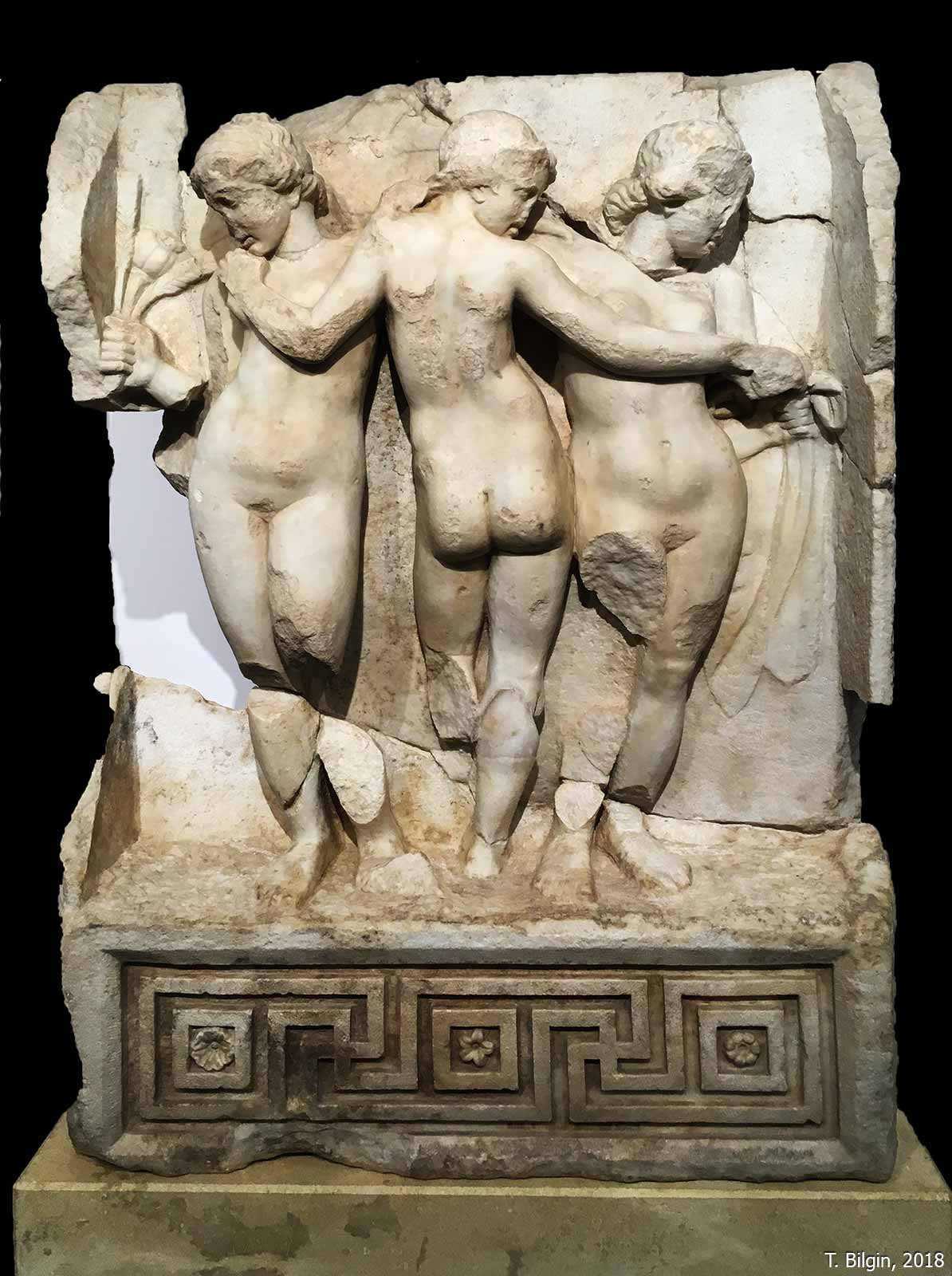
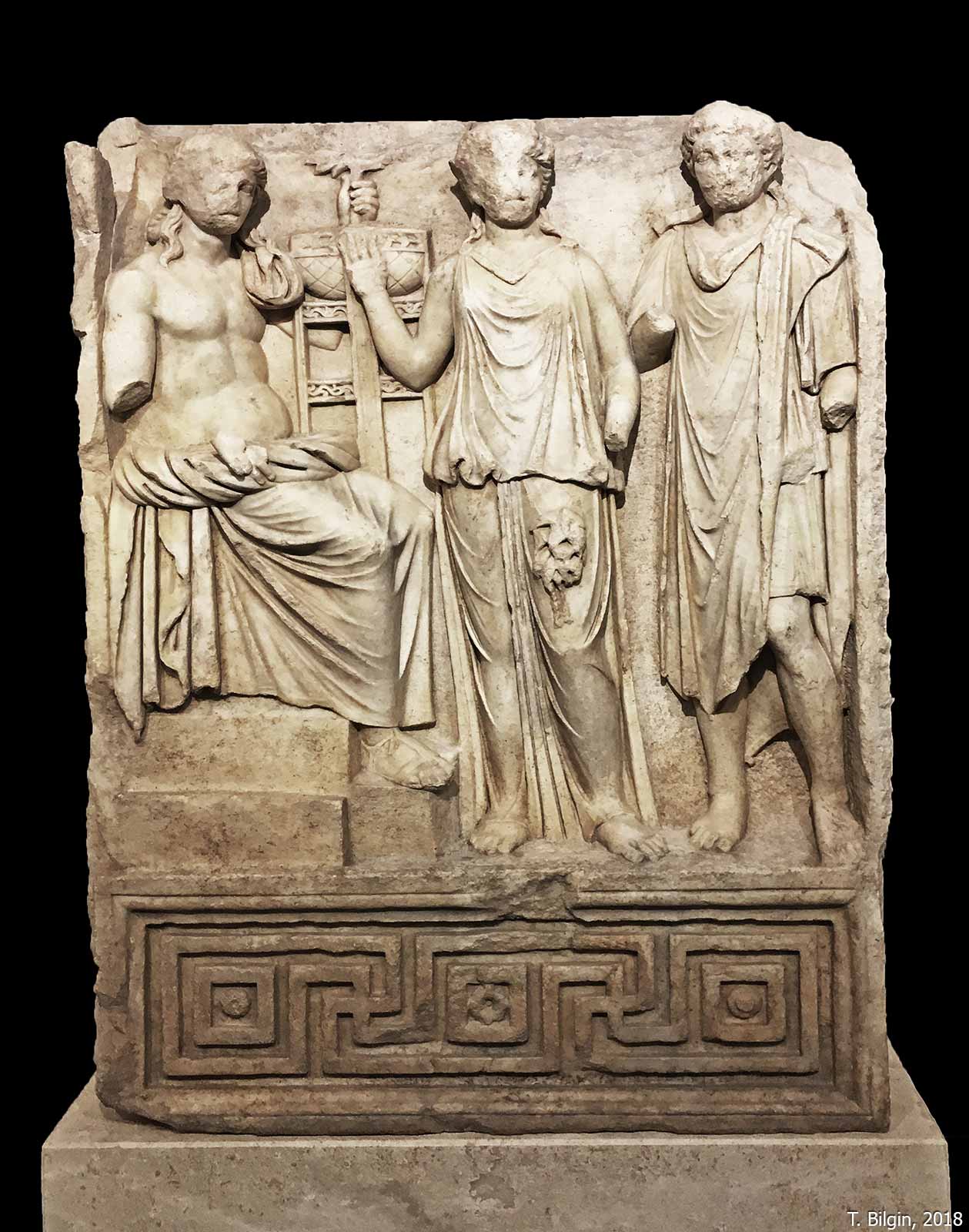
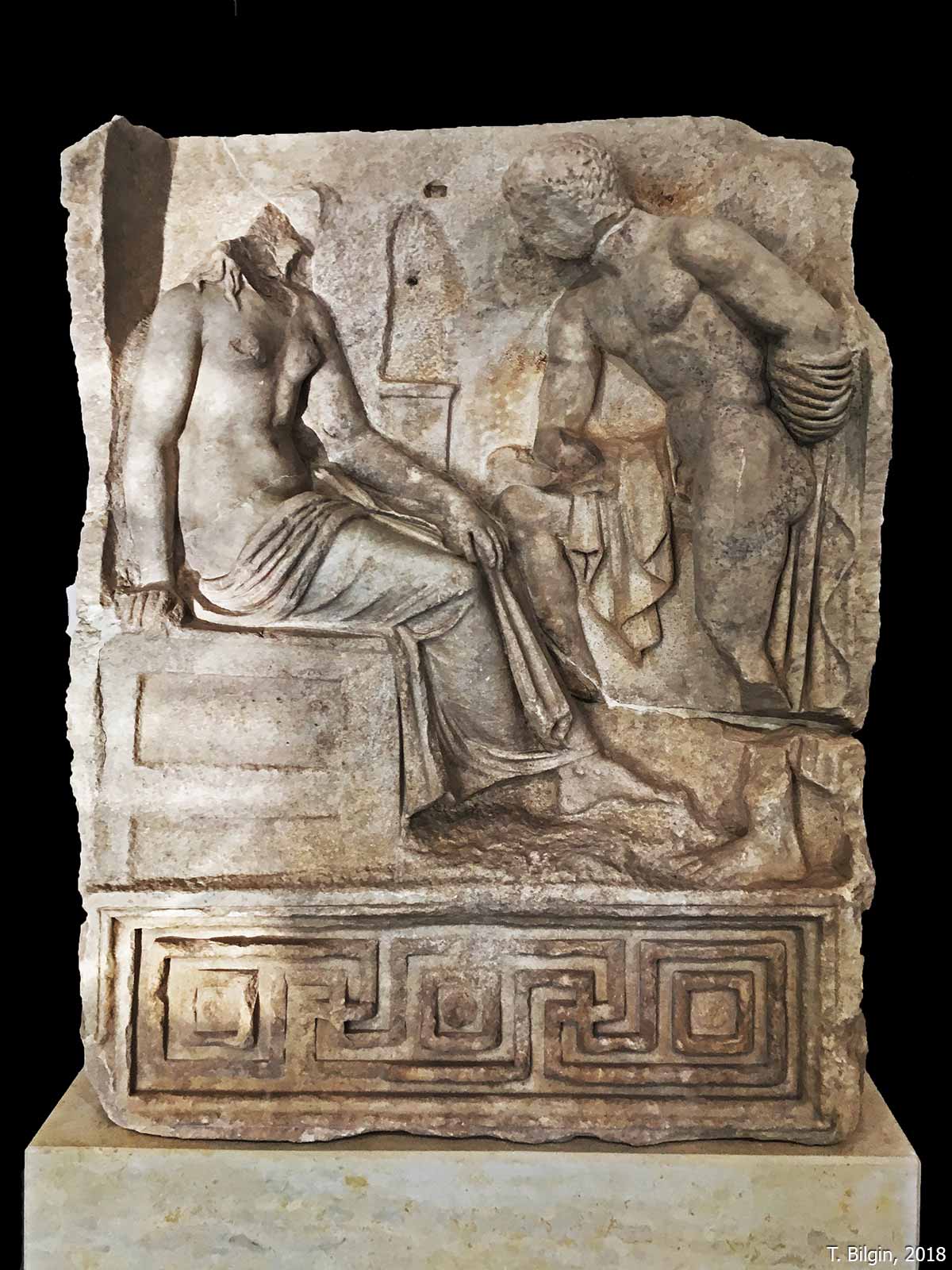
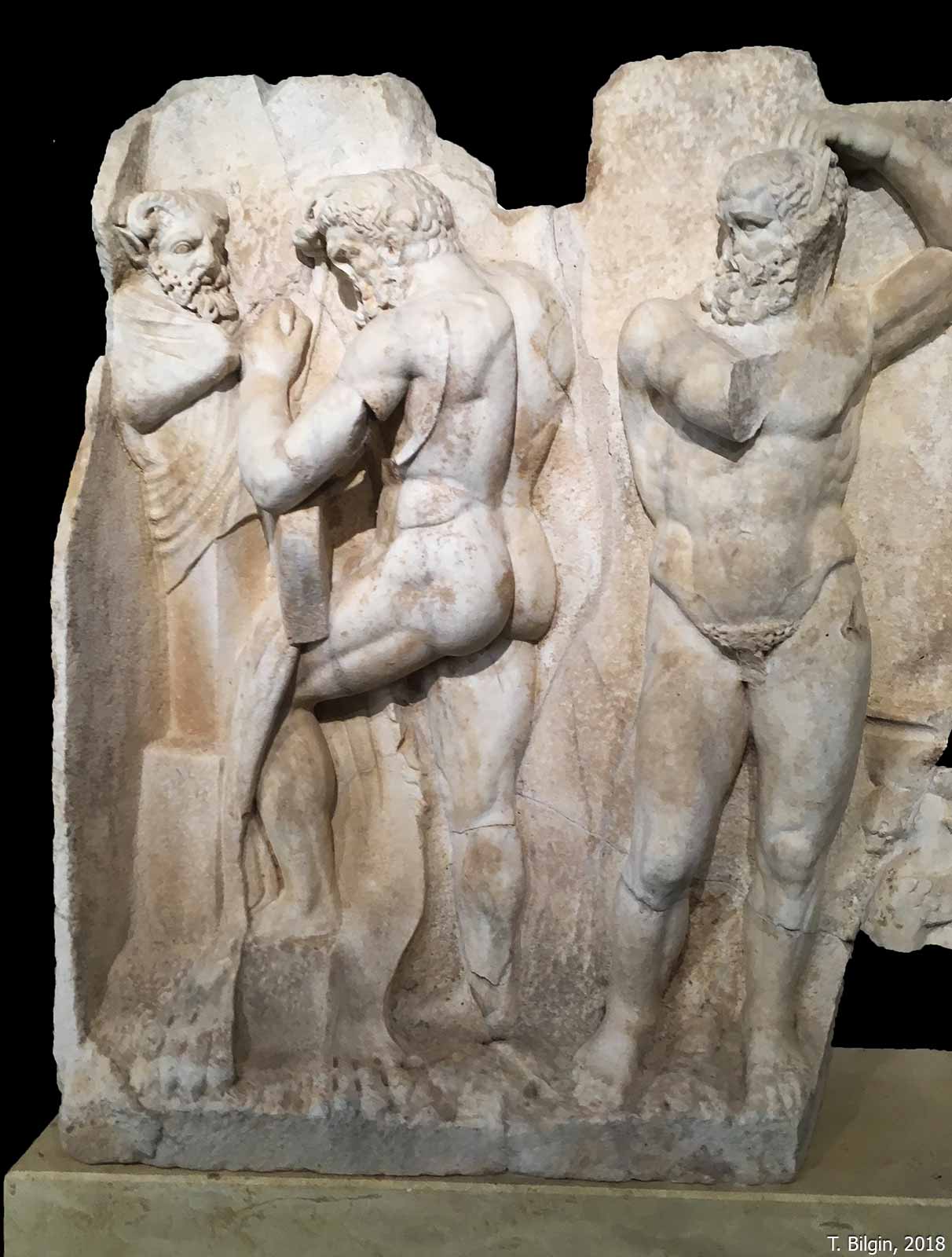
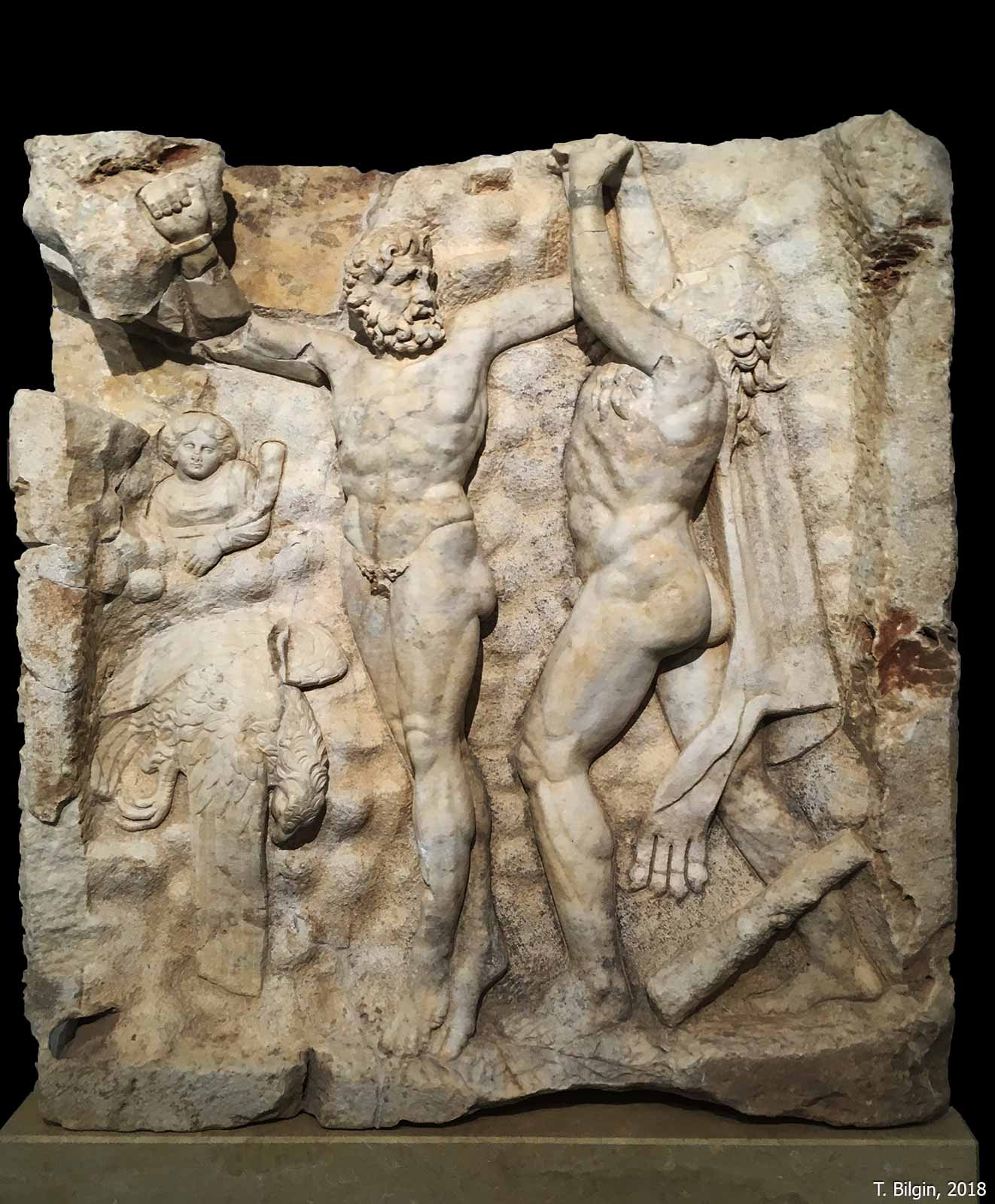
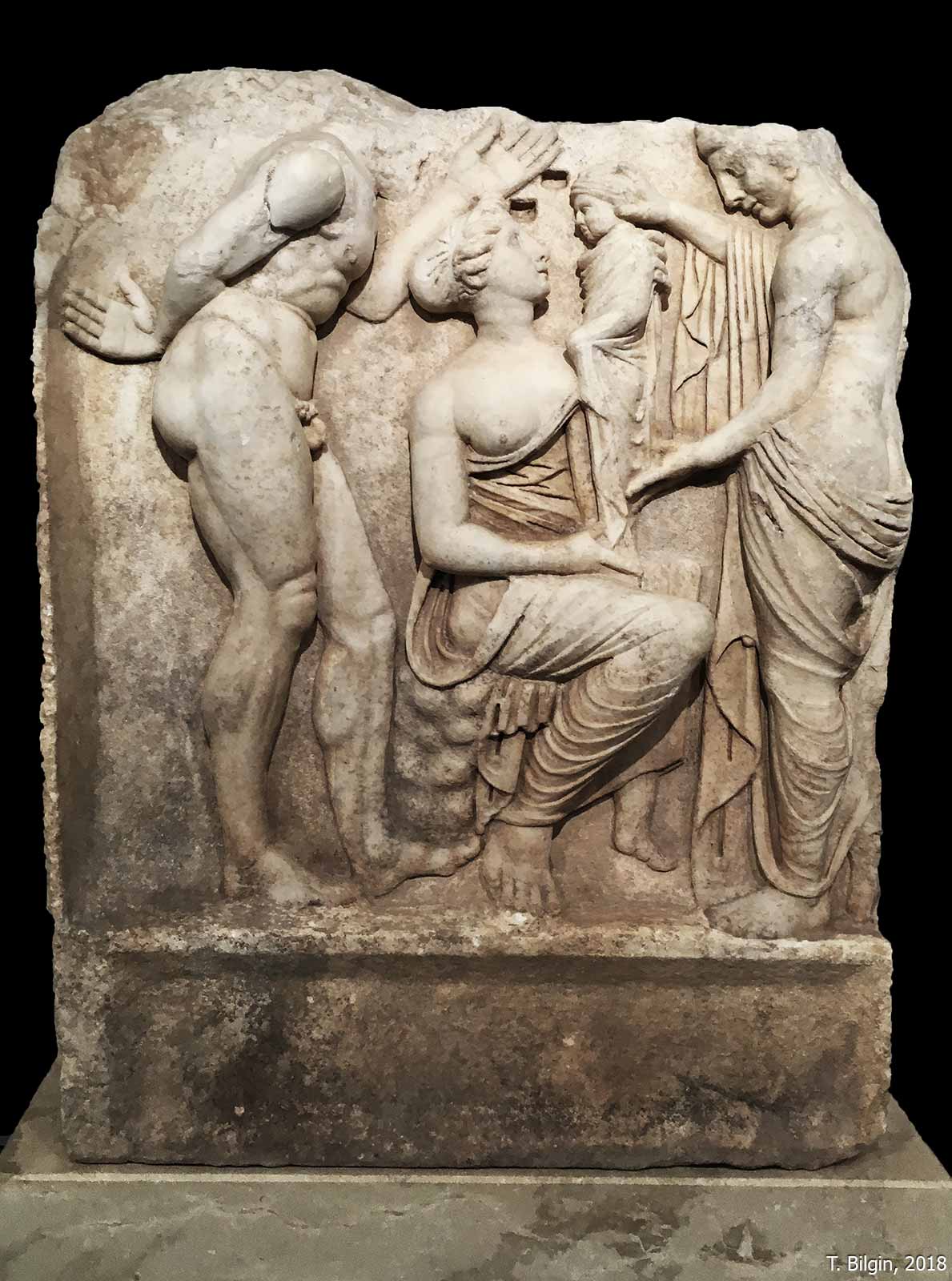
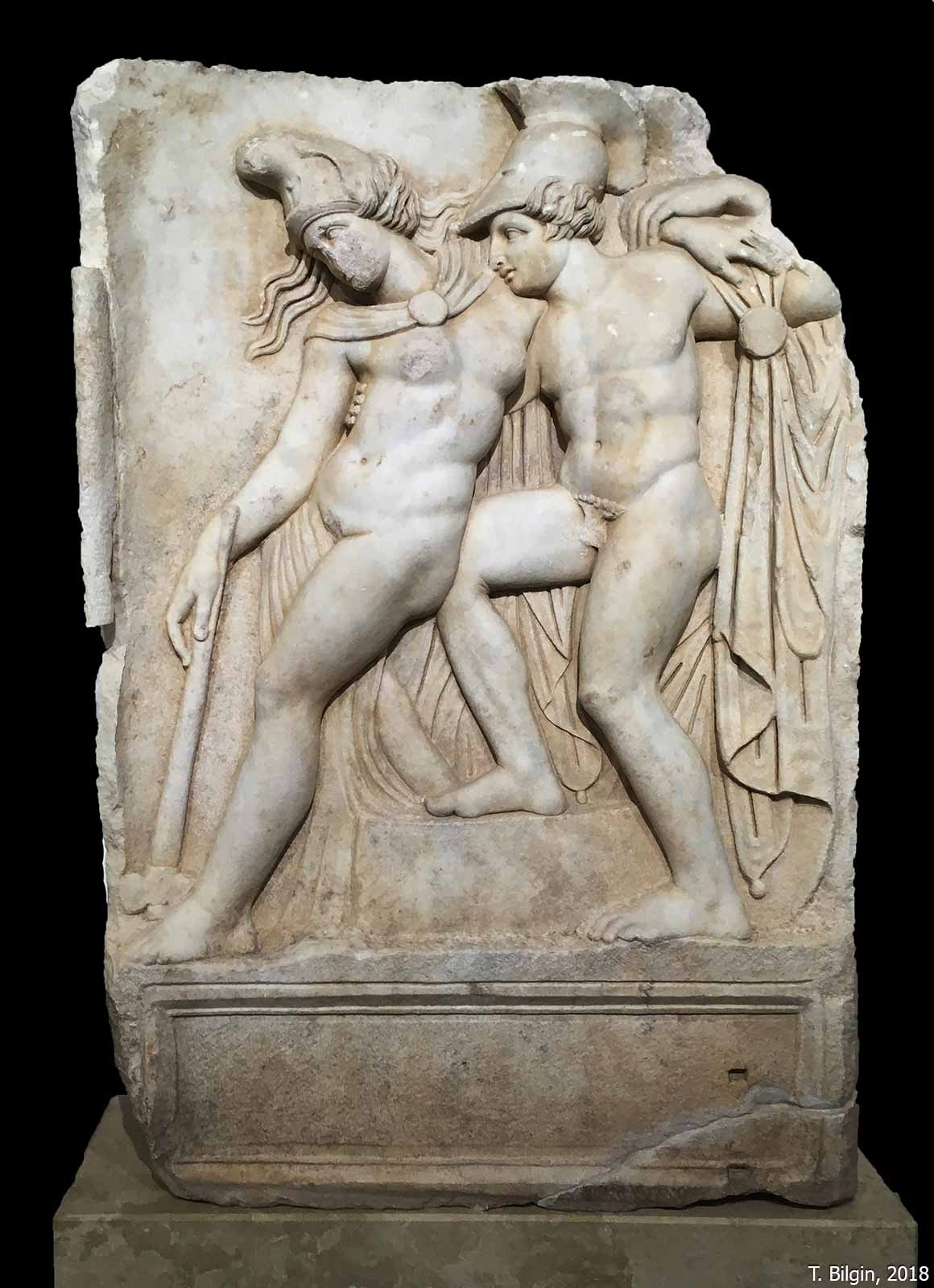
The Sebasteion, or the Temple of the Emperors, was a cult complex dedicated to Aphrodite and the Julio-Claudian emperors, constructed between approximately 20 and 60 CE, spanning the reigns of Tiberius to Nero. Located east of the city center and aligned off the city grid, the complex functioned as both a sanctuary and a processional way. It consisted of a paved avenue (90 meters long by 14 meters wide) flanked by two parallel three-story porticoes—the North and South Buildings—closed by a propylon at the west end and a raised Corinthian temple at the east. The flanking buildings utilized the superposition of Doric, Ionic, and Corinthian orders and were essentially “temples of sculpture.” Their upper stories displaying nearly 200 marble relief panels, of which approximately 80 have been recovered. Many of the reliefs (particularly those depicting pagan gods like Aphrodite, Zeus, and Apollo) have been defaced in Christian era, often carving crosses onto them to “neutralize” their power. However, the reliefs depicting the emperors were largely left untouched, as they were viewed as secular history rather than pagan idolatry.
The South Building featured reliefs of Greek mythology on the second story and depictions of the emperors and Olympian gods on the third story. The North Building displayed a series of personified ethne (subject peoples) of the empire on the second story—listing conquests from Ethiopia to Spain—while the third story featured emperors and cosmic allegories like Day and Ocean. Much of the complex was damaged by earthquakes and dismantled in antiquity, but the South Building and the Propylon have partially restored by recent projects.
Tetrapylon
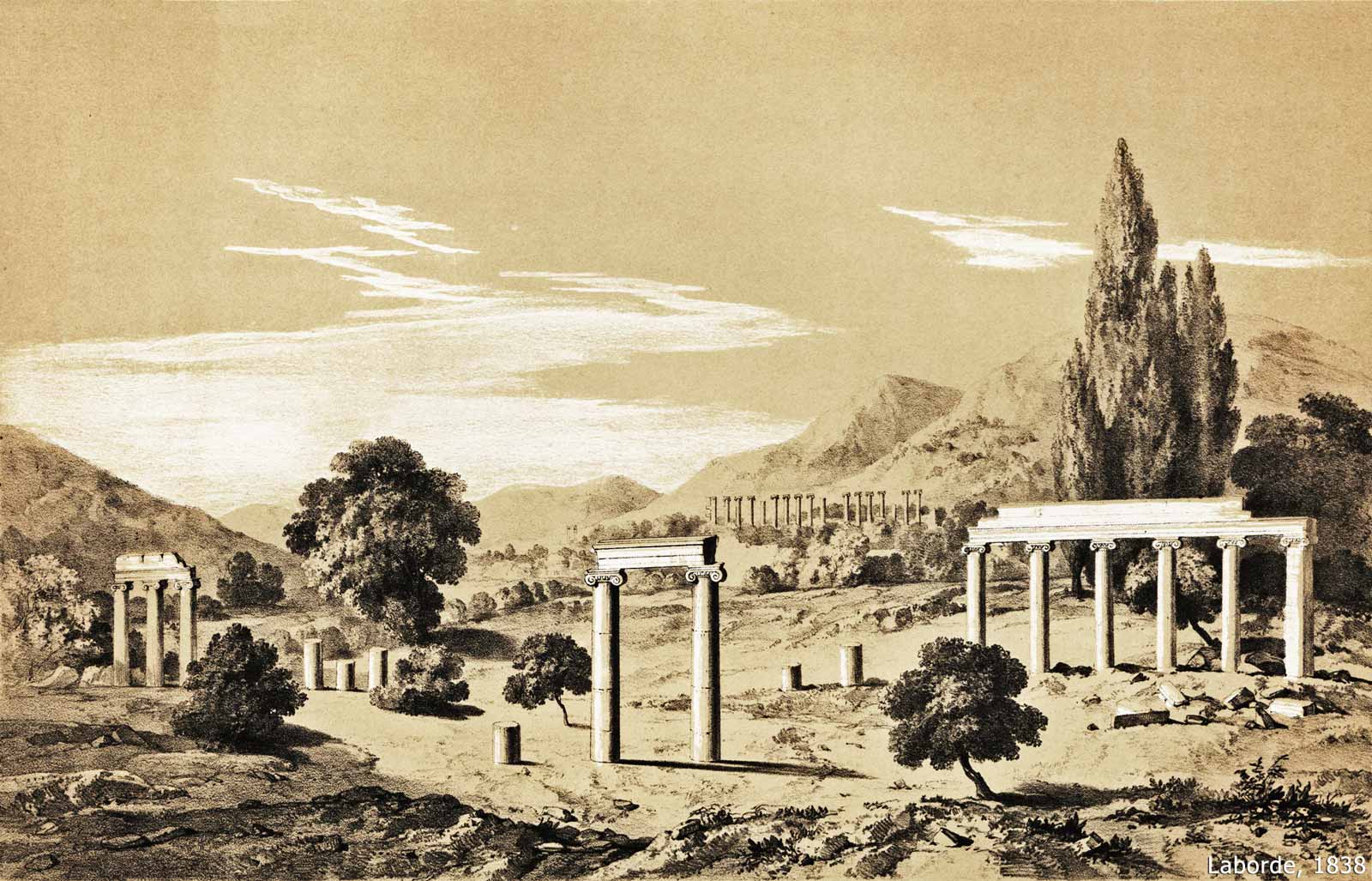
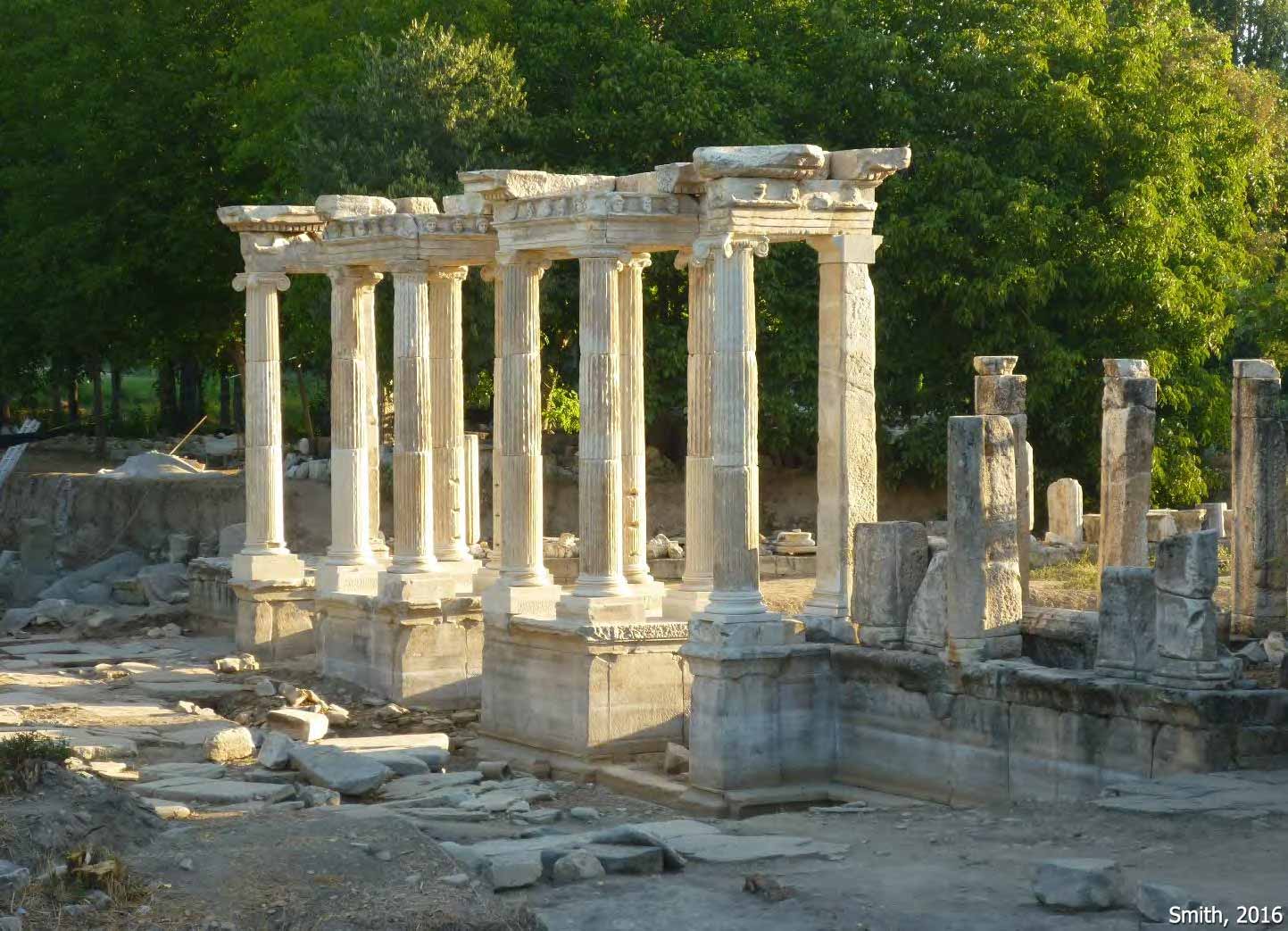
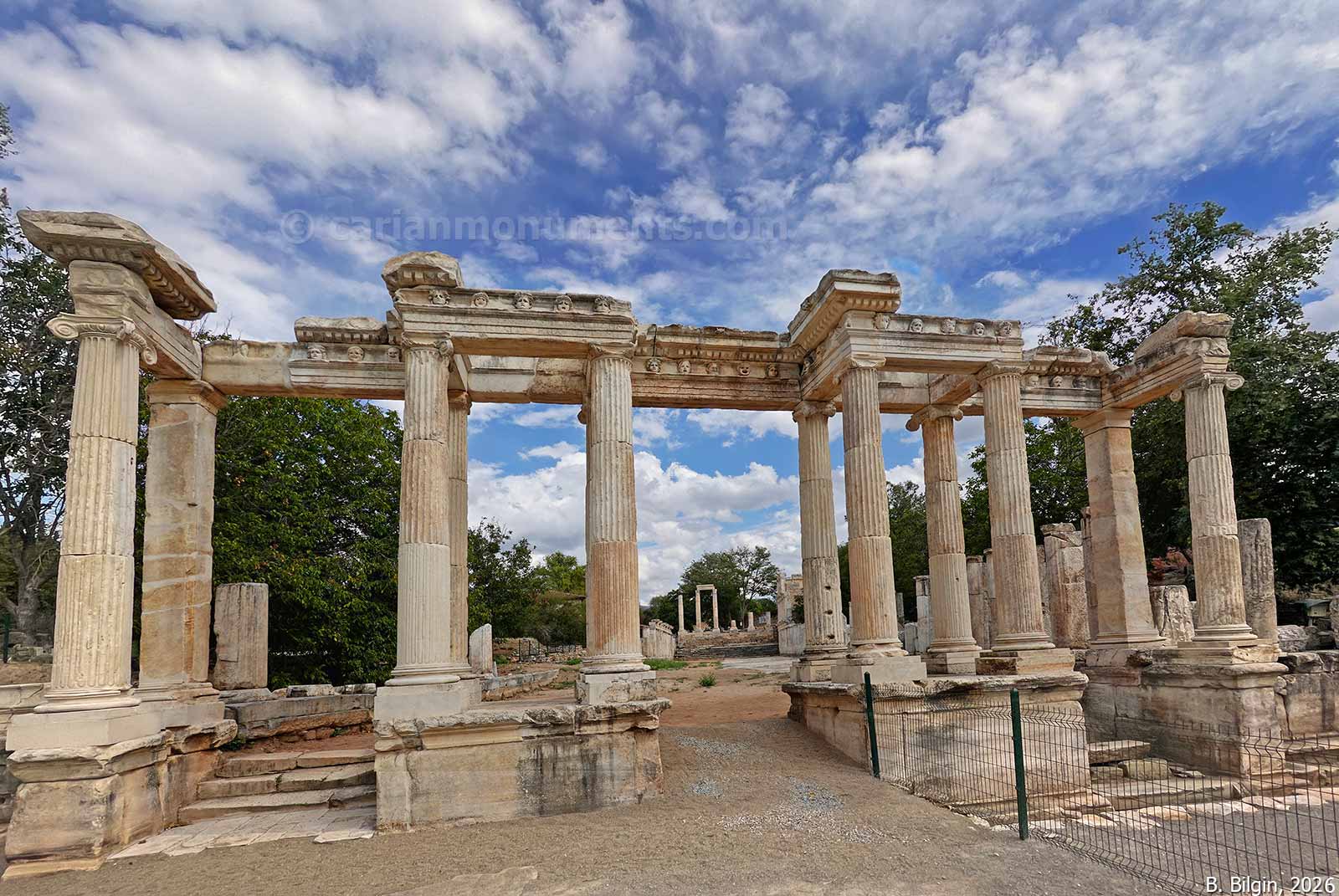
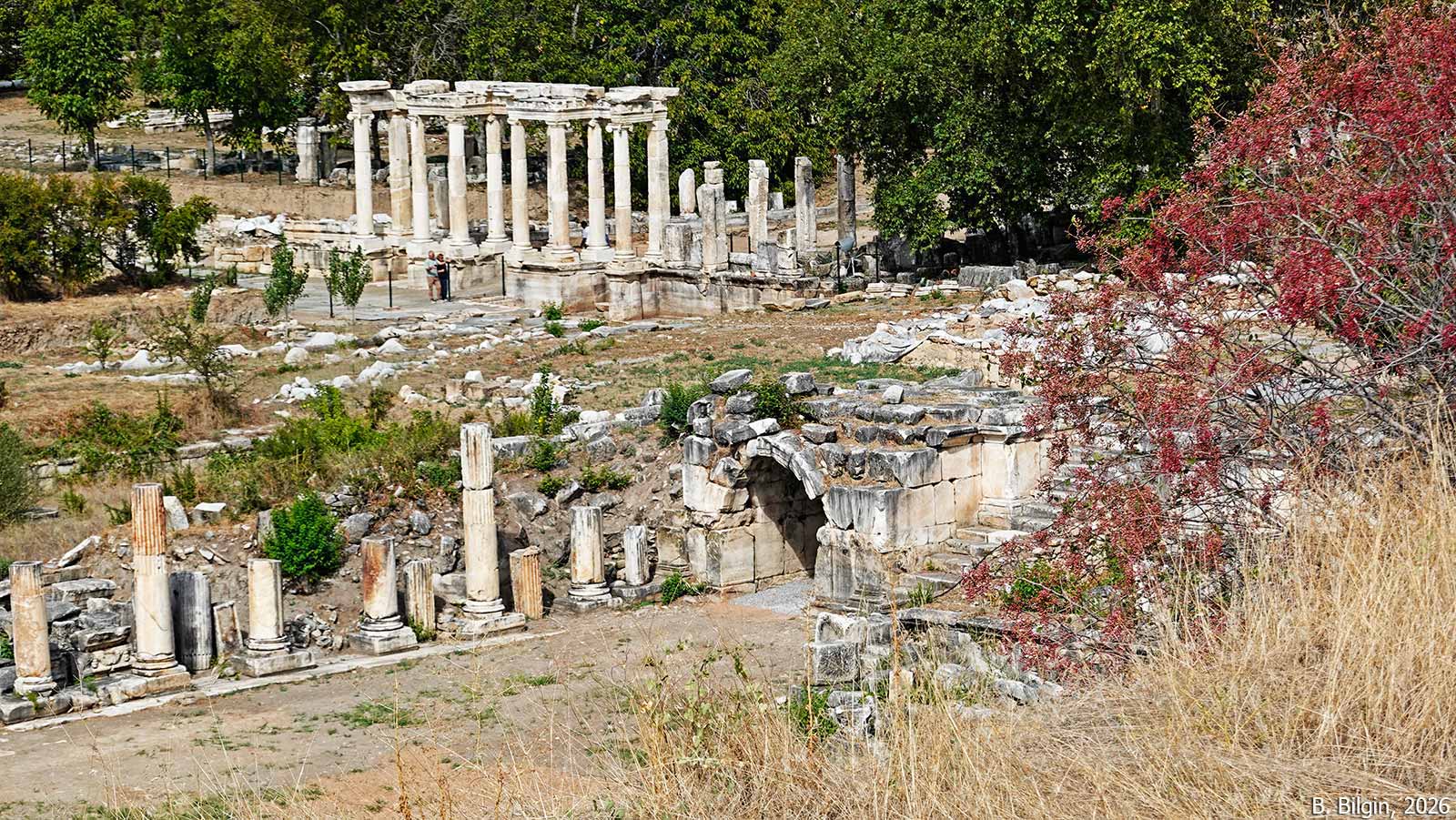
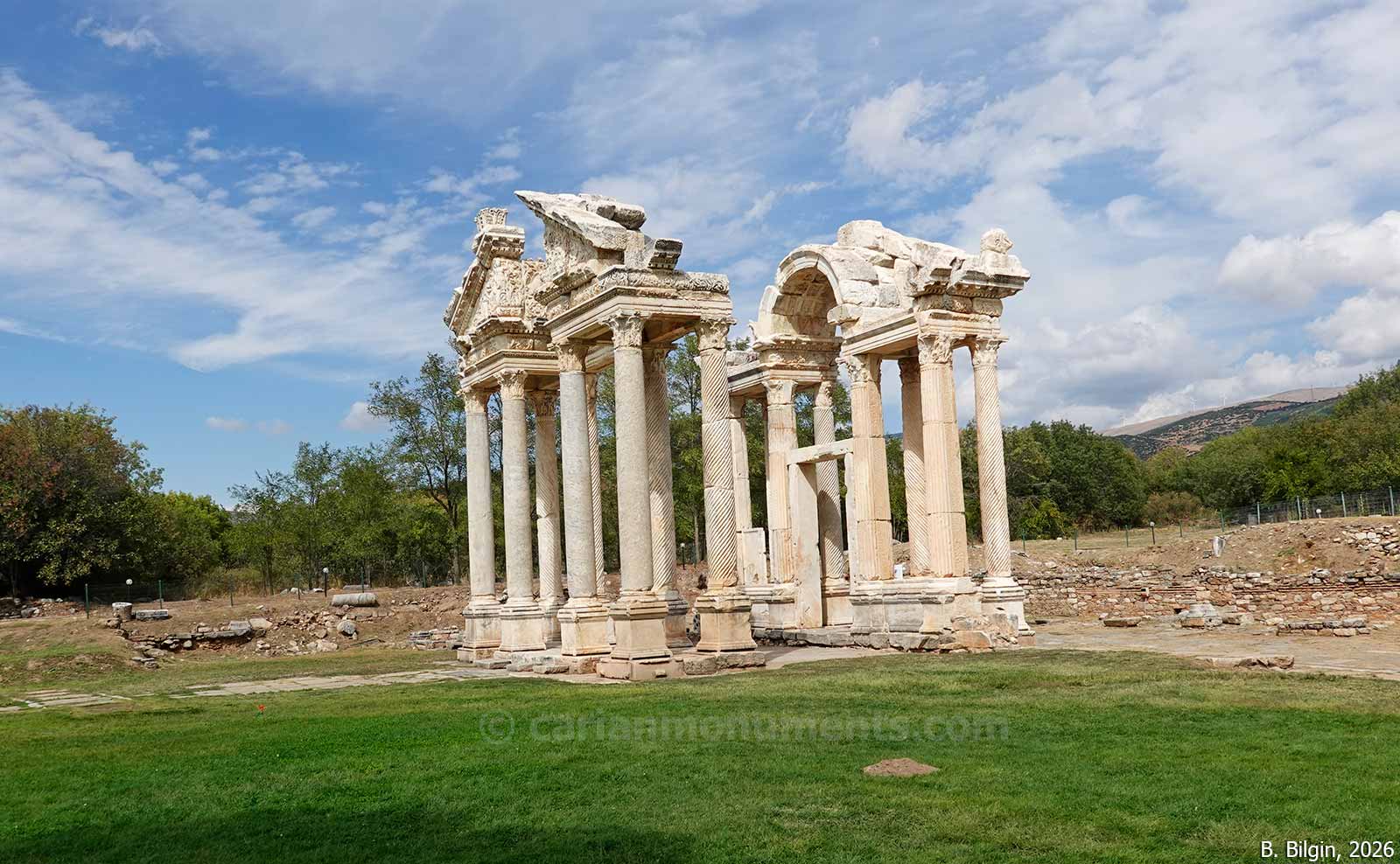
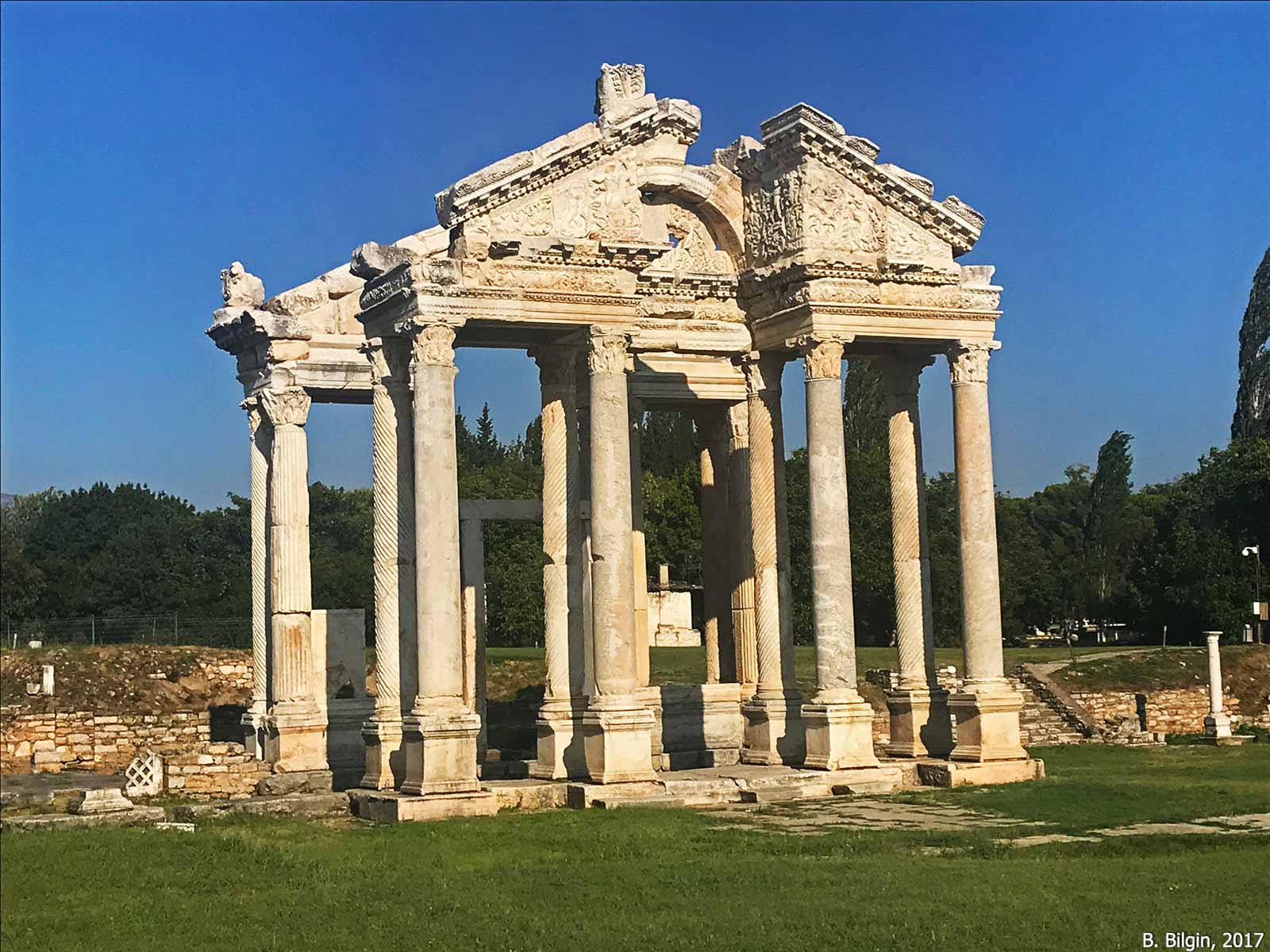
The Tetrapylon was a monumental columnar gateway constructed in the mid-2nd century CE to serve as the formal entrance to the sanctuary of Aphrodite. Located on the main north south street that connected the sanctuary to the Sebasteion Propylon, it is characterized by its elaborate architectural ornamentation and “baroque” style. The structure consists of four rows of four columns, creating a tetrapylon (“four gates”) arrangement that defined the sacred precinct’s eastern boundary. Archaeological evidence suggests that the monument was dismantled and rebuilt around 400 CE, likely due to structural damage caused by an earthquake, before being fully restored in the modern era. It stands today as one of the most recognizable landmarks of Aphrodisias.
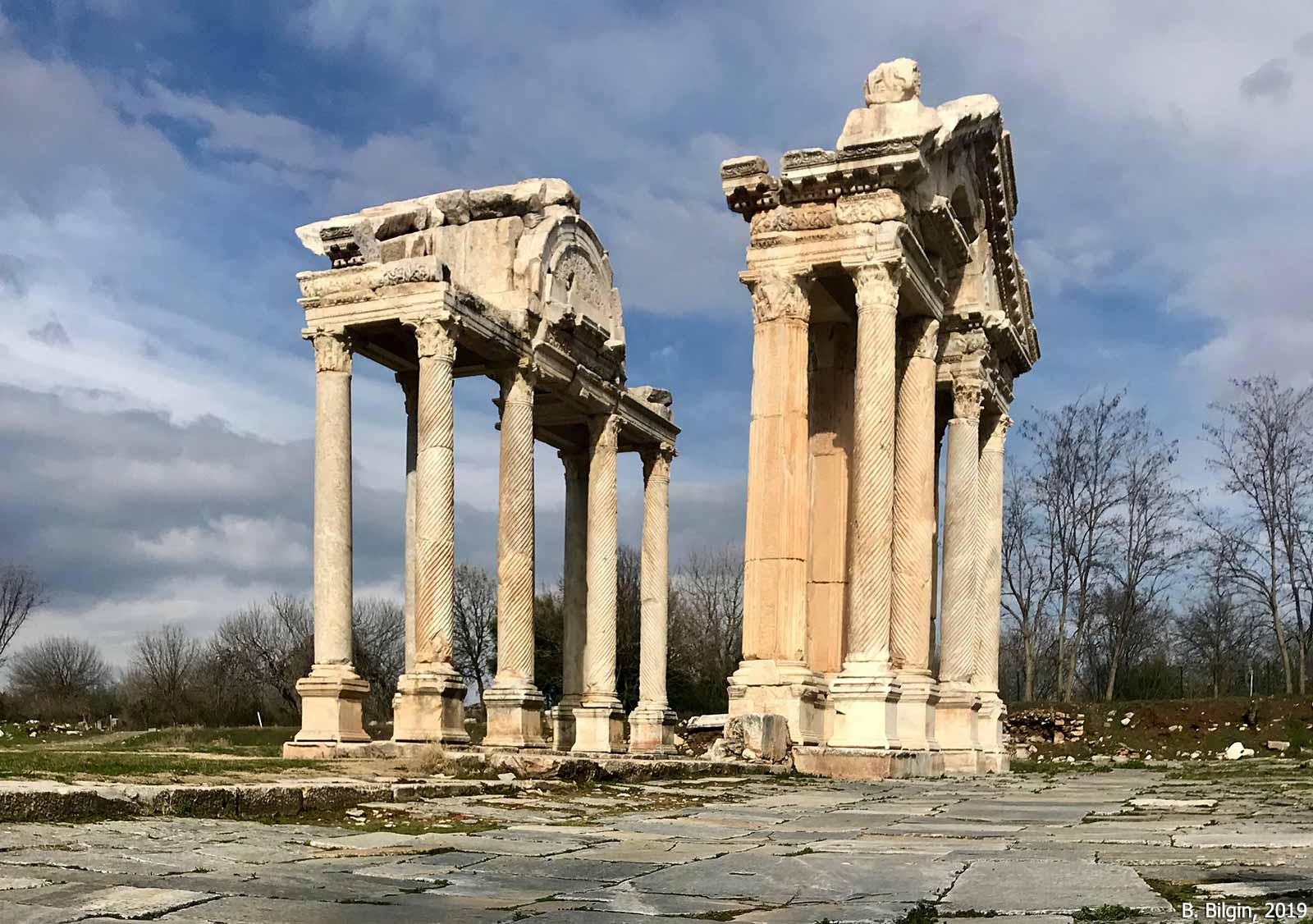
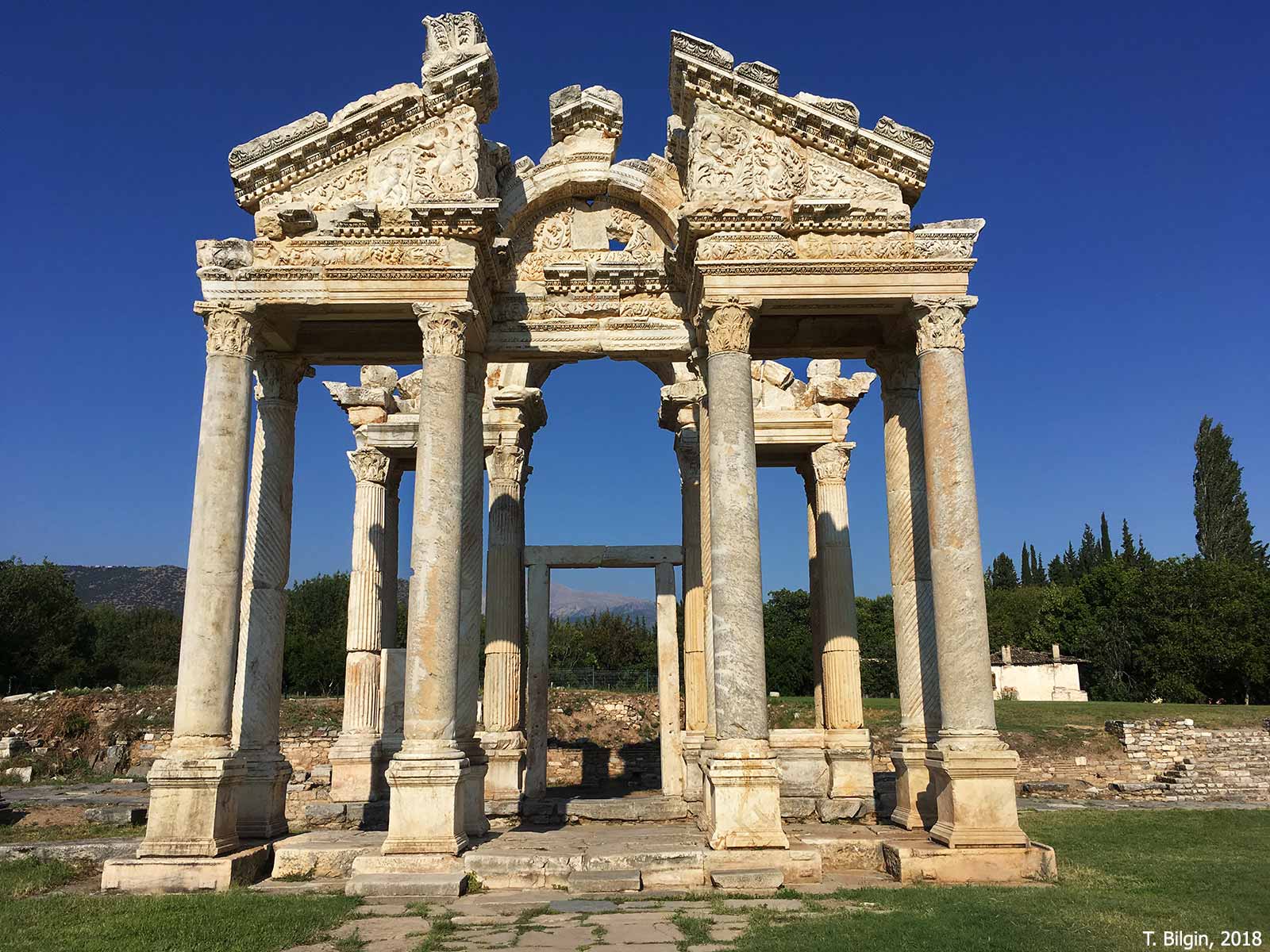
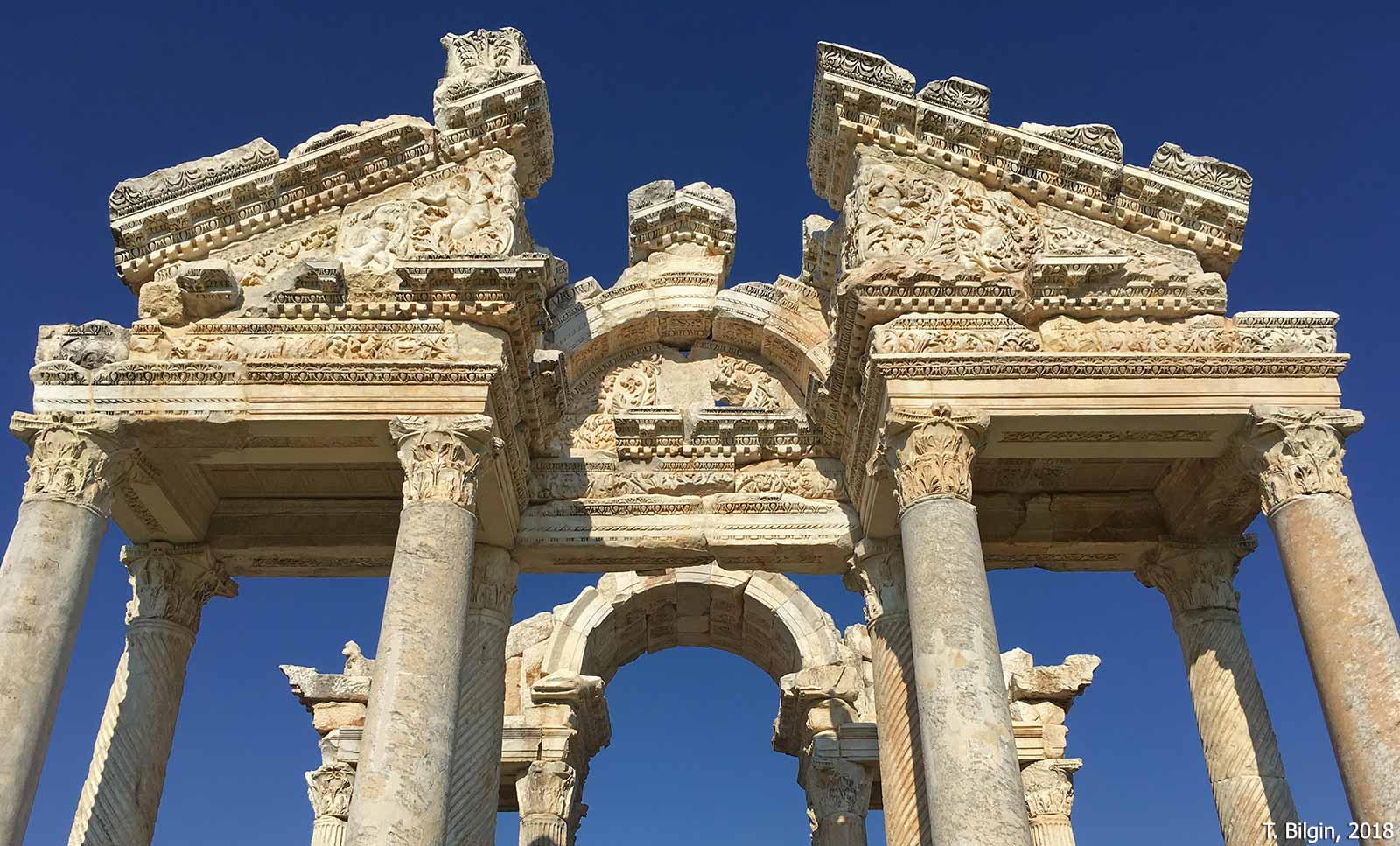
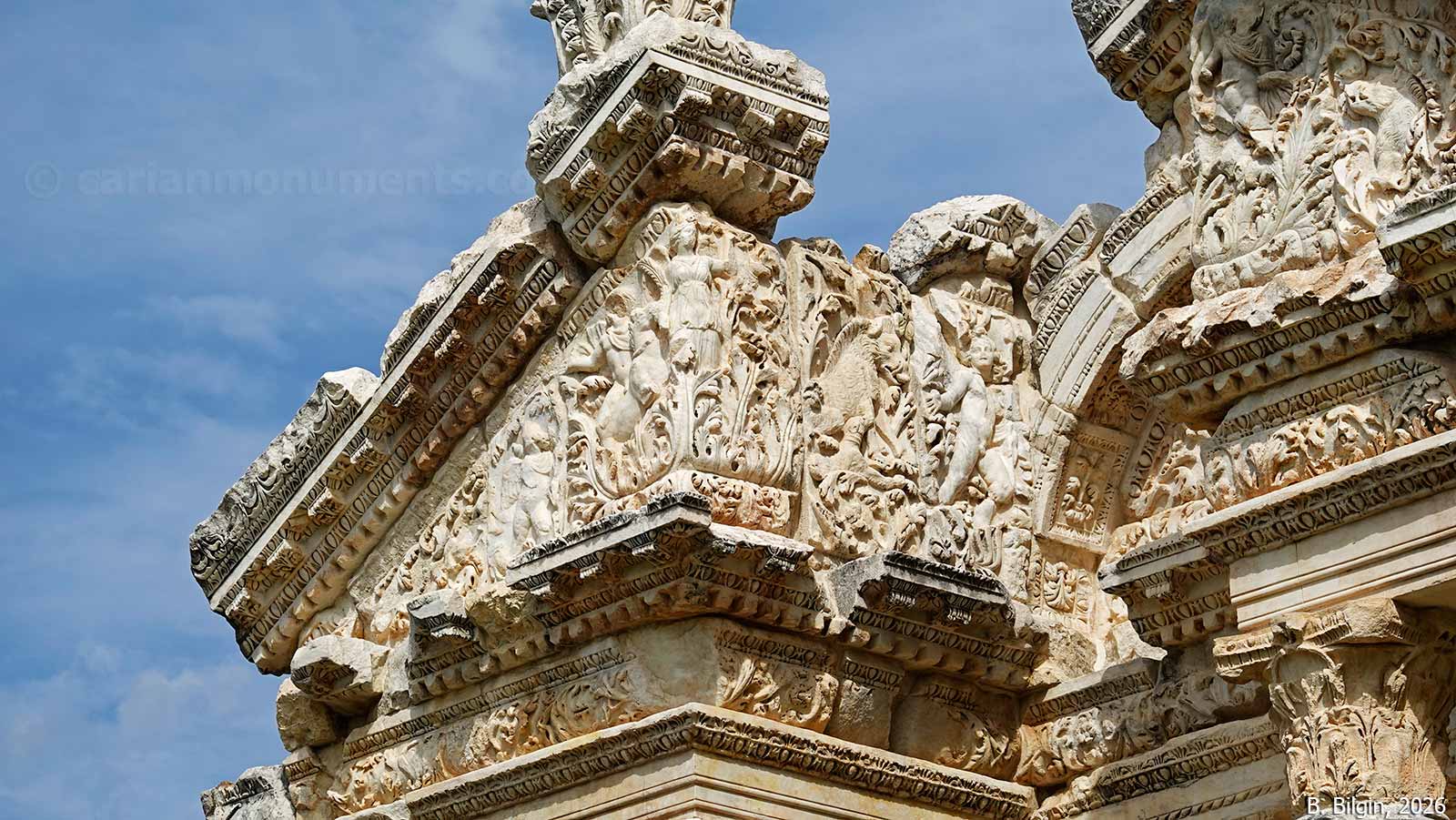
Zoilos Monument
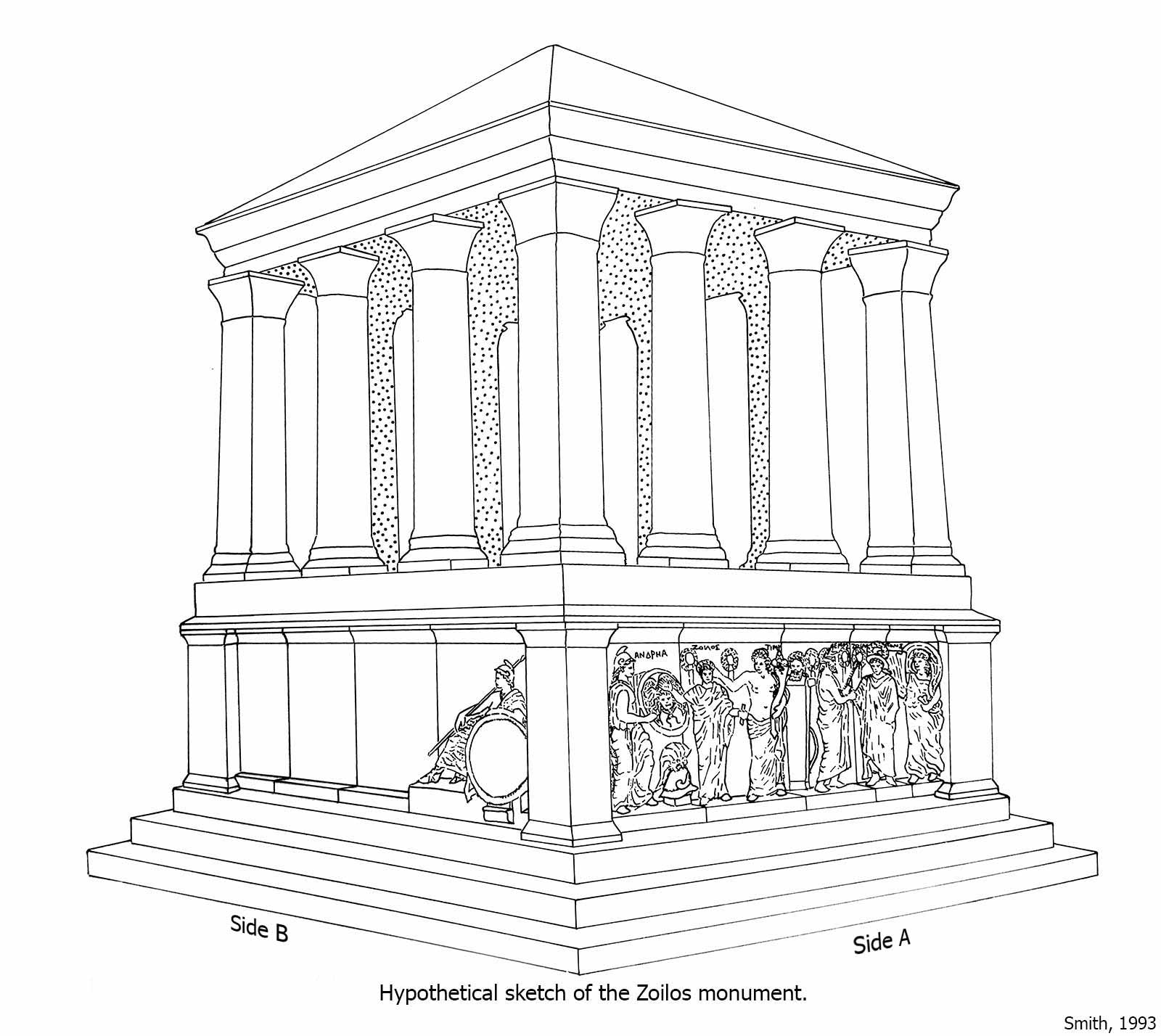
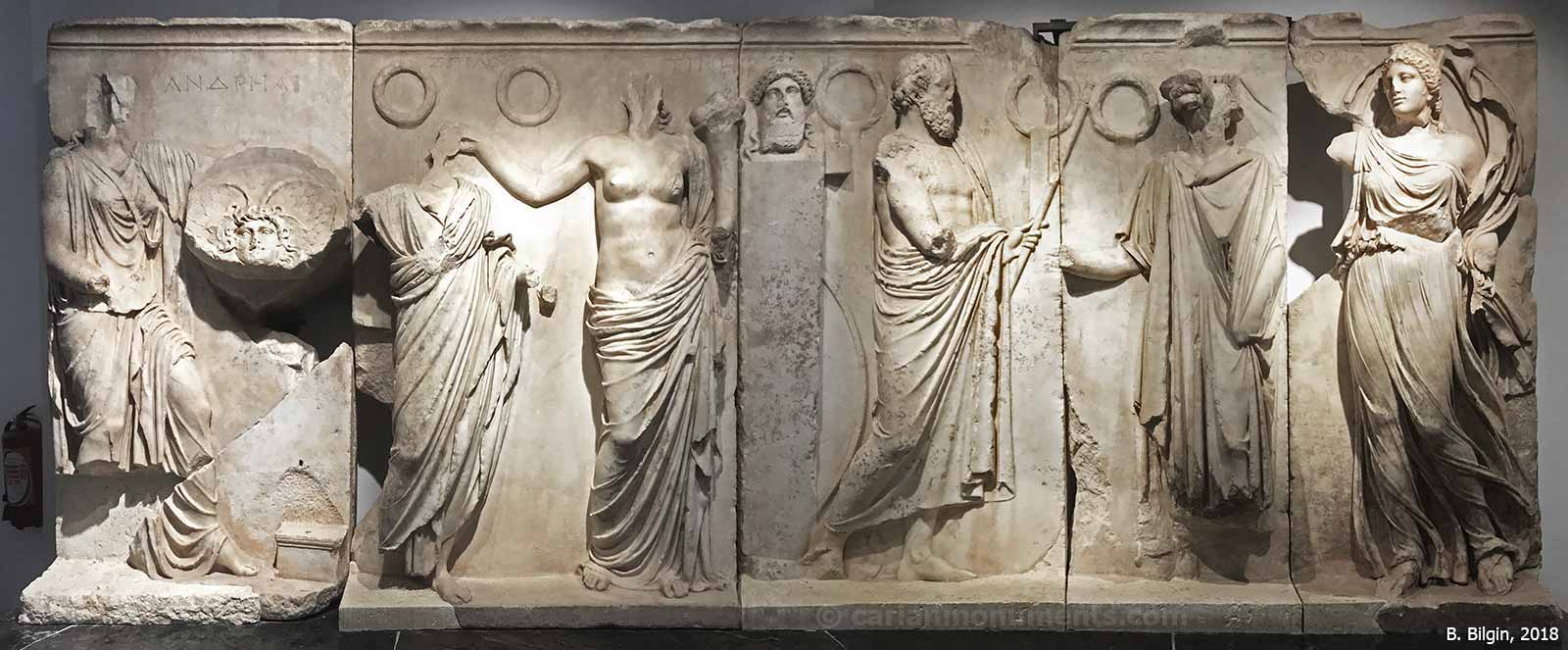
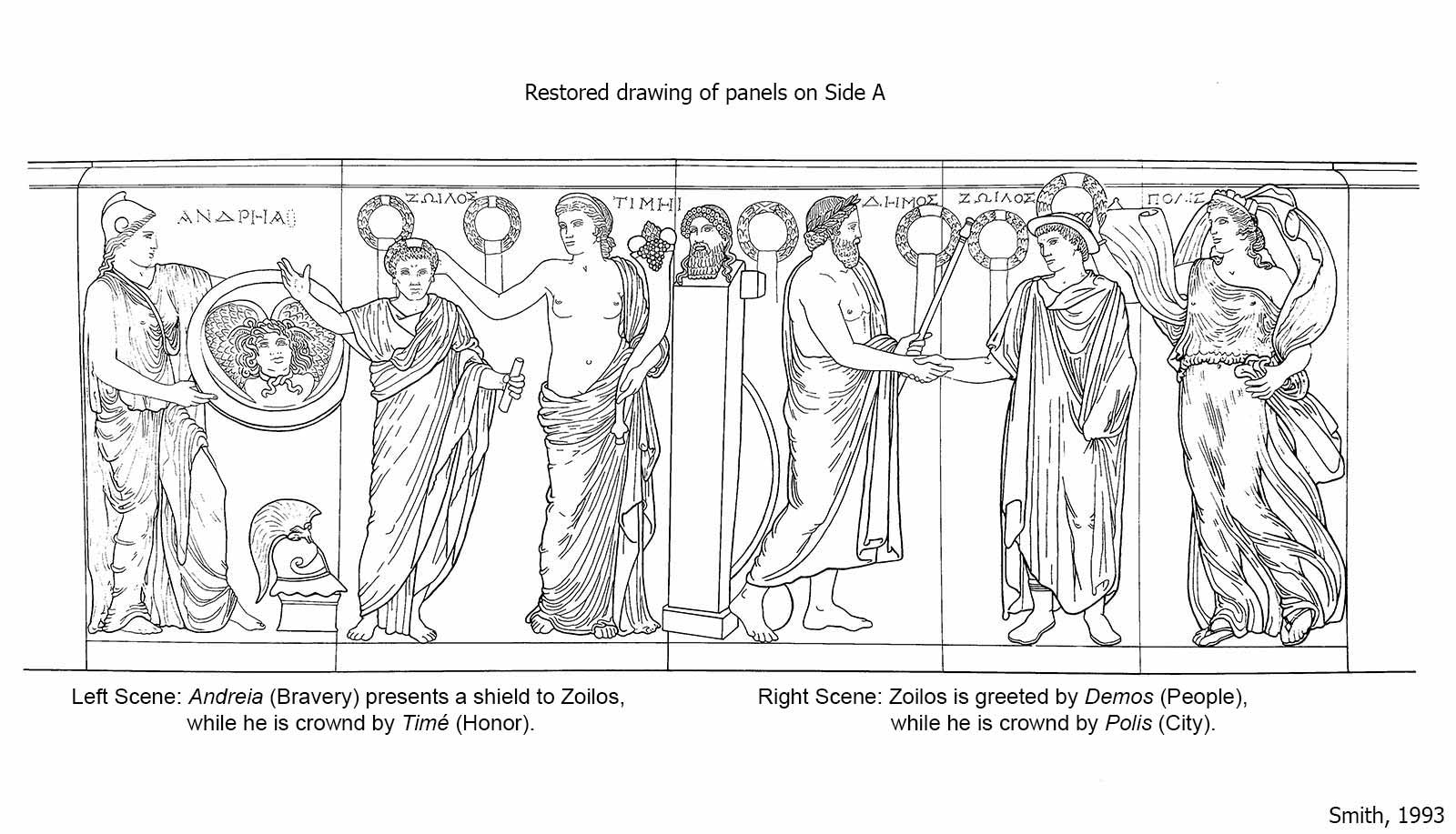
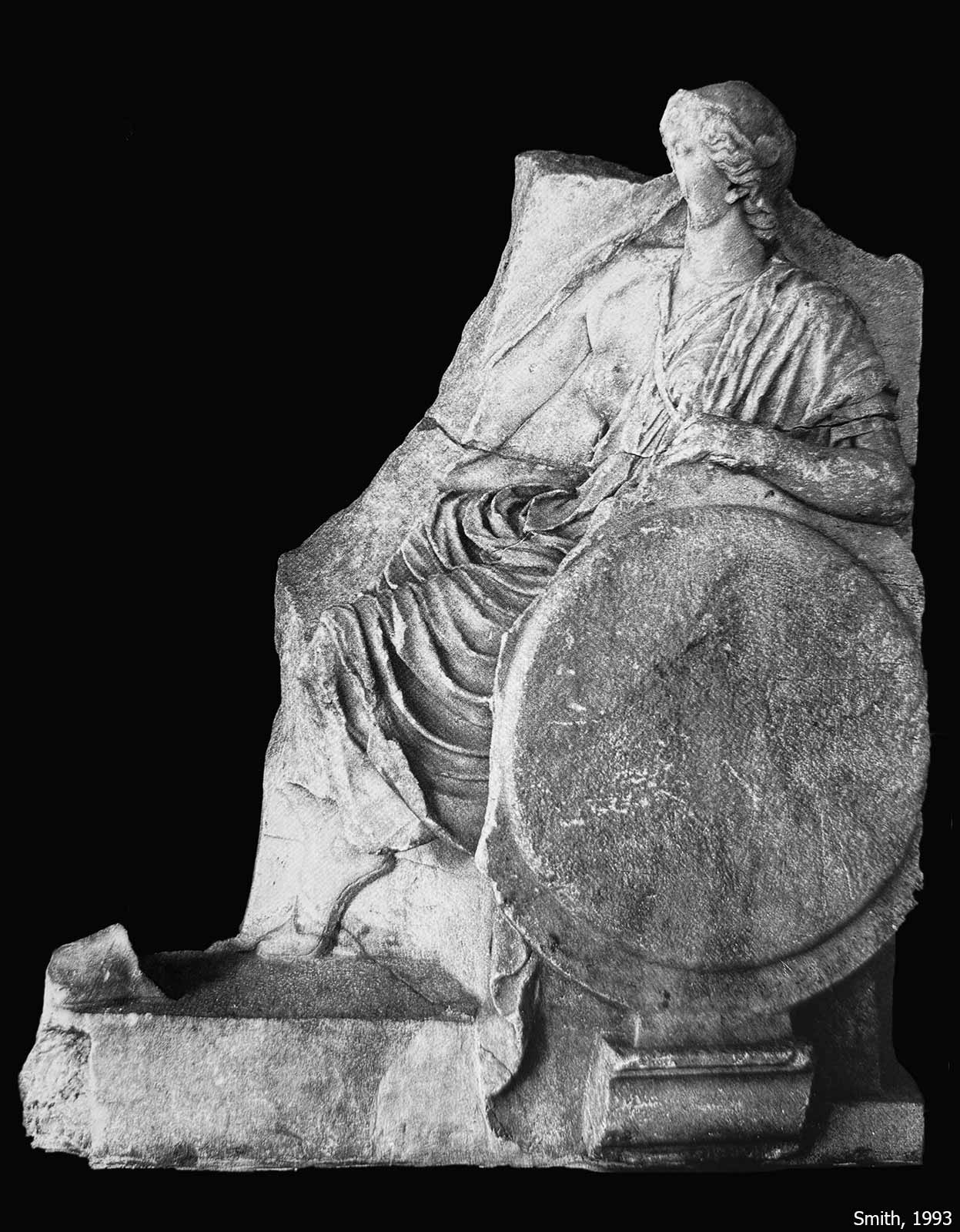
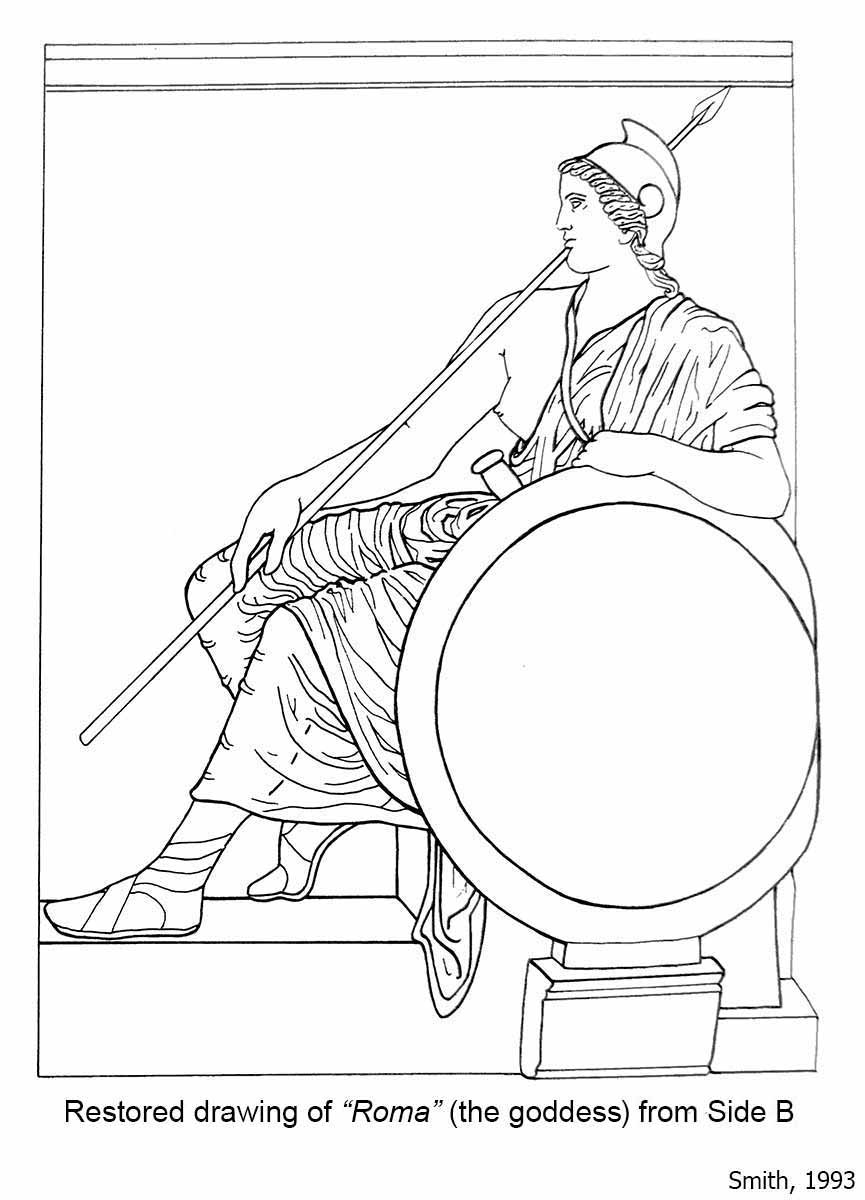
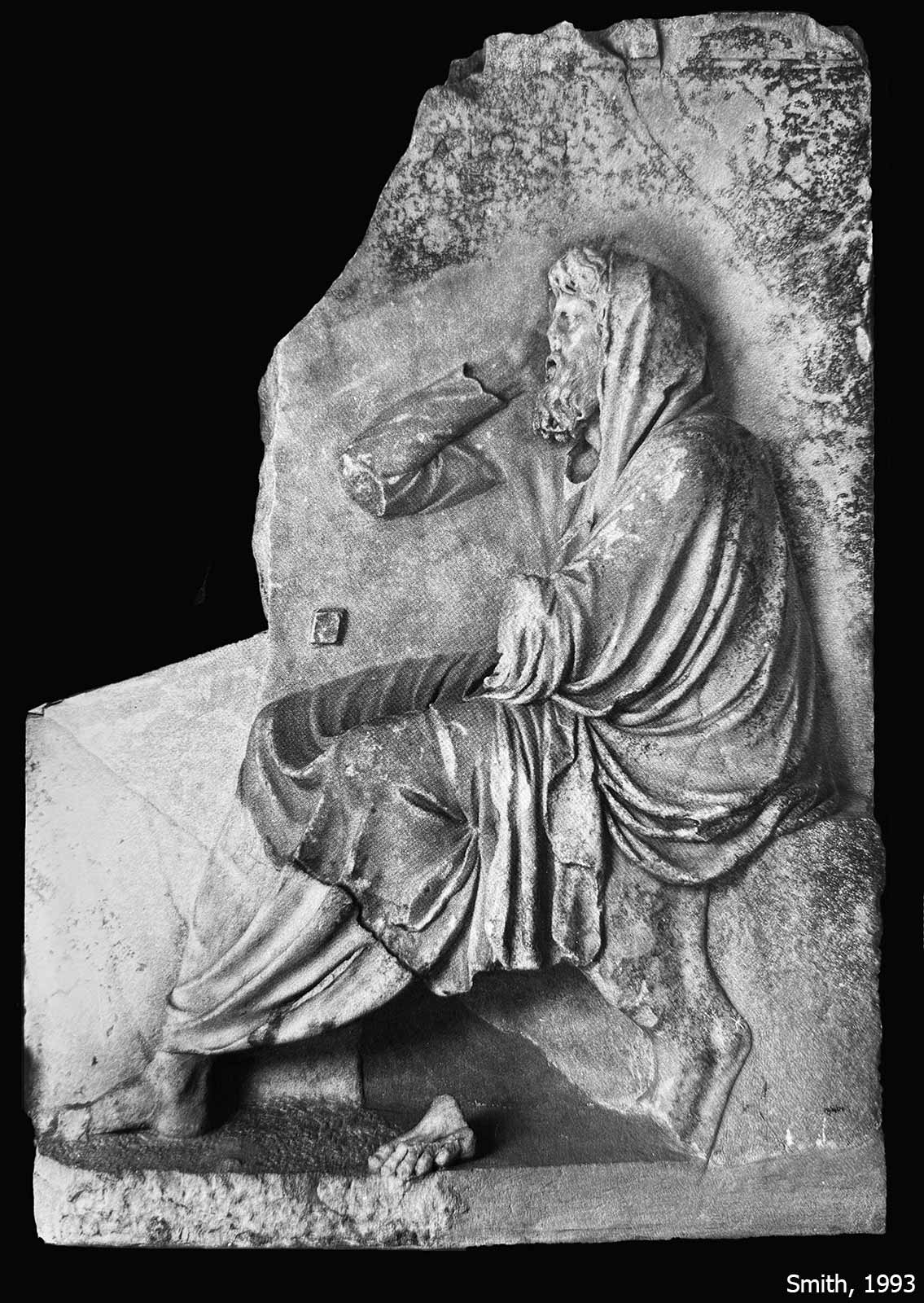
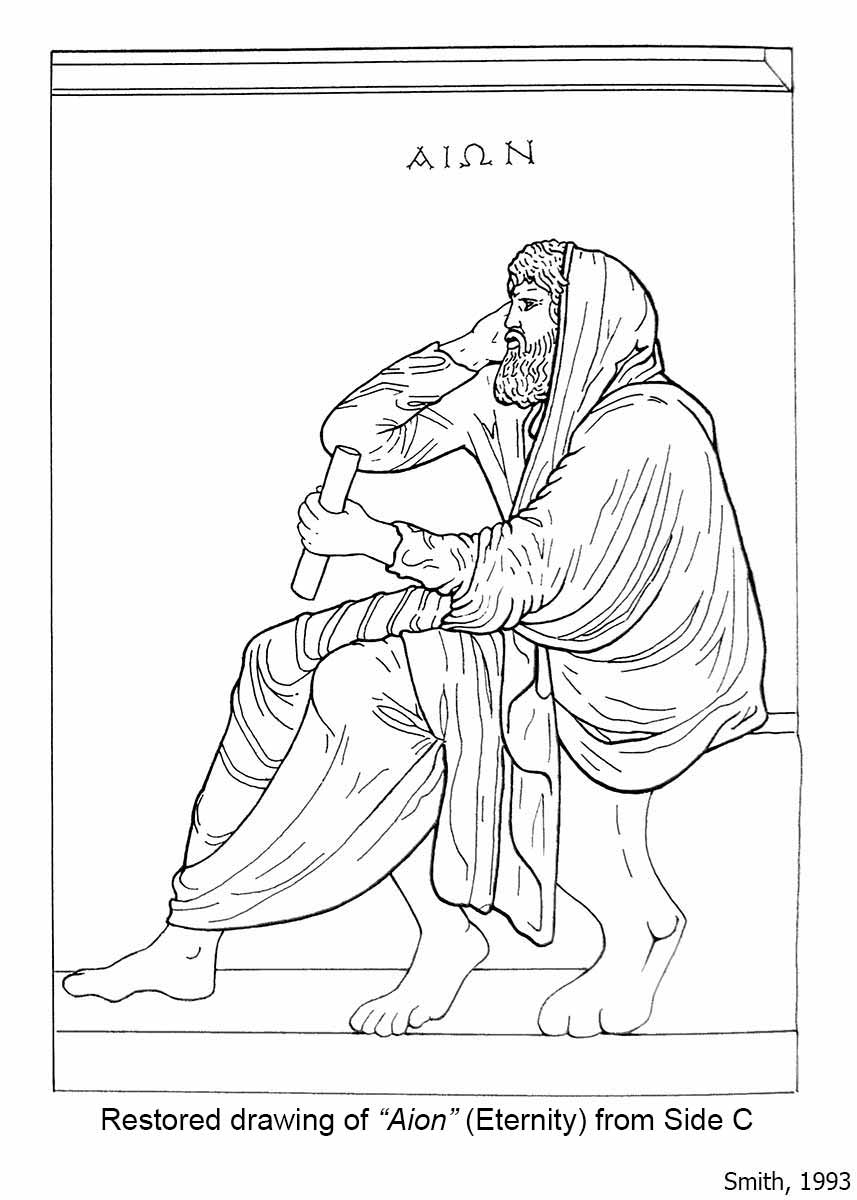
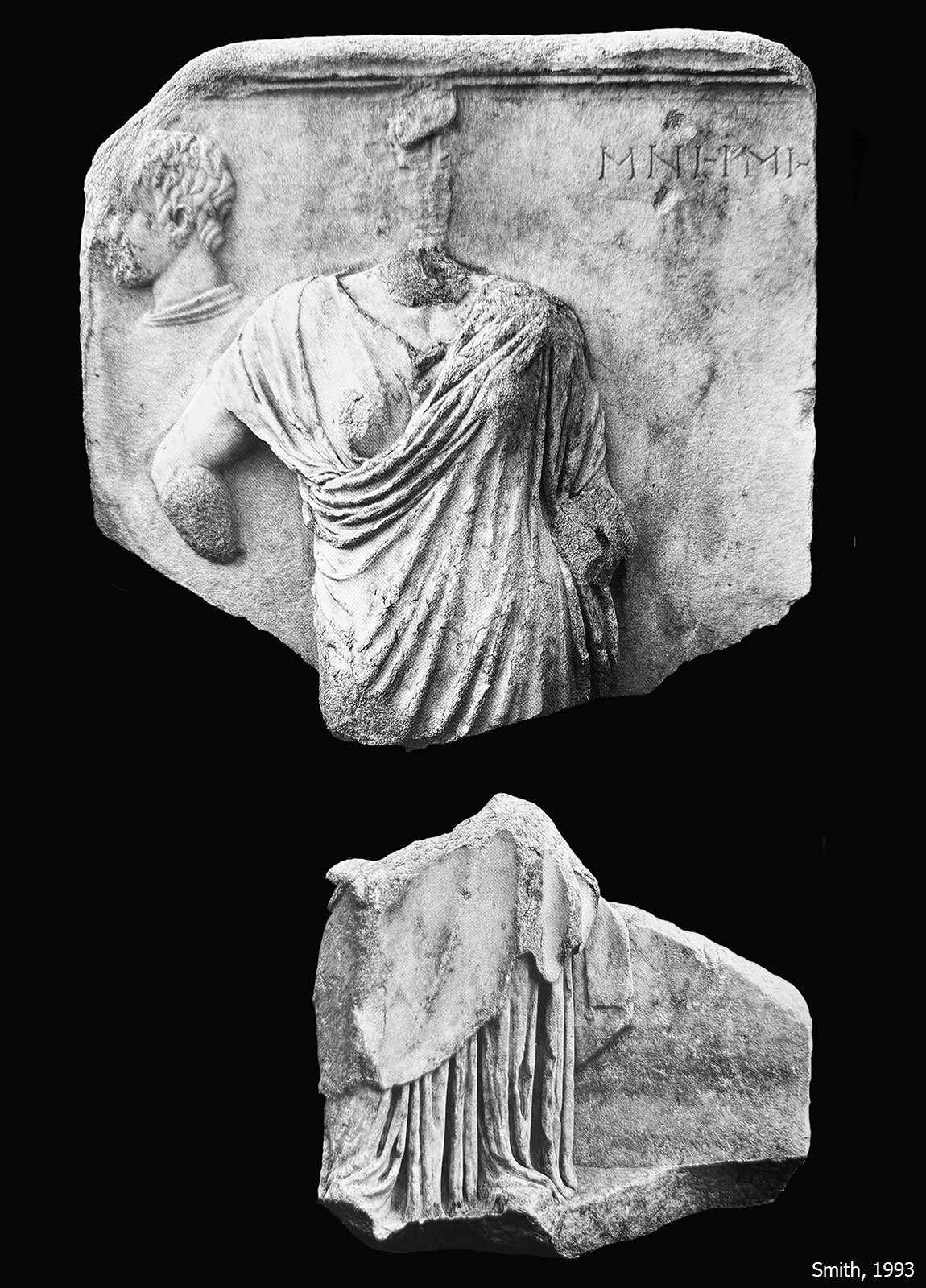
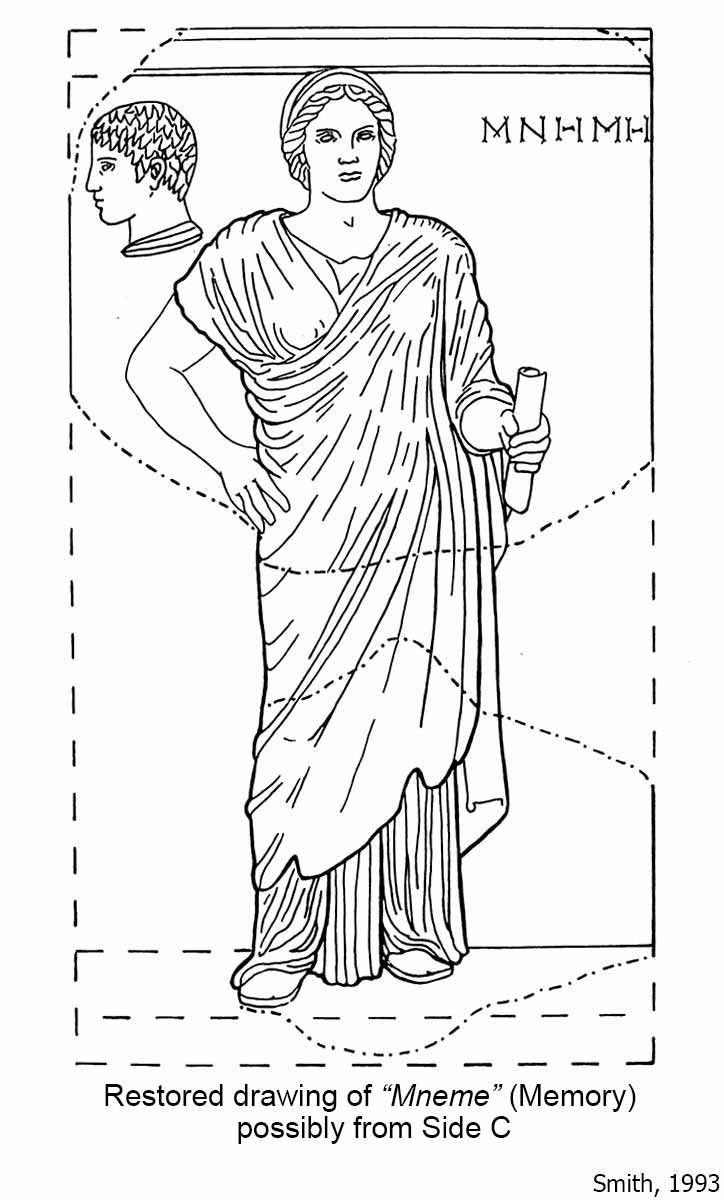
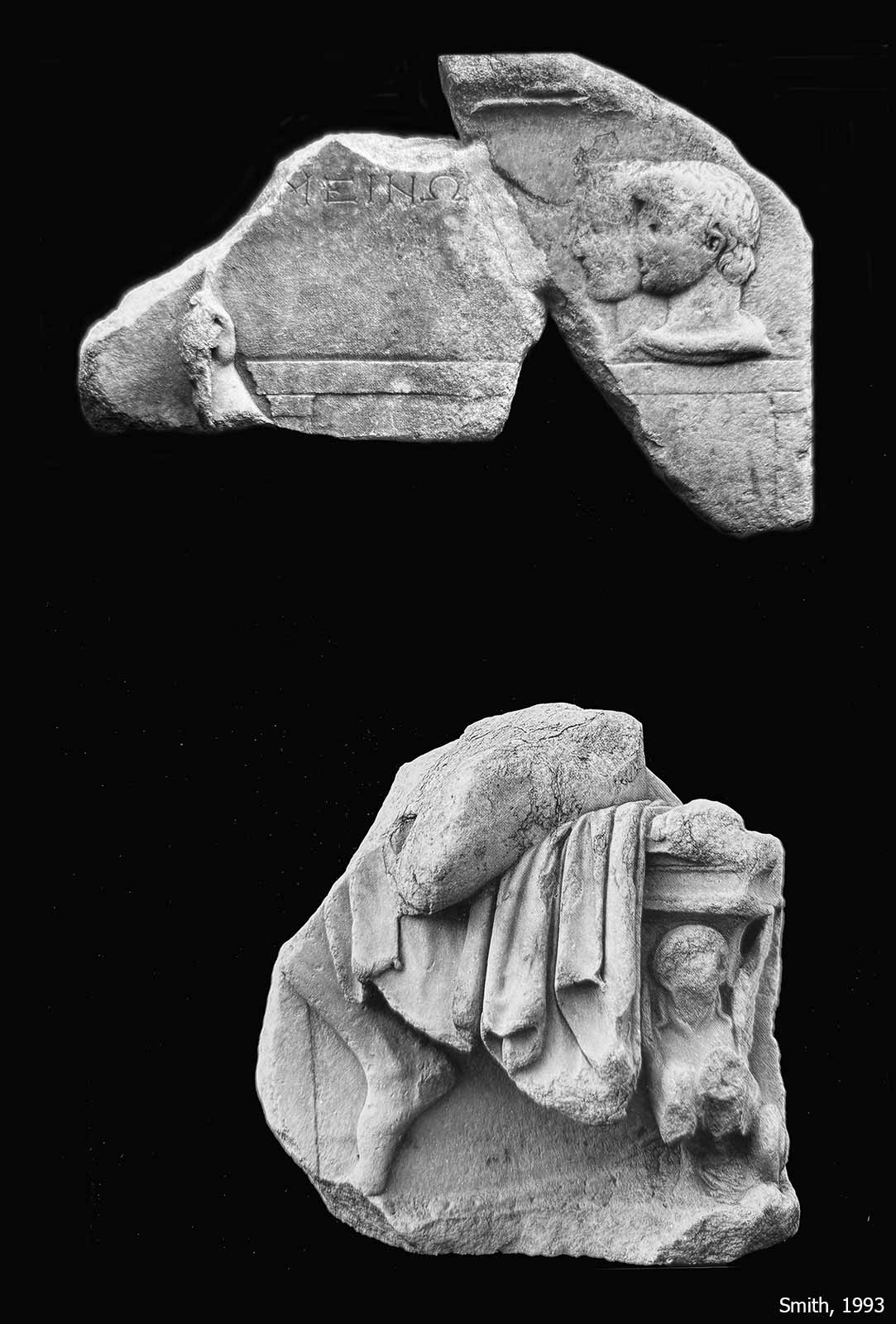
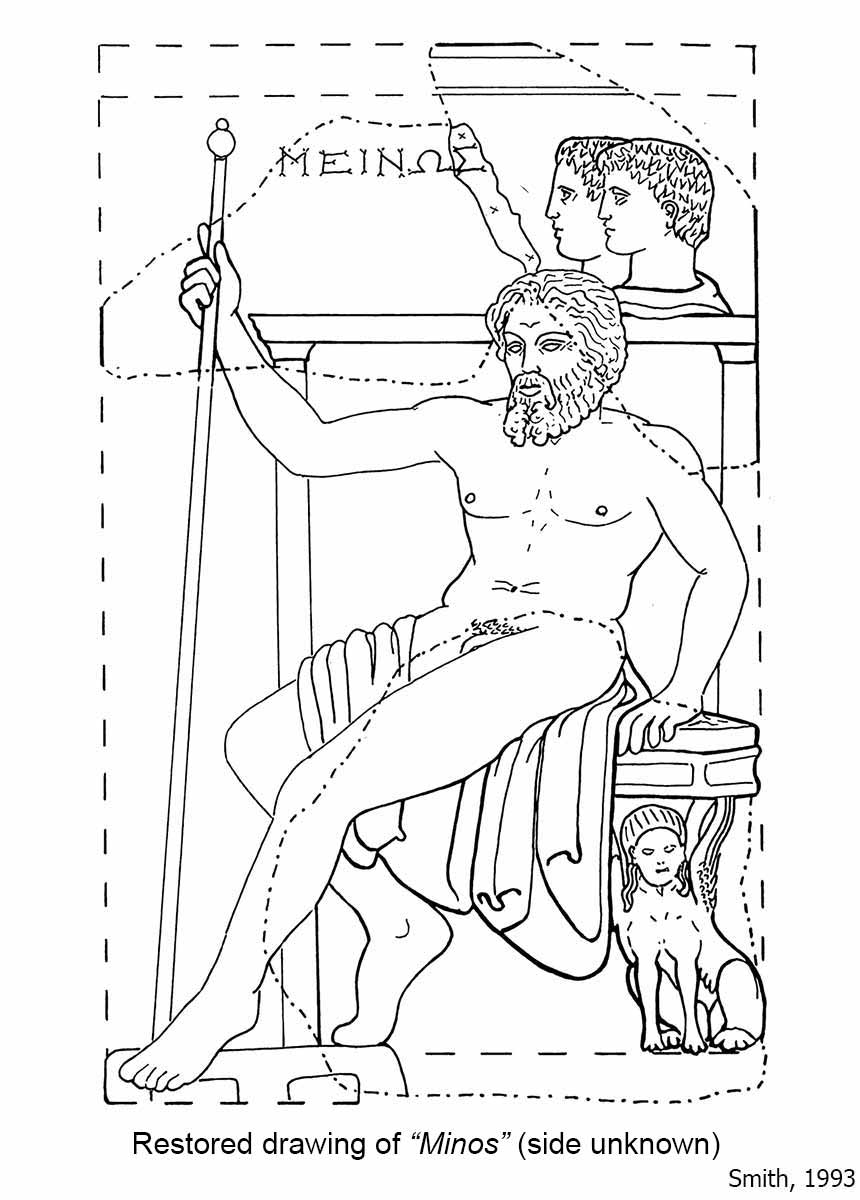
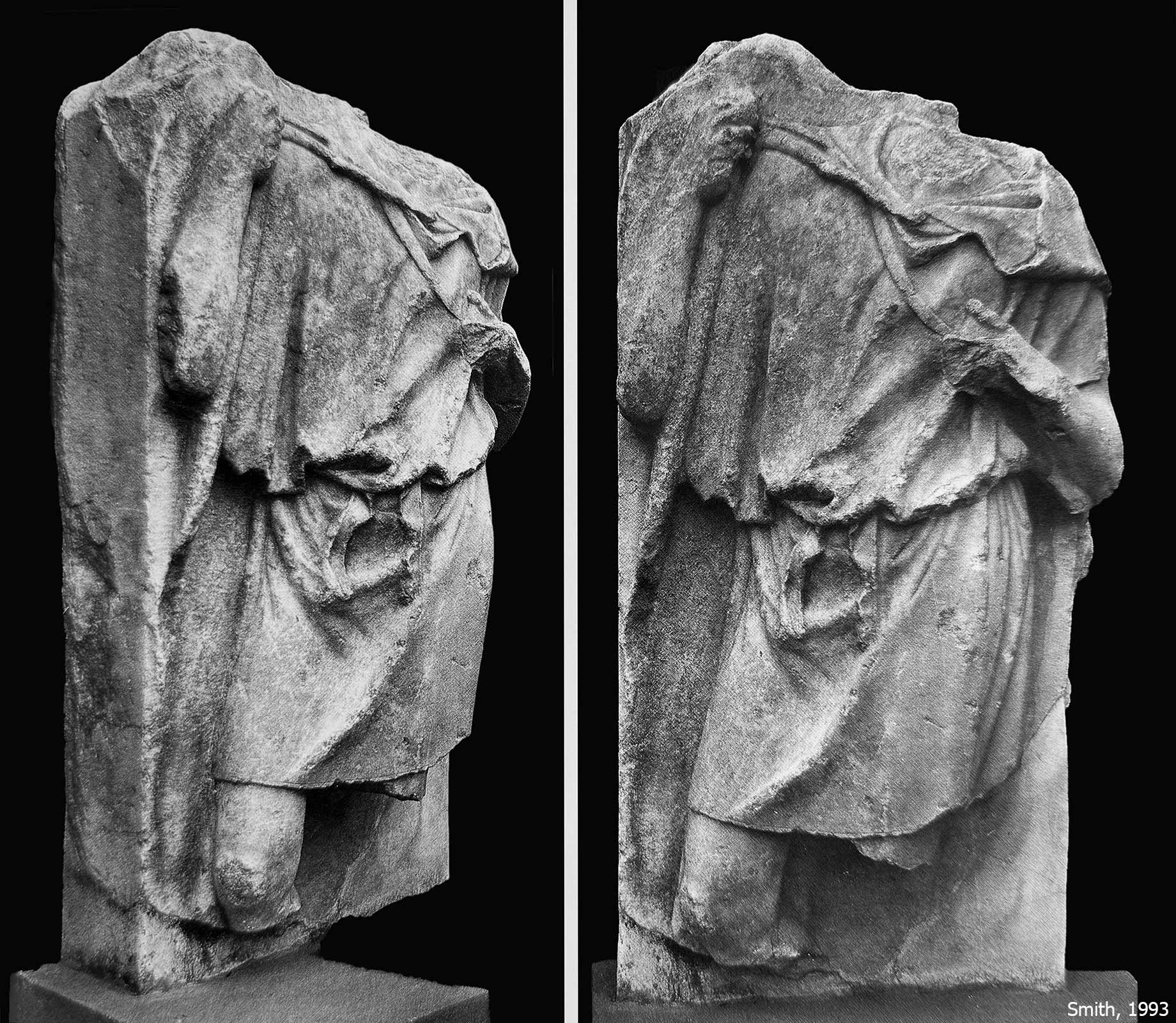
The Monument of C. Julius Zoilos was a square marble mausoleum erected in the late first century BCE (c. 30–20 BCE) to honor the prominent freedman, ambassador, and civic benefactor of Aphrodisias. Decorating the podium base of the tomb, its 1.85-meter-high marble frieze depicts Zoilos accompanied by identified deities and allegorical personifications, including Andreia (Bravery), Timé (Honor), Demos, Polis, Roma, Aion (Eternity), Mneme (Memory), and Minos. These relief panels celebrate his public career, military bravery, and Roman citizenship by artfully blending Greek civic traditions with Roman imperial themes. Dismantled in Late Antiquity, the frieze blocks were reused as spolia in the city walls before being recovered during archaeological excavations. Today, the restored panels are exhibited in sequence at the Aphrodisias Museum.
References:
Chaniotis, A. 2019. “Aphrodisias: History and Society, ca. 200 BCE–ca. 230 CE,” in Hellenistic And Roman Anatolia: Kings, Emperors, City States, ed. O. Tekin, İstanbul, 377–397.
Ilgım, M. (ed.) 2008. Afrodisyas Sebasteion Sevgi Gönül Salonu / Aphrodisias Sebasteion Sevgi Gönül Hall, İstanbul.
de Laborde, L. 1838. Voyage de l’Asie Mineure Par Mrs. Alexandere de Laborde, Becker, Hall et Leon de Laborde, Paris.
Hallett, C. H. & U. Quatember. 2018. “Three Bouleuteria from Roman and Late Antique Aphrodisia,” in Sculpture in Roman Asia Minor: Proceedings of the International Conference at Selçuk 2013, ed. M. Aurenhammer, Wien, 353–364.
Öğüş, E. 2014. “Aphrodisias, Archaeology of,” in Encyclopedia of Global Archaeology, ed. C. Smith, New York, 289–293.
Öztürk Ö. 2011. A digital reconstruction of visual experience and the Sebasteion of Aphrodisias, M.A. – Master of Arts, Middle East Technical University, 2011.
Roueché, C. 1989. Aphrodisias in Late Antiquity: The Late Roman and Byzantine Inscriptions including Texts from the Excavations at Aphrodisias conducted by Kenan T. Erim, London.
Smith, R. R. R. 1993. The Monument of Julius Zoilos, Mainz am Rhein.
Smith, R. R. R. 2014-2025. Aphrodisias Excavations Reports, Aphrodisias Excavations (https://aphrodisias-excavations.com).
Smith, R. R. R. 2020. “Aphrodisias,” in The Carians, From Seafarers to City Builders, eds. O. C. Henry & A. Belgin-Henry, İstanbul, 368–389.
Smith, R. R. R., I. Jacobs, & S. Somersan. 2022. “Aphrodisias’ta Güncel Çalışmalar / New Research at Aphrodisias,” Lycus 6, 25–63.
Images:
Aphrodisias Excavation Archive
L. de Laborde, 1838
R. R. R. Smith, 1993, 2014-2025
Ö. Öztürk, 2011
C. H. Hallett & U. Quatember, 2018
Bora Bilgin, 2017, 2018, 2019, 2025, 2026
Tayfun Bilgin, 2018, 2025
Ertuğrul Anıl, 2025