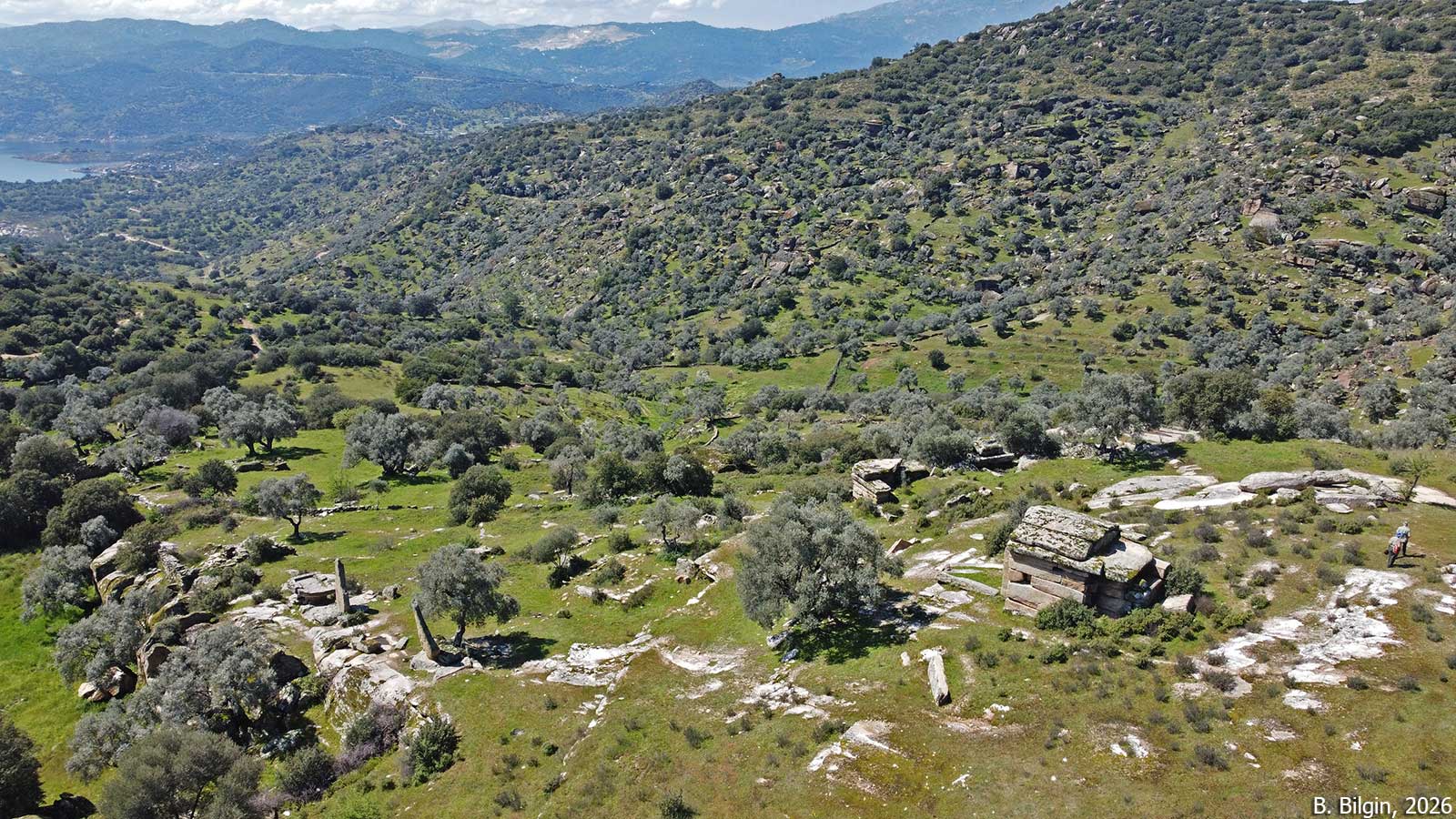
Gergakome is an ancient sanctuary site situated in the rugged mountainous terrain of inland Caria (modern-day Aydın), specifically in the Deliktaş locality near the village of Alabayır, east of the Marsyas River (Çine Çayı). The site lies approximately 13 to 14 kilometers southeast of the ancient city of Alabanda, with which it likely shared a political connection. The identification of the site is secured by the ubiquitous presence of the inscriptions “GERGA,” “GERGAS,” or “GERGAKOME” (Village of Gerga) carved in monumental letters—sometimes up to a meter high—on natural rocks and constructed edifices throughout the valley. While “kome” typically denotes a village, in this context, it likely refers to a sanctuary settlement dedicated to a local deity named Gerga or Gergas.
Despite the distinctly archaic appearance of its monuments—characterized by massive, roughly hewn gneiss blocks and rigid, xoanon-like statuary—archaeological and epigraphic evidence dates the extant ruins primarily to the Roman Imperial period, specifically the 2nd or 3rd century CE. Key indicators for this later dating include the use of specific construction mortar and the paleographic style of the inscriptions, such as the use of cursive omega and sigma letters. This anachronistic style is interpreted as a deliberate “historicizing” effort, likely influenced by the Second Sophistic movement, to revive or emphasize the antiquity of an indigenous Carian cult. The cult appears to be centered on a local nature deity, often syncretized by scholars with the Anatolian Mother Goddess (Cybele) or Artemis Ephesia, evidenced by iconographic attributes such as lions and bulls found on the statuary bases.
The site was first introduced to the academic world by G. Cousin in 1900, followed by the French scholar A. Laumonier in the 1930s, who interpreted the ruins as a “funerary sanctuary” surrounding the tomb of a local hero. Subsequent investigations by G.E. Bean in the 1960s challenged this view, reidentifying several small structures previously thought to be tombs as fountain houses. More recently, comprehensive surveys conducted by Winfried Held in 1994 provided detailed architectural analyses that solidified the Roman dating and clarified the site’s function as a pilgrimage sanctuary with significant water features. Research continues to debate the exact nature of the deity, with some recent scholarship suggesting an eclectic cult grounded in local landscape characteristics rather than a strict Cybele worship.
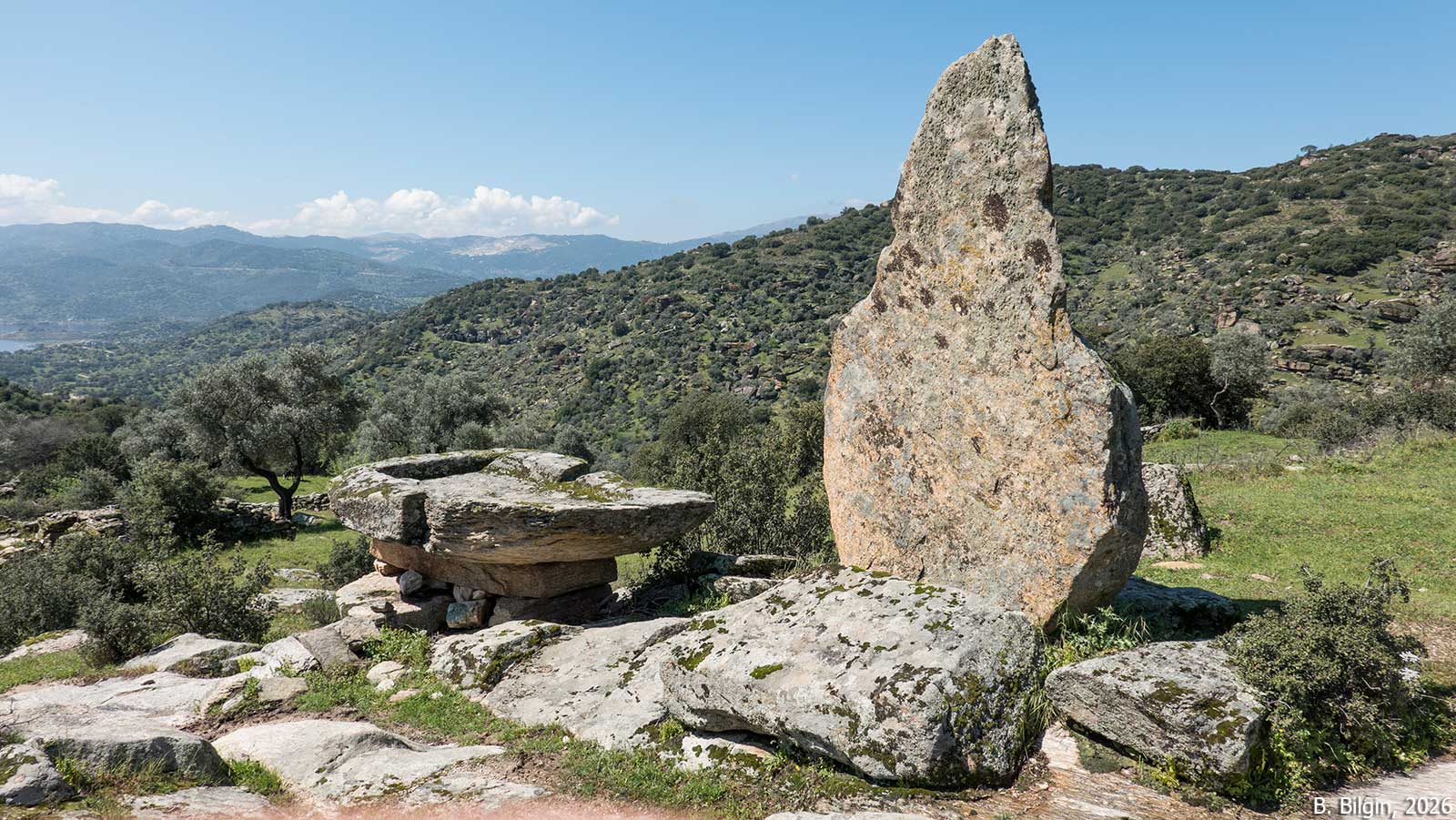
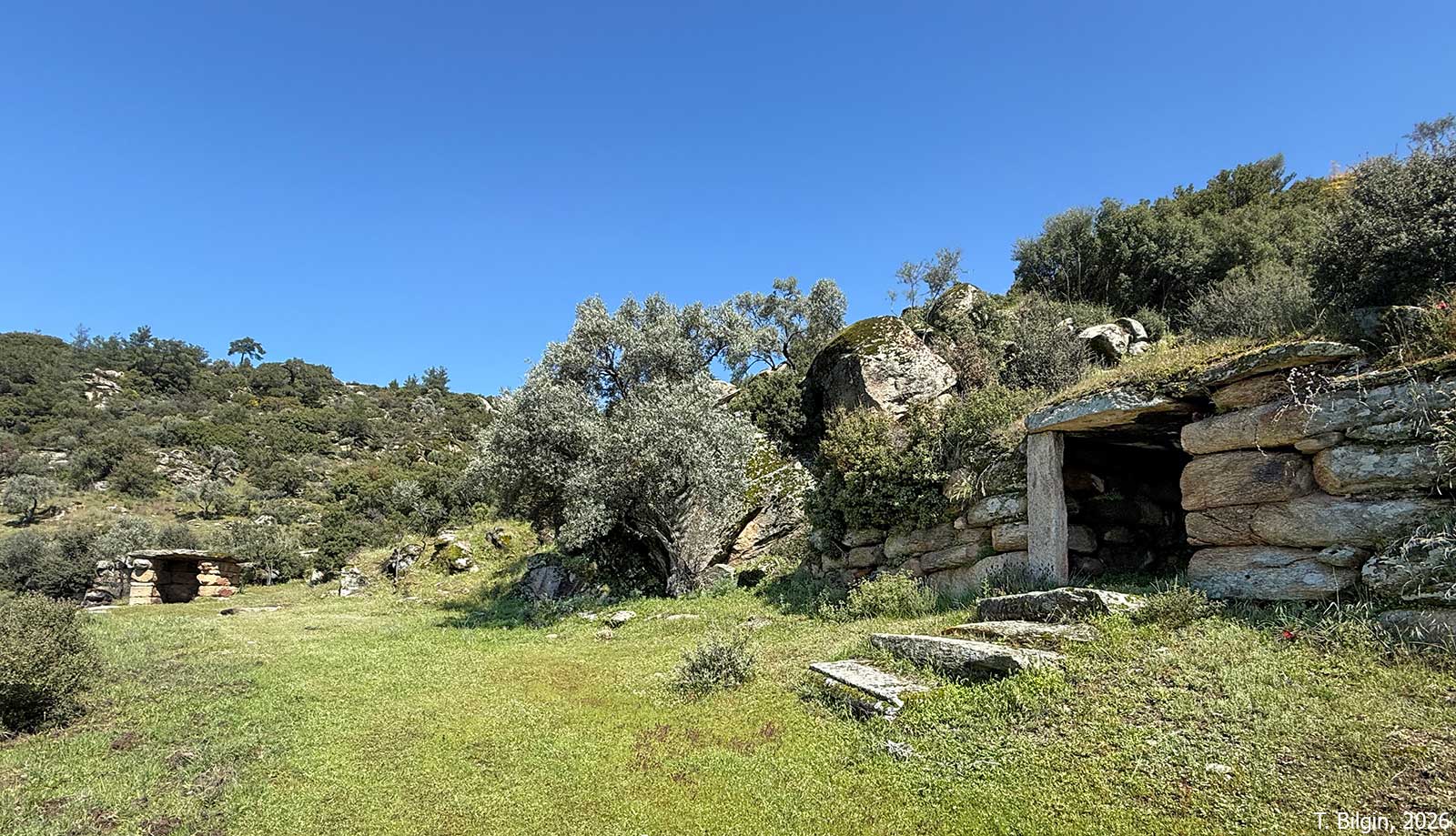
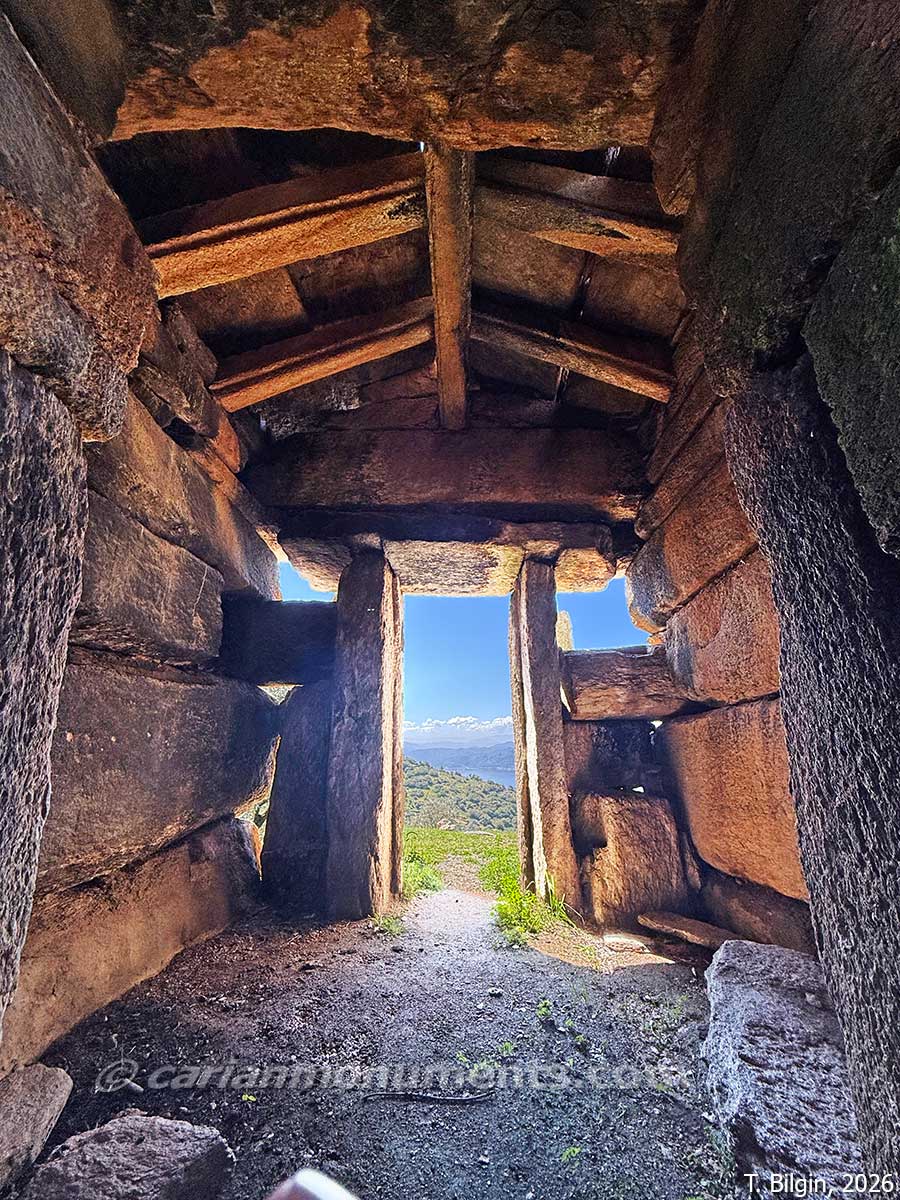
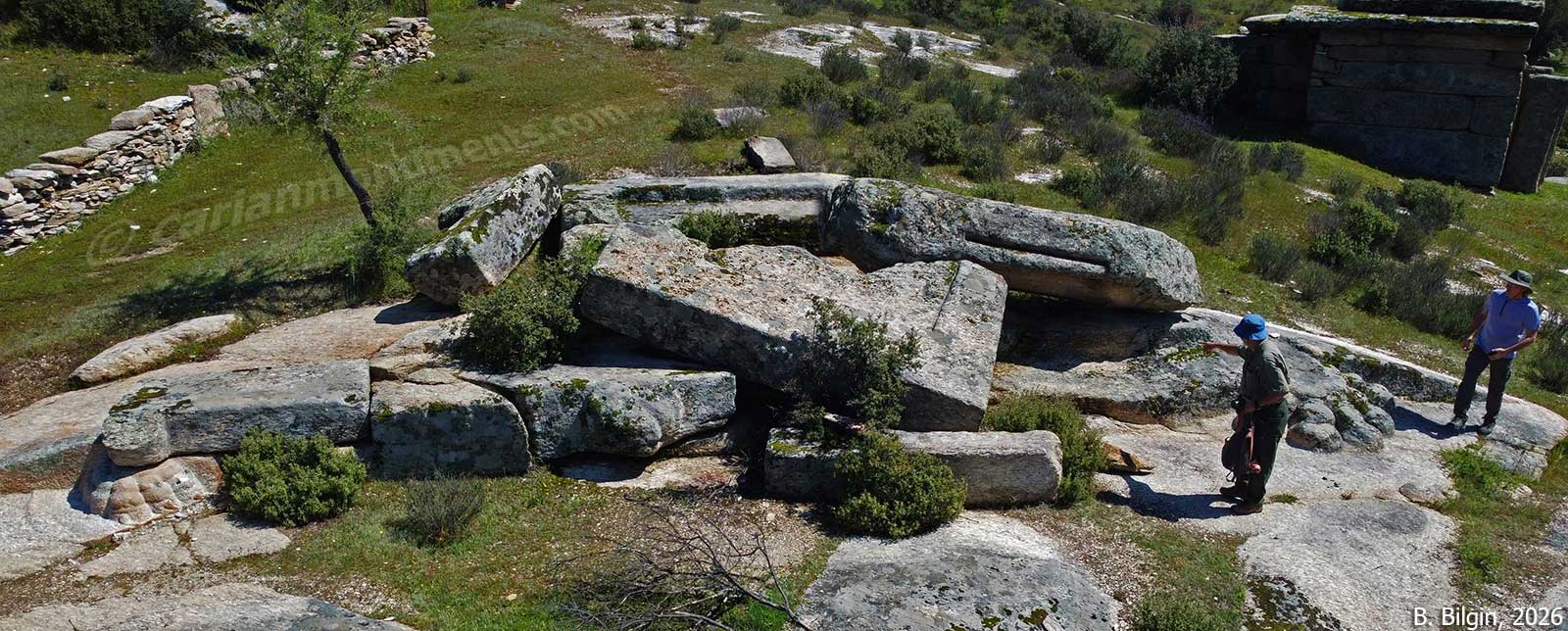
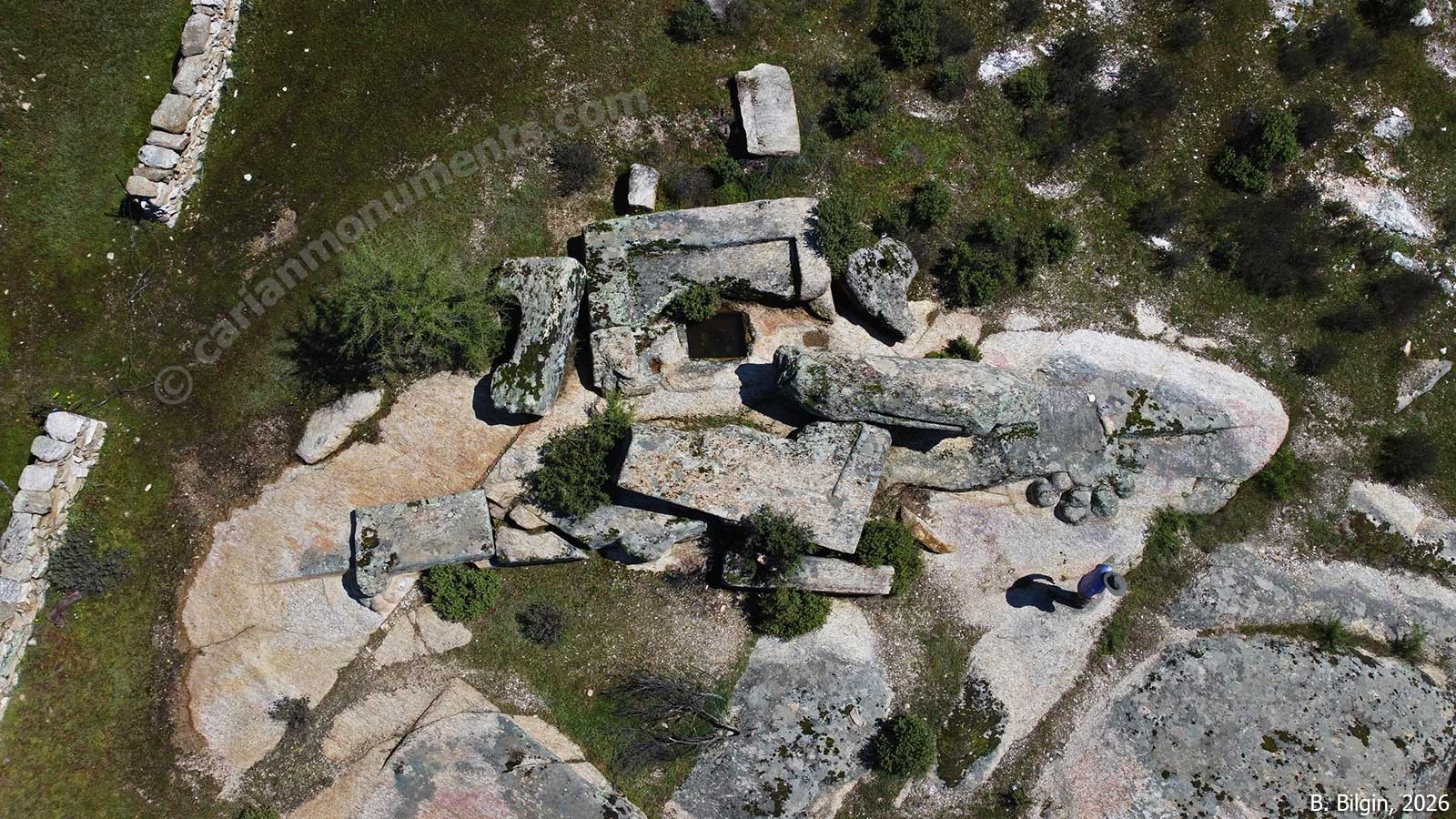
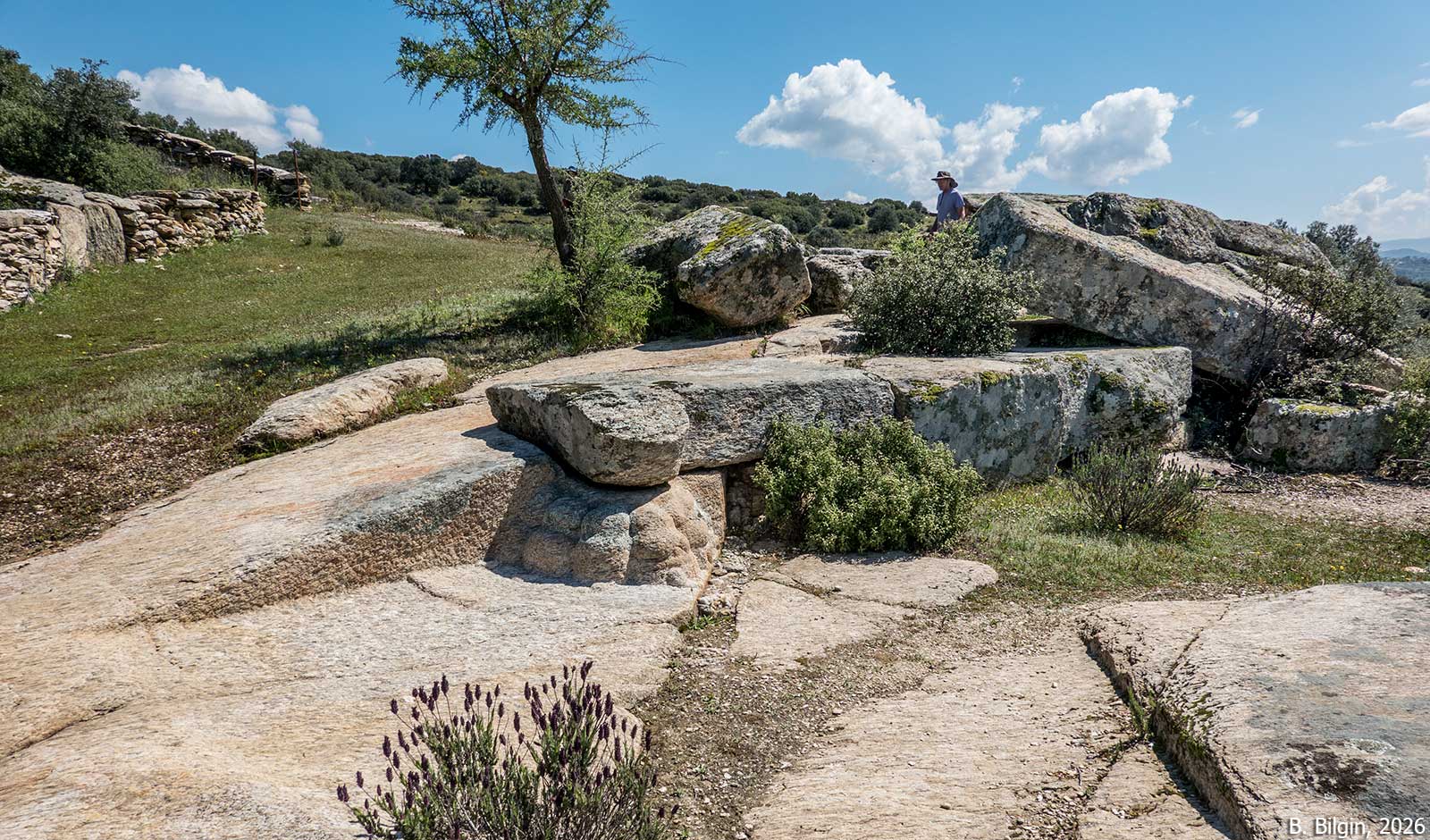
The site’s architecture is dominated by the indigenous gneiss stone found in the immediate vicinity. The most prominent structure is the so-called “funerary temple”, a well-preserved building featuring a stone roof ingeniously carved to imitate timber ridge-poles and rafters, with “GERGAS” inscribed on its pediment. The sanctuary also housed colossal cult statues, including a fallen figure originally standing over 4 meters tall, which stylistically resembles the Artemis Ephesia and stands on a base adorned with lion and bull reliefs.
Other significant monuments include pairs of pyramidal stelae (obelisks) standing up to 4 meters high and several fountain-like structures. Although these structures are commonly referred to as fountain houses, they are believed to have served religious and ritual functions. One of these structures bears an inscription dedicated to the river god Marsyas.




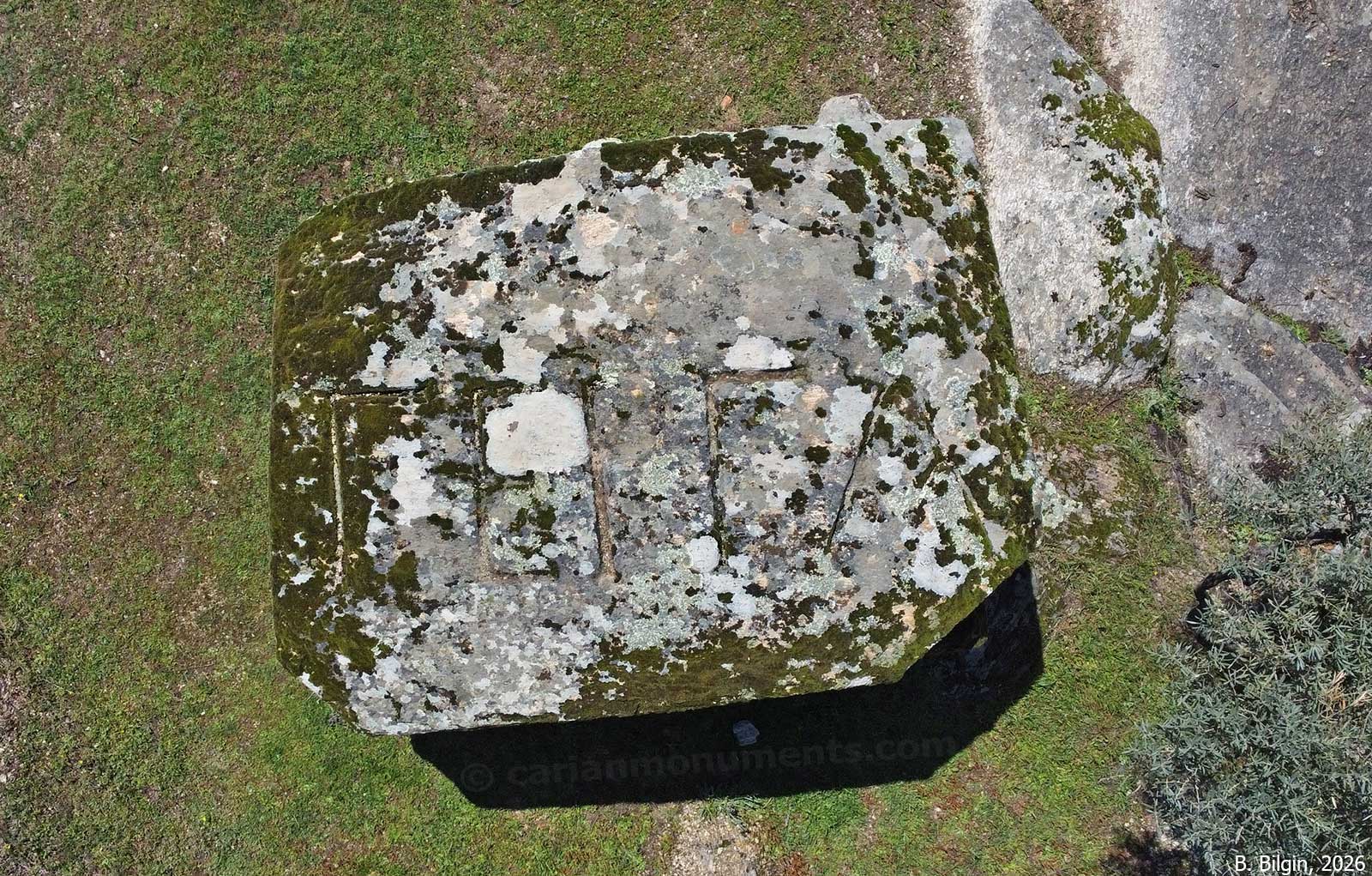

Temple
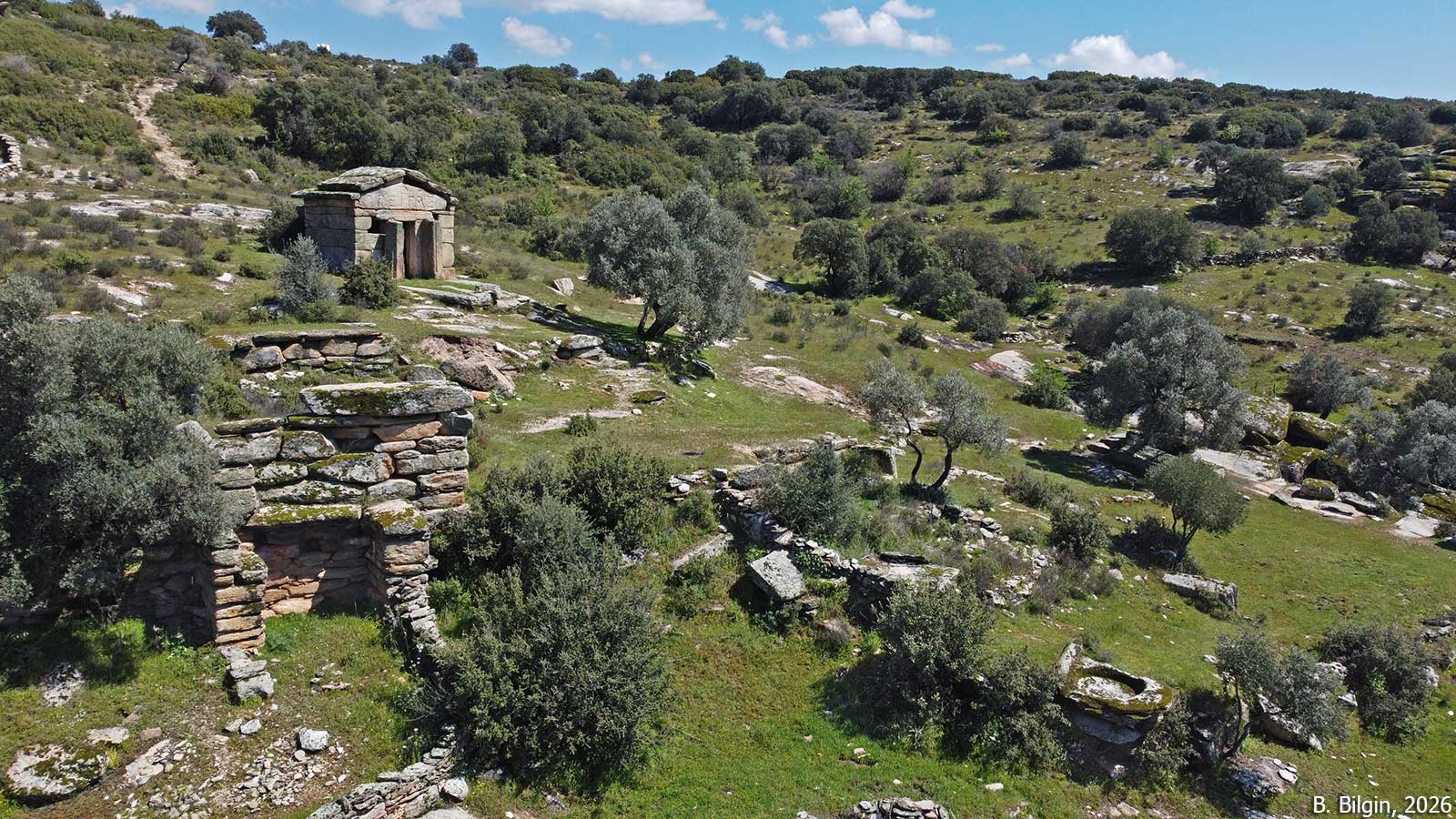


Statue A and Monumental Structure



References:
Bean, G. E. 1969. “Gerga in Caria,” Anatolian Studies 19, 179–182.
Held, W. 1995. “Gergakome in Karien Survey 1994,” AST 13/2, 51–70.
Held, W. 2008. GERGAKOME. Ein ‘altehrwürdiges’ Heiligtum im kaiserzeitlichen Karien, Istanbuler Forschungen 49, Tübingen.
Held, W. 2020. “Gergakome,” in The Carians, From Seafarers to City Builders, eds. O. C. Henry & A. Belgin-Henry, İstanbul, 462–469.
Heitz, C. 2019. “Gergakome: Überlegungen zum Charakter eines merkwürdigen Heiligtums und seiner Gottheit in Karien,” in UPIKU:TAUKE: Festschrift für Gerhard Tomedi zum 65, eds. S. Hye & U. Töchterle, Bonn, 313–343.
Images:
W. Held, 2008
Ertuğrul Anıl, 2026
Bora Bilgin, 2026
Tayfun Bilgin, 2026