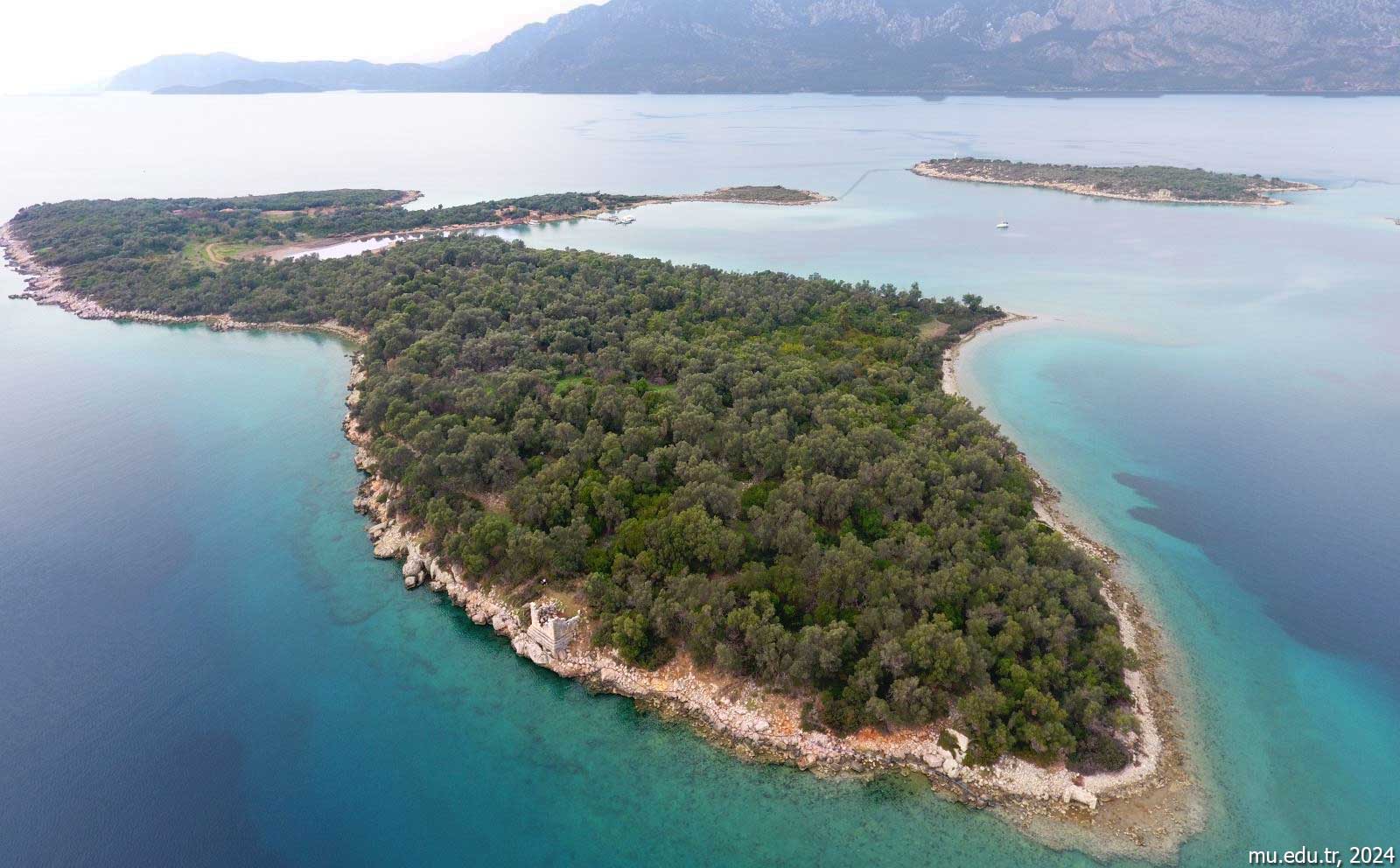
Kedreai, also known as Cedrae, is an ancient Carian city located in the Gulf of Gökova (ancient Gulf of Keramos), situated primarily on what is today known as Sedir Island (“Cedar Island”). The city’s name is derived from kedros (cedar tree), suggesting that the region was historically abundant in cedar forests, though today the vegetation is dominated by olive trees and maquis.
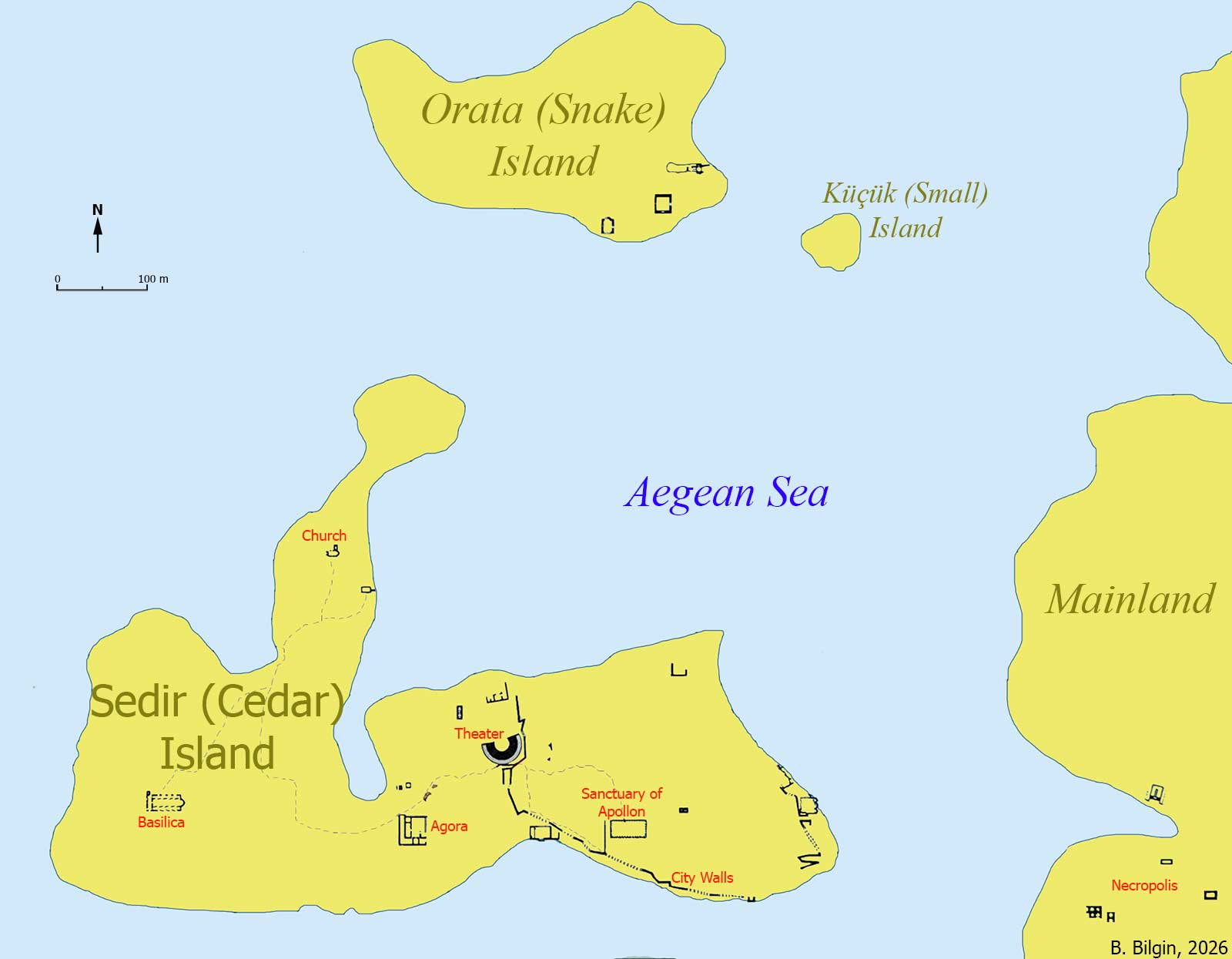
The settlement of Kedreai is not confined to a single landmass but constitutes an archipelago system and a mainland extension. The core settlement occupies Sedir Island, which is approximately 800 meters long and divided into two sections by an isthmus. The city extended across Sedir Island and two smaller islets to the north: Orata (Snake) Island and Küçük (Small) Island. The territory of the city included a section of the mainland to the east, specifically the area between Koy Hill and Gözleme Hill, which served as the city’s necropolis and featured a small port. The primary residential, religious, and public structures were concentrated on the eastern side of the Sedir Island isthmus, surrounded by fortification walls, while the western side and the isthmus area contain later period structures such as the Great Basilica.
Kedreai is mentioned in some early Greek sources from 6th century BCE. During the 5th century BCE, the city was a member of the Delian League, contributing an annual tribute that decreased from 3,000 to 2,000 drachmae. The historian Xenophon described the inhabitants as mixobarbaroi (semi-barbarians), suggesting a population of Carian origin that had been partially Hellenized. The city remained loyal to Athens until 405 BCE, when the Spartan commander Lysander besieged and captured the city, subsequently enslaving its population. By the 2nd century BCE, the city was firmly integrated into the Rhodian Peraia (Rhodian mainland possessions). Inscriptions indicate the city was fully Hellenized in language and culture during this era, hosting athletic games and worshipping Apollo. Following the Peace of Apamea (188 BCE), Rhodian control was solidified, though the region eventually transitioned into the Roman province of Asia. Kedreai remained significant in the Byzantine era as a trade center. The settlement abandoned likely by the 14th century.
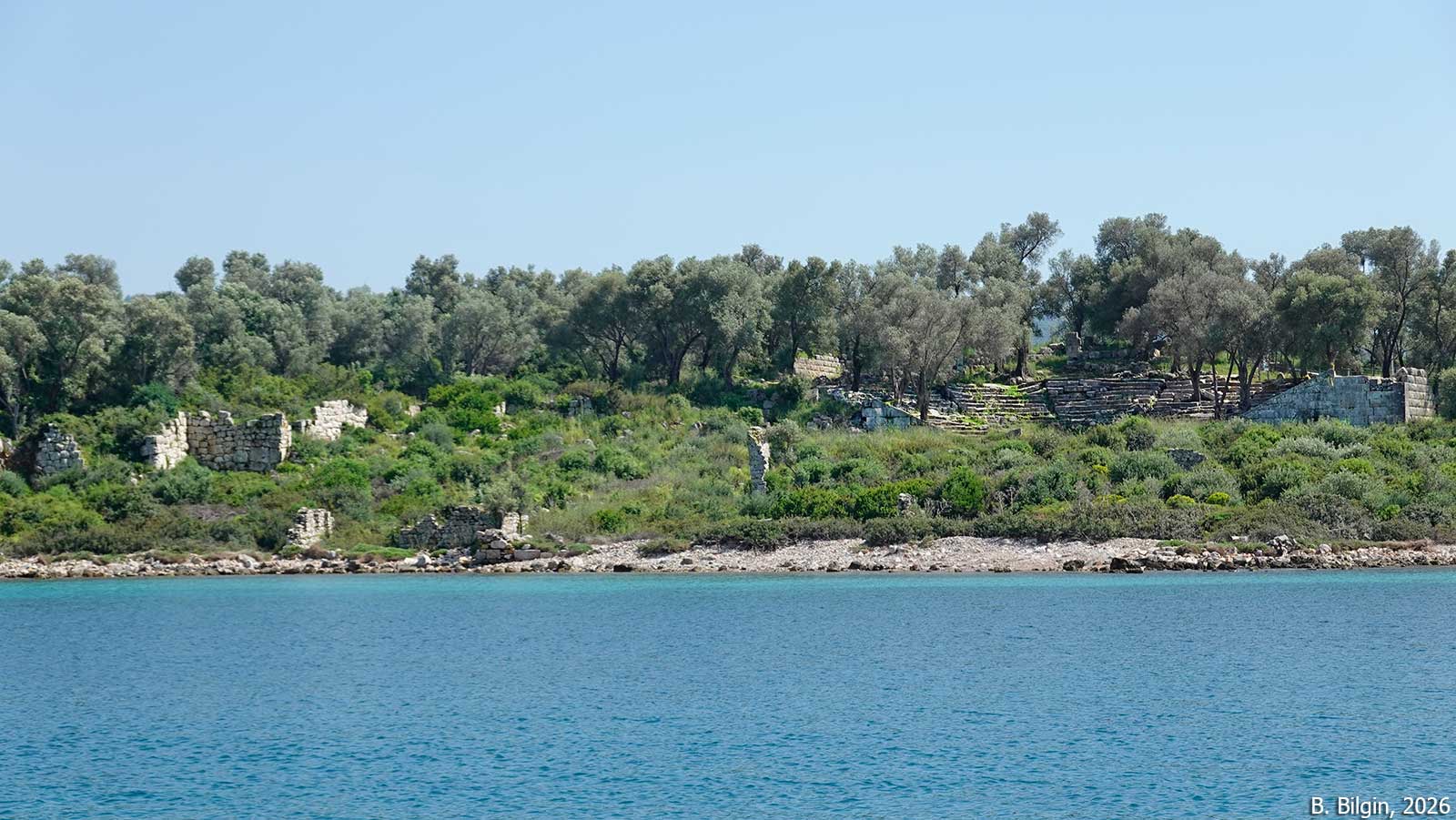
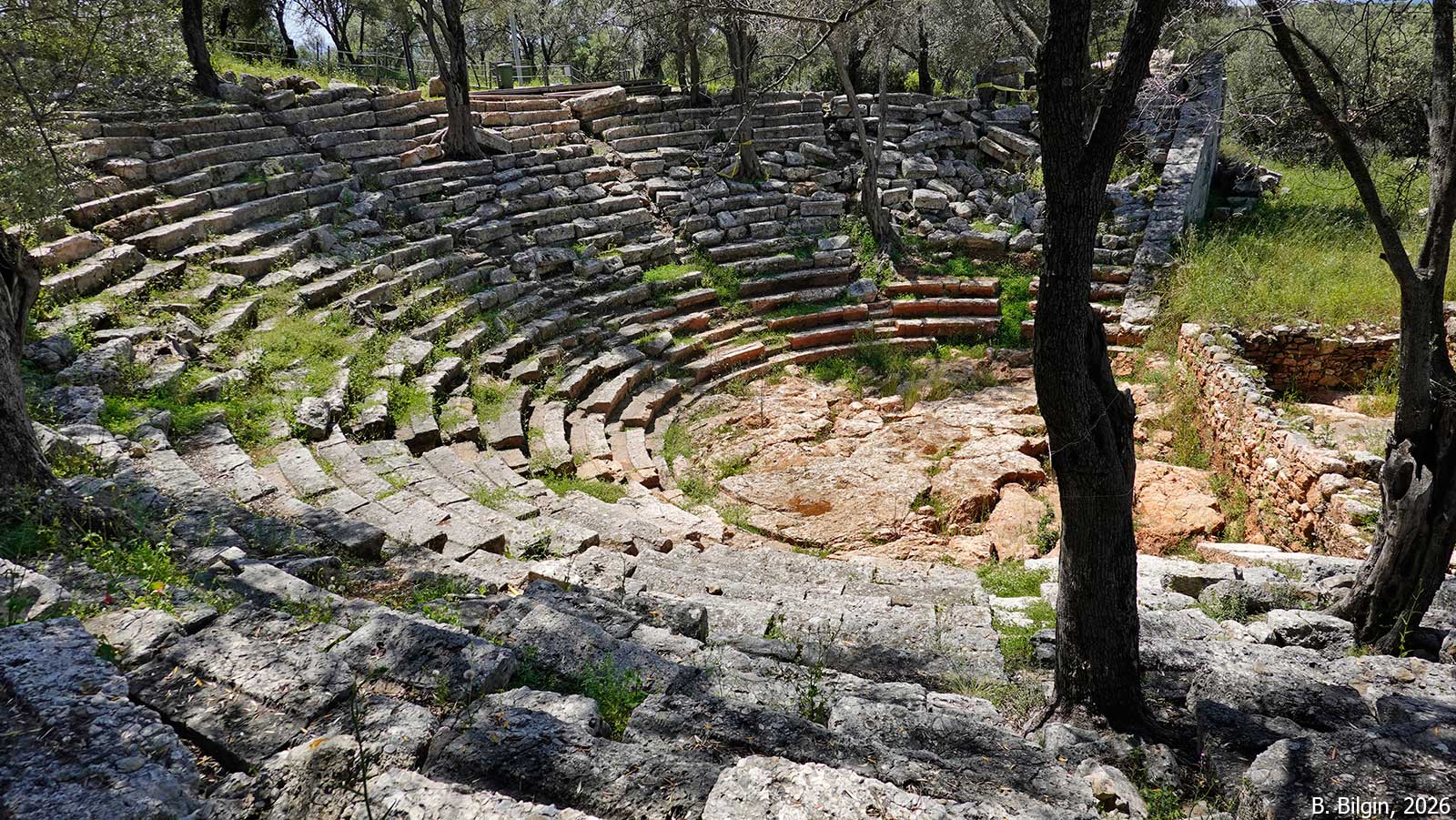
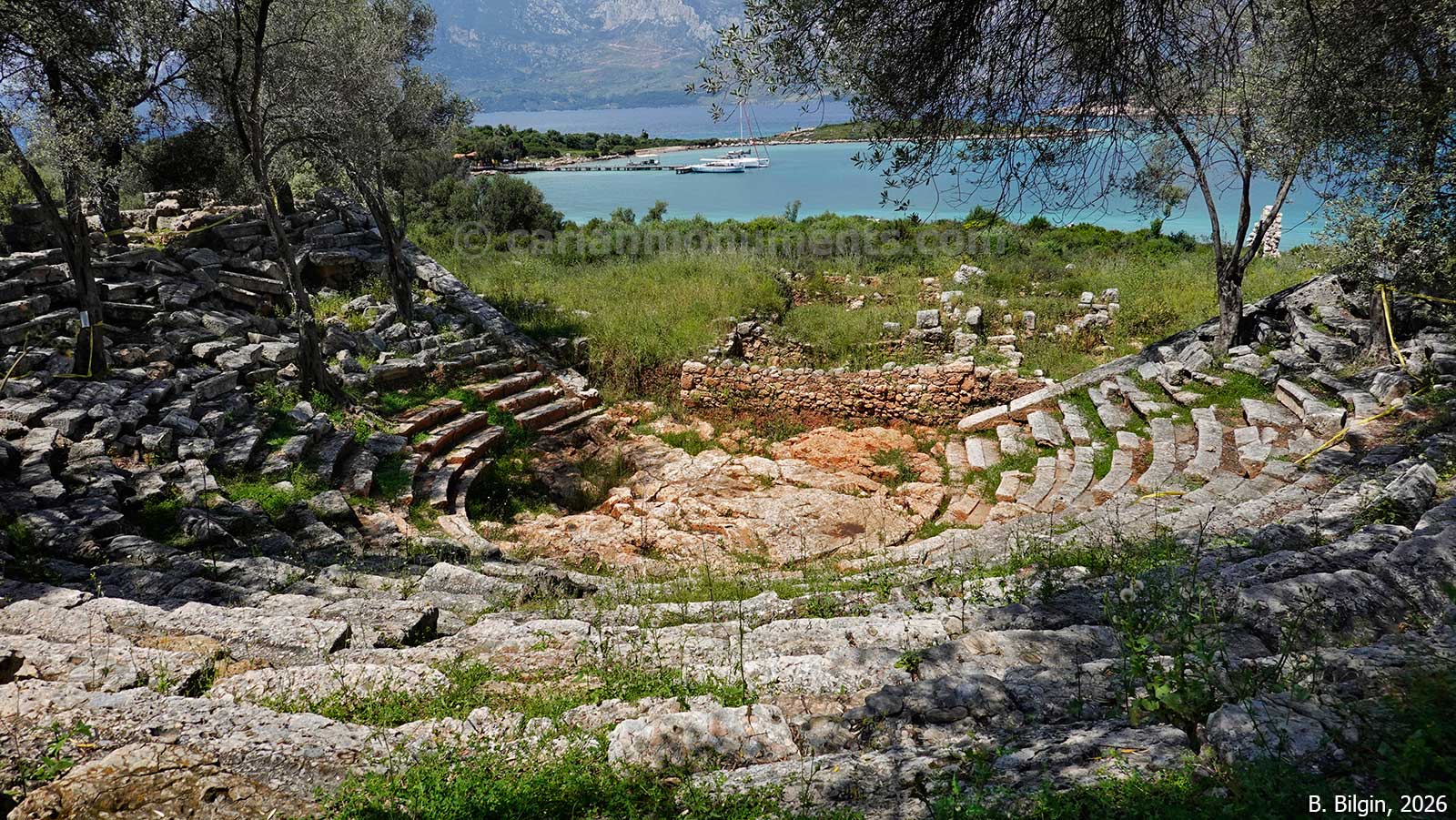
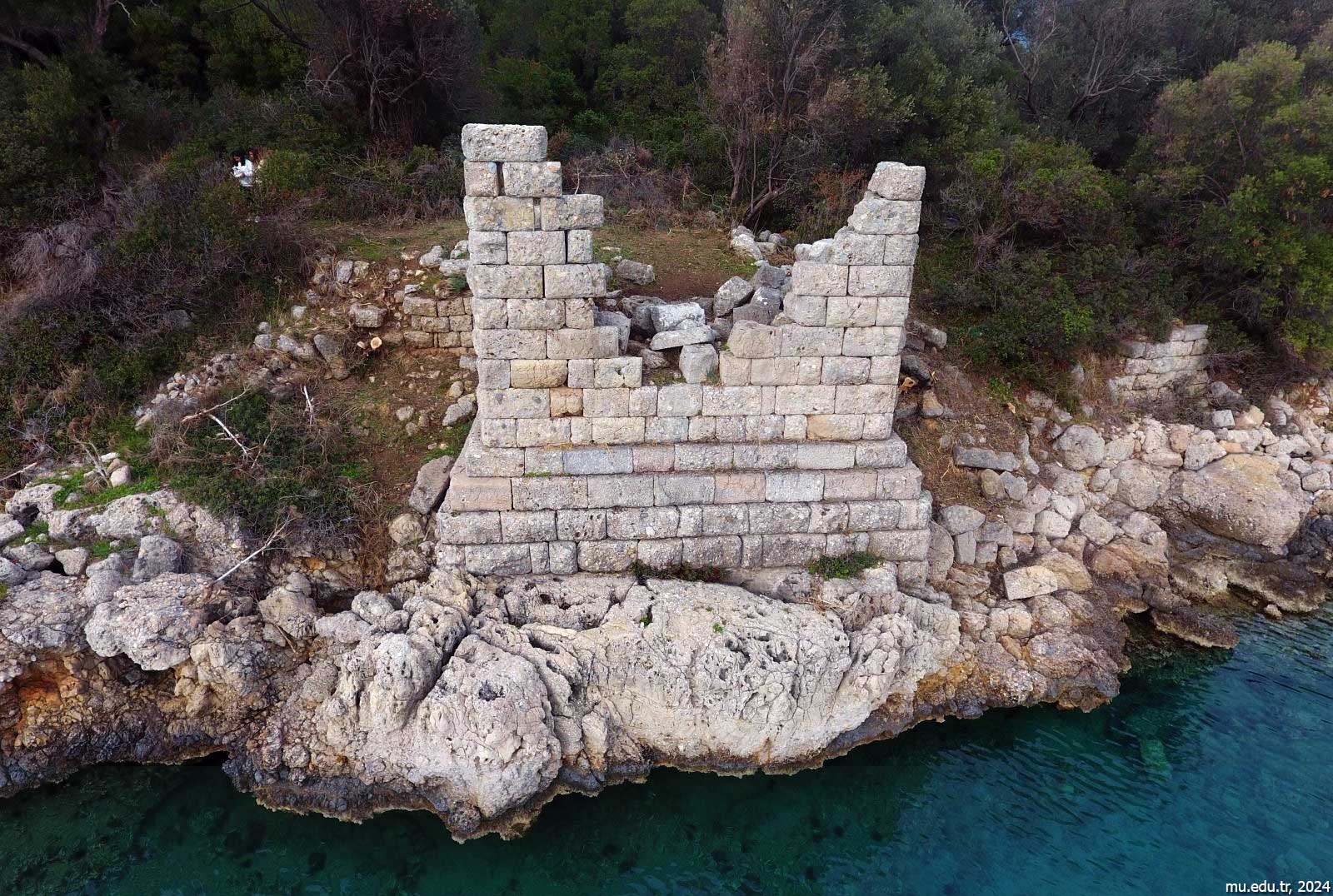
From the Hellenistic period onward, the city was protected by strong walls, which were reinforced by well-preserved towers, particularly on the eastern and southern sides. The theater is located on the north slope of the island. With a capacity of approximately 2,500 people, it has a surprisingly large size for a small island city. The cavea is well preserved but the stage building has suffered damage, with its blocks likely reused for later Byzantine construction. The principal cults were dedicated to Apollo Pythios and Apollo Kedrieus. A Doric temple dedicated to Apollo stood on a prepared terrace; remains include cylindrical altars decorated with bukranion, garlands, and snake motifs (the snake being sacred to Apollo). An agora is located west of the theater near the harbor. The visible remains in the agora largely reflect late period or Byzantine modifications. The island also features numerous cisterns, essential due to the lack of natural fresh water sources. The site contains significant Christian architecture, including a Great Basilica (measuring 35.5 x 19 meters) on the western part of the island, and several churches located on the isthmus and Orata Island. Necropolis is located on the mainland, opposite the island, which includes vaulted chamber tombs and sarcophagi hidden within dense vegetation.
The site remained largely unrecognized until 1885, when Ch. Diehl and G. Cousin utilized a discovered inscription to identify the ruins as the ancient city of Kedreai. Several surveys in the 20th century mainly focused on inscriptions and indentification of the visible structures without a large-scale excavation work. Most recently, partial cleaning and excavation works were carried out between 2003 and 2020 as part of a multidisciplinary project led by Adnan Diler to protect the region’s archaeological and natural heritage from the pressures of mass tourism.
The island is also famous for a beach composed of unique oolitic sand (ooids). Local legend claims the sand was brought from Egypt specifically for Cleopatra, but scientific analysis confirms the ooids are formed locally through sedimentary processes, though they remain geologically rare.




References:
Anabolu, M. 1965. “Issız Bir Adacığın Koynunda Uyuyan Antik Şehir: Kedreai (Cedrae),” Belleten 29, 245–254.
Diler, A. 2007. “Sedir Island (Kedreae): Sedir Island Management Plan,” SMAP III European Union Gökova Project, Muğla.
Images:
Muğla Sıtkı Koçman Üniversitesi Arkeoloji Bölümü, 2024
Bora Bilgin, 2026