
C.Ke 1–2
Two limestone stele fragments, both belonging to the same funerary monument, were found in Keramos. Both fragments have the same five characters, which Adiego suggests reading “one year” or “first year”. The fragments are preserved in the Bodrum Museum.


(→)
1 | usoτ
C.Ke 3(?) Mengefe
The inscription was discovered in 2008 during rescue excavations in the ancient settlement of Mengefe, located north of the ancient city of Keramos. It is carved into the rim of a ceramic pithos. The vessel is 76 cm high, with a body diameter of 65 cm and a mouth diameter of 33 cm. The text consists of 58 clearly readable signs (including word dividers) and an estimated nine additional signs that are missing or illegible due to damage on the mouth of the vessel. The inscription features a chiastic structure involving two personal names: mane (Manes) and artmsi (Artemisios). Scholars interpret the inscription as a dedicatory formula where Manes is the dedicator and Artemisios is the recipient. It has been dated to the end of the 4th century BCE. The item is in the Milas Museum (Inventory No. 391).
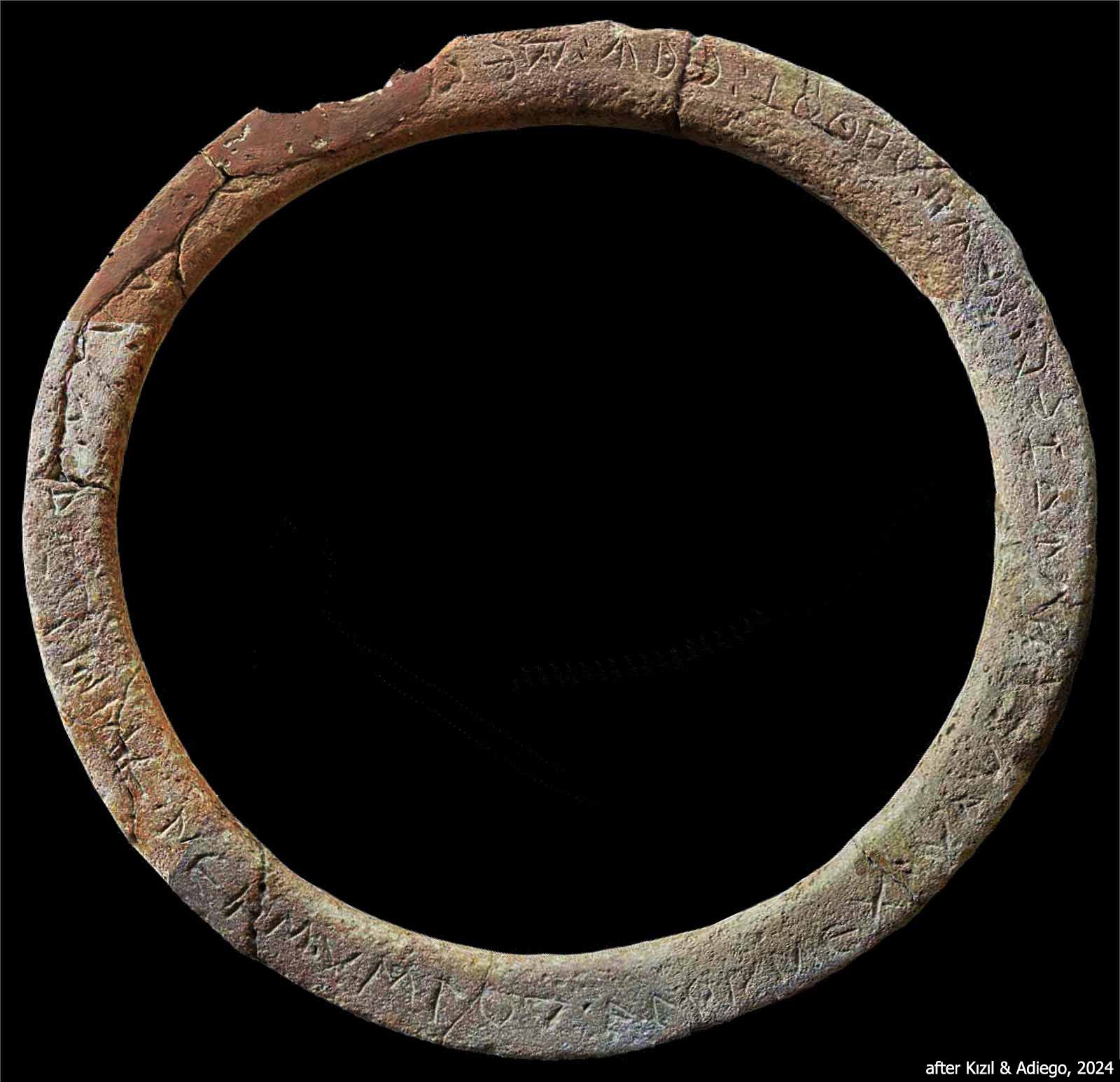
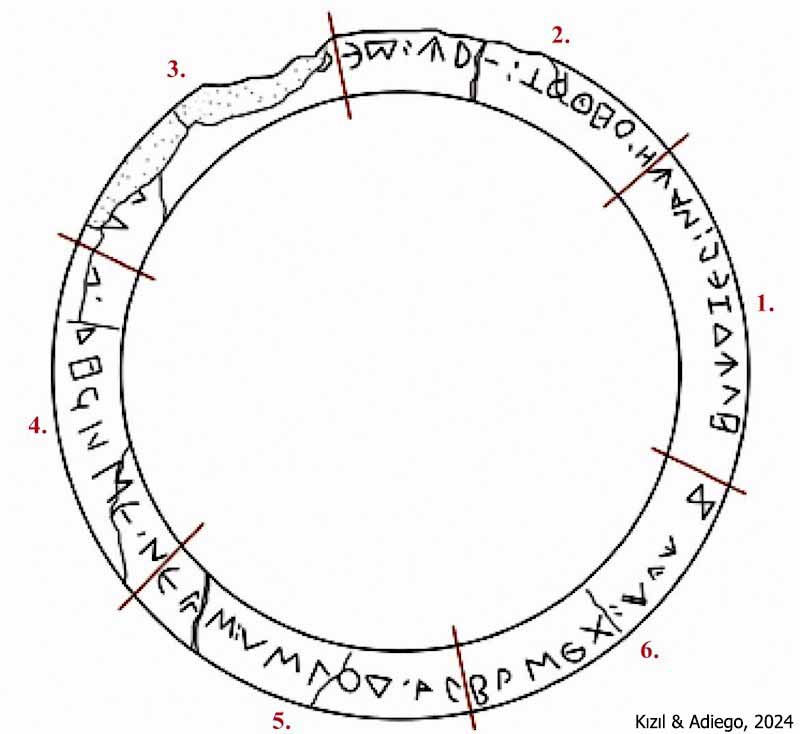
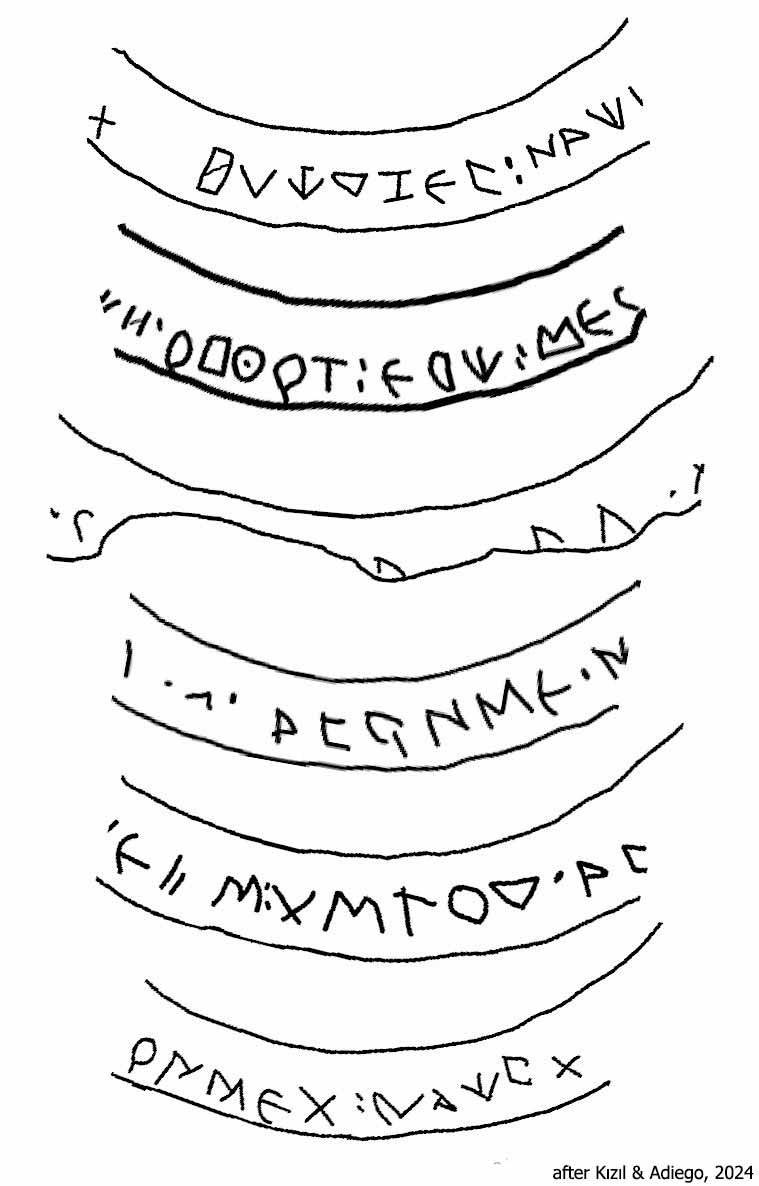
Kızıl & Adiego 2024:
(→)
eunk̑λir : mane : teqtT : išn : pid[–]-?-[-]-?-? :? δ? : artmsi : miδs : k̑sbok : artmsik̑ : manek̑
References:
Adiego, I.- J. 2007. The Carian Language, Leiden/Boston. (C.Ha 1)
Adiego, I.- X. 2019. “A Kingdom for a Carian Letter,” in Luwic Dialects and Anatolian. Inheritance and Diffusion, eds. I.-X. Adiego et al., Barcelona, 11–50.
Kızıl, A. & Adiego, I.-X. 2024. “A Pithos with Carian Inscription from Mengefe Settlement, North of the Ancient City of Keramos, Caria,” Kadmos 63: 39-58.
Simon, Z. 2025. “On the Carian Inscription from Mengefe,” Gephyra 29, 1–8.
Varinlioğlu, E. 1986. Die Inschriften von Keramos, Bonn.
Images:
E. Varinlioğlu, 1986
A. Kızıl & I.- X. Adiego, 2024